That’s right, I’ve not been blogging for quite a long time, but now am much freer to do so.
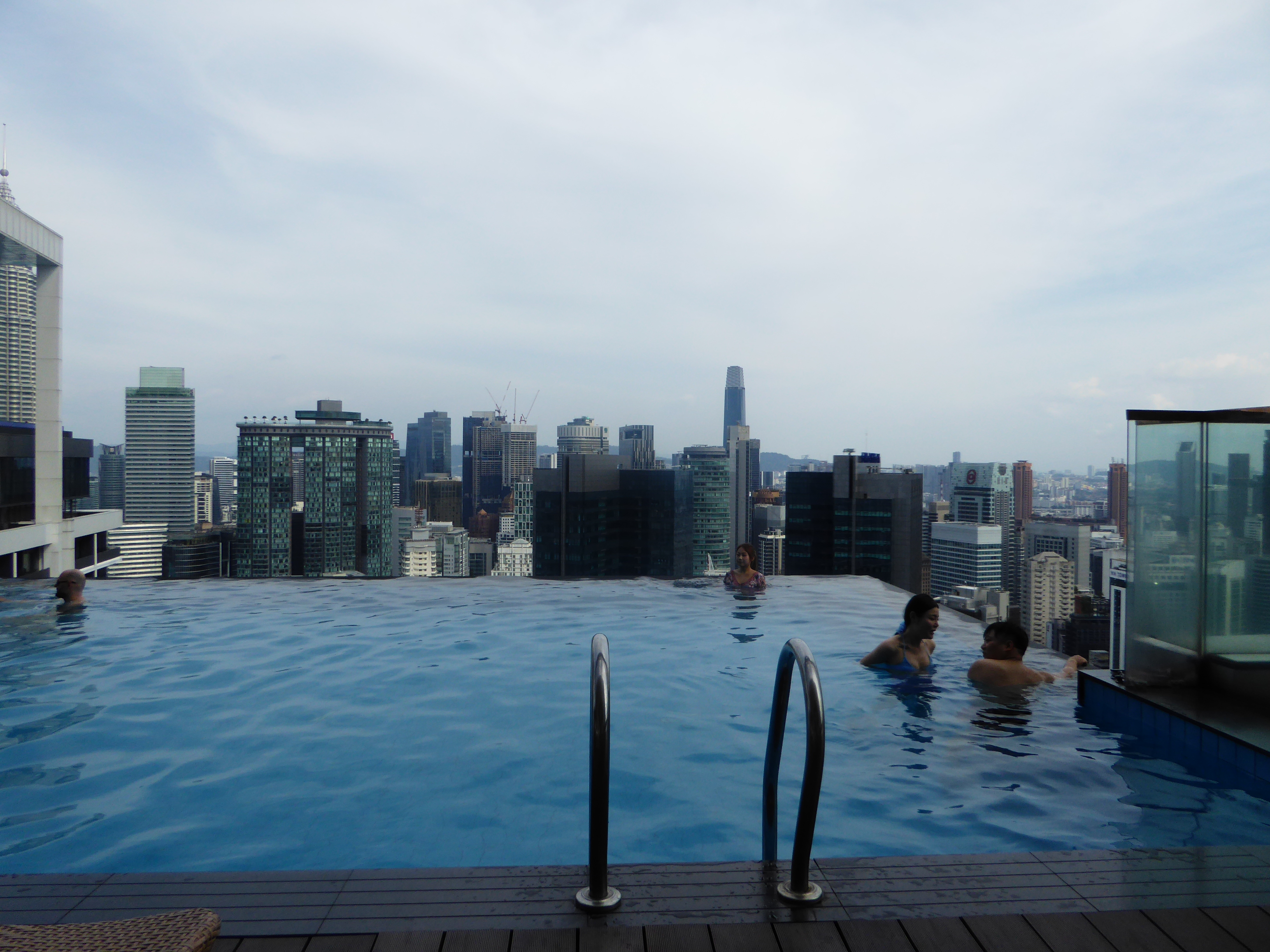
Above is where I was last year on a Far East trip. This shot is the pool in a hotel in Kuala Lumpur where I was staying. For such a view (with amenities) it was surprisingly inexpensive and I no doubt (as everyone should!) will return.
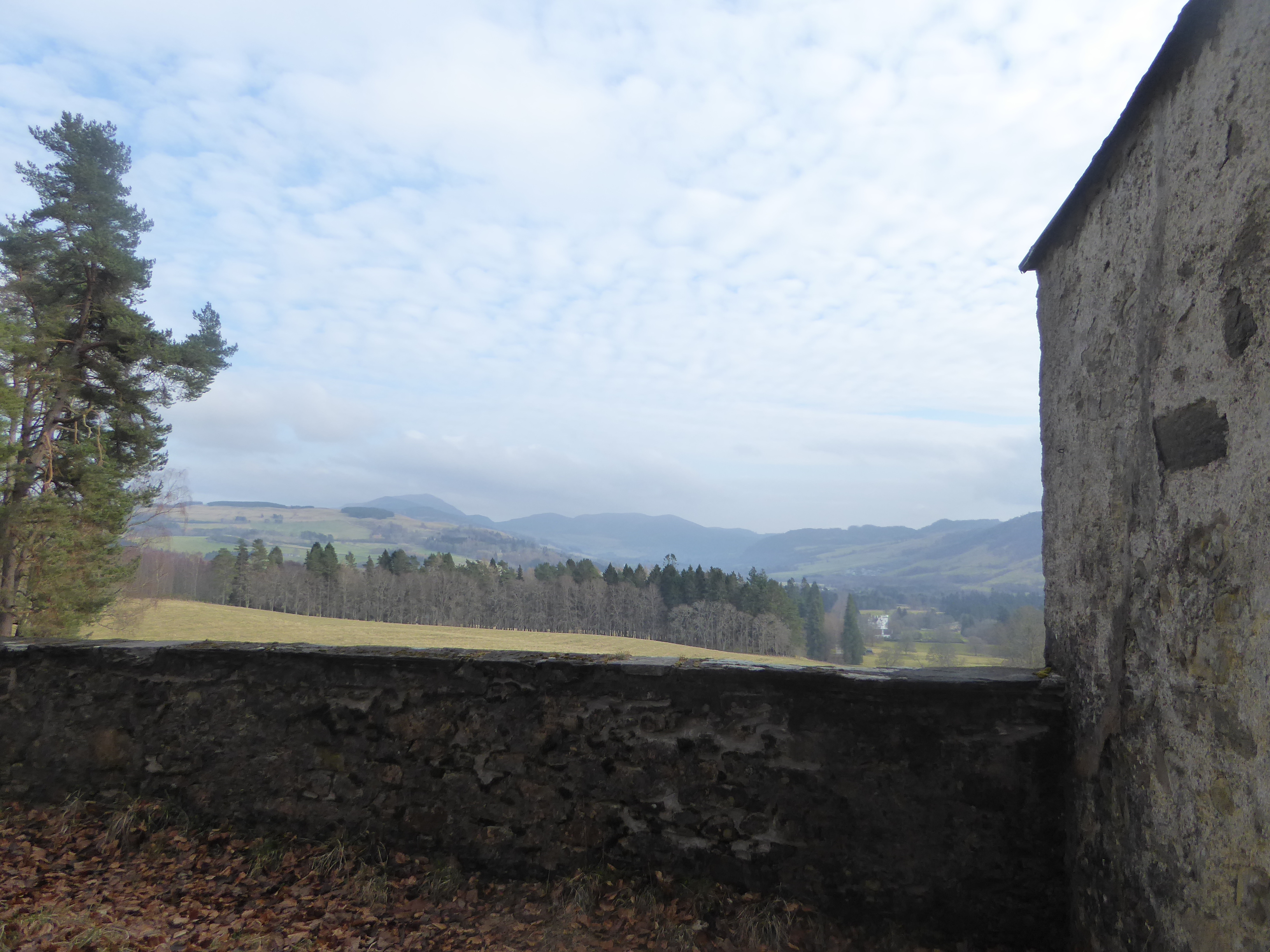
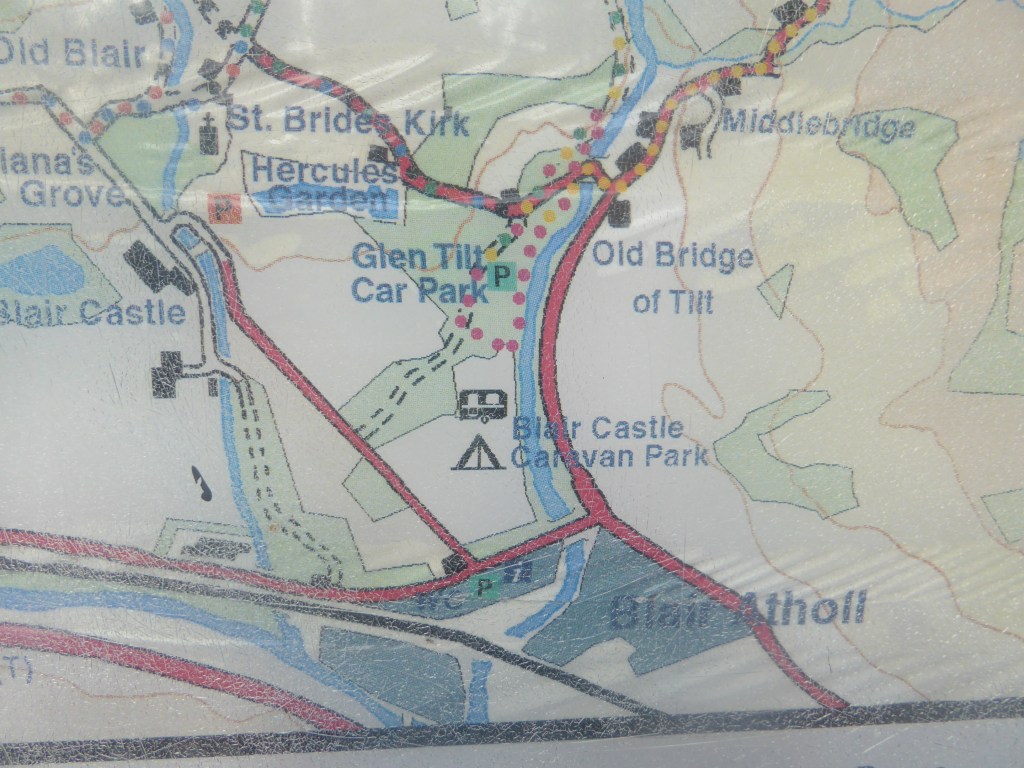
I’ve spent a lot of time in the Perthshire Highlands recently in Scotland, exploring areas north of Pitlochry, including Blair Atholl and Aviemore. Recently, we decided on another short walk—about an hour and a half to two hours—near Blair Atholl, specifically within the Blair Atholl estate, home to the castle and its reputed private army. It was a fascinating walk.
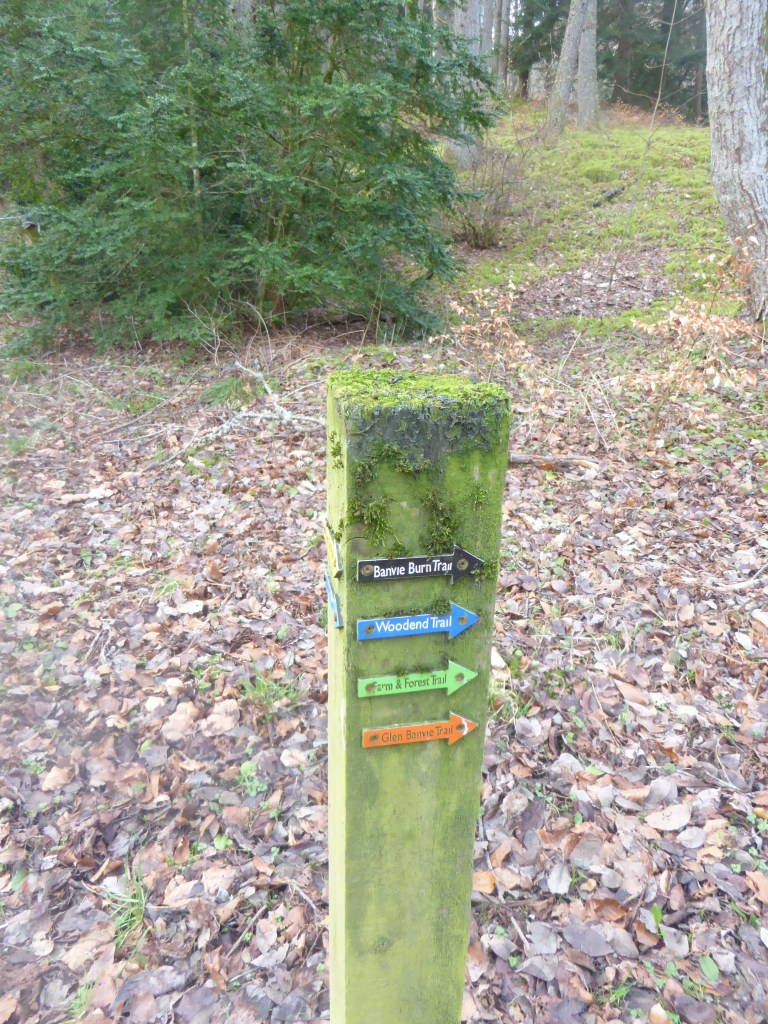
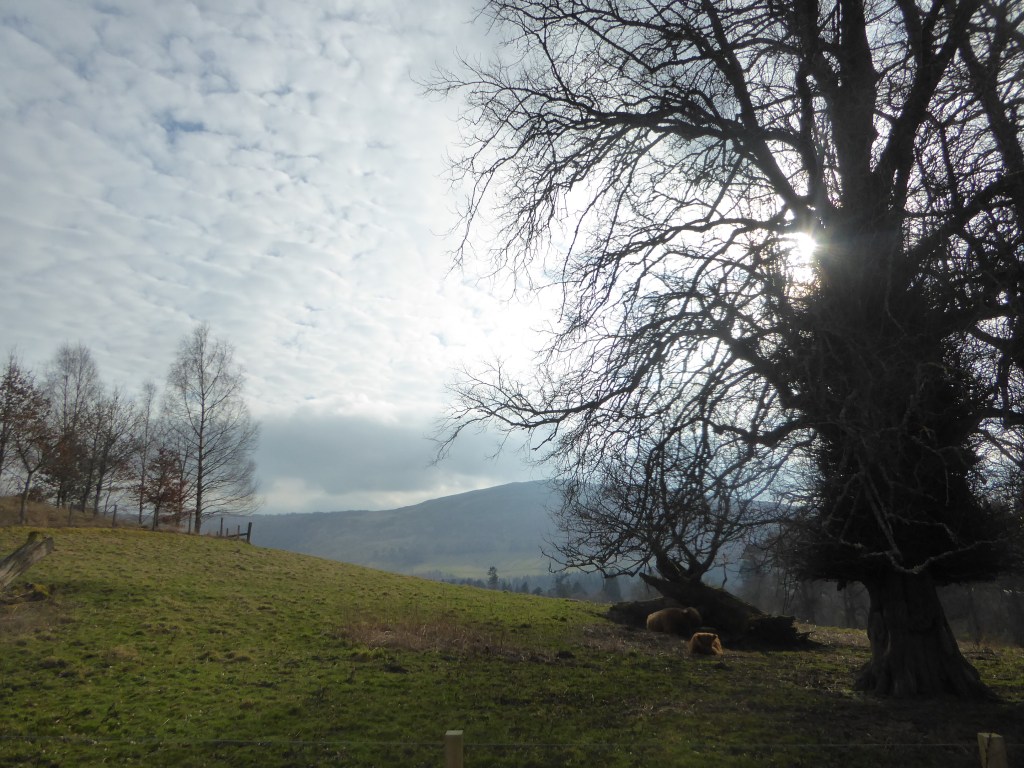
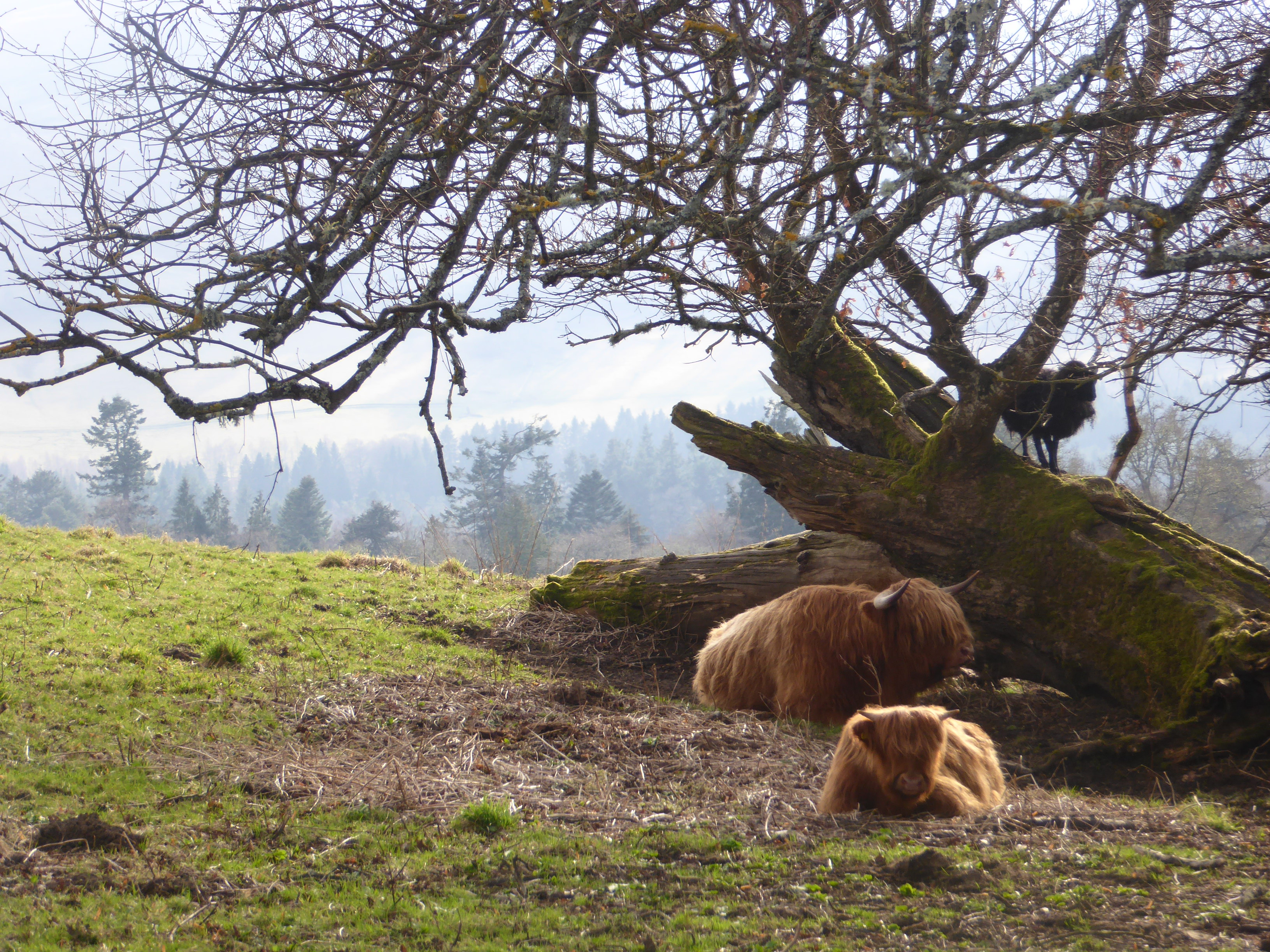
It’s easy to get lost in the charm of this landscape. Tiny hamlets, abandoned churches, deep gorges, and lush scenery unfold along the way, accompanied by the sight of goats, Highland cows, and migrating geese. The trail was well-marked, making for a smooth and enjoyable hike.
We followed the black trail, a steady 90-minute route of gentle ascents and descents, before heading to the House of Bruar for some indulgent—if entirely unnecessary—posh food.
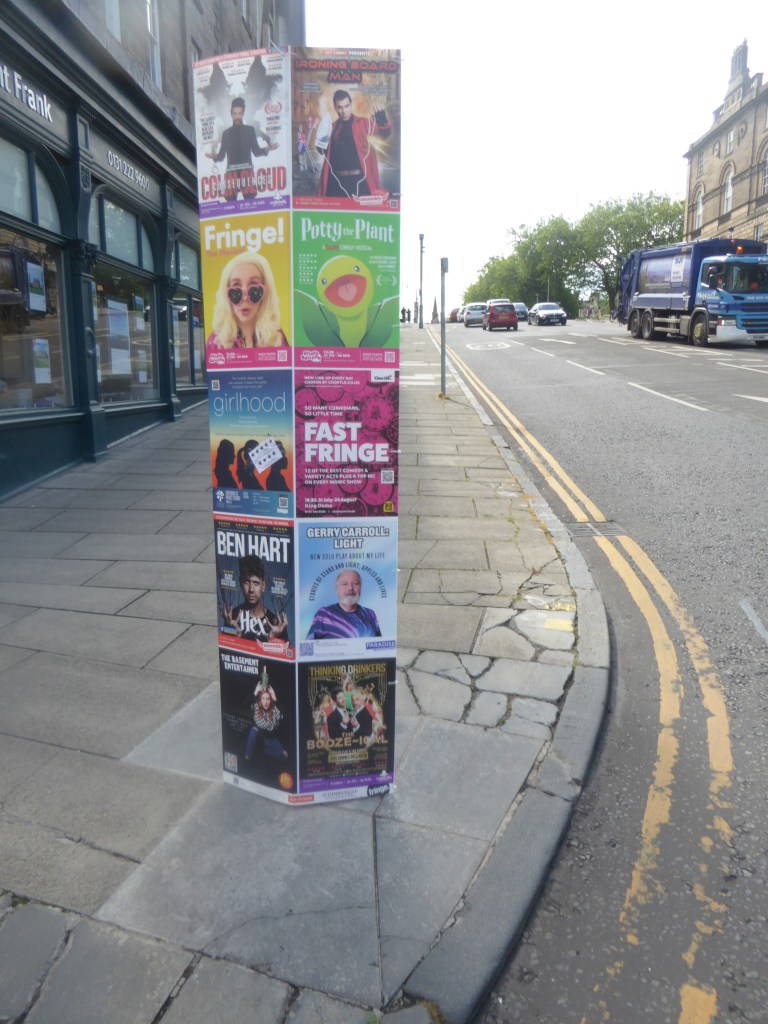
It’s interesting because I have been to Edinburgh countless times in my life, normally as a day trip, but this time my partner had to attend a conference, so I went along, especially since it coincided with the Edinburgh Festival, the largest arts festival in the world.
It’s different because normally when I go to the festival, I just visit for the day and then come back. However, this is the second time in two years that I chose to stay overnight. The previous time, the prices were simply outrageous—nearly £300 for one night at a tiny hotel room the size of a broom cupboard. It’s disgraceful and explains why certain people are no longer attending the festival.
At the same time, I can understand why some of the hotels wish to make as much as possible; and many people are more than willing to pay it. In addition, it’s not just me who thinks this must be a problem, but for the performers, it must be nearly impossible to find affordable accommodation for their one, two, or even three-week runs.
Naturally, we decided to stay as cheaply as possible, and for some reason, our Travelodge was located in the West End, just out of the more expensive parts of Edinburgh, yet it was still a spectacular area to visit.
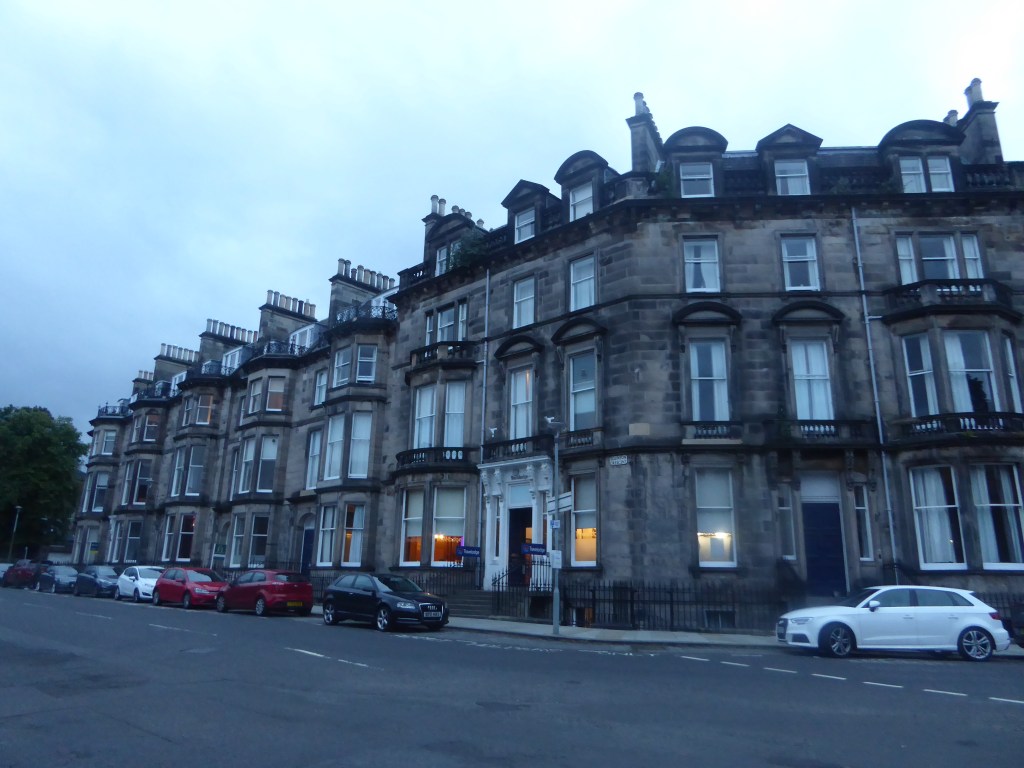
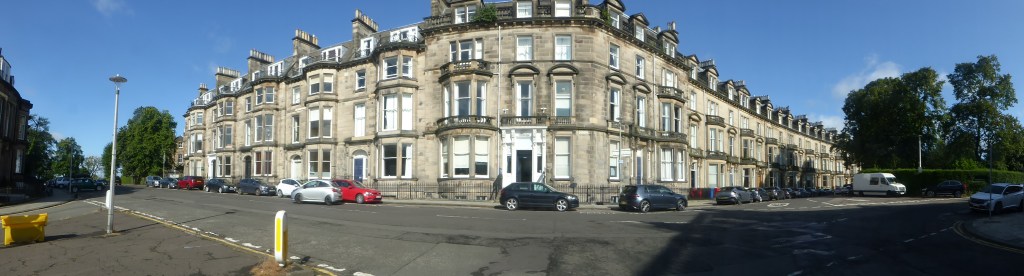
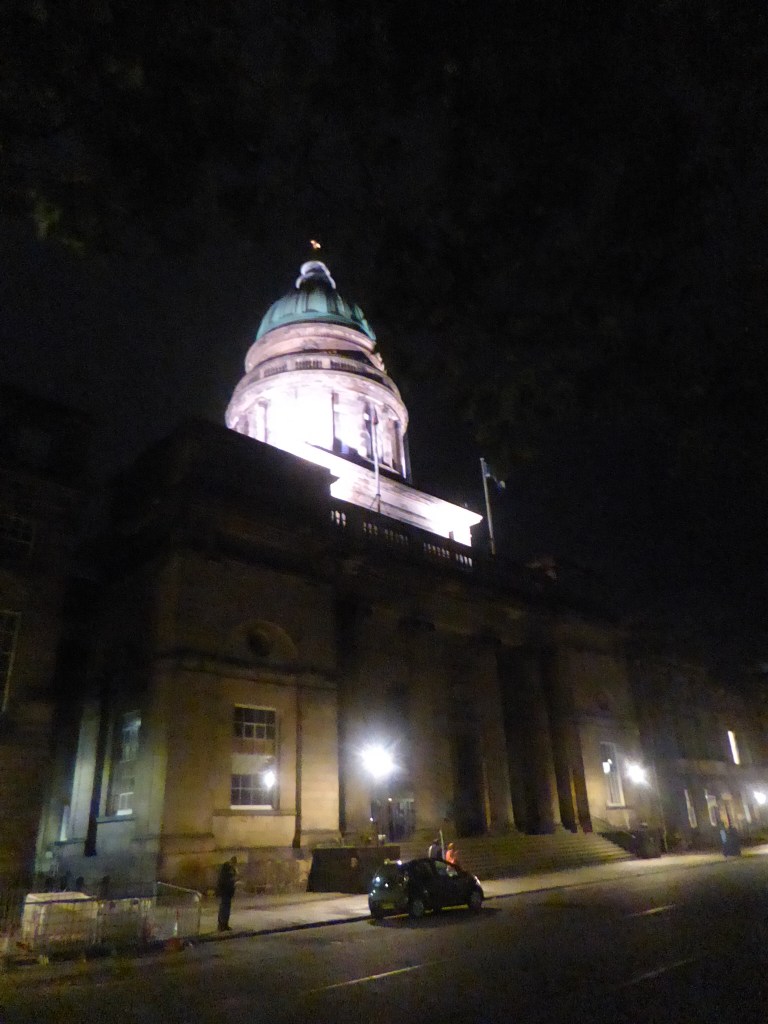
You only need to take a walk anywhere in Edinburgh, particularly in the town centre, to see the magnificent Victorian architecture. In this case, avoiding like the plaque anywhere near to the tourist areas. But even here in the West End of Edinburgh the buildings are spectacular.
The architecture is quite different from that of Glasgow, as it tends to be almost entirely white sandstone, as opposed to the red stone that we have in various parts of Glasgow, albeit, with plenty of white sandstone as well.
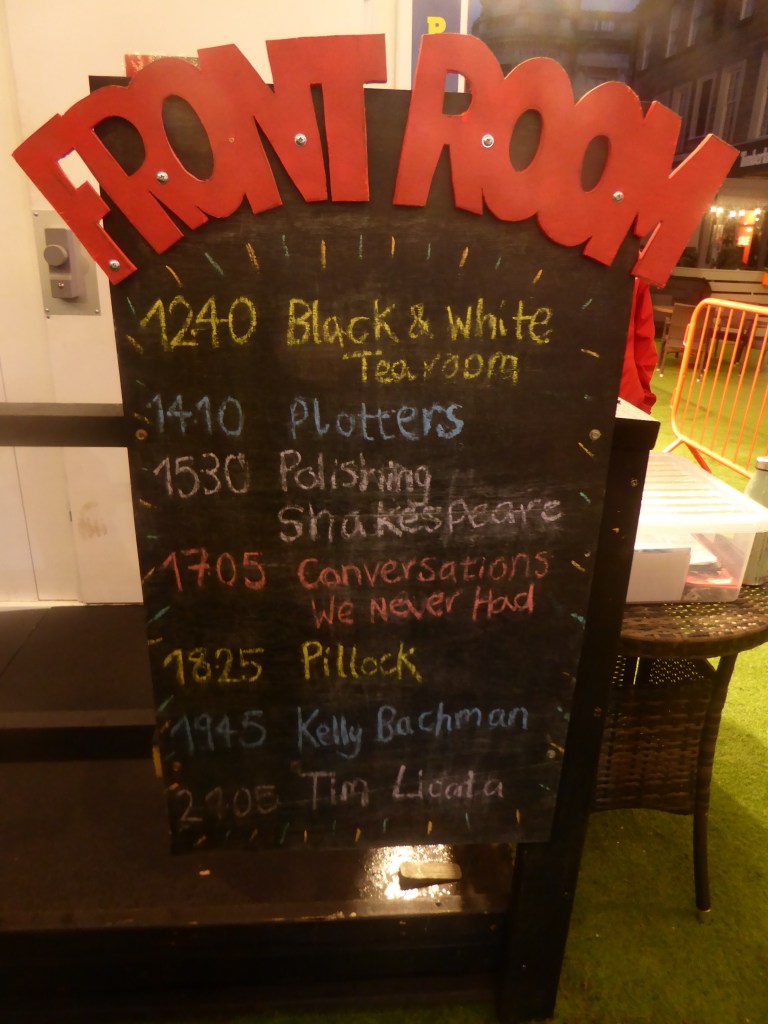
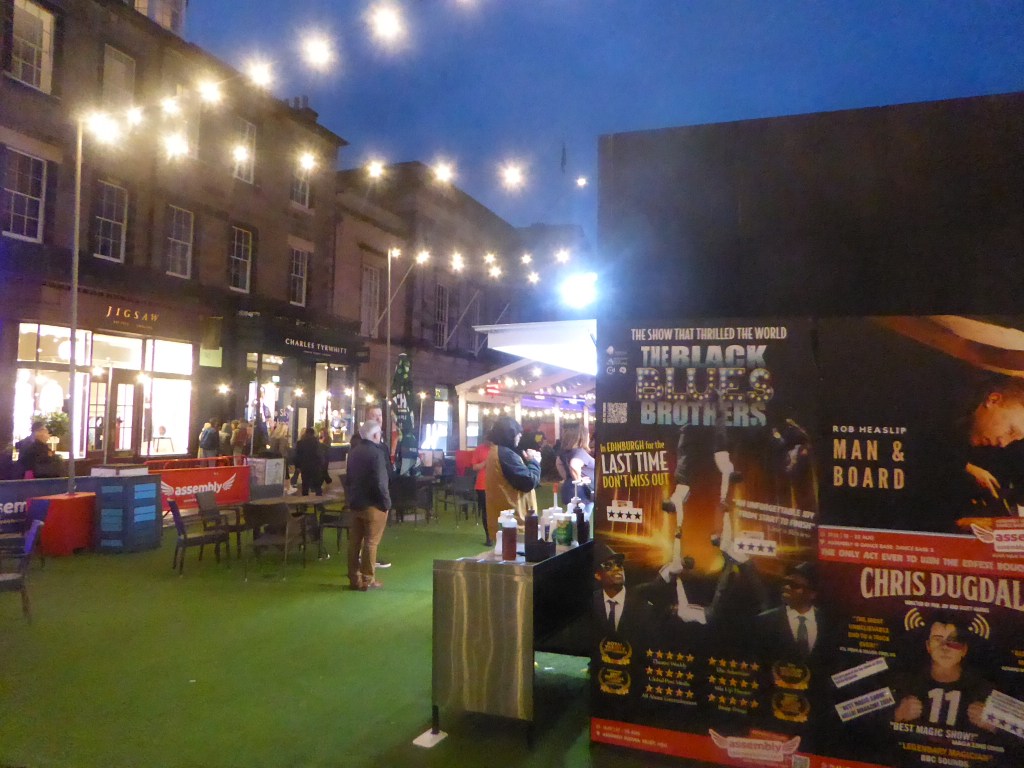
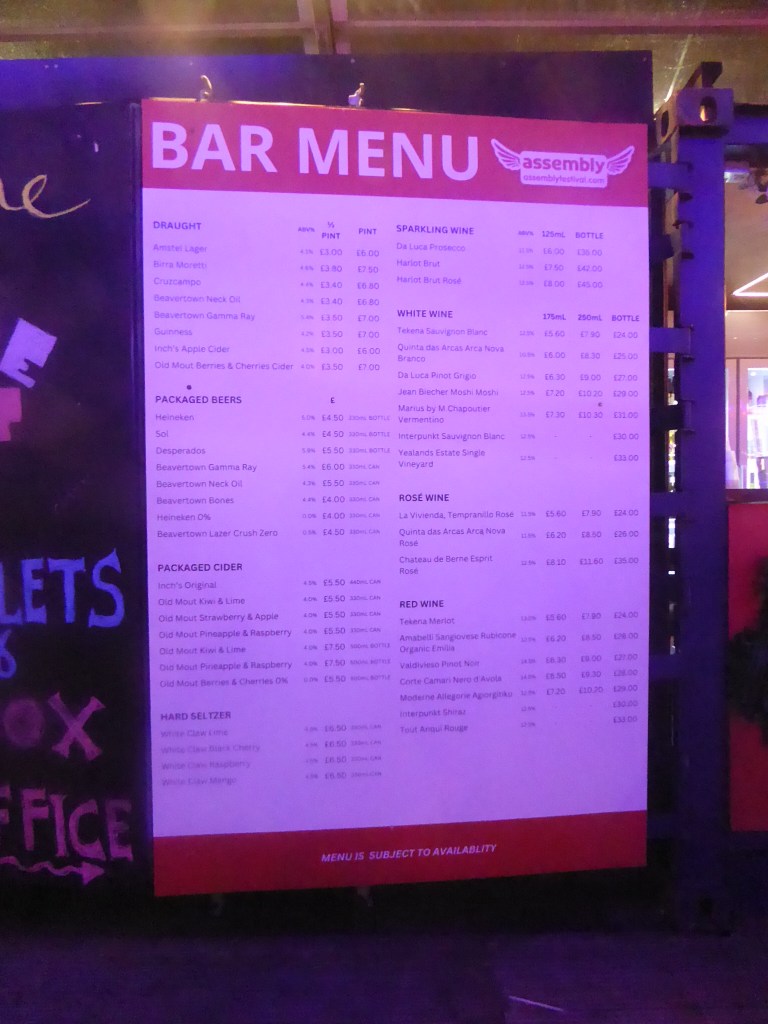
Naturally, on my first night there, we decided to go to the Edinburgh Festival, in this case to see a magician, Tim Licata. He was just fine, and of an Italian-American heritage. It also was not too crowded as well. Not sure why, though the show inside was close to a sell-out.
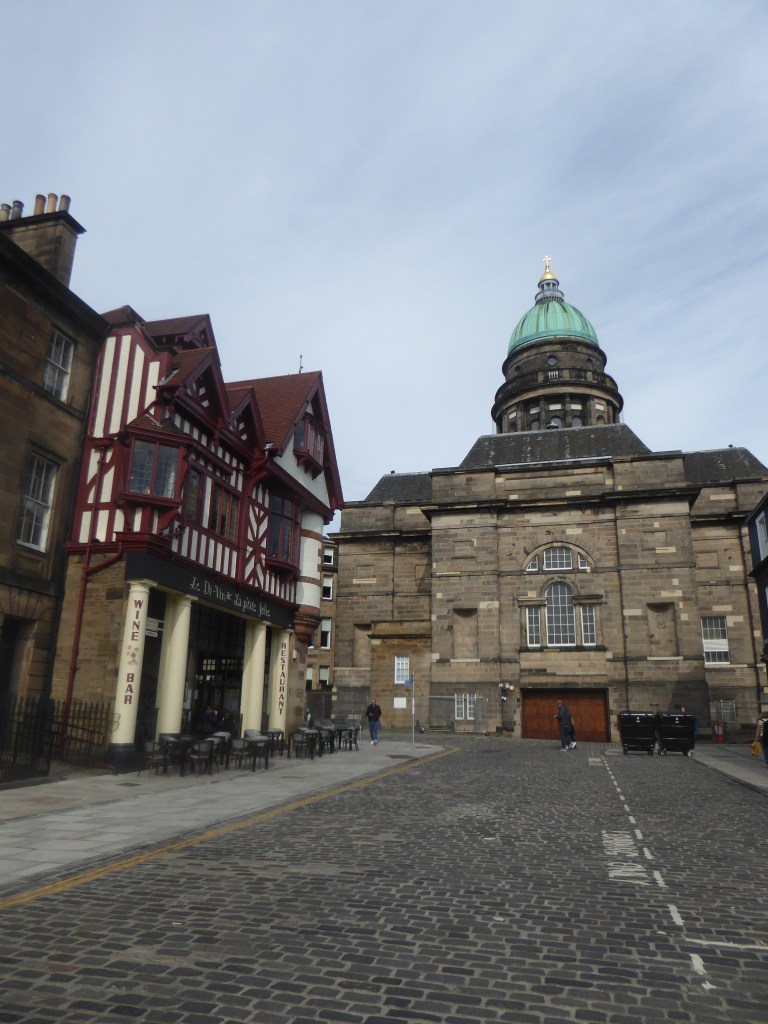
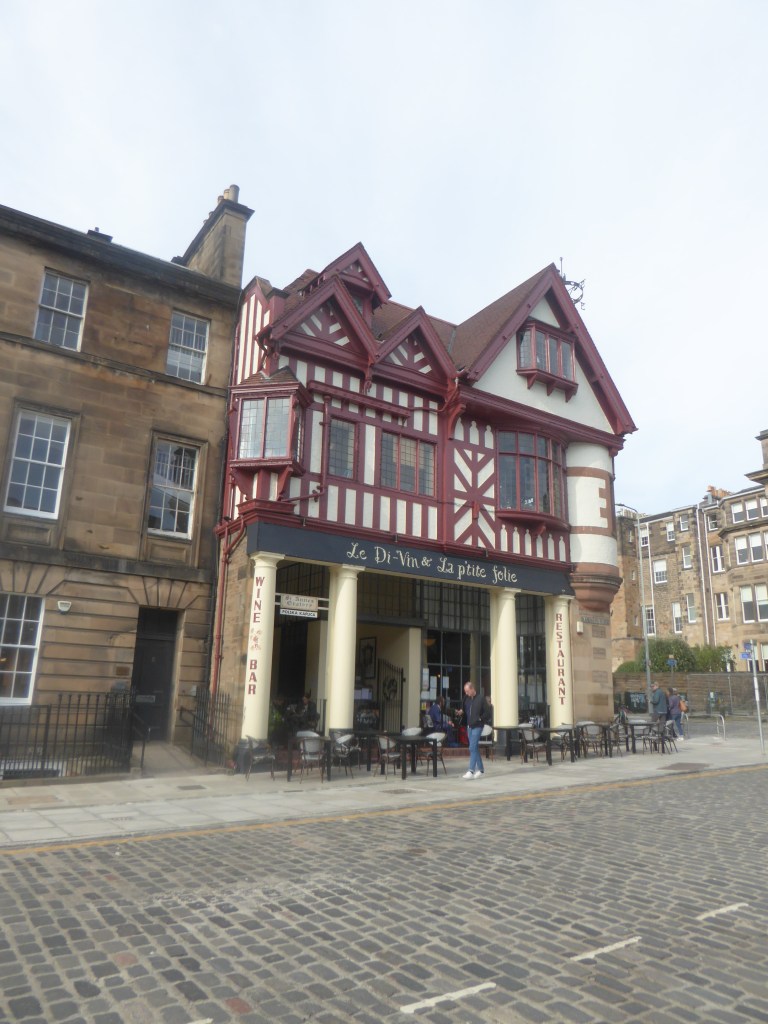
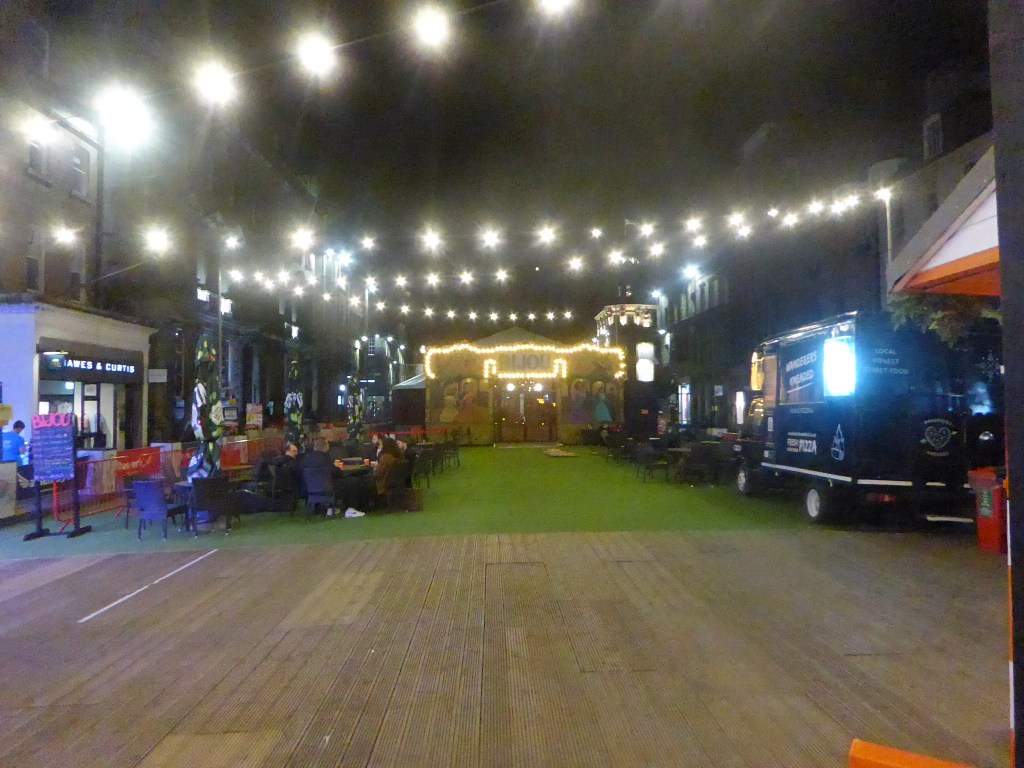
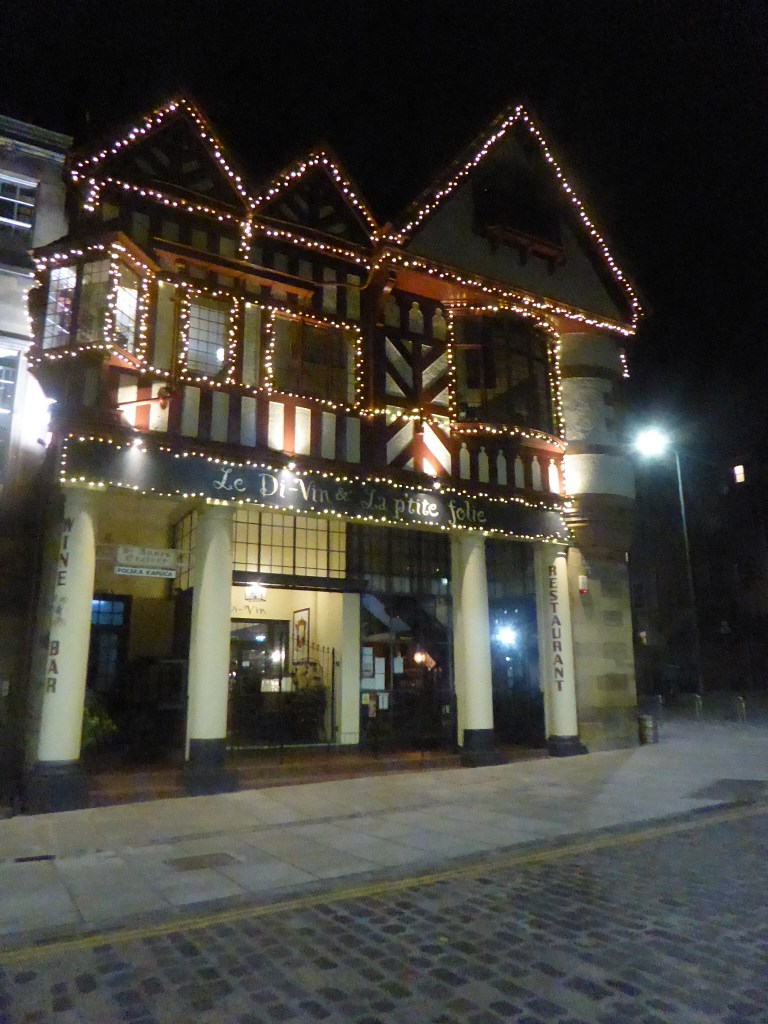
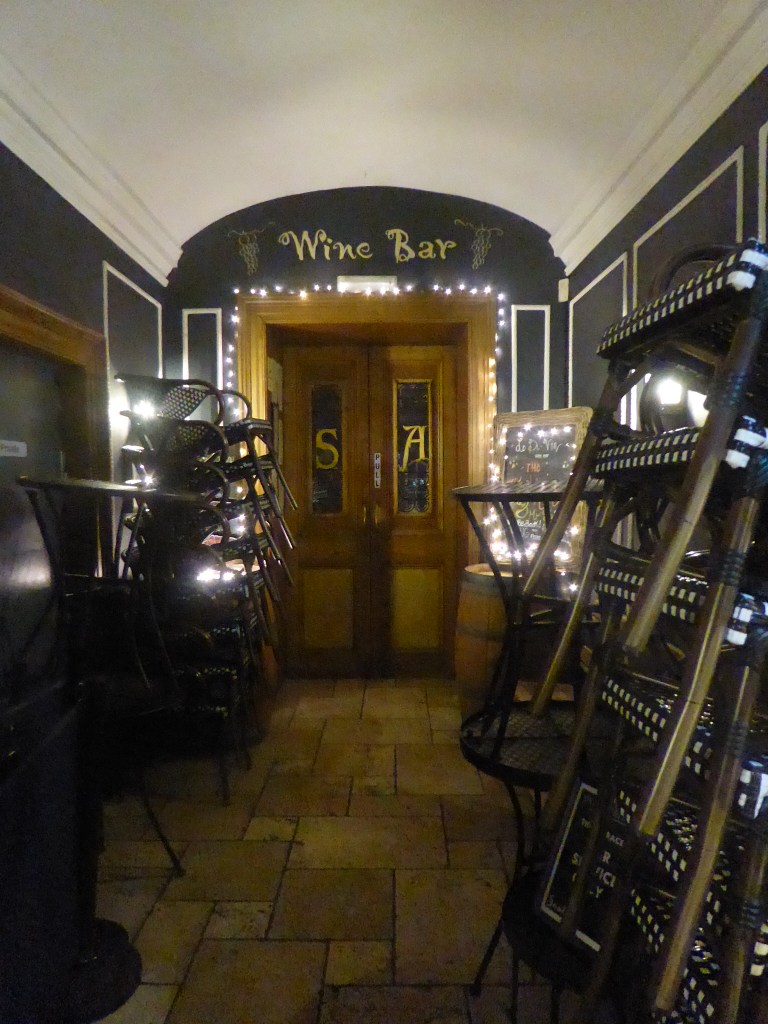
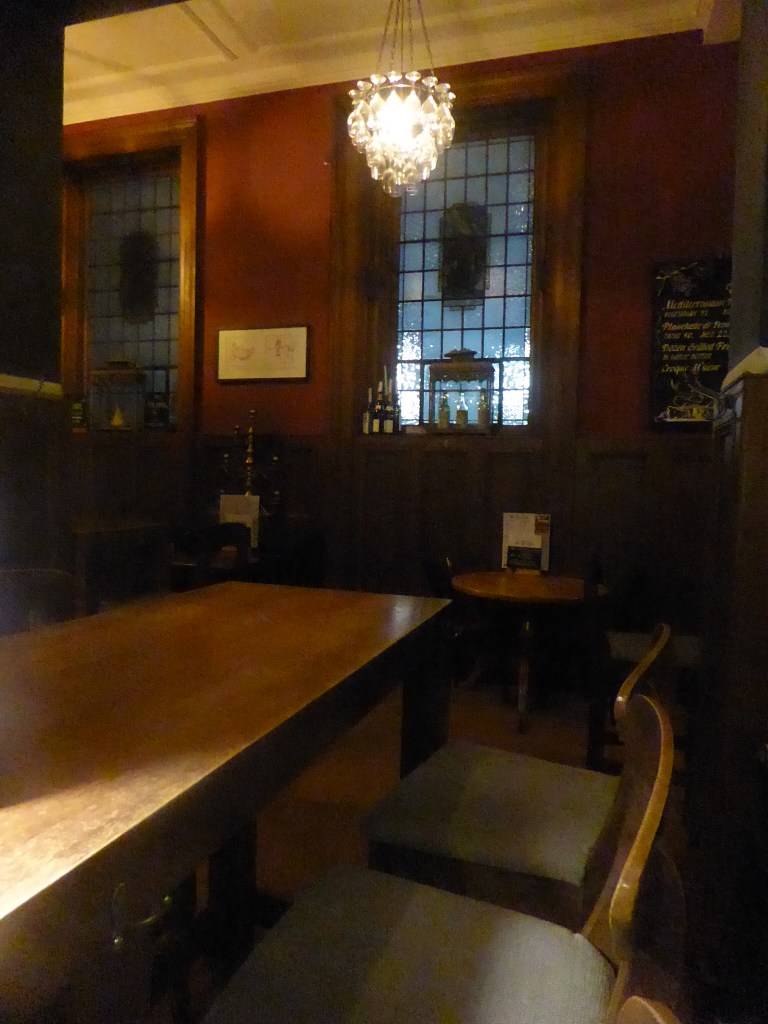
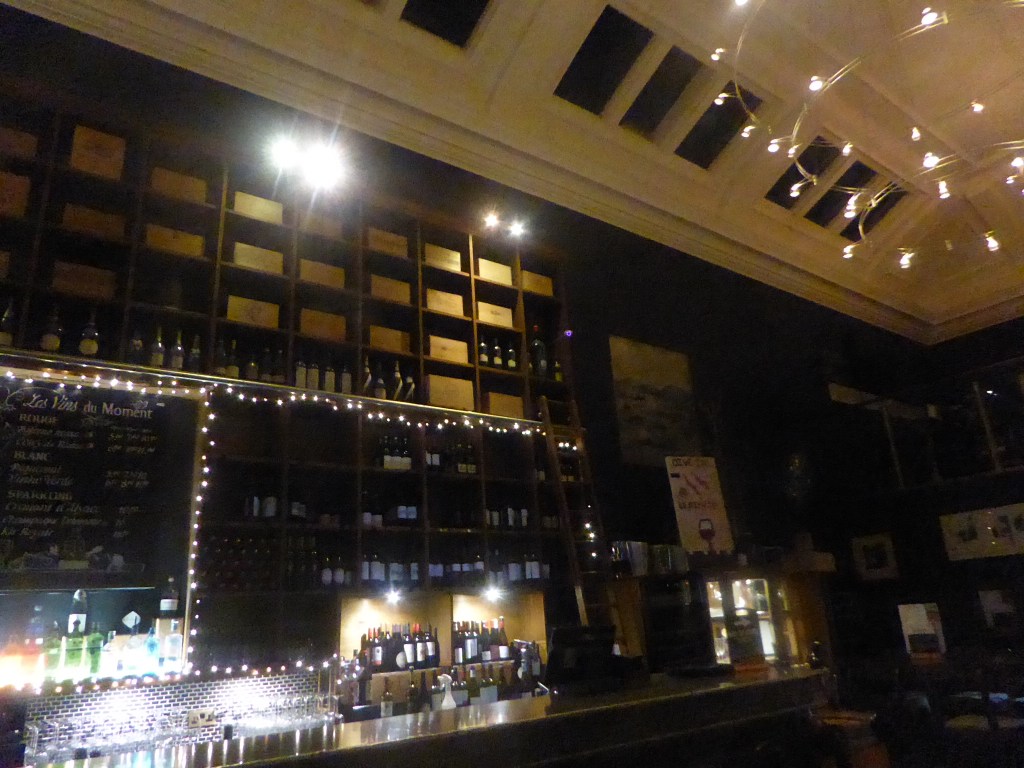
On the way back our walk we went through this area in the West End, that showed us a wee gem of a wine bar, Le Di-Van.
What a beauty! One could hardly believe being here, that I wasn’t on the continent or in France itself.
And it’s definitely one that I’ll be frequenting the next time I’m in Edinburgh.
The day before my visit to the Tenement House, I decided to wander around the West End of Glasgow. This tree-lined, leafy area is very middle-class, with many Chinese students near the university and various hospitals. It is probably the most desirable place to live in Glasgow, perhaps even in Scotland.
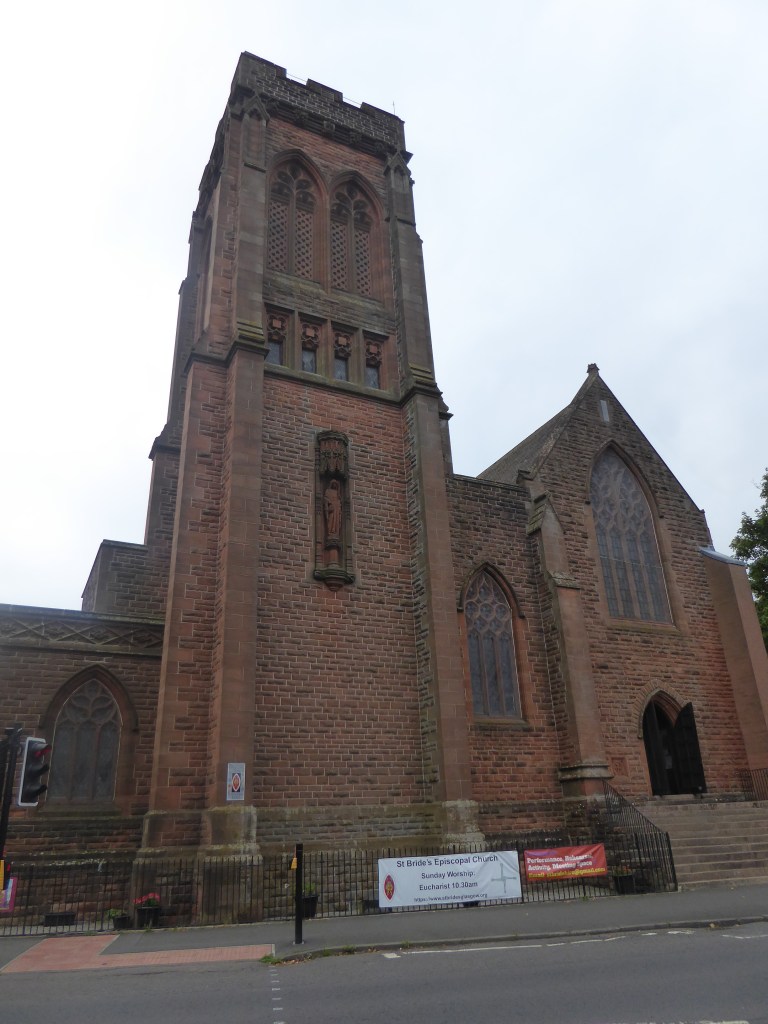
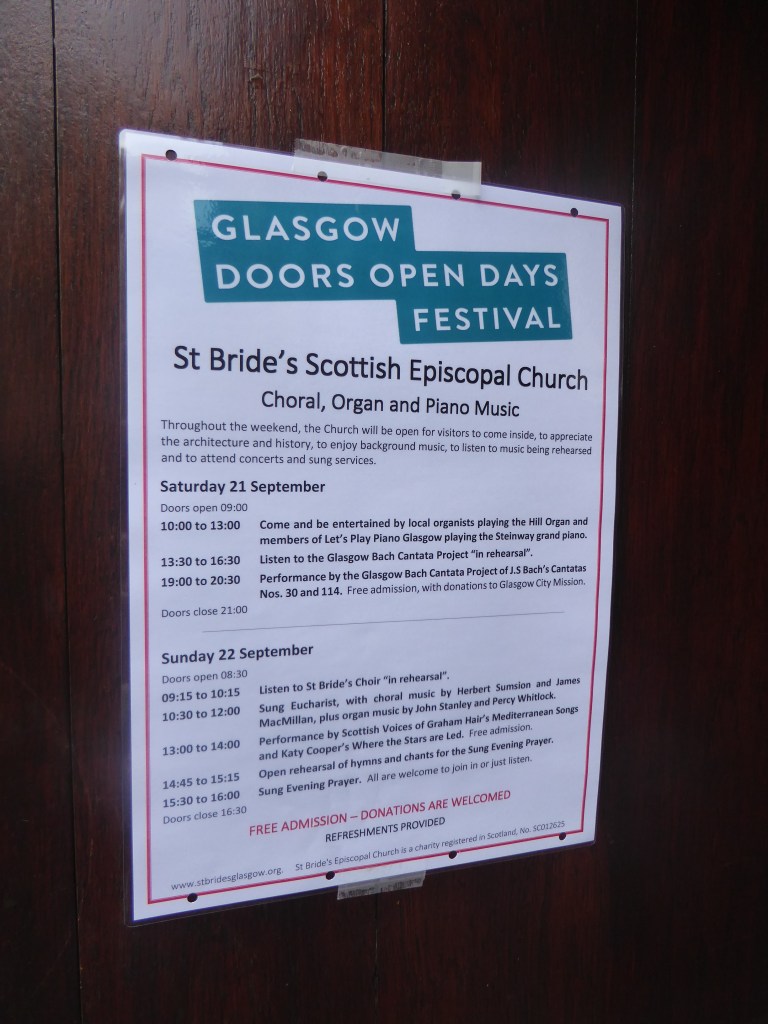
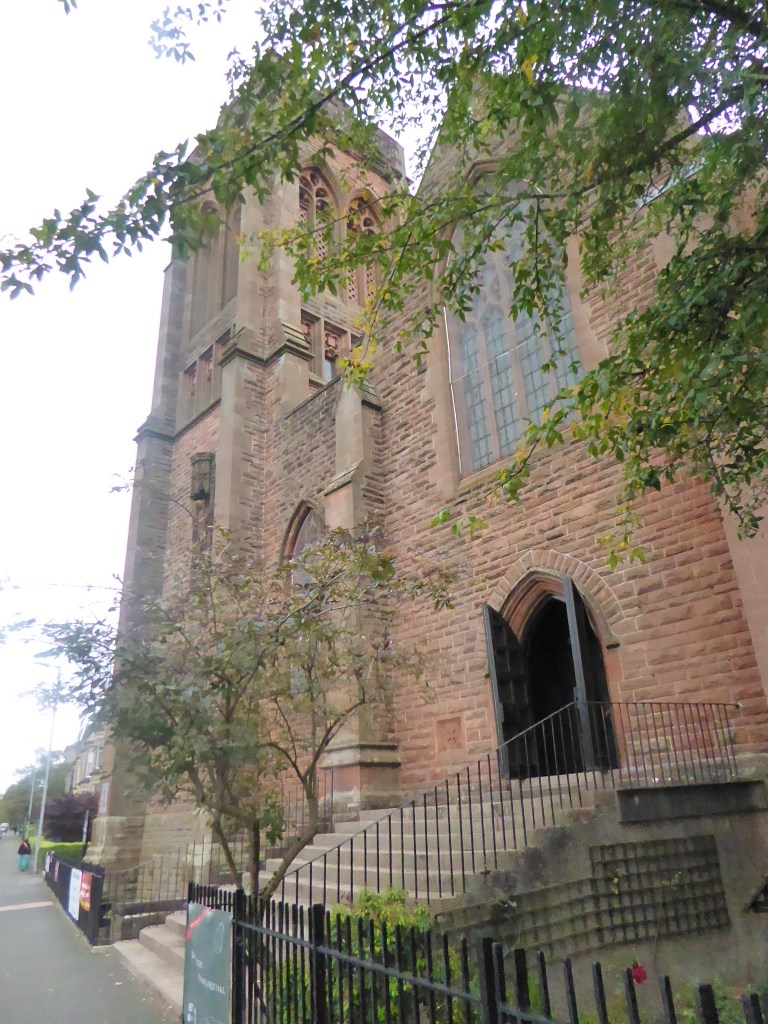
Doors Open Day is a celebration that occurs every September in Glasgow, showcasing many different buildings, with churches being one of the highlights.
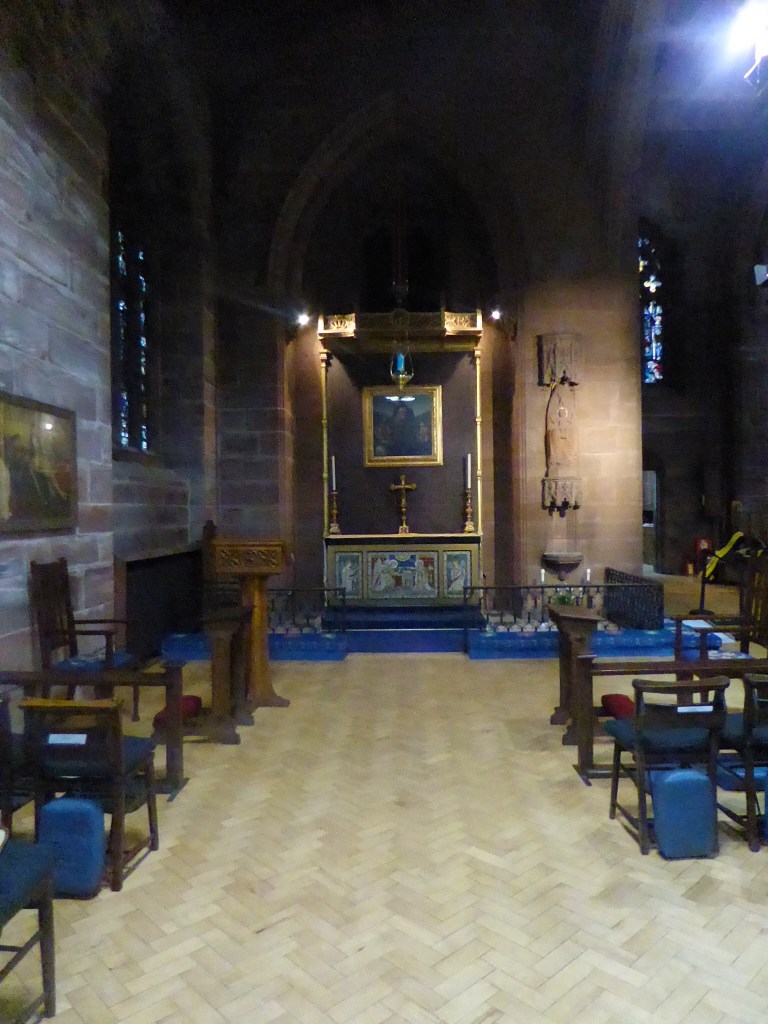
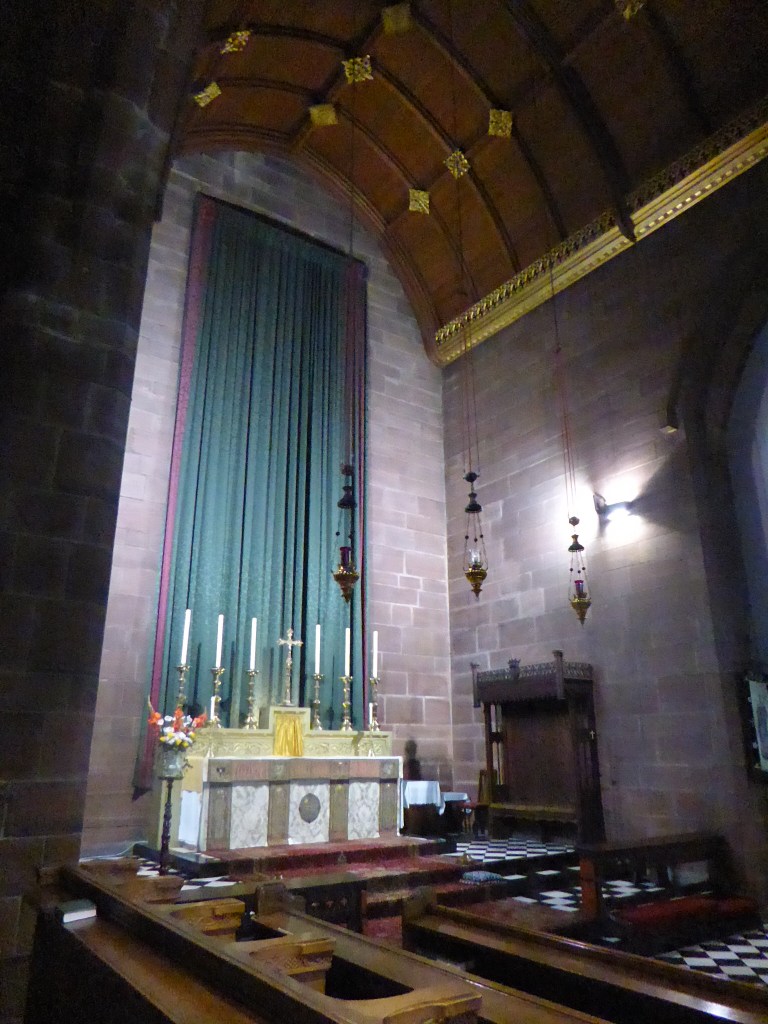
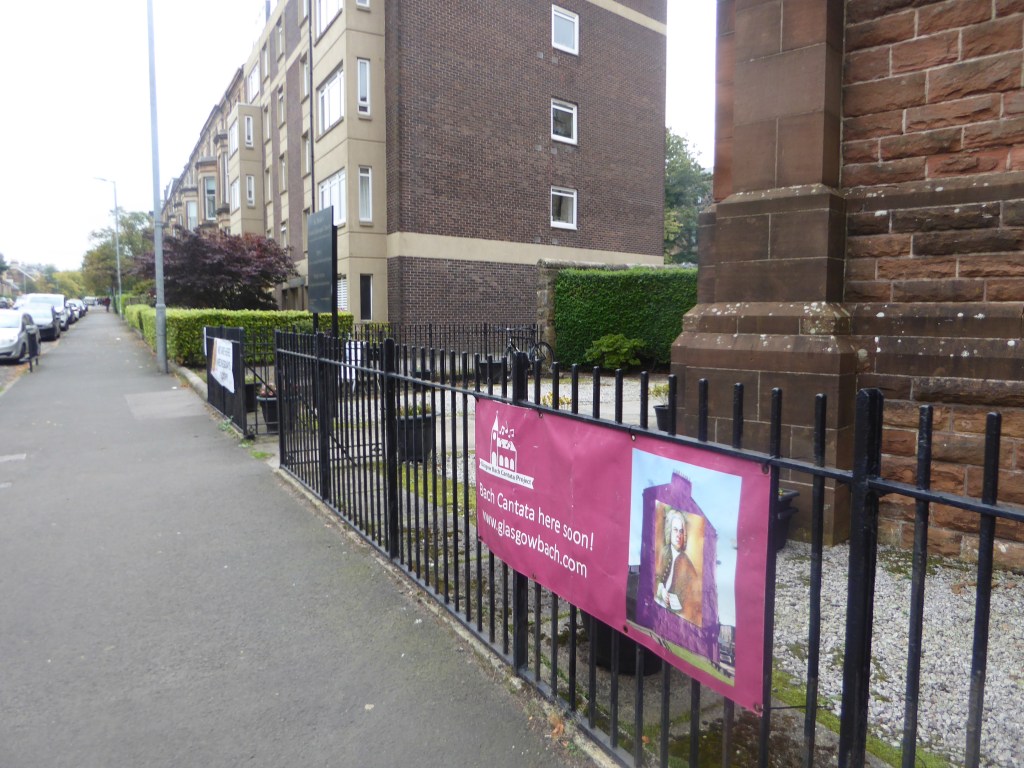
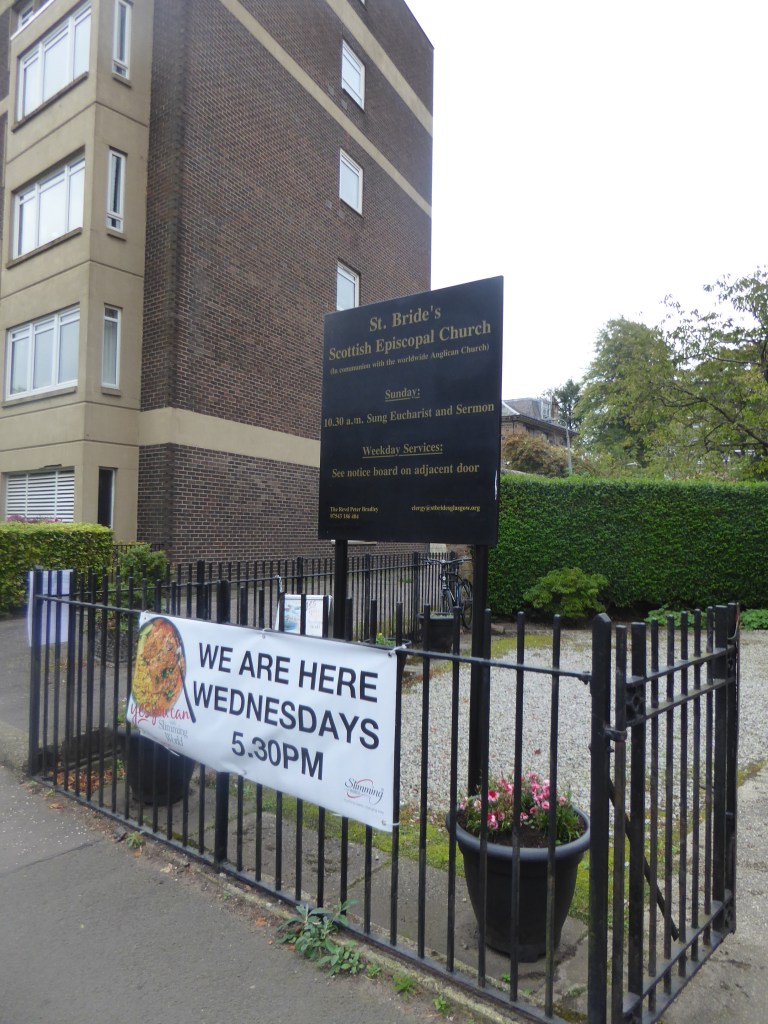
Like many other churches in Glasgow, St. Bride’s Church is not only old but also grand and elegant. It appears to be well-maintained, showcasing the care taken by its community. According to my research, it is a member church of the Scottish Episcopal Church, which is part of the global Anglican Communion, with the Archbishop of Canterbury serving as its head.
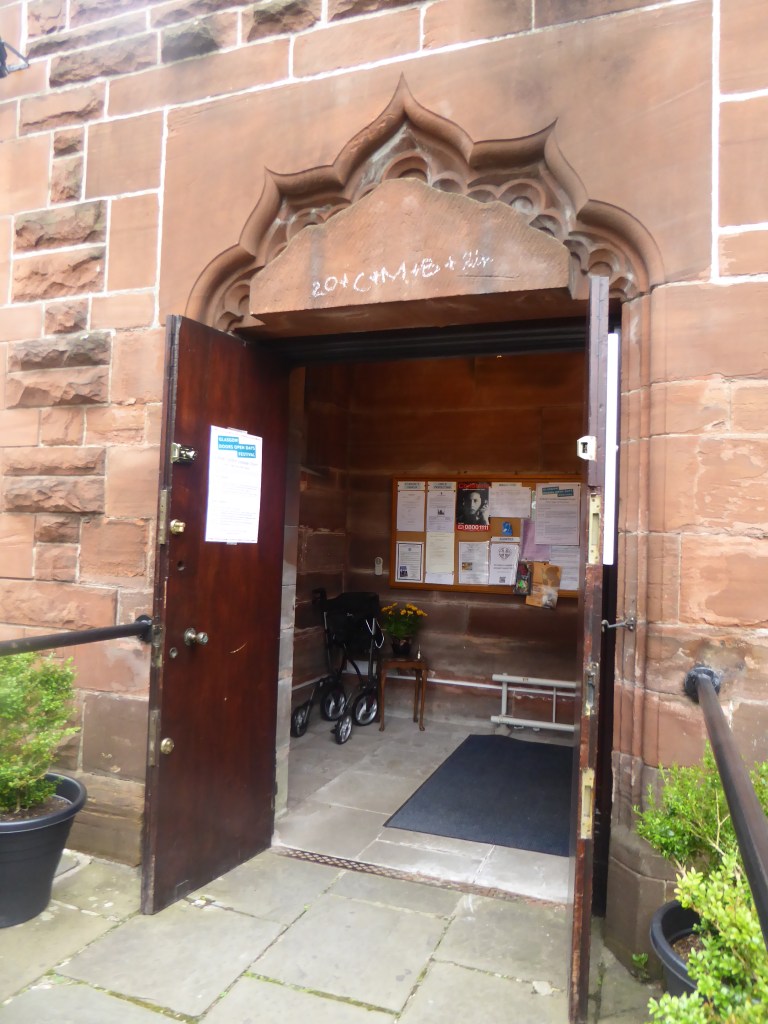
The church exudes a warm and welcoming atmosphere, evident from the numerous bulletins, brochures, and various “churchy” materials I observed. These resources indicate that St. Bride’s is a hive of activity, hosting many services and a plethora of music concerts.
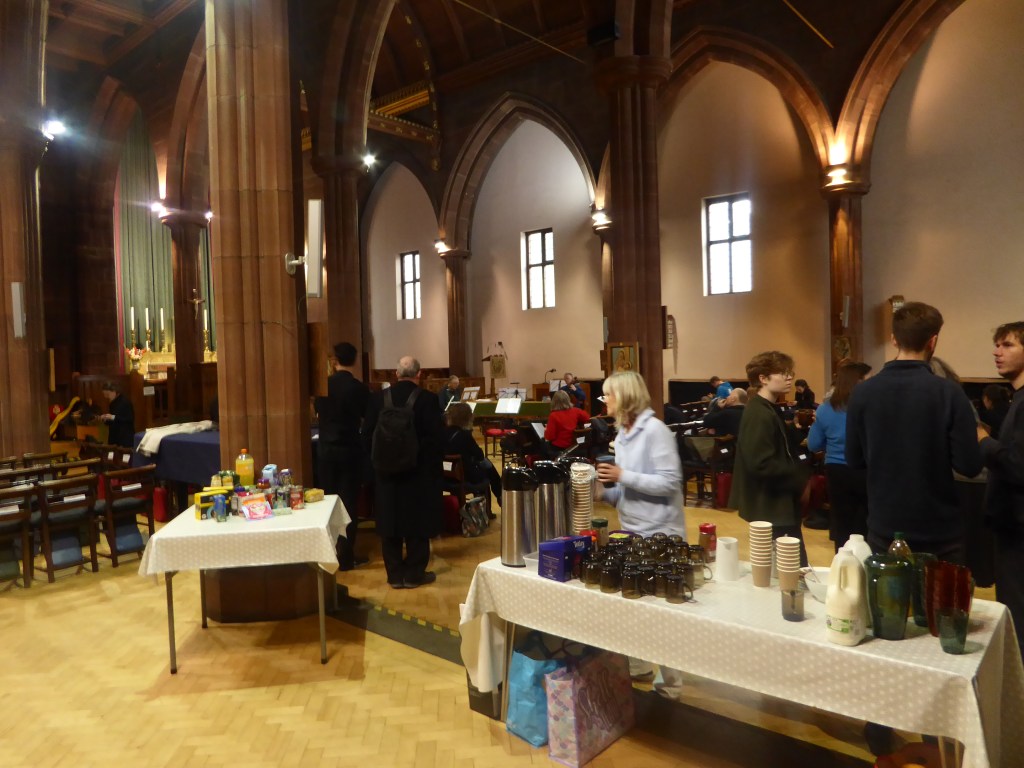
During my visit, I noticed a Bach or Baroque group rehearsing inside, presumably preparing for an upcoming concert either at the church or elsewhere in Glasgow.
With the added charm of delicious cakes, tea, and coffee, I left St. Bride’s Church with a positive impression.
I already have a “Church of the Month” category on my blog that I haven’t utilized enough. Perhaps I can make it a point to explore more of these hidden gems in the future.
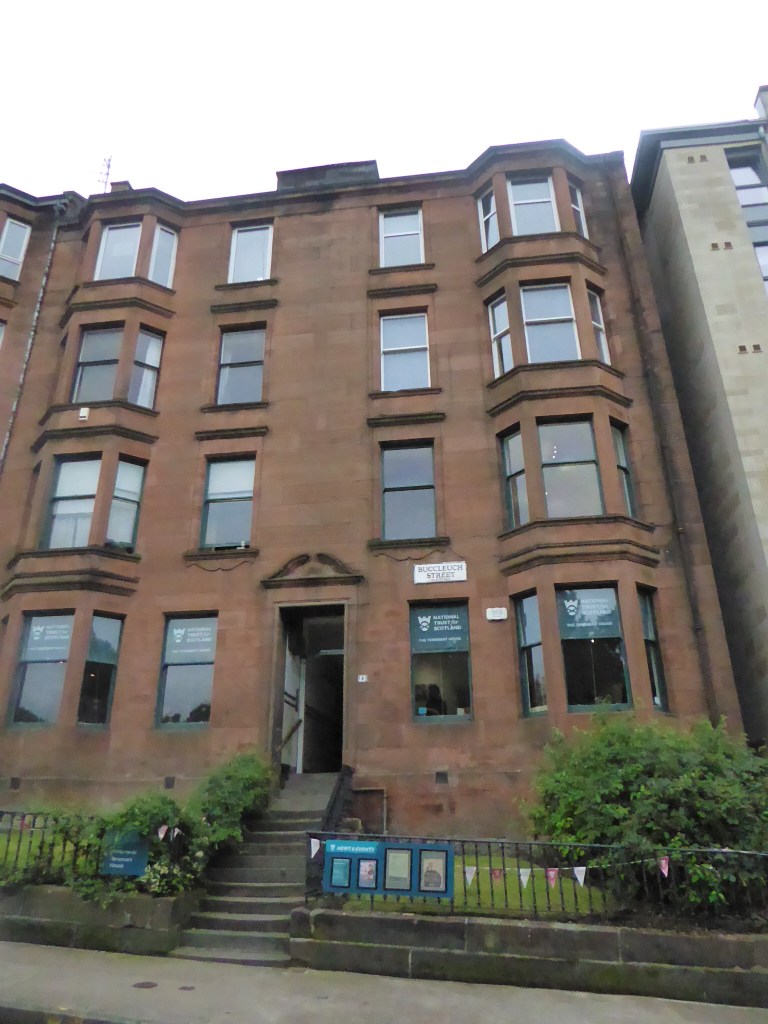
It’s interesting because I’ve been in Glasgow for 30 years, but I’ve never actually visited this part of the National Trust for Scotland. At the same time, it seems that virtually every accommodation I’ve used in Glasgow has been a tenement—tenements in the West End, tenements in the East End, and tenements in the South Side. The only time I haven’t stayed in a tenement was in the city centre, specifically in the Pollokshields area of Glasgow, which is a very nice inner suburb.
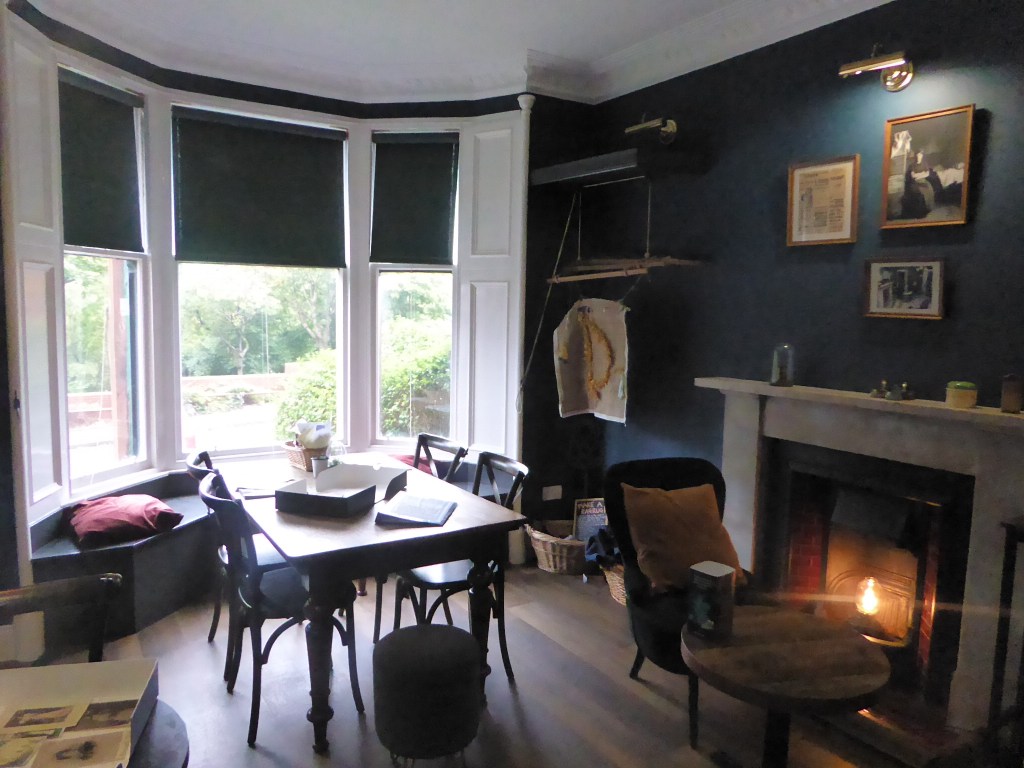
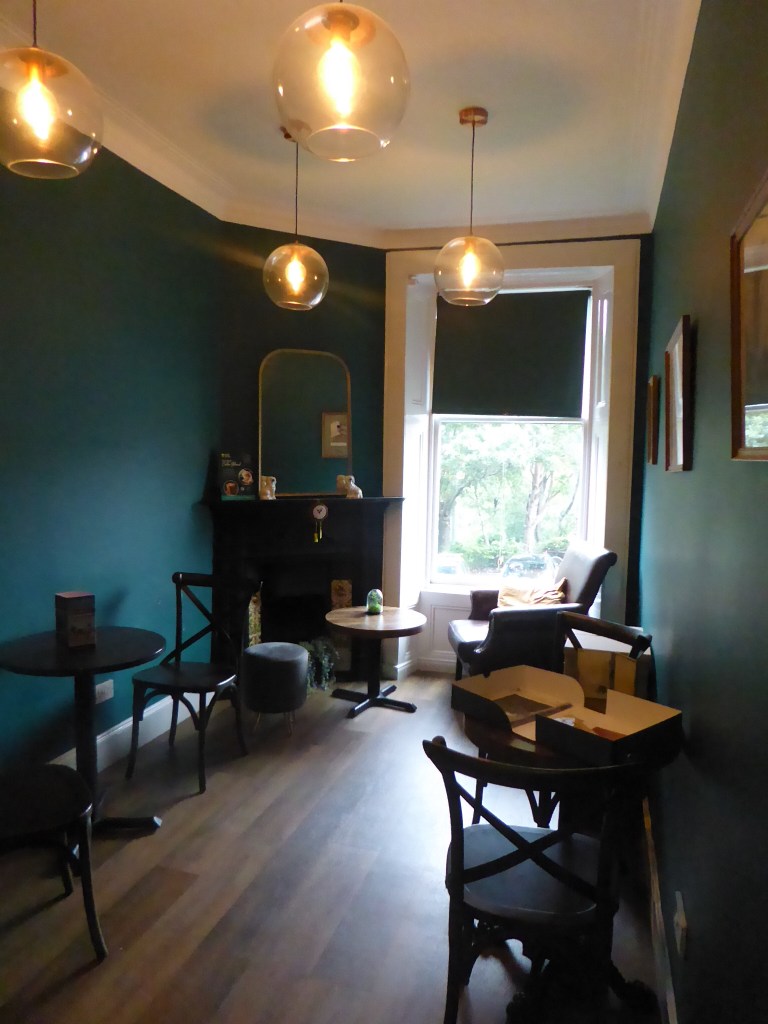
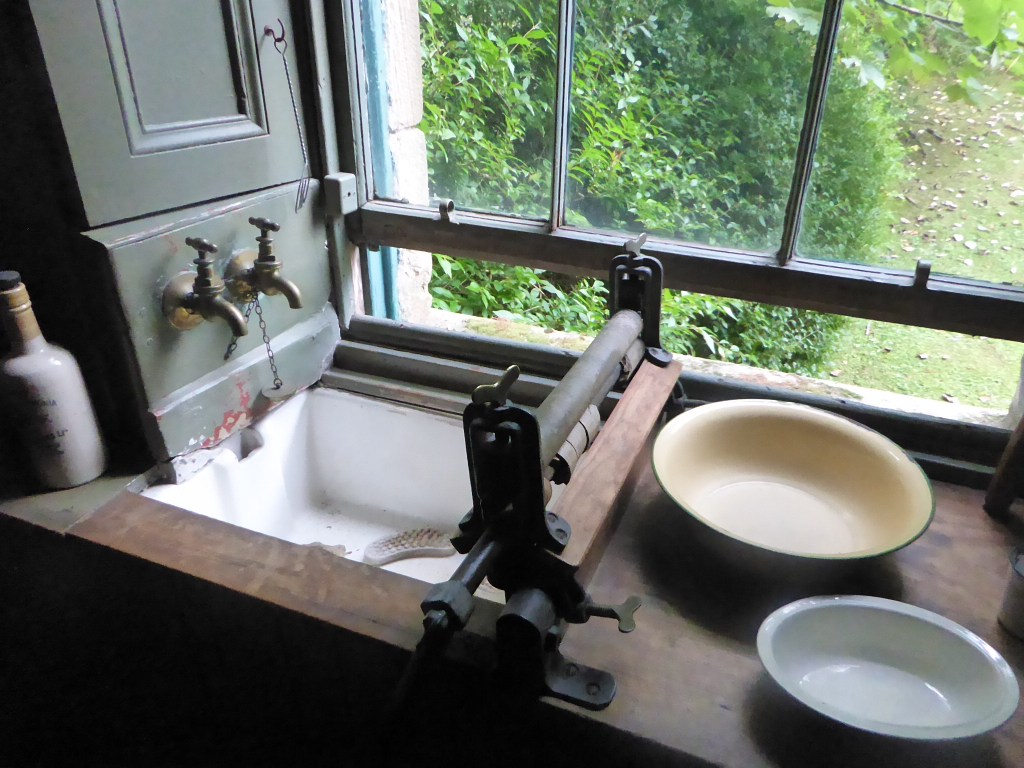
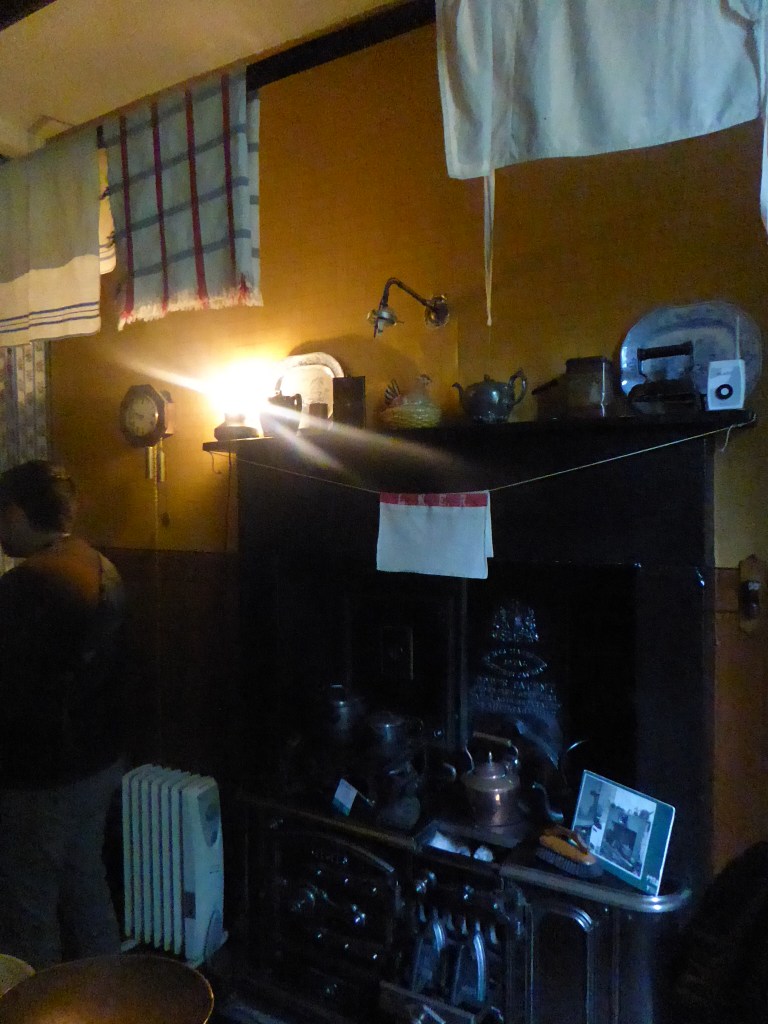
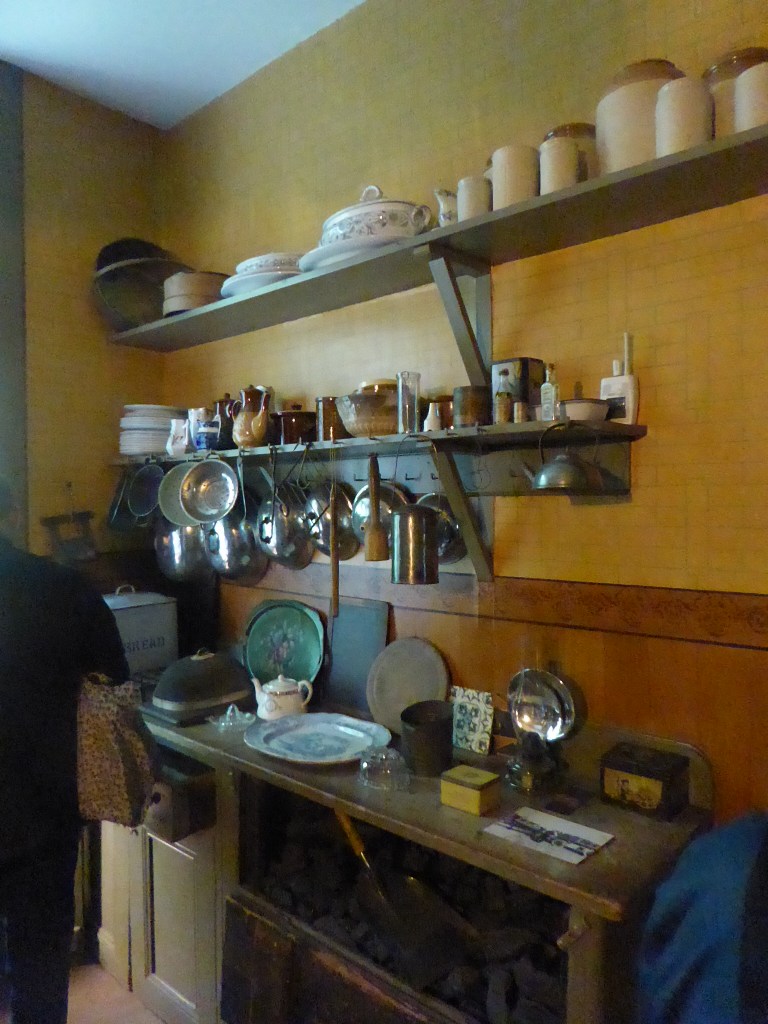
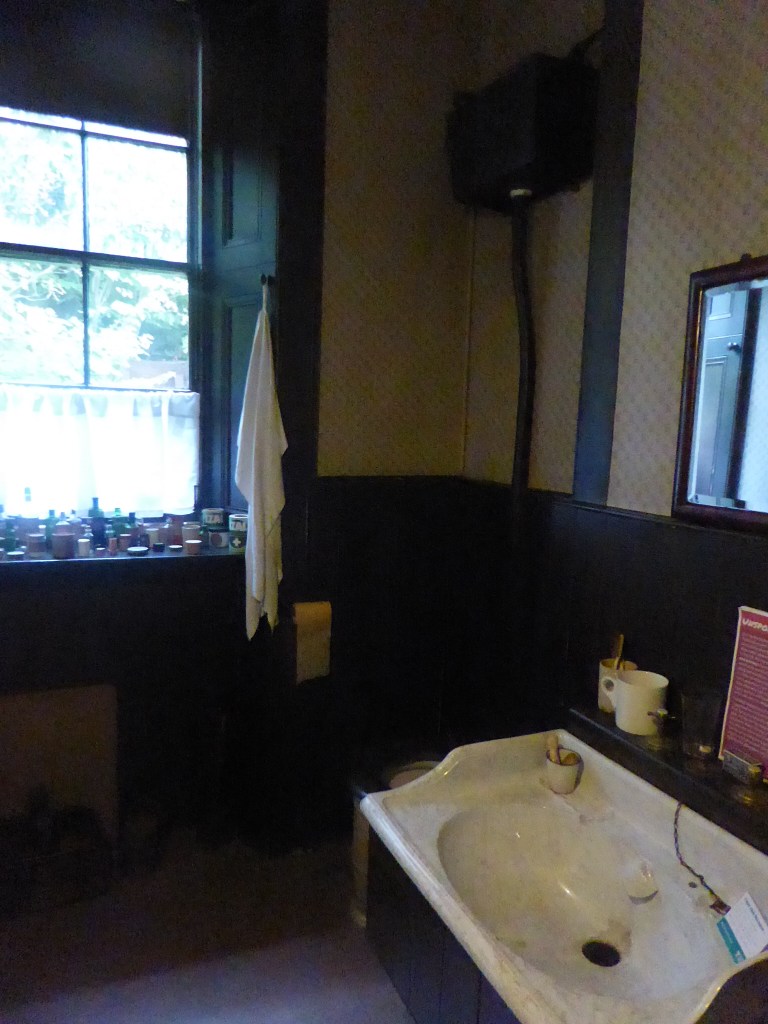
During the annual Doors Open Day in Glasgow, which took place a couple of weeks ago, I decided to visit the Tenement House located in the Garnethill section. It truly feels like a time capsule from 100 to 120 years ago.
The house was bequeathed to the city and later to the National Trust in the mid-1960s, after the owner neared the end of her life. I believe her daughter took over and rented some of it out. The National Trust acquired it in 1965.
It’s fascinating to have a conversation with someone and then, 100 years later, start that conversation again. Time stands still here.
The overall layout is identical to so many tenements here in Glasgow, from the bed recesses (now used as a kitchen table area or closet):
To the “pully,” which is rather horrifically referred to as a Victorian hanger by some:
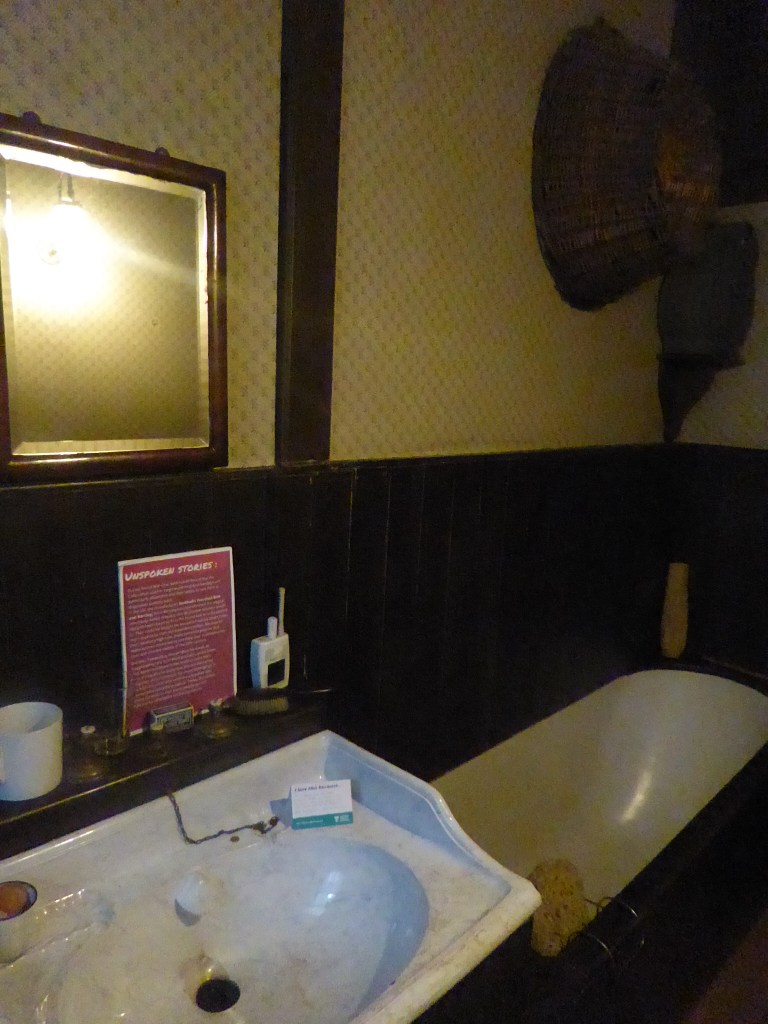
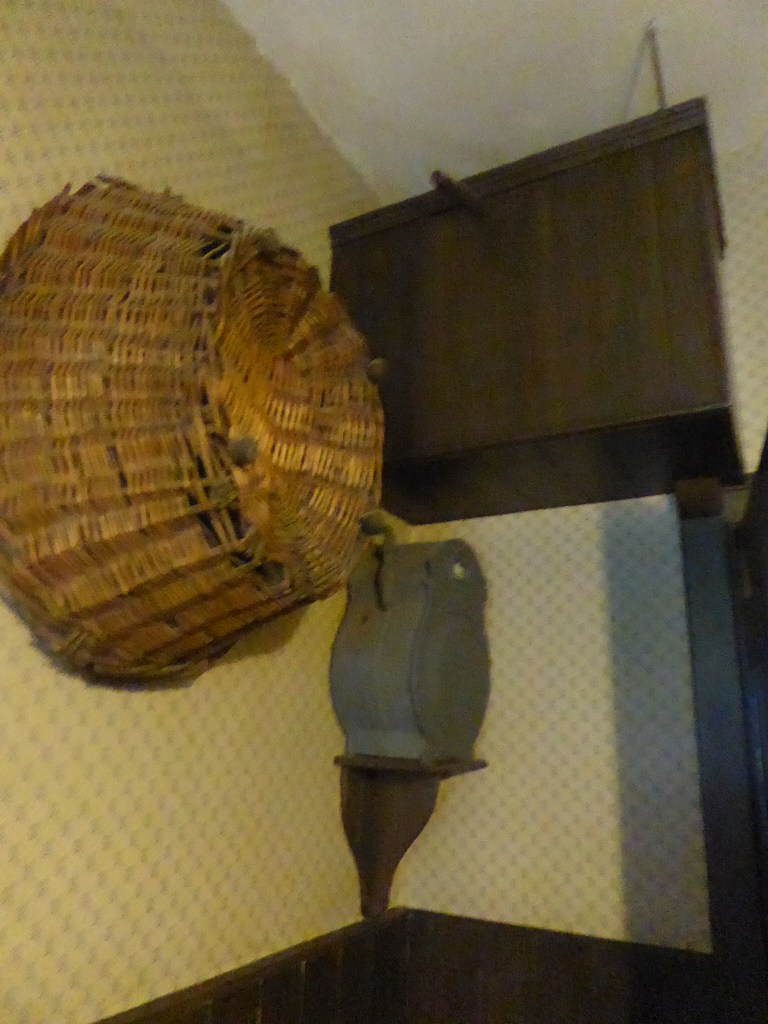
Additionally, it seems the lady who owned it was fairly well-off. While I was in the bathroom, three older Glaswegian women were describing what each feature in the room represented. They noticed a gas connection in the wall, which was connected to the gas port at the time, providing some of the heating and hot water. This suggests that the woman who owned the place was probably middle class.
Even in the bathroom, with a little paint and minor repairs, it would fit right in today.
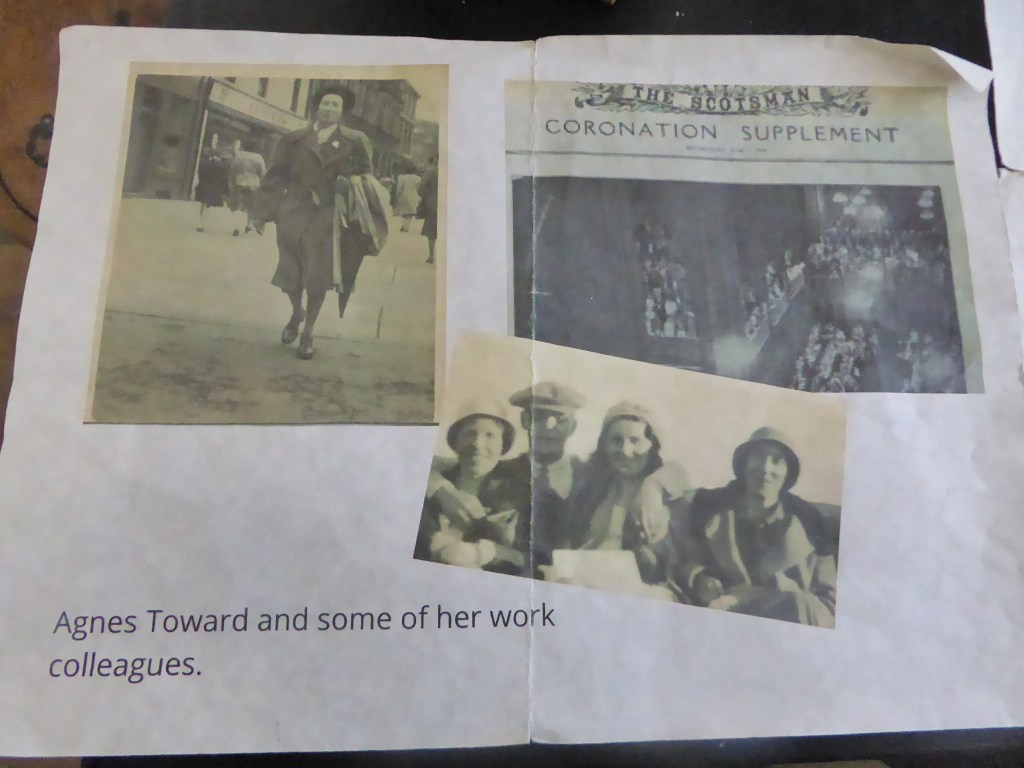
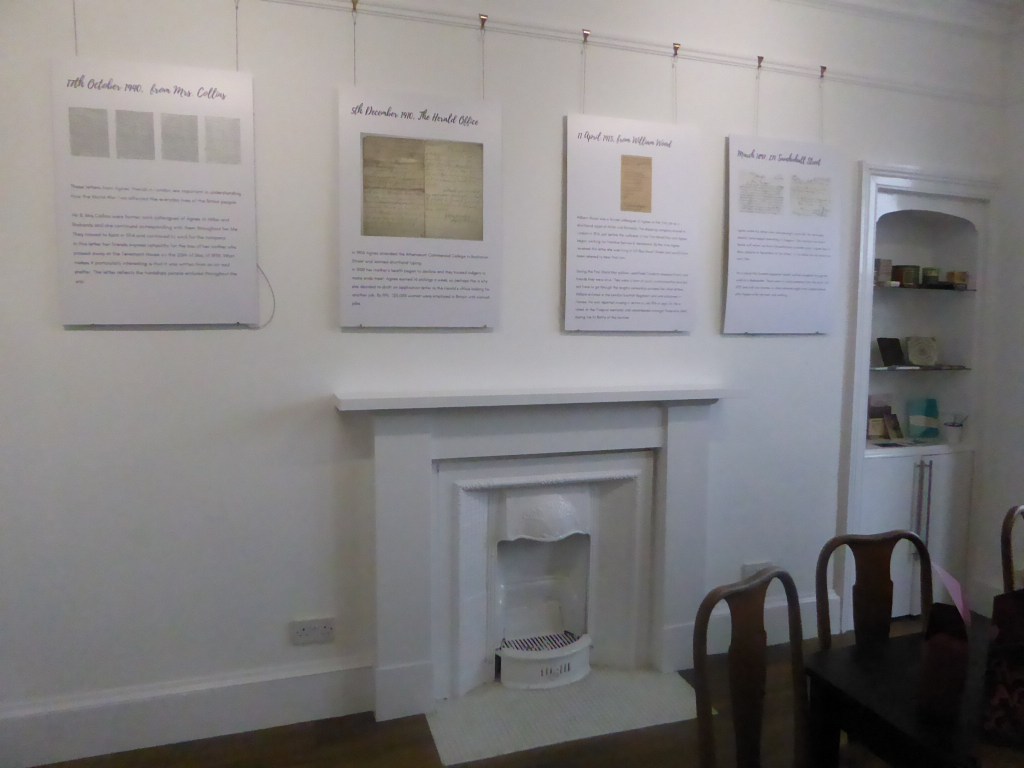
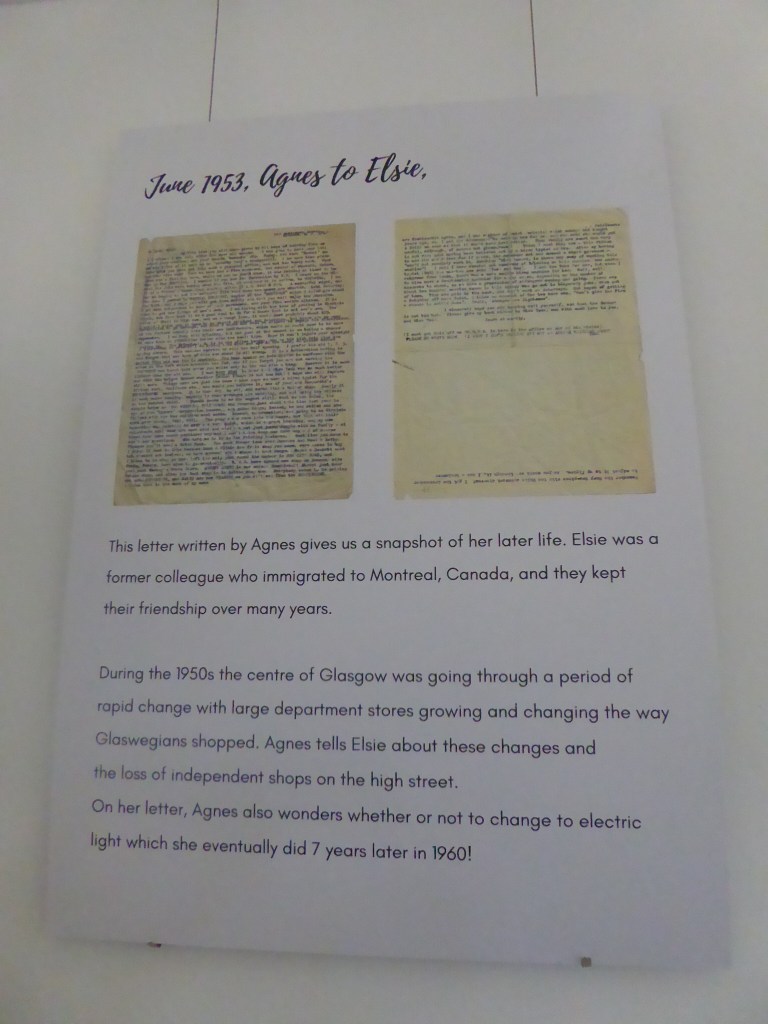
The most striking thing I saw was the letters and briefs that she had written and received throughout her life. It always strikes me that although we have everything from the internet to telephones and mass communication today, we’ve completely and utterly lost any form of communication via pen and paper. These letters were so much more eloquent and elegant than we use today; the words were utterly superior than what we could ever dream of crafting nowadays, even if we were to give up texting or emails.
What’s interesting about the UK and Scotland as a whole is that there seems to be an increasing number of Chinese students and residents nowadays, which can only be good for the restaurant trade. I live in the West End of Glasgow in Scotland, where there has been a significant influx of Chinese students, leading to a rise in the number of Chinese cafes, restaurants, and even supermarkets.
Also, if you look at the figures from the last few years, in 2021, around 150,000 people from Hong Kong were allowed to settle in the UK. In Glasgow, this likely represents many thousands that we’ve probably welcomed in the last few years.
The last few months in Glasgow, I’ve walked by a bike shop that surely had someone from Hong Kong working there, as he was older, and not a student. In addition, I was also at a small café that had been for sale for about a year. The new owner, Chinese, I believe also comes from Hong Kong, as his English was excellent, and I don’t believe too many Chinese students have this level of English, in addition to not having enough money to fork out for a used café’.
He was also quite astute, as when I mentioned to him that I had noticed this café’ had been on sale for the last few months, he enquired how I knew that piece of information. I told him that it was on a Glasgow website.
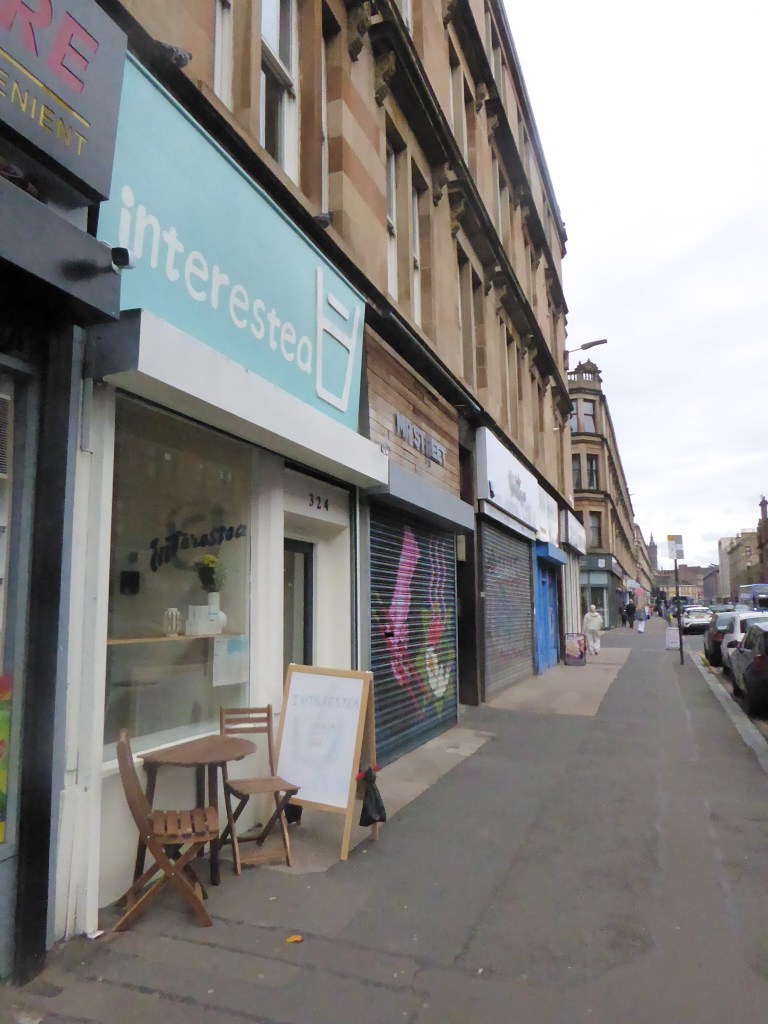
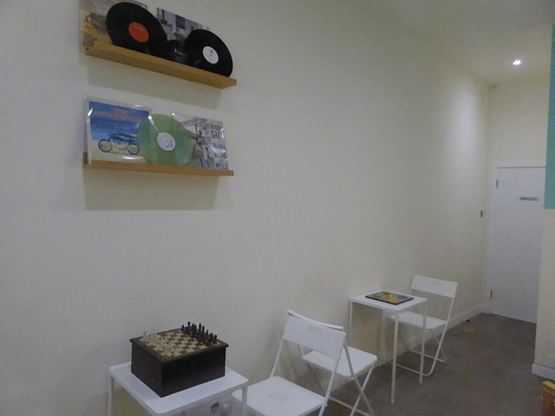
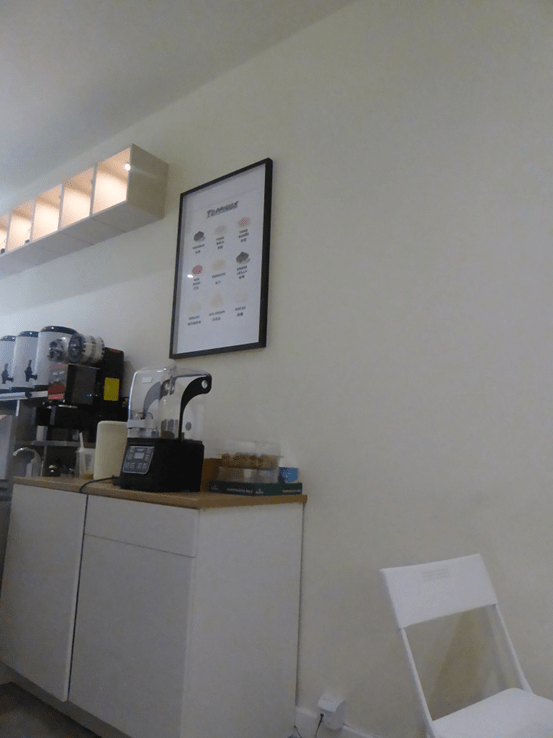
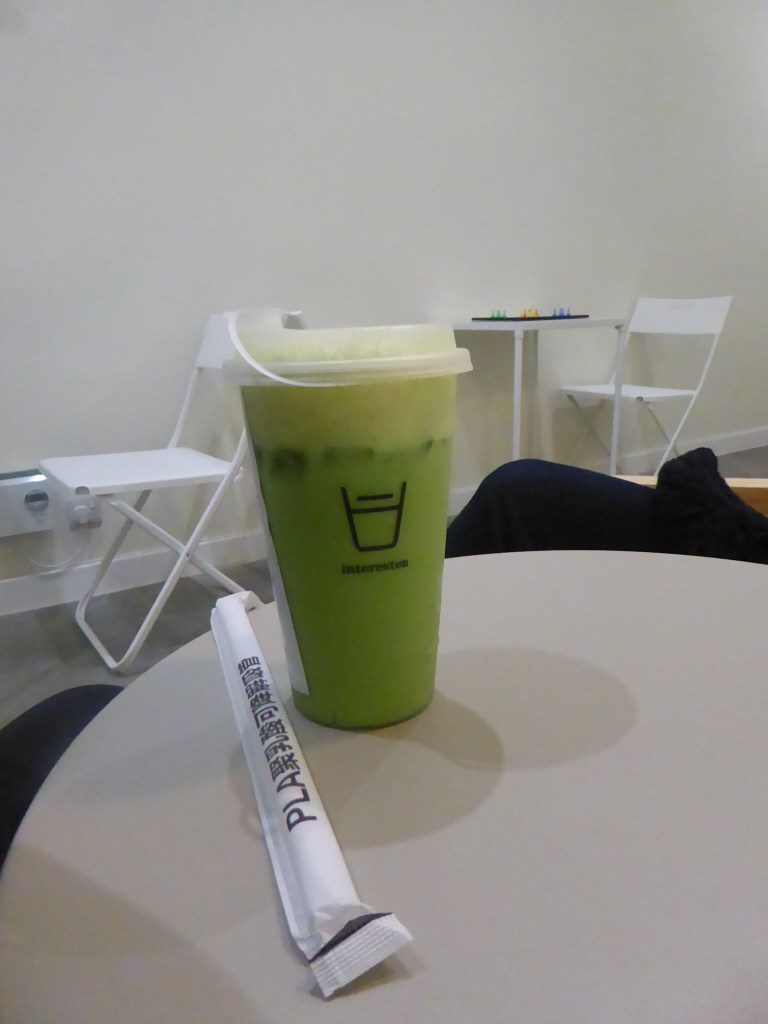
So, during a walk the other day, we passed by, yet another Chinese place, in this case also with a rather unfortunate name Interestea – a new bubble tea and coffee café that is minimal and sleek.
I just LOVE some of the names of Chinese restaurants in Glasgow!
This establishment is located further west in the West End of Glasgow. This trend is natural, as more & more Chinese students (and other nationalities) arrive, there simply isn’t enough accommodation near the University itself. As a result, they are moving further west, expanding into the Thornwood, and Victoria Park areas of the city.
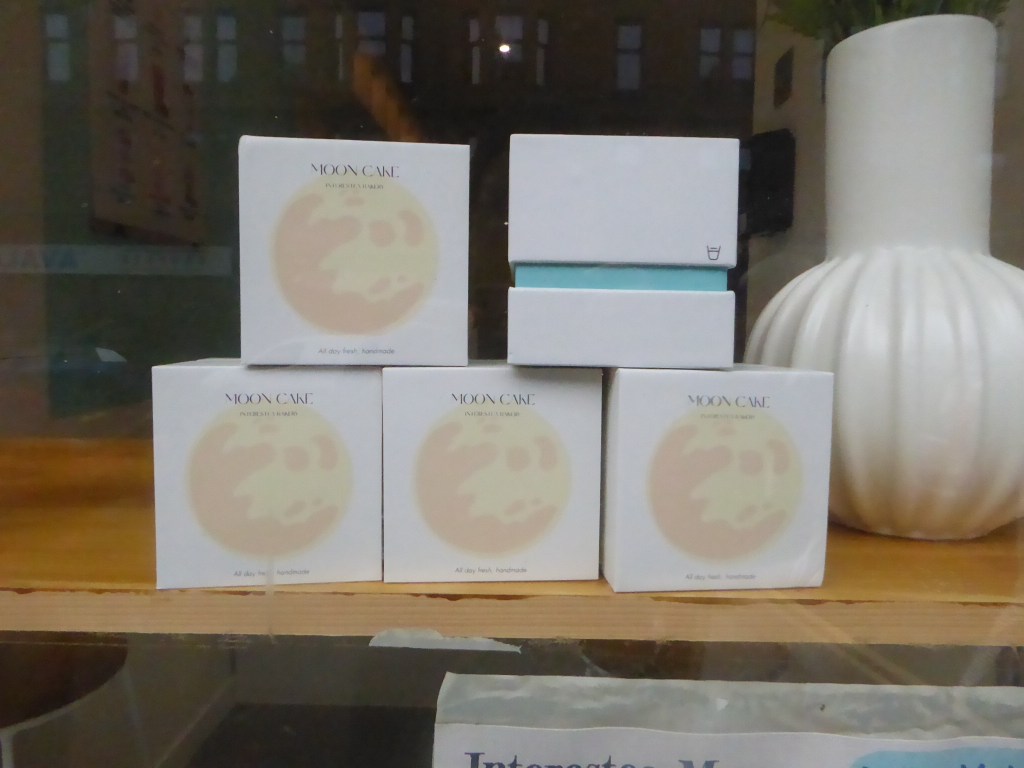
One thing I noticed, as I am currently trying to learn Chinese, whilst I also have Chinese clients online, was that there were some moon cakes displayed in the window.
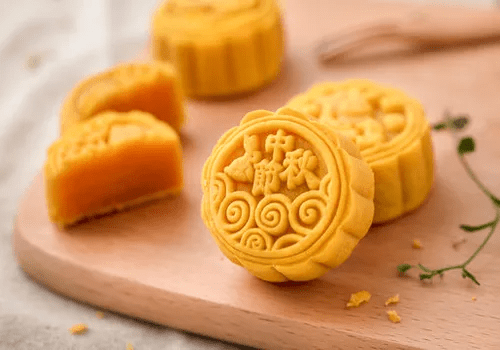
Moon Cakes, or Autumn Festival cakes, are traditionally baked for the Mid-Autumn Festival that took place 2 weeks ago in China. Unfortunately, we didn’t get to try any here, but we did buy some last week from our Chinese supermarket in the West End. I haven’t tried them yet, but one client mentioned he didn’t like them because they were too greasy.
In addition, as I’m a dreadful amateur “cook”, I searched for and found an online recipe that called for a strange flour mixture of dough; consisting of alkaline water, along with some sort of golden syrup and eggs—it didn’t look very appetizing.
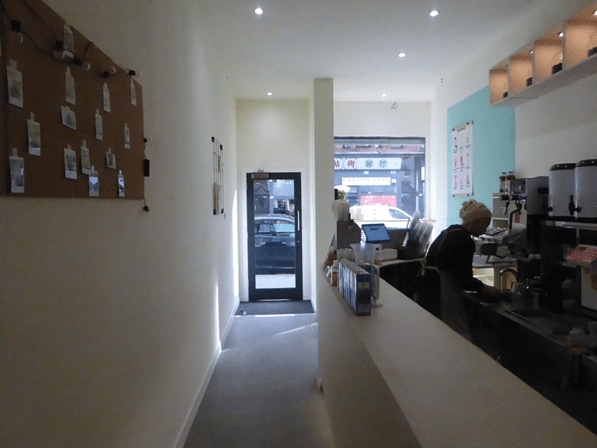
This café was new, clean and very minimal; and will no doubt contribute to the proliferation of Chinese establishments, whether cafes or restaurants, in the West End of Glasgow. It can only be a blessing.
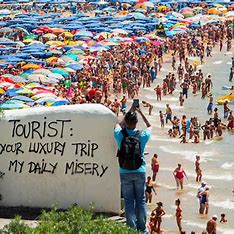
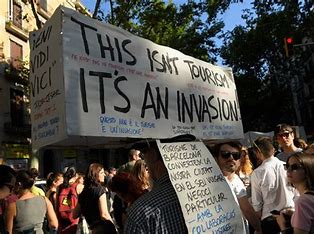
As a follow up to my post of February 1 of this year, it is now quite well known that Venice has indeed brought in a tourist fee for a day trip to the beloved city.
But, what the press has been quite low key about, is a variety of other regions and cities are essentially doing the same thing.
These are presently ranging from Spain to Hawaii, and various places in between.
As always, there is a decision taken (this case Venice) and then, there are the followers.
It’s happening all over Spain at present. I mention Spain, because of the sheer numbers who do go there from the UK. In fact, I’ll be going to Mallorca in June, in order to watch the Mallorca Open grass court tennis tournament.
As someone who travels quite a lot, with my next trip to Porto or Northern Ireland to see a brother(s) of mine, next week, I can well understand both the concerns of the tourist, as well as the people who live in these tourist areas.
At present I’ve a holiday home in a picturesque area of Scotland, that as of last week, has started to become inundated with tourists. Though many in the local community, as the town is small, rely on them for certain portions of the year for their income (or at least a part of it).
I put up with them, and they are really not that bad! OTOH, at times the traffic is outrageous. This makes me furious, as I’ve always wondered why people who want to “get away from it all“, are at the same time driving through the village as if it’s a friggin motorway!
In addition, as this is not our main residence, as of this year we’ve now been hit with a double council tax from the local Council.
Is this really a solution? I’m still not sure, as we will not only pay it, but at the same time will have no intention of all of a sudden, selling it to a “local”. I say local, as we’re there for about 7 – 10 days a month, and consider ourselves to be “locals”. And besides, just what does the local Council do with this new found money? I seriously doubt that they’ve set up a special trust fund with it, in order to assist locals in find accommodation!
Alternatively, I can certainly understand when certain local people can not find a flat either for sell, or to rent for the long term.
An obvious solution comes from countries who have already experienced something like this. Germany is one that comes to mind, and one where I have first-hand experience of.
There, it has always been the case for many of the states to have a cap / limit, on the number of Ferienwohnungen (holiday houses) that a specific area is allowed to have.
This seems like common sense, and it also does not punish someone like myself, who has bought a second property, and then later, is expected to be taxed double for it.
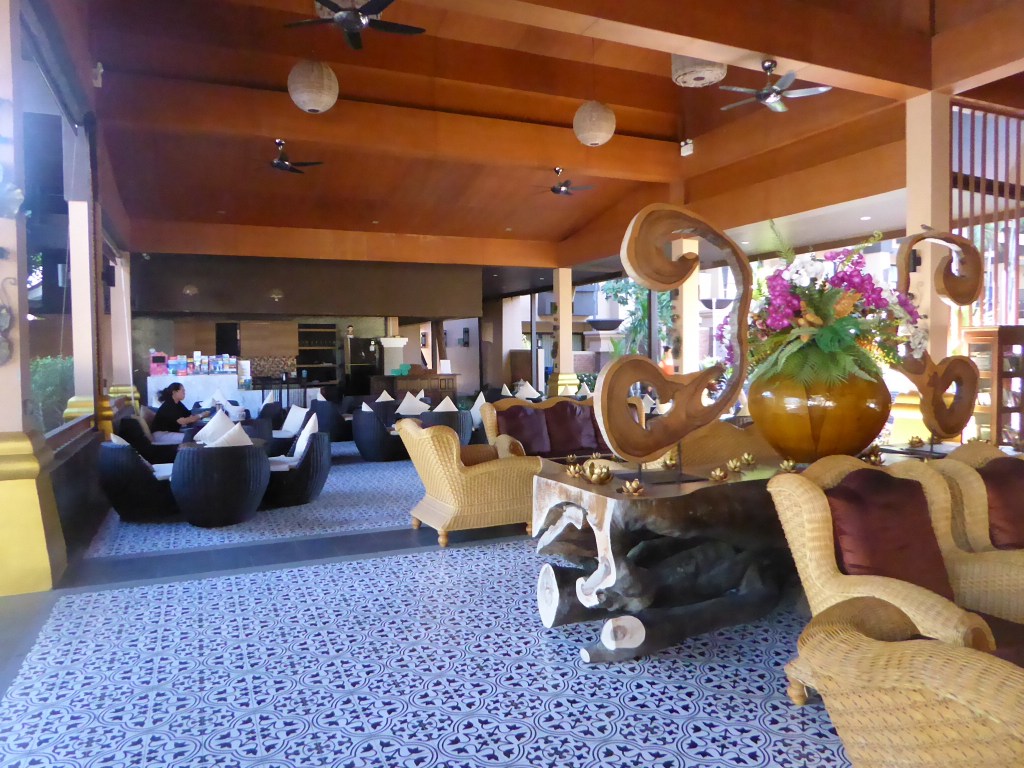
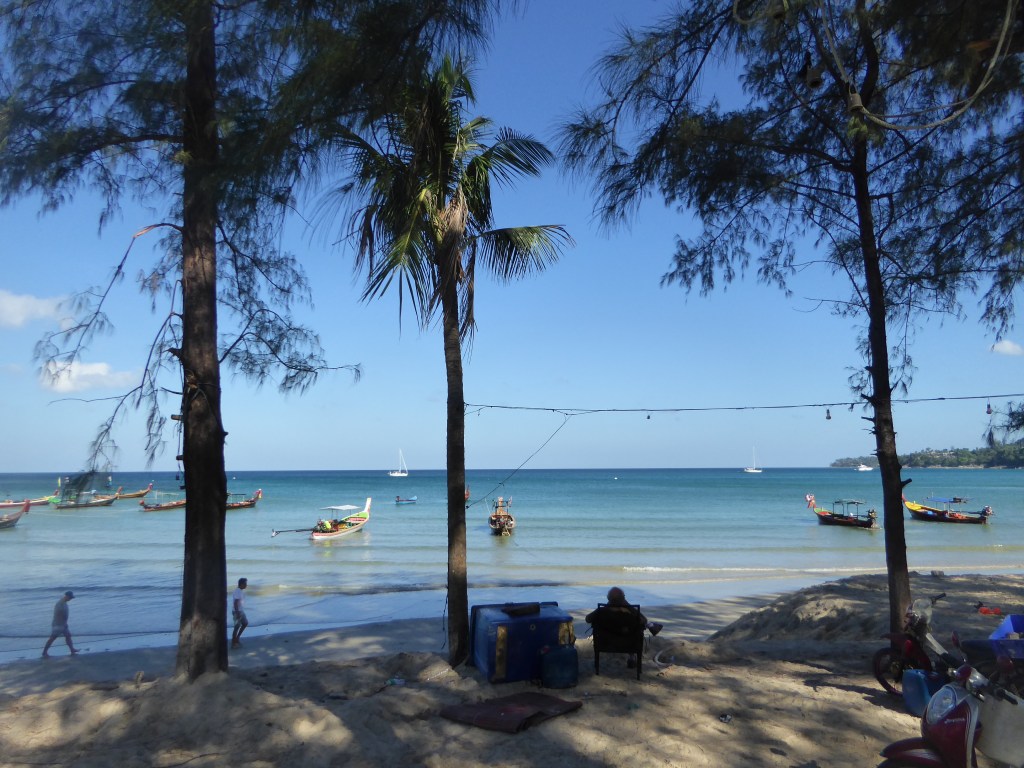
Koh Lanta is an interesting island. At one stage, it feels completely tribal and third world, but on the other stage, it is incredibly friendly, with a myriad of restaurants catering to a variety of tourists.
In my previous post, I mentioned that we got there via an ultra fast, speed boat. Next time, I will opt for the slower boat, allowing me to relax, have a beer, and enjoy lunch without having to deal with anyone who might feel nauseous and puke all over the ship! This boat was meant to be 1.5 hours, but both journeys averaged at about 2+ hours; not good enough.
Upon arriving at the port, we were informed that we had to contribute 1 or 2 pounds in the local currency as a tourist tax. While this didn’t bother me much, it would have been nice to have known this in advance.
This highlights another issue I have with such places – the lack of communication between private and public entities. You would’ve thought that when we boarded the boat in Phuket, someone (the tour operator, the port?) would have said something? They didn’t.
After disembarking, we hired a very cheap tuk-tuk taxi to take us to our hotel. The ride was only 10 minutes long, and the operator took pride in providing a safe journey and helping us with our baggage.
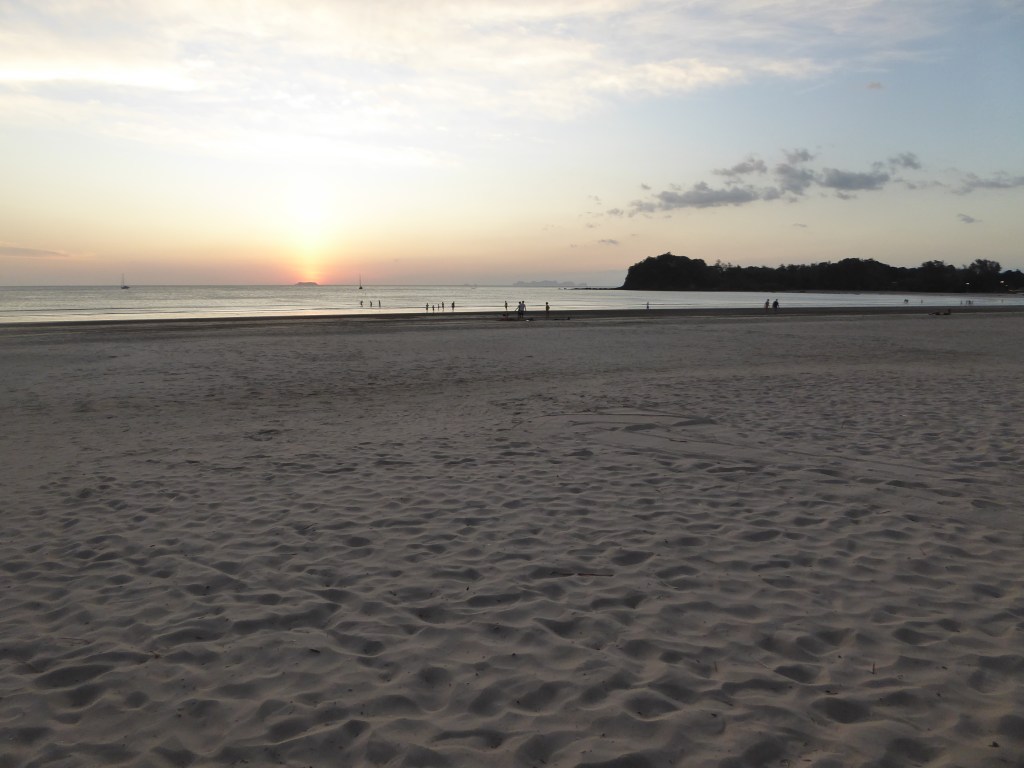
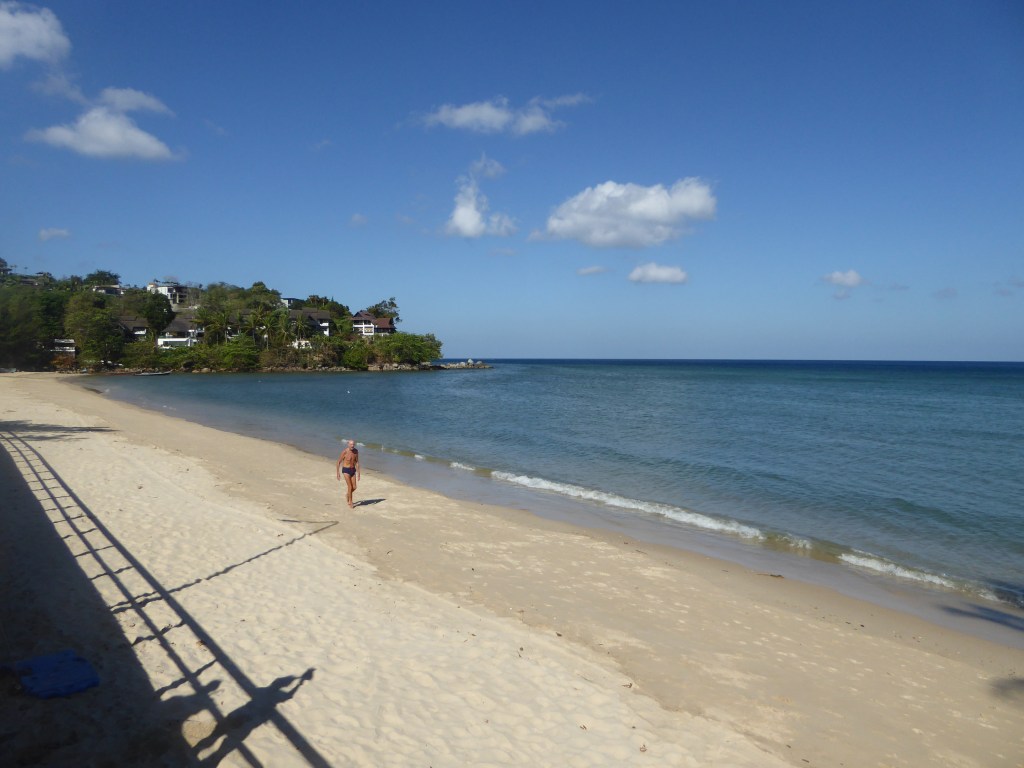
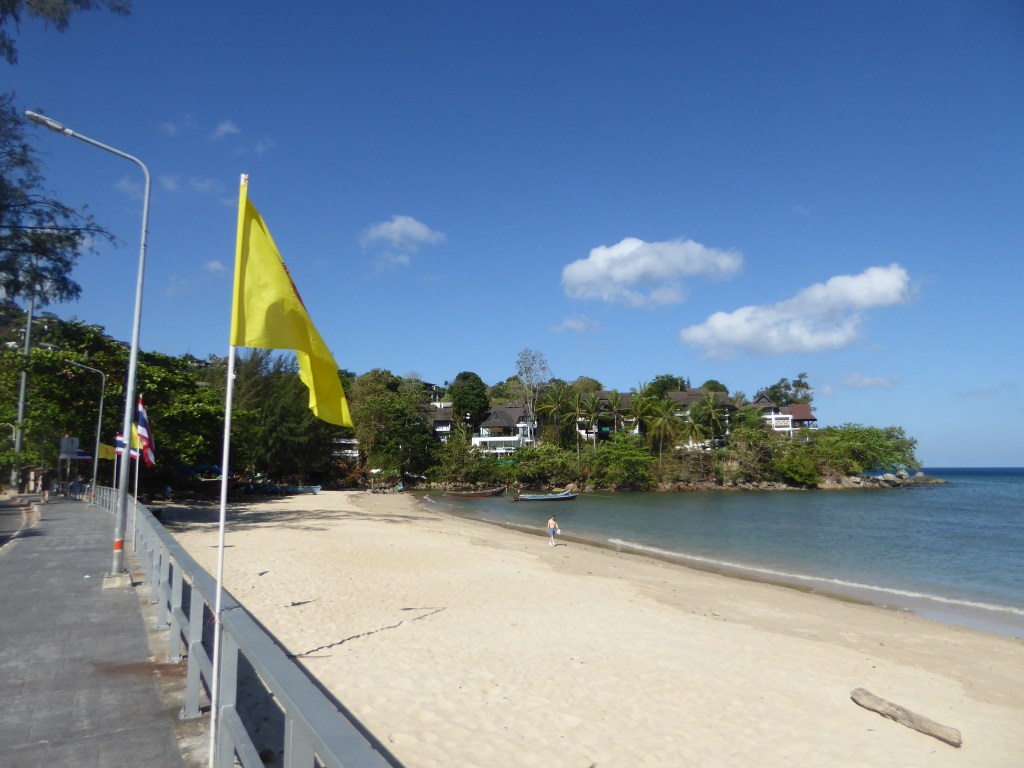
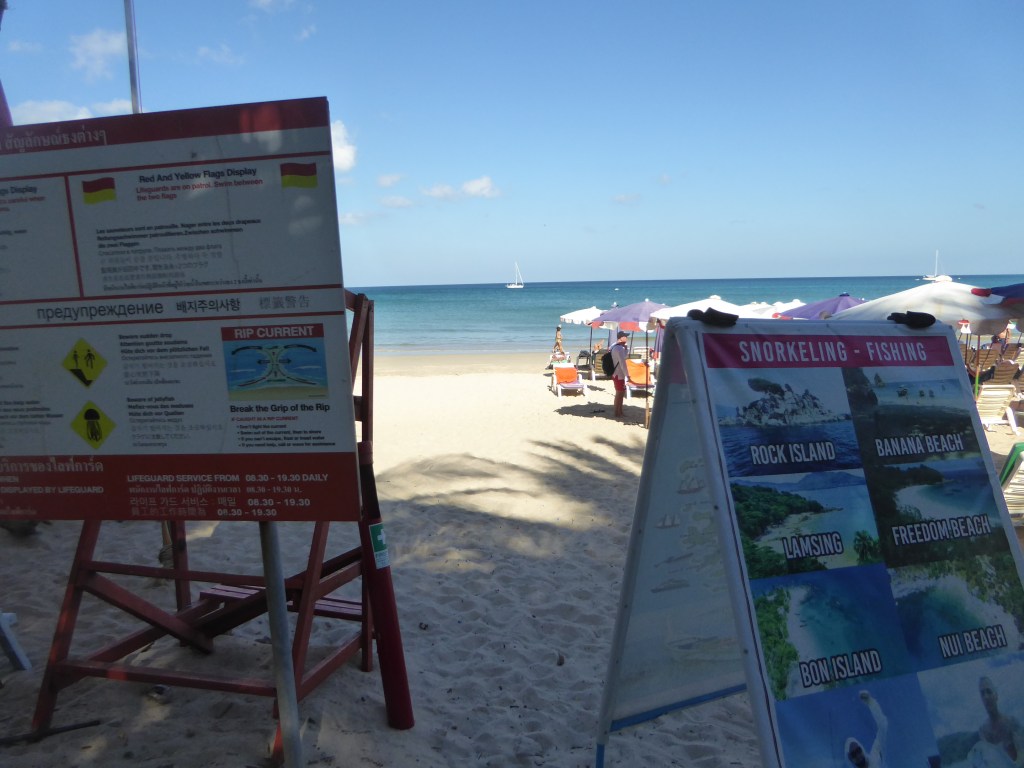
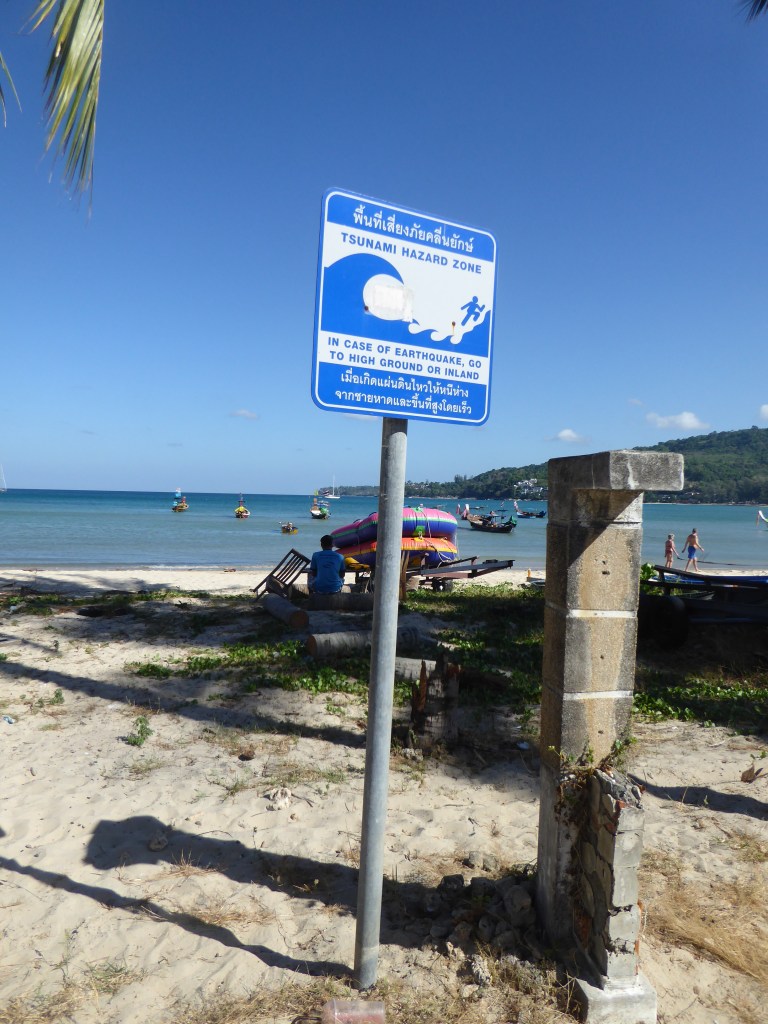
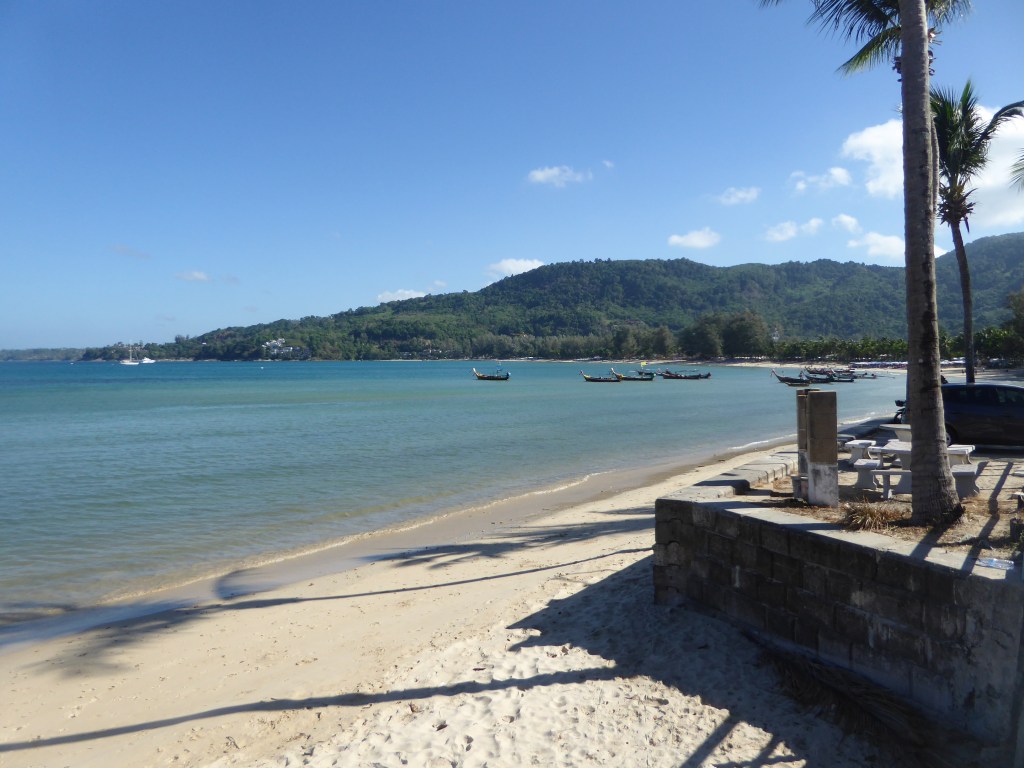
Once we reached our room, we headed straight to the beach. It was interesting to find that there was literally no one there, which we later realized was due to the intense heat and humidity; it was about 35 with stifling humidity.
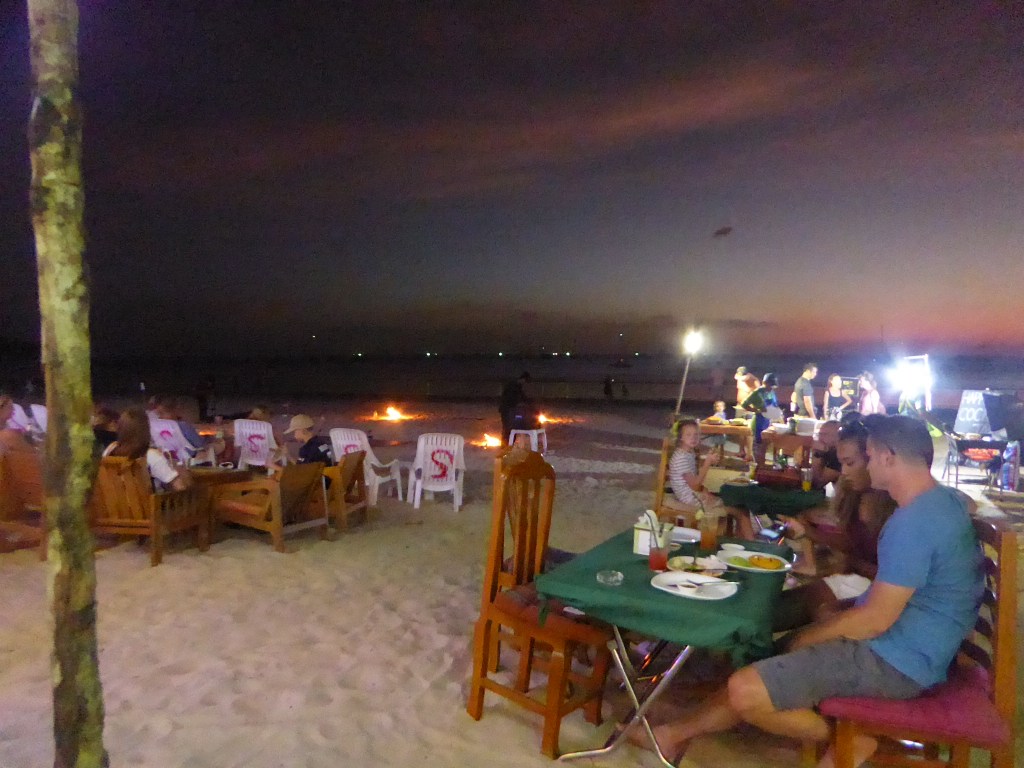
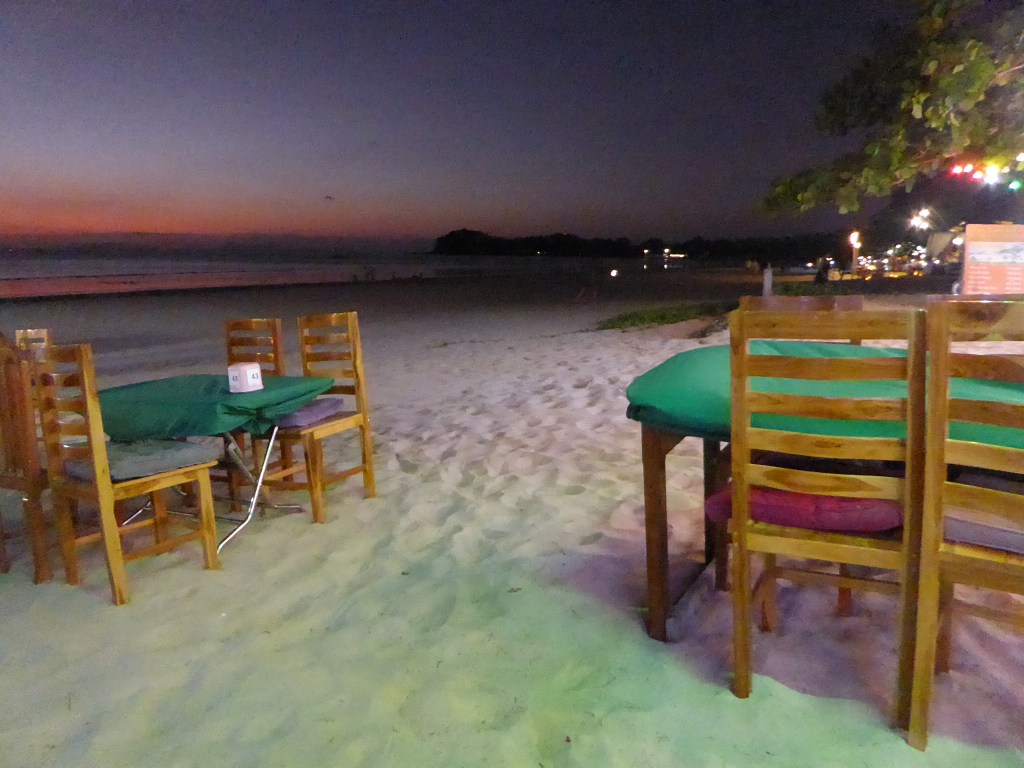
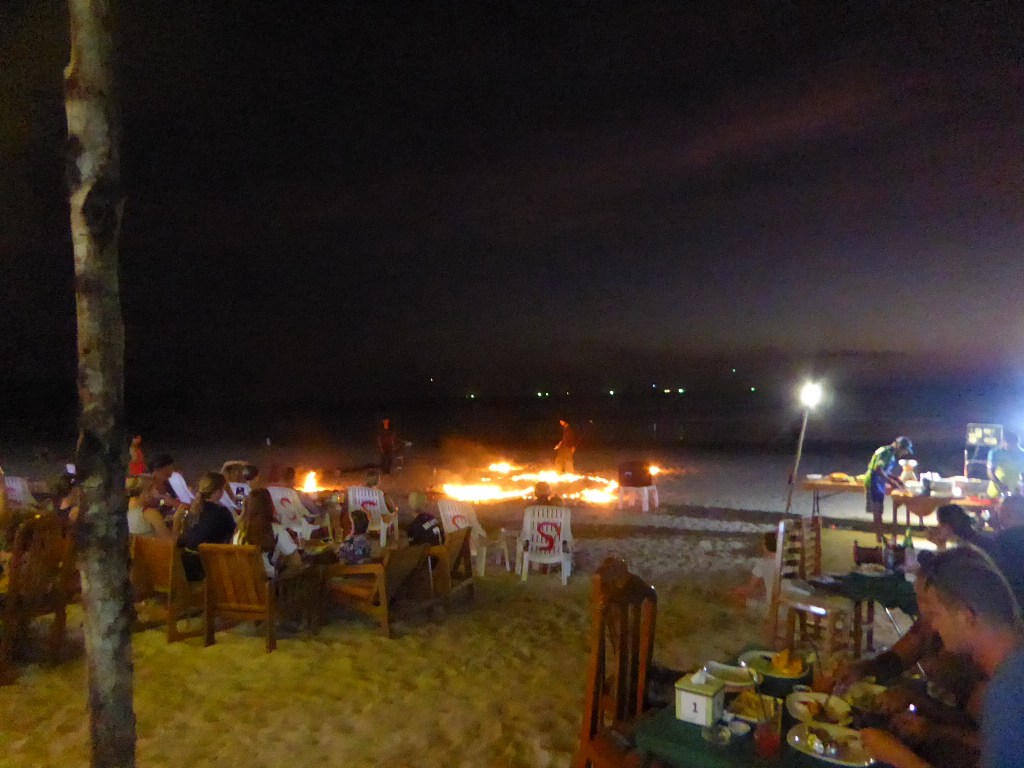
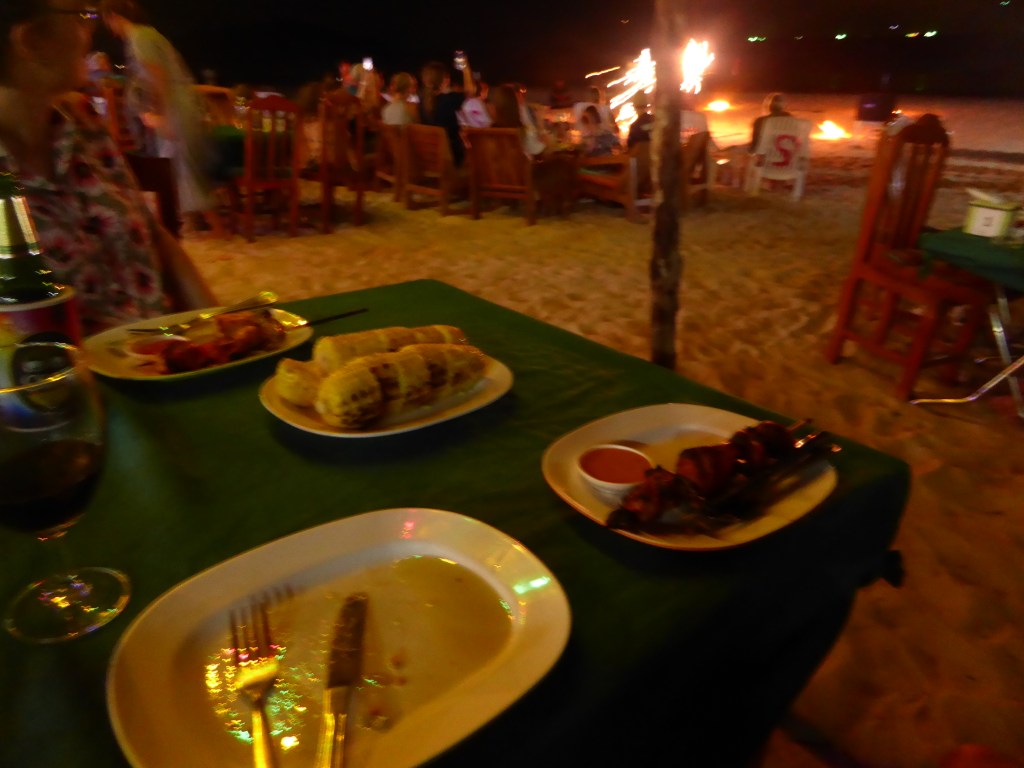
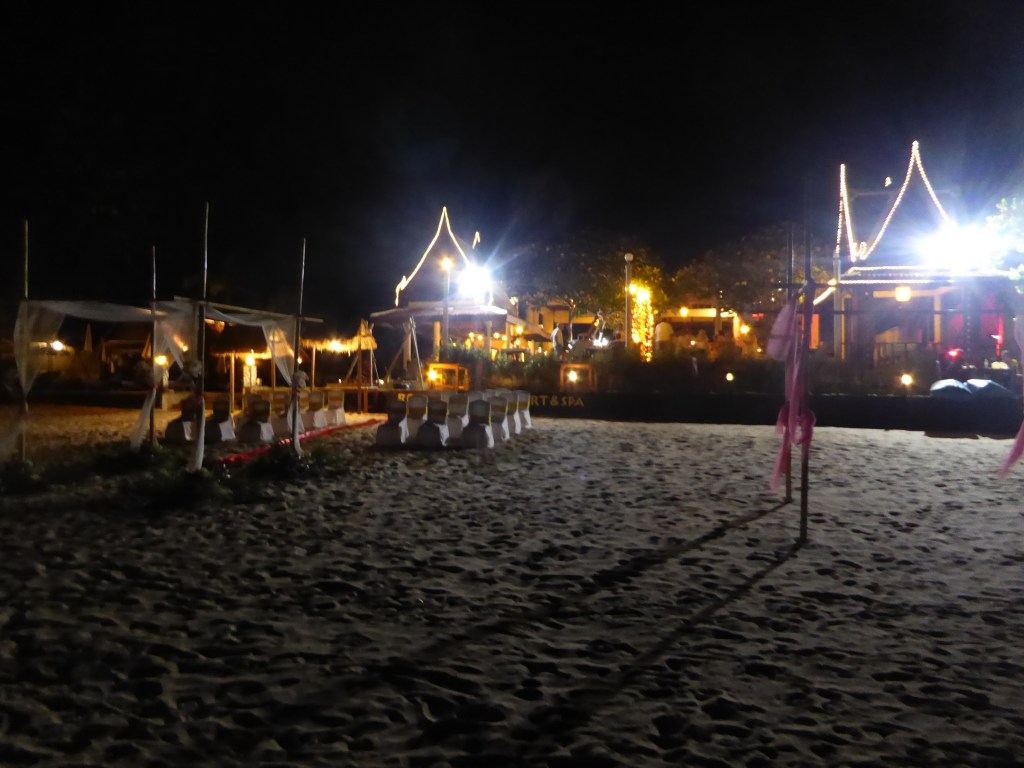
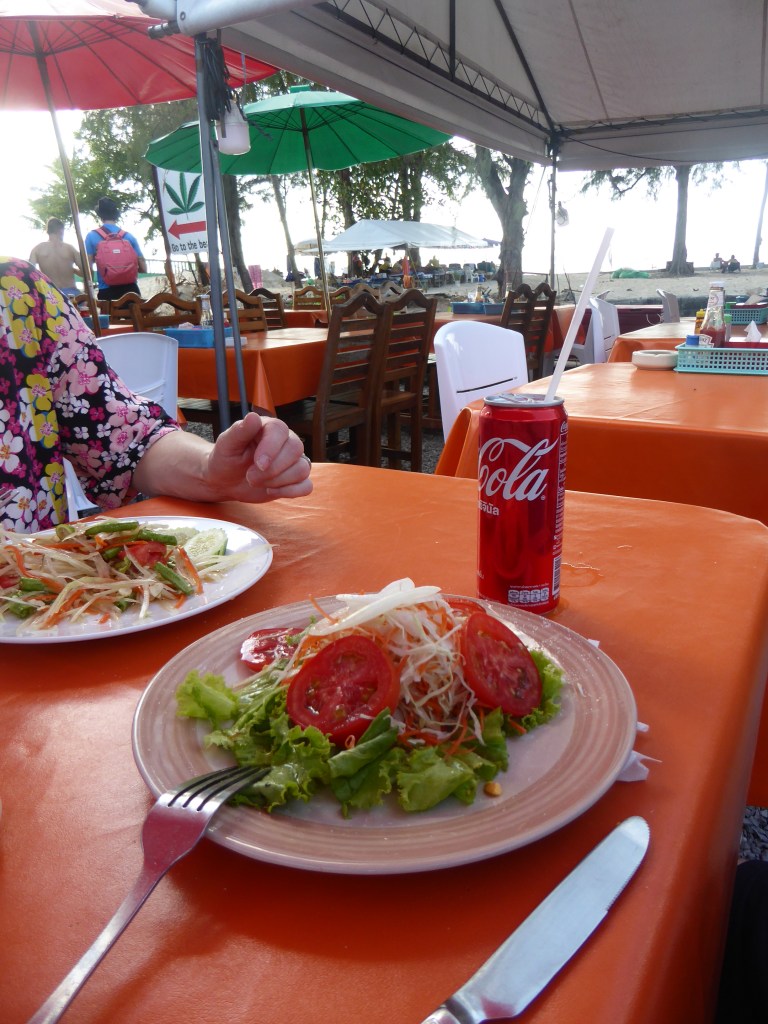
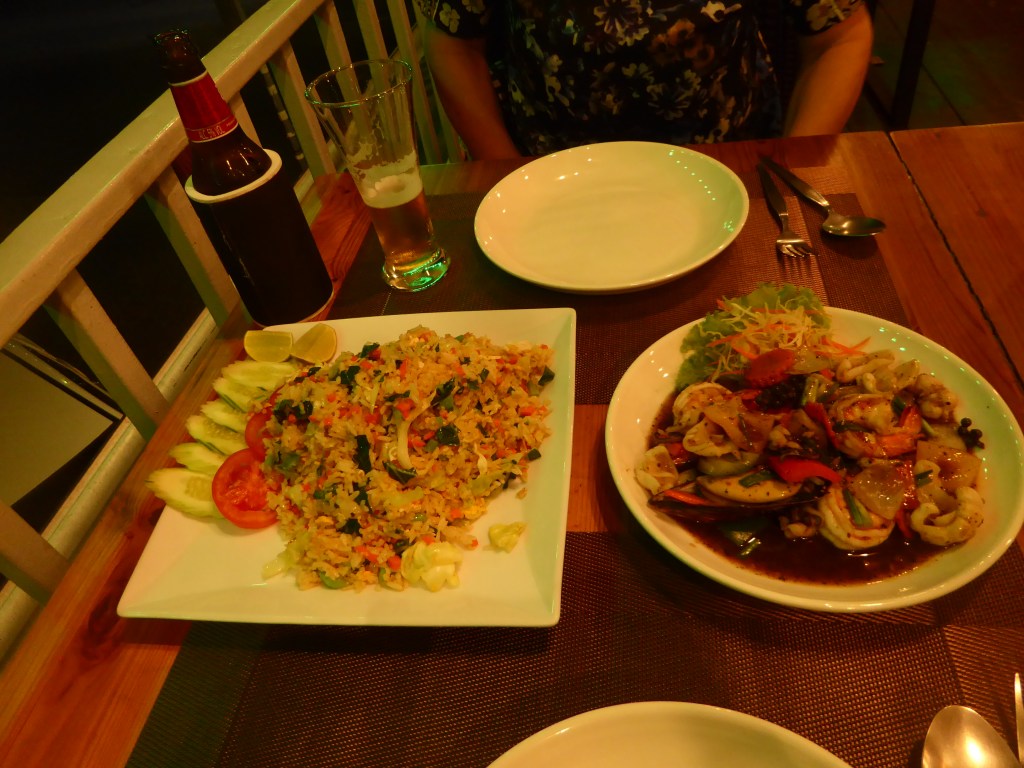
Regarding restaurants, there was a huge variety within a 10 to 20-minute walk along the wide beach. We explored different types of cuisine, including Thai and British food. One night, we even enjoyed a fire breather show, which was complimentary with our meal, though we made sure to tip him for his performance.
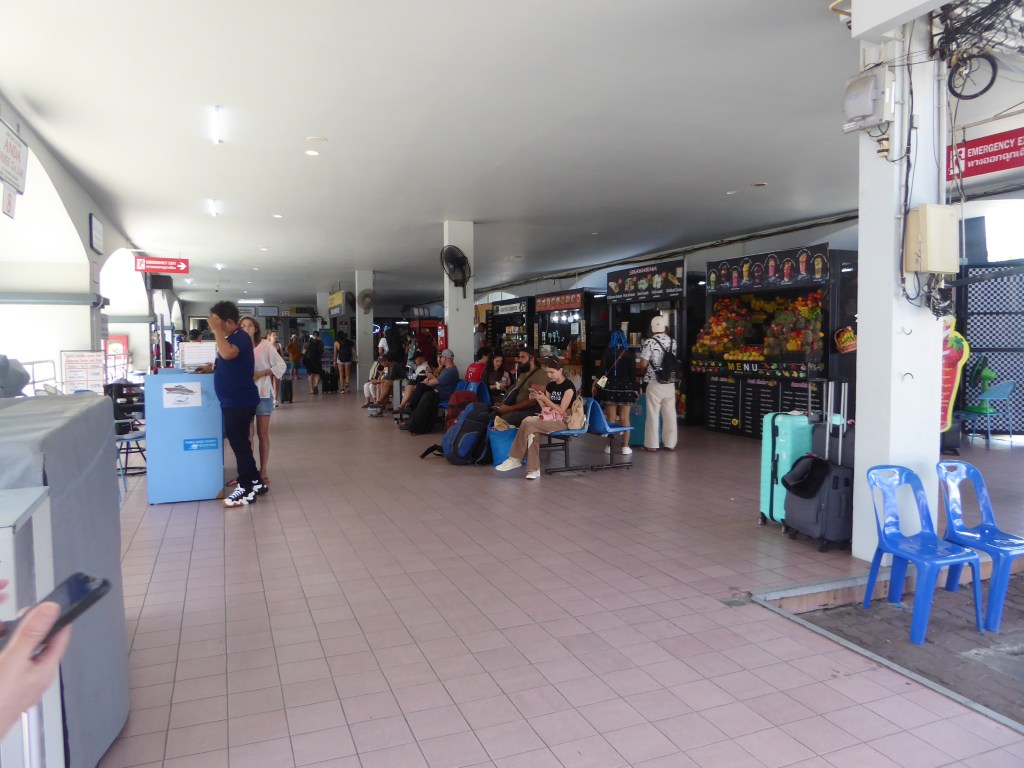
It’s interesting being in Ko Lanta. I’ve never been here before, but after an easy taxi ride of about 45 minutes from Phuket, which I think was only a tenner, we arrived at the port fully equipped to board the high-speed boat to Ko Lanta.
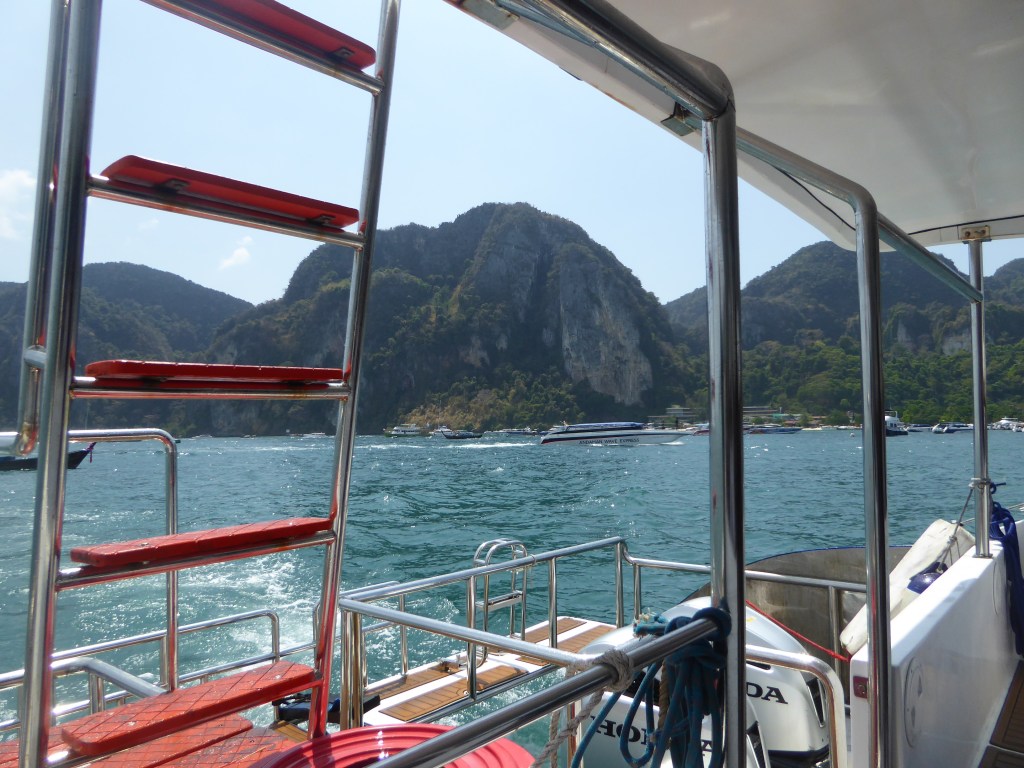
I’m not really one for high-speed boats; never have been, never will be. Although I don’t mind cruising on slower boats. In this case, the trip was advertised to take an hour and a half to two hours, but the combined time for both trips there and back was pushing five hours—it was very slow and naturally, very rough.
The journey there, of course, involved one or two people being sick like crazy, and naturally the crew didn’t have the common courtesy to clean it up. It was actually two Scottish girls on the boat who decided to this; what troopers!
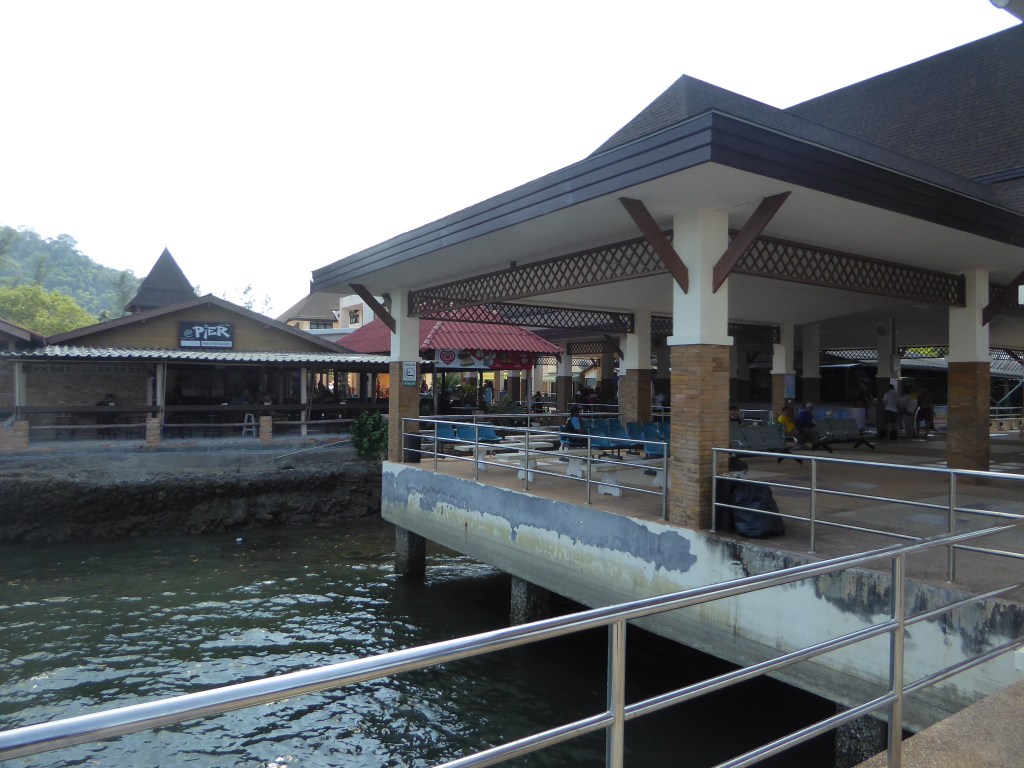
Rassada Pier
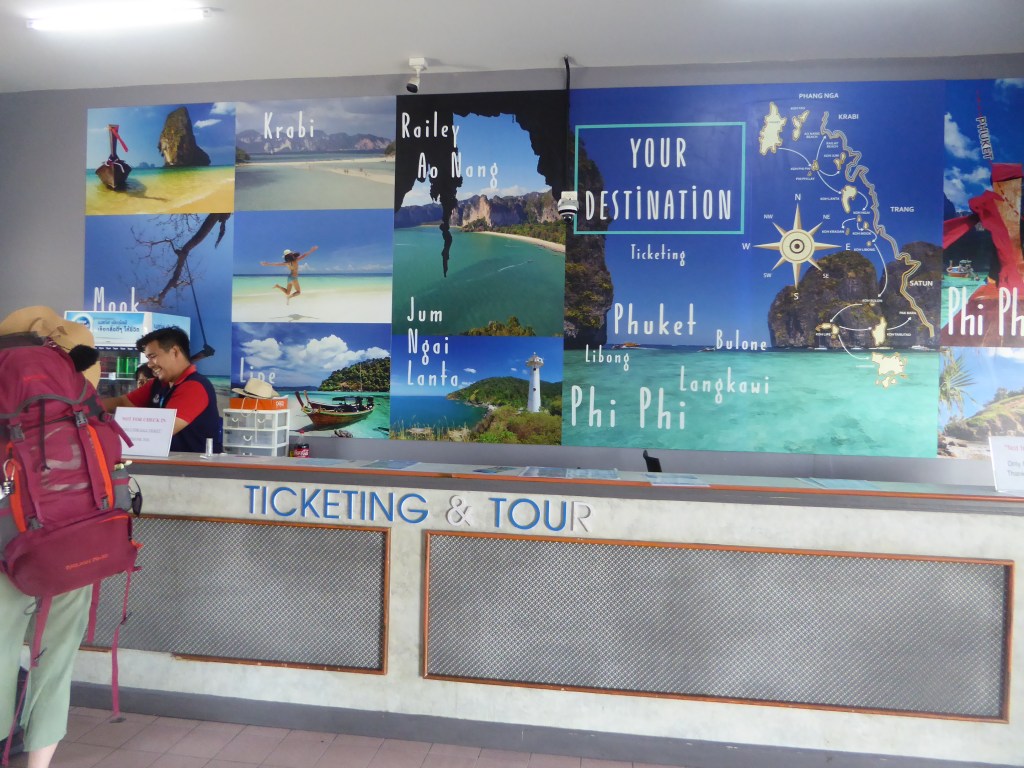
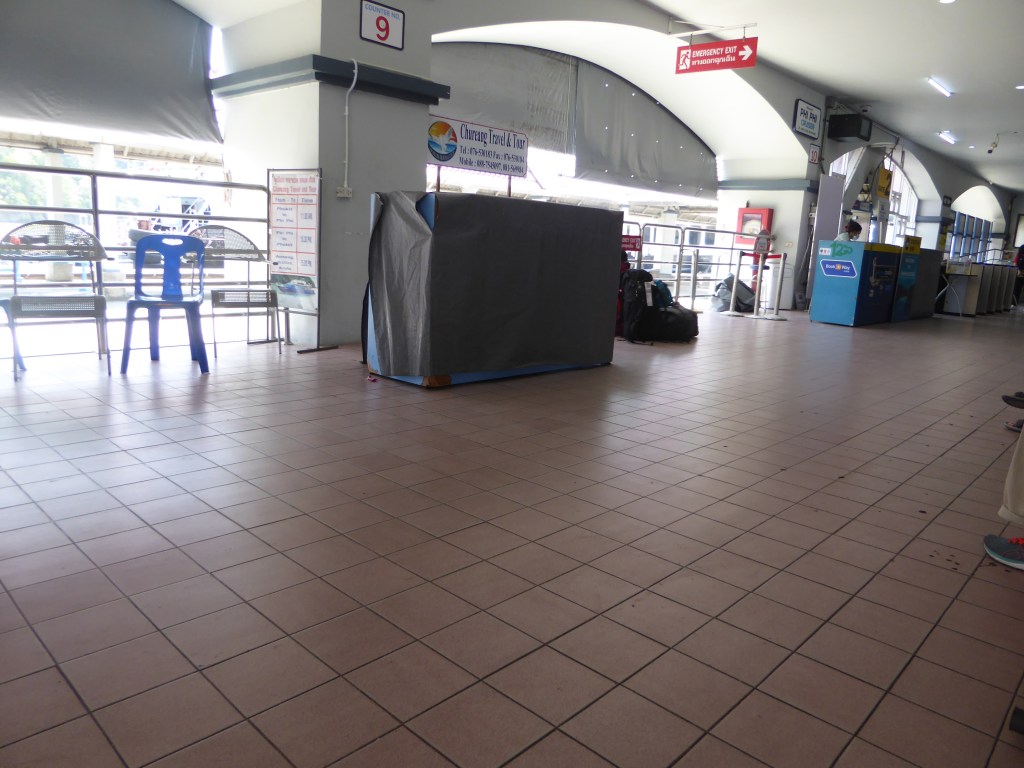
The port, Rassada Pier, was actually like going to an airport (above). There was an orderly queueing system and a it was similar to boarding a plane. In addition, there was a variety of mini-cafes / food bars where again, the food was delicious.
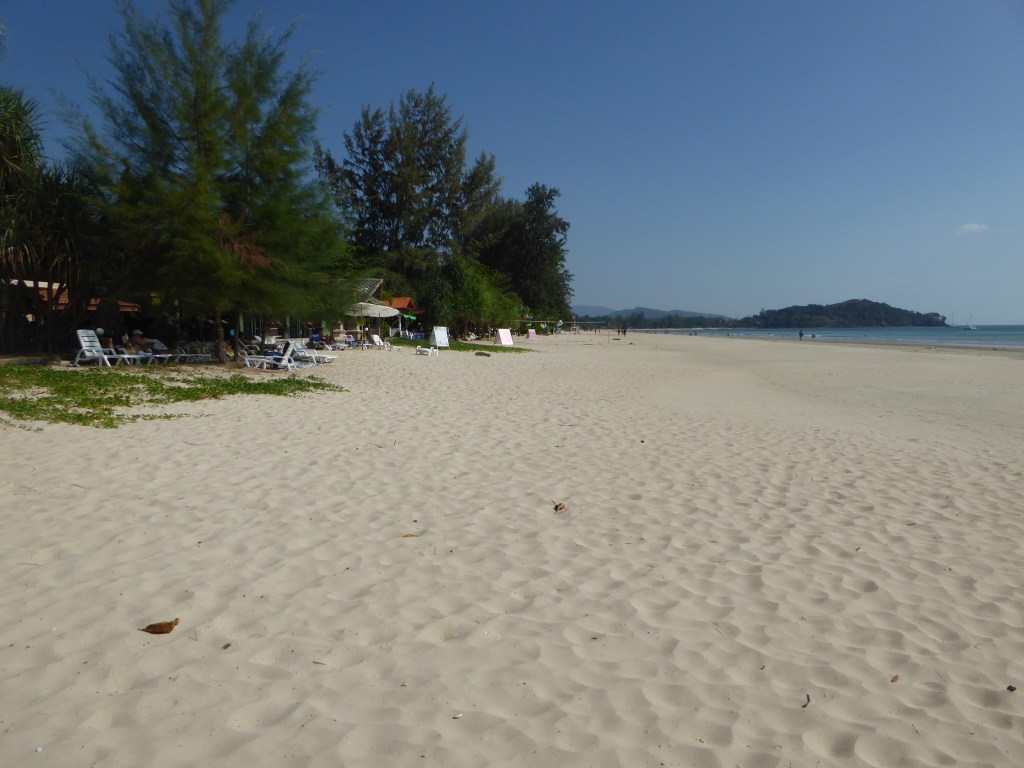
Khlong Dao Beach
After the aforementioned trip, we arrived at (after also stopping at the Phi Phi islands) Ko Lanta, and immediately had to fork over about 5 pounds as a local tax? Don’t know what it was for or why, though it wasn’t that much money and we gladly paid for both this and a similar priced tuk tuk to arrive at our destination at Khlong Dao beach.
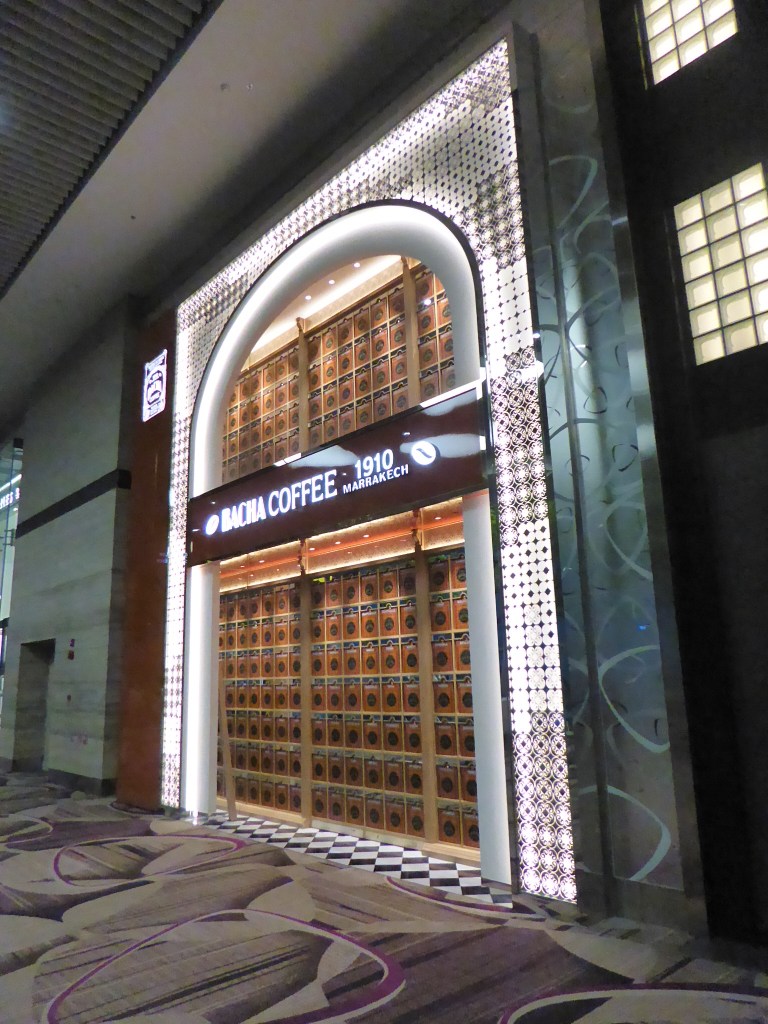
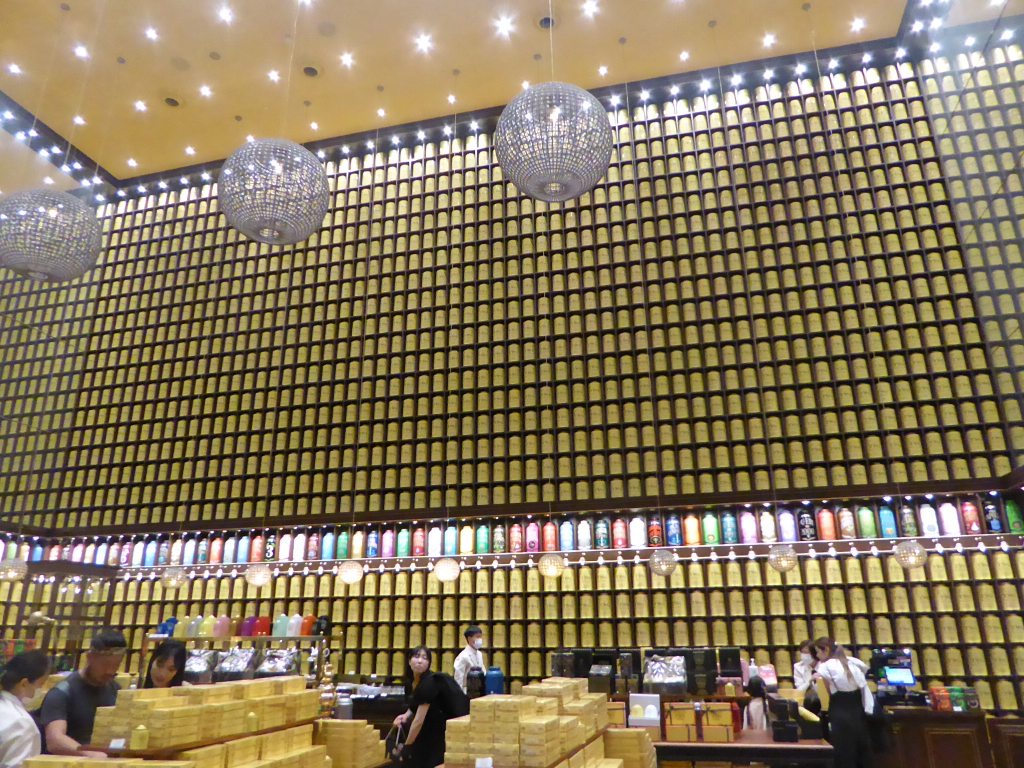
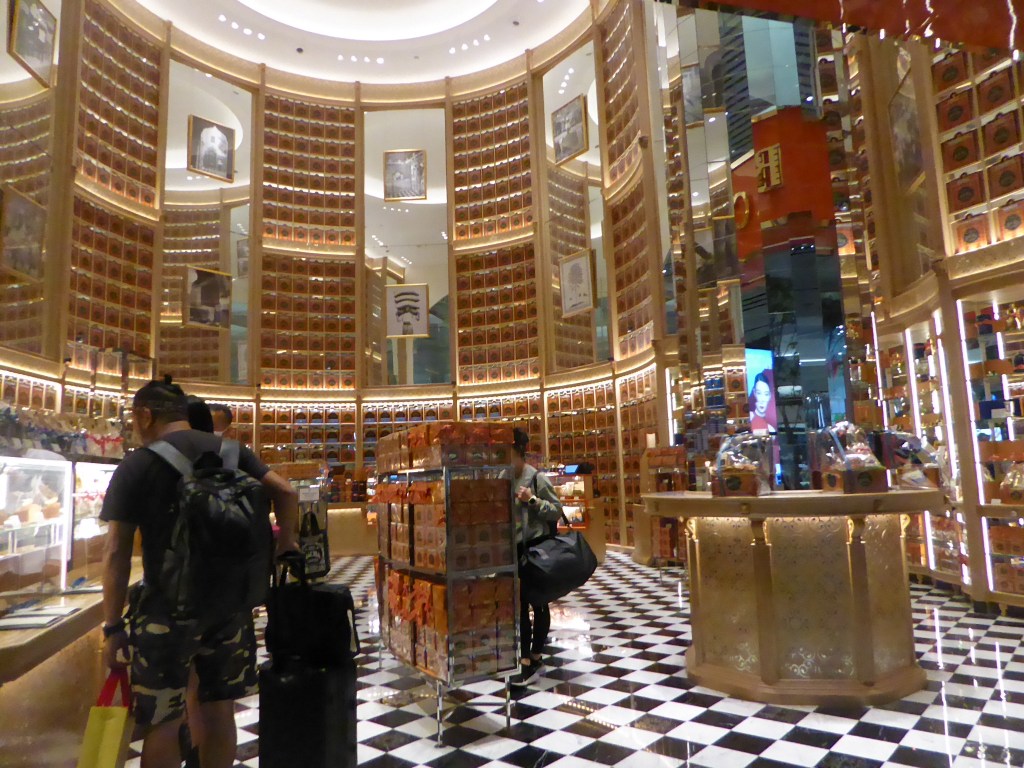
Yes, folks, I’m currently smack dab in the middle of a whirlwind 3 1/2-week adventure across Asia, with stops in Singapore, Thailand, Kuala Lumpur, Beijing, and even some islands off the coast whose names I can’t quite remember—oh, the joys of travel! First the Singapore airport:
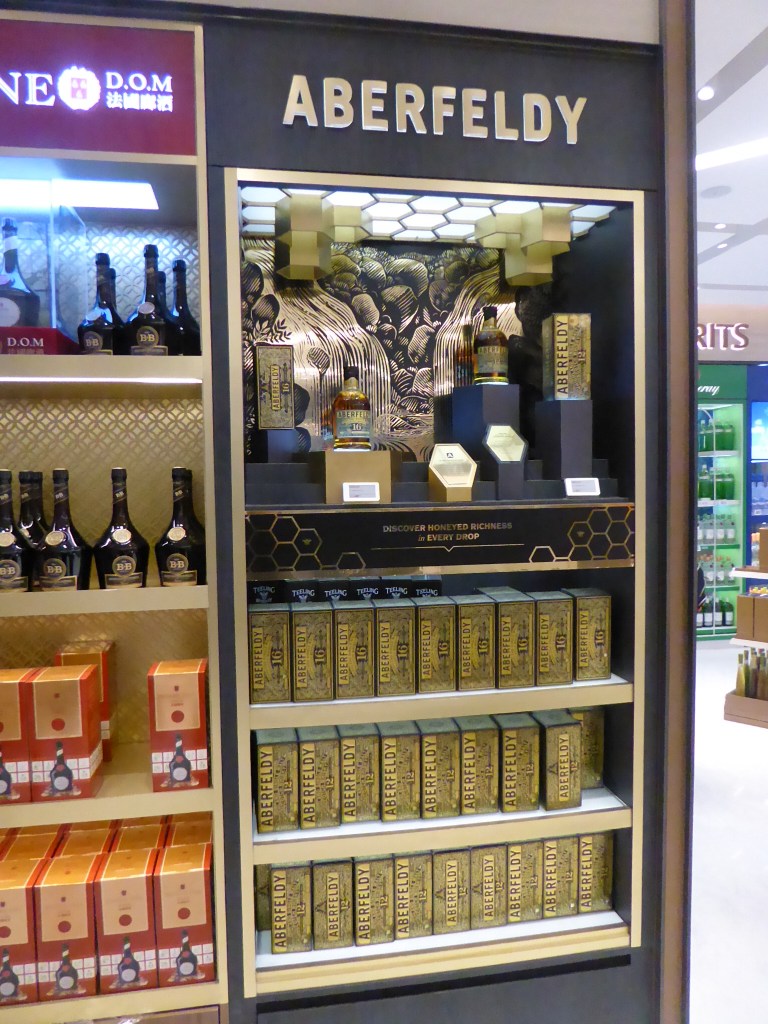
With tea shops, coffee shops and designer good shops everywhere. You then realize just how modern / rich that this place actually is. And they were even selling Aberfeldy single malt.
It’s been quite the journey so far, and while I’ve got a ton of experience to share, let me bring you up to speed with the highlights of my trip thus far. First things first, let’s talk about Thailand.
If there’s one thing I’ve learned about traveling to Thailand, it’s that the mainland and the islands offer two entirely different experiences. Our first stop was in Phuket, affectionately dubbed “Fuckit” by some (I’ll let you guess why). Surprisingly, despite its reputation, I found myself falling in love with the place. We managed to steer clear of the rowdy, party-centric areas and stumbled upon a more tranquil, family-oriented side of Phuket.
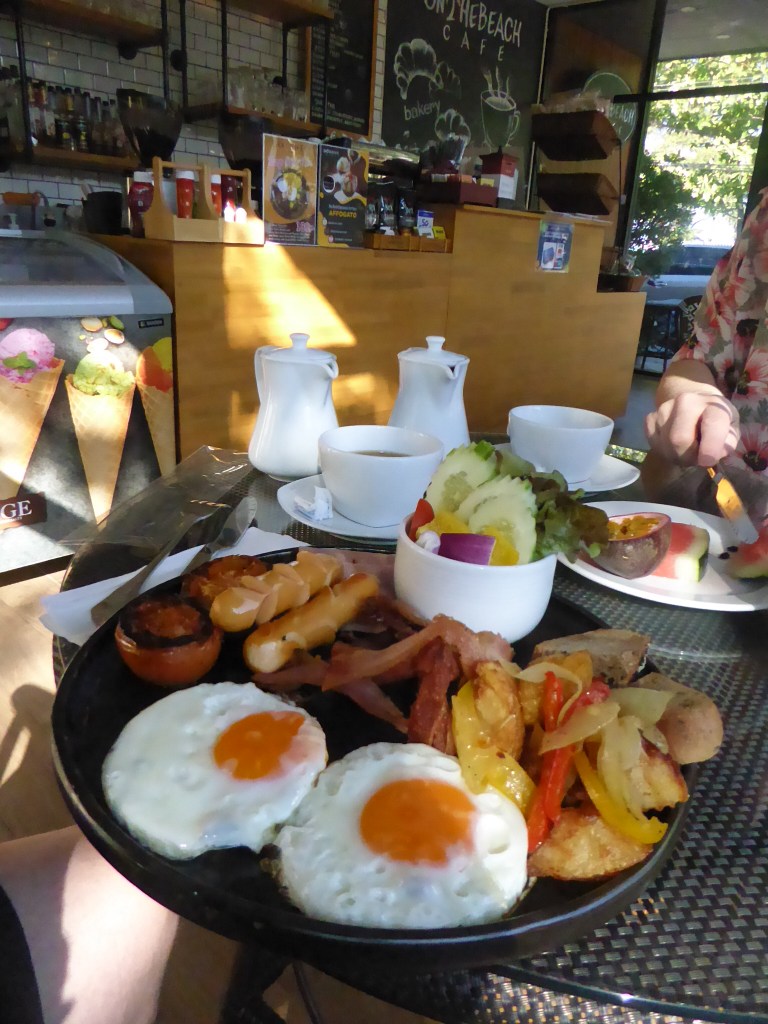
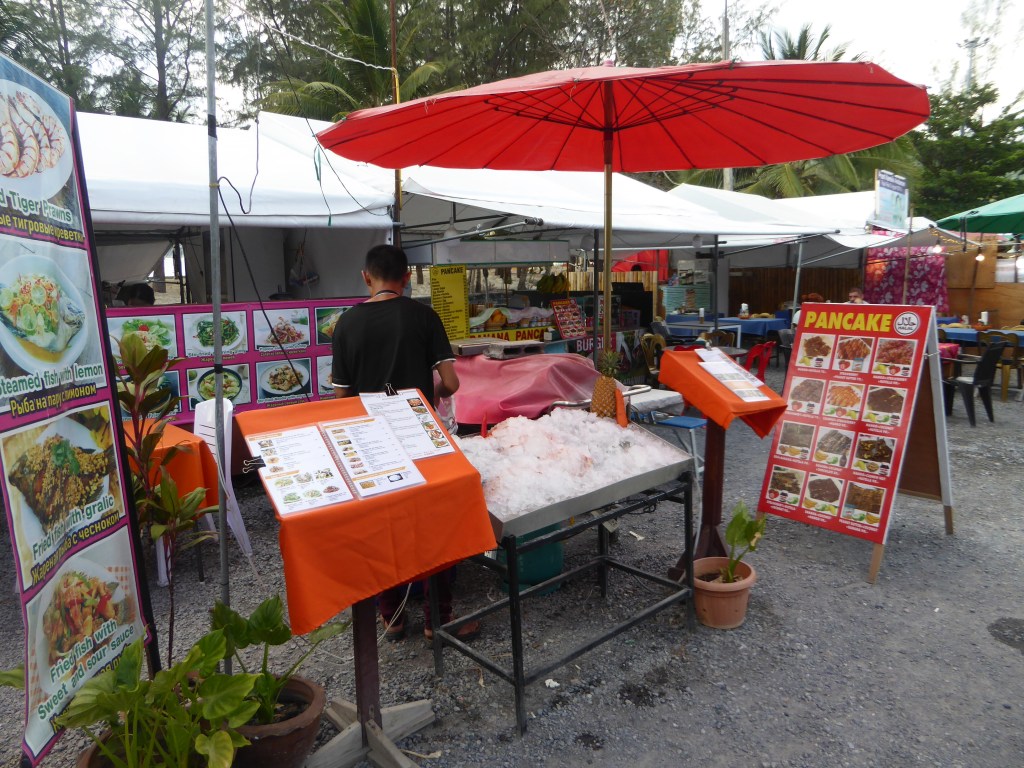
Our accommodation, priced at a reasonable £90.00 per night, was a stone’s throw away from a serene pool and just a short walk from the pristine beaches; and also offered gigantic breakfasts. Dining options were aplenty, with restaurants offering delectable dishes at a fraction of the cost back home. I mean, who knew chicken could taste so divine when paired with cashew nuts and black beans? Equally, the fish, presumably from the night before, was highly fresh and was easily inspected in ice, in front of each restaurant.
What struck me the most about Phuket was the laid-back vibe and the warmth of the locals. It’s no wonder that so many travellers find themselves drawn back to this idyllic paradise. From the moment we touched down in Singapore, after a slight delay, to the swift taxi ride to our hotel, which set us back a mere tenner, the ease of travel in this region has truly impressed me.
Stay tuned for more updates from my Asian escapade as I delve deeper into the vibrant cultures and breath-taking landscapes of this captivating continent. Until then, stay adventurous!
CB
PS – This review, which I think is cheesy, was actually prompted by me, via ChatGPT Not again!
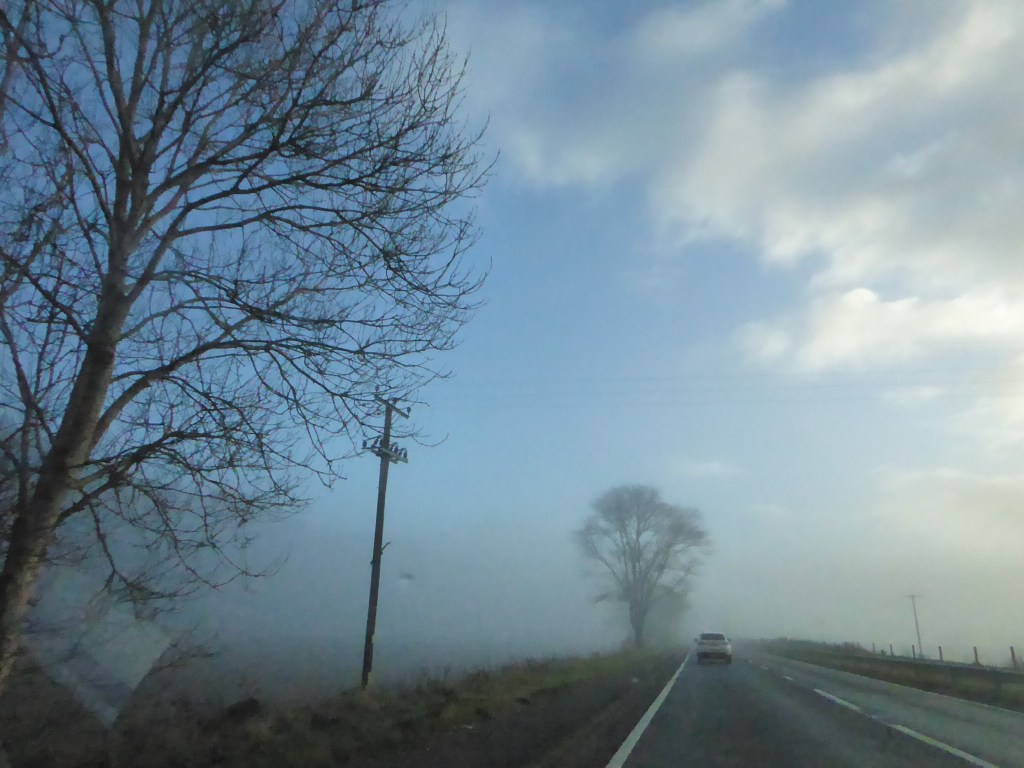
Have I blogged about this before? I’m not entirely sure. But Dunkeld is a charming little village nestled between Perth and Aviemore. And as you can tell, driving there, the fog had still not lifted yet.
It’s also known as the home of Beatrix Potter. In the 19th century, I’m uncertain whether she lived there permanently or just during the summers, or if she did any writing there. I’ll delve into that in another post. However, they do have a new museum dedicated to her, along with a café.
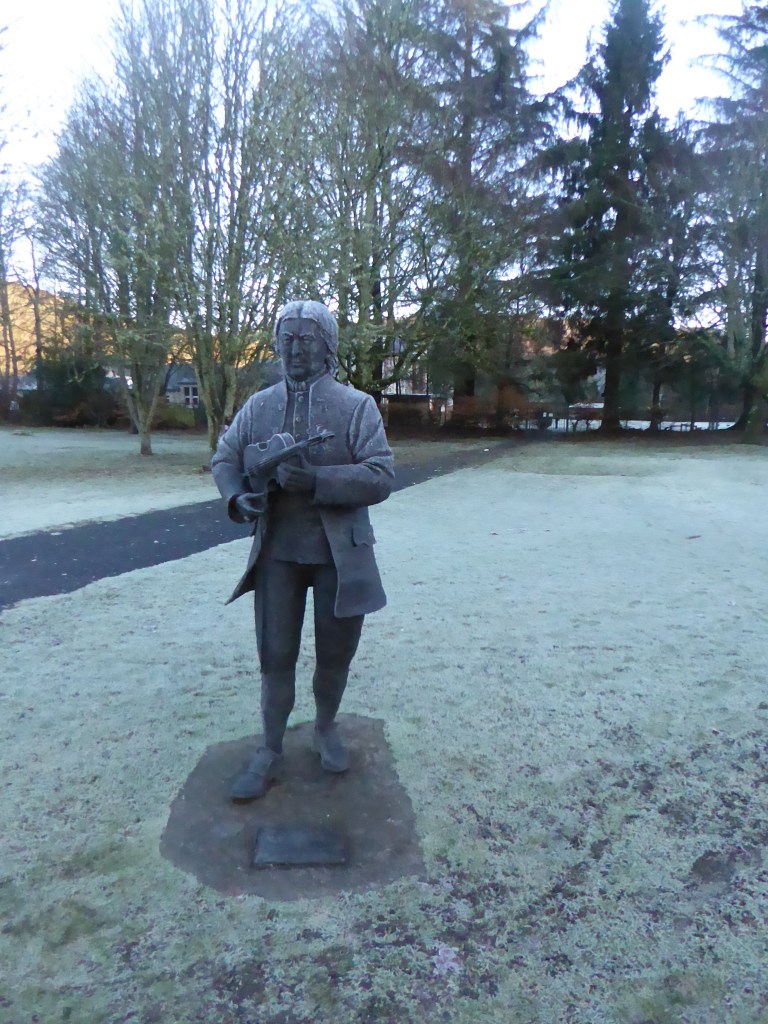
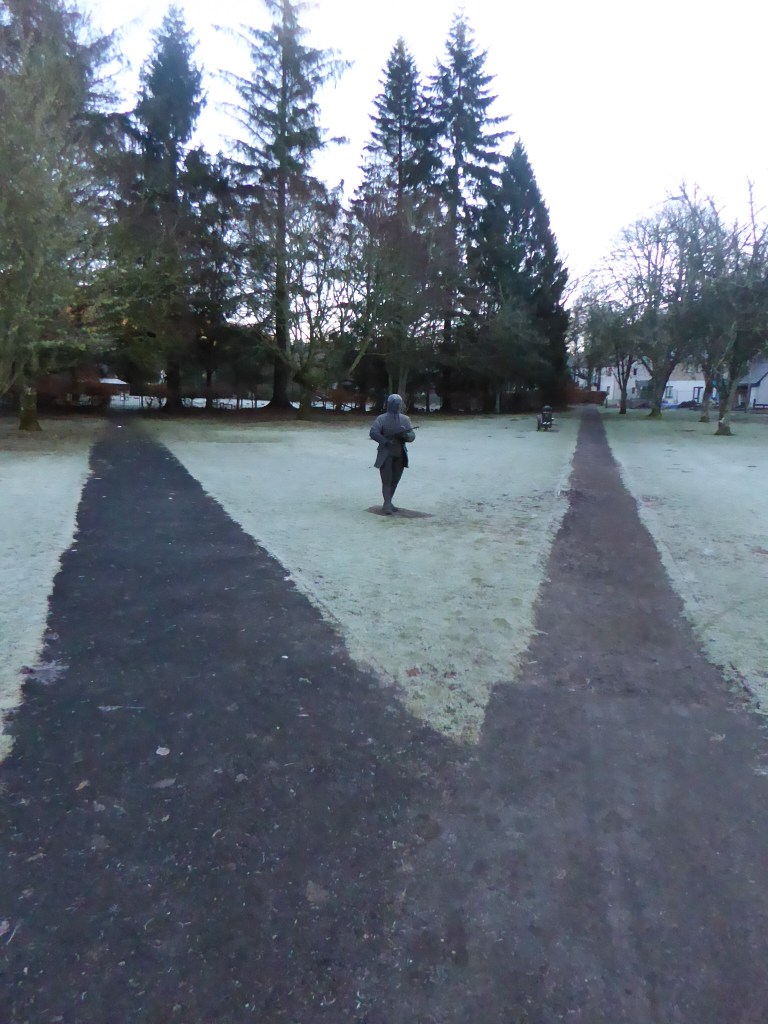
As we wandered into Dunkeld; we passed by a statue of a violin player named Neil Gow, who was apparently the foremost player in all of Scotland during the 17th century, if not the world. It’s a wonderful statue in the park just before you reach the bridge.
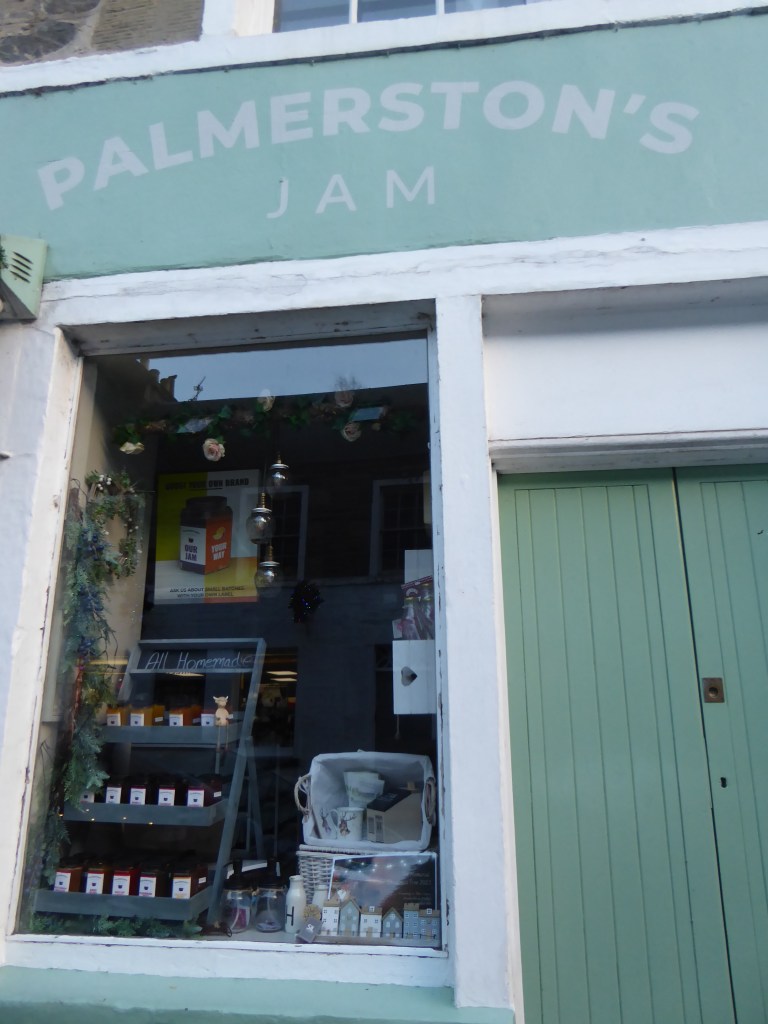
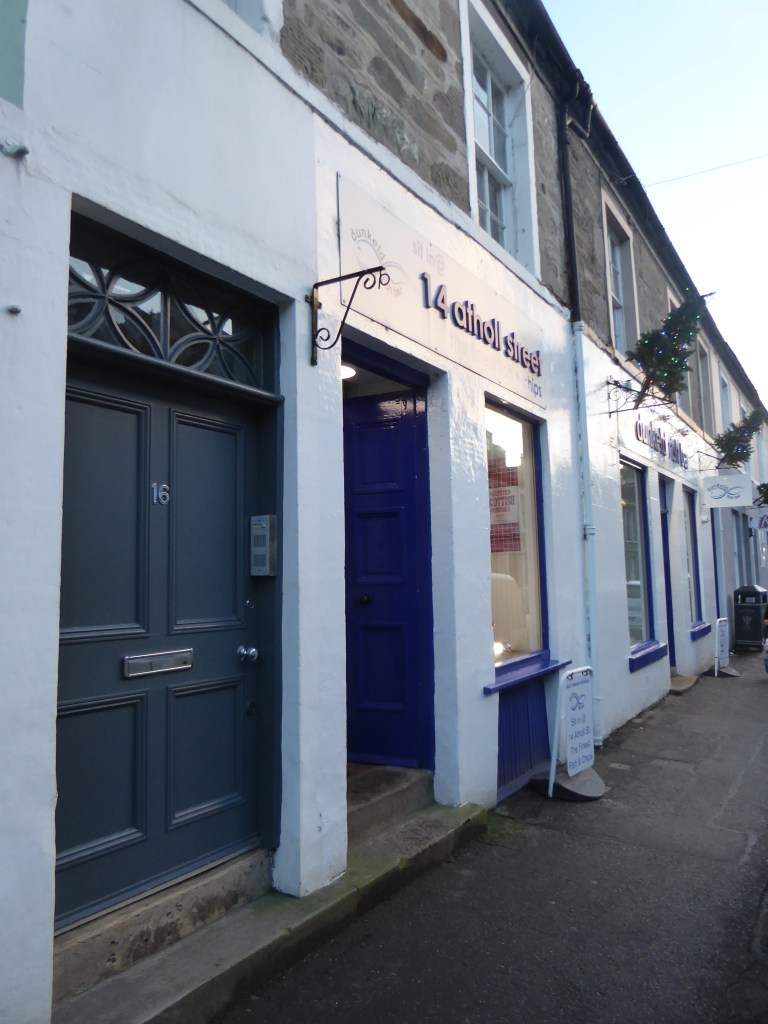
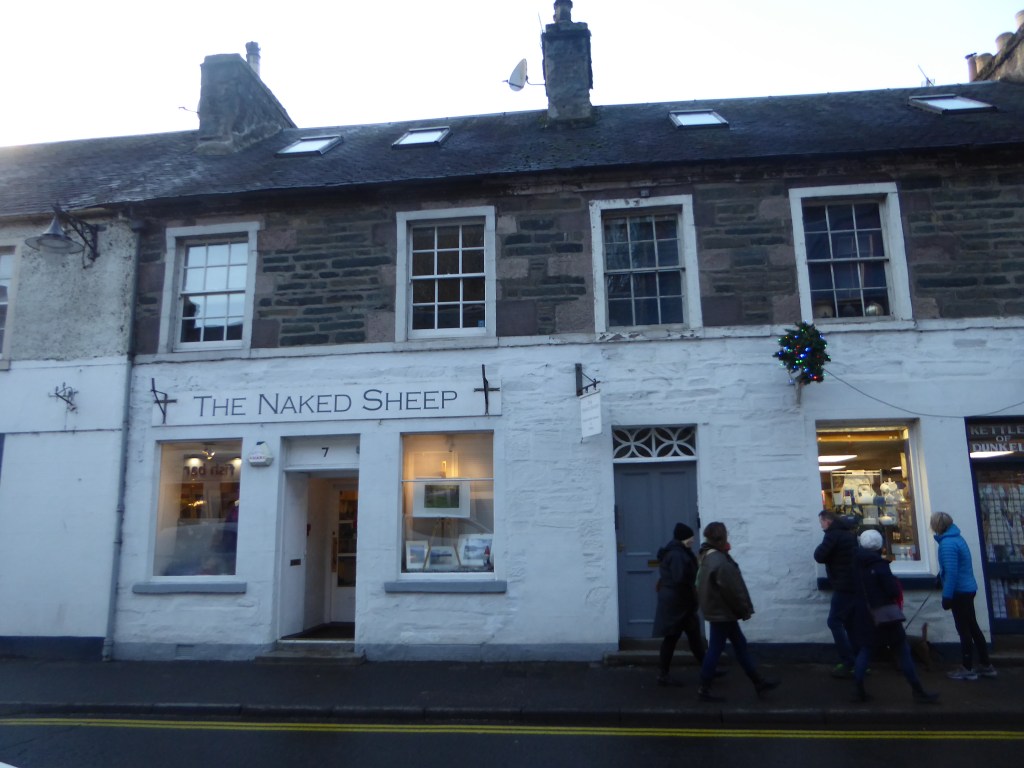
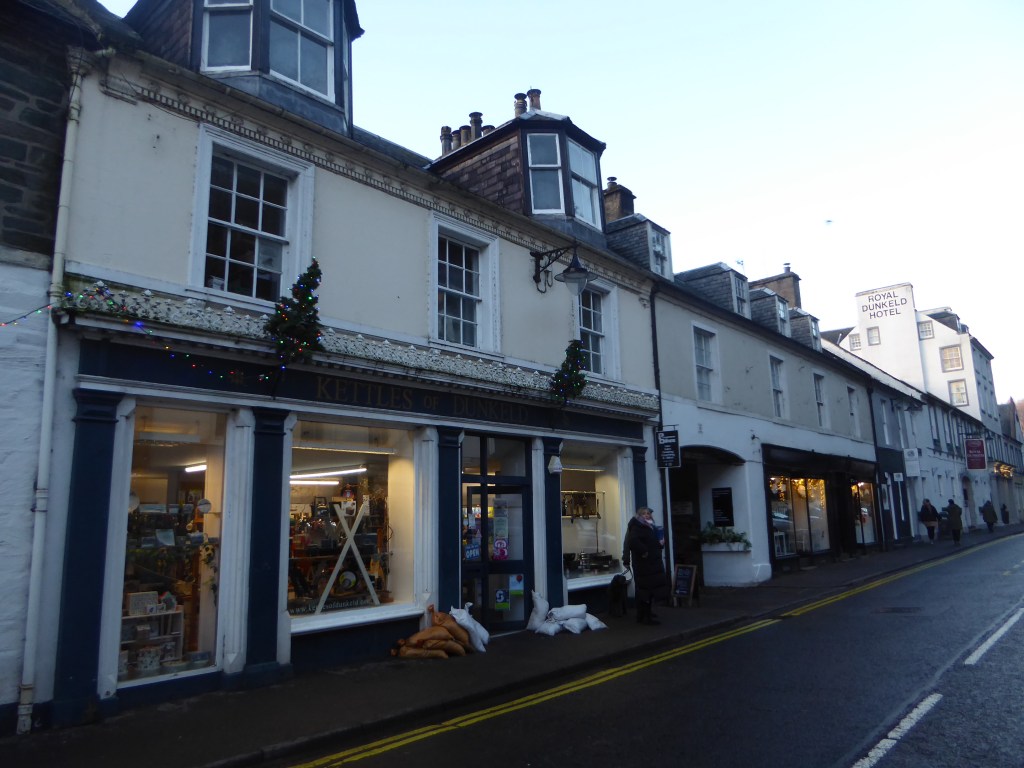
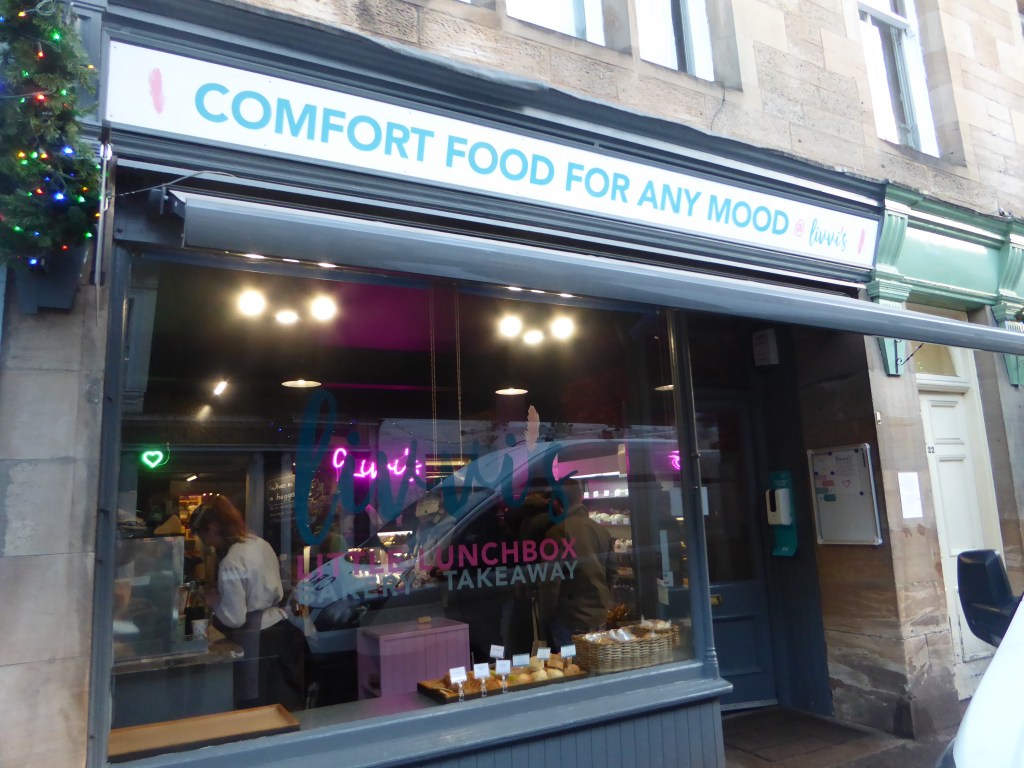
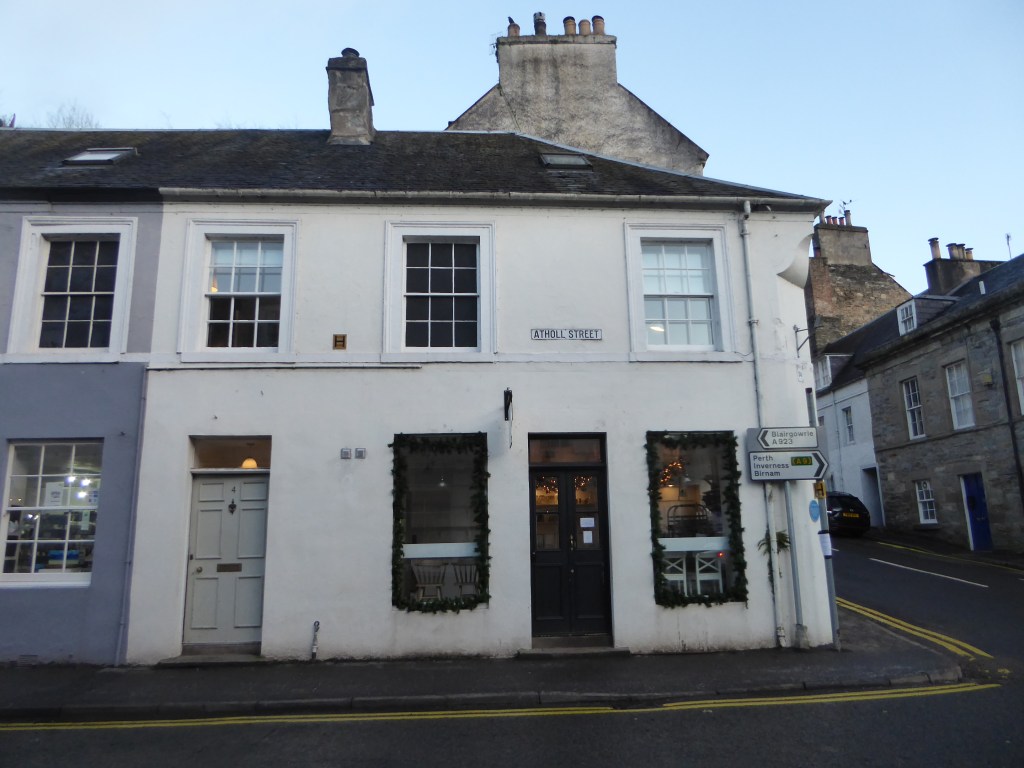
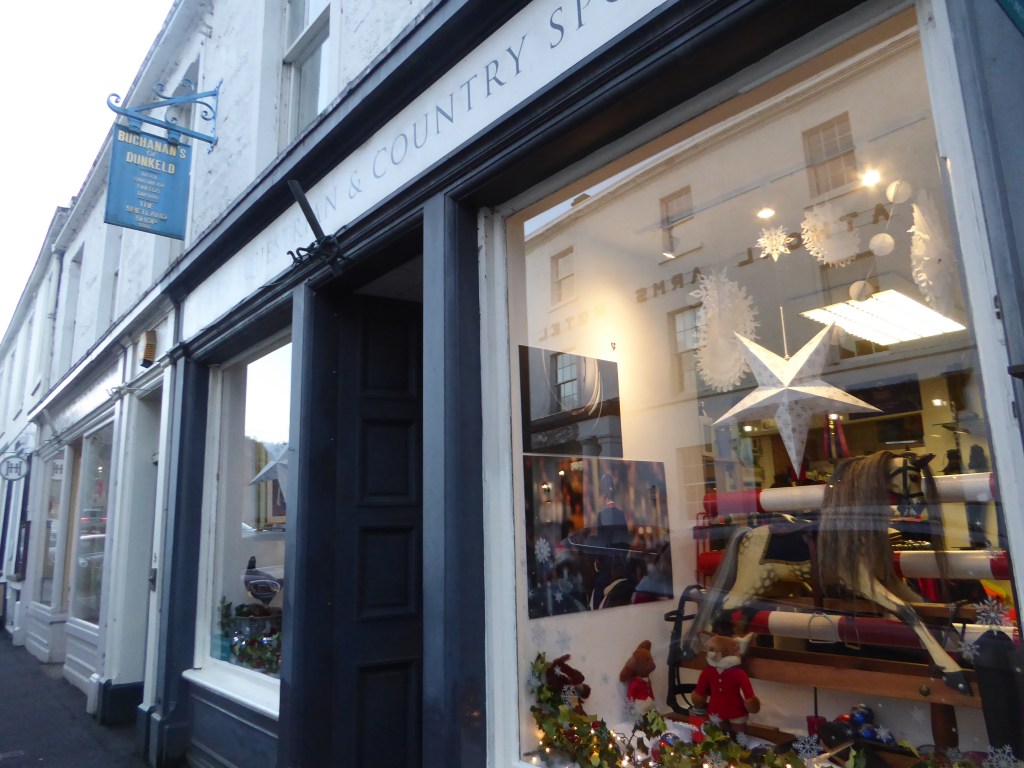
Once you cross the bridge into Dunkeld proper, you’re greeted by a multitude of boutique shops, numbering around fifteen to thirty. The air practically oozes affluence here, yet it retains a refined, classical, and quintessentially Scottish middle-class vibe.
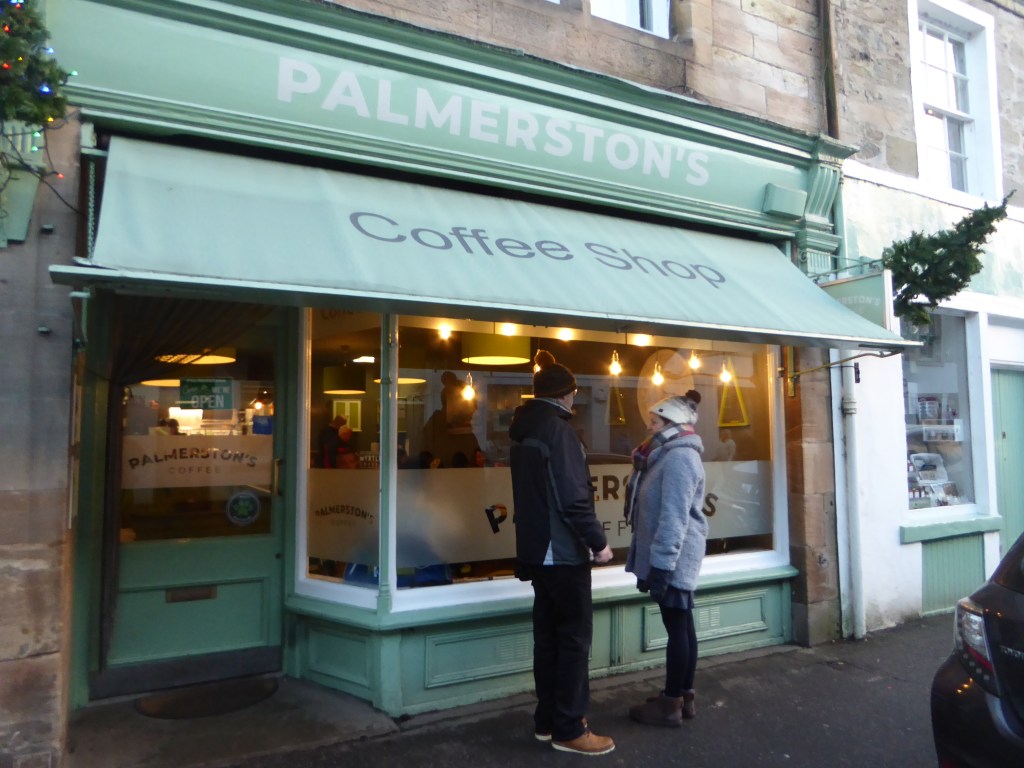
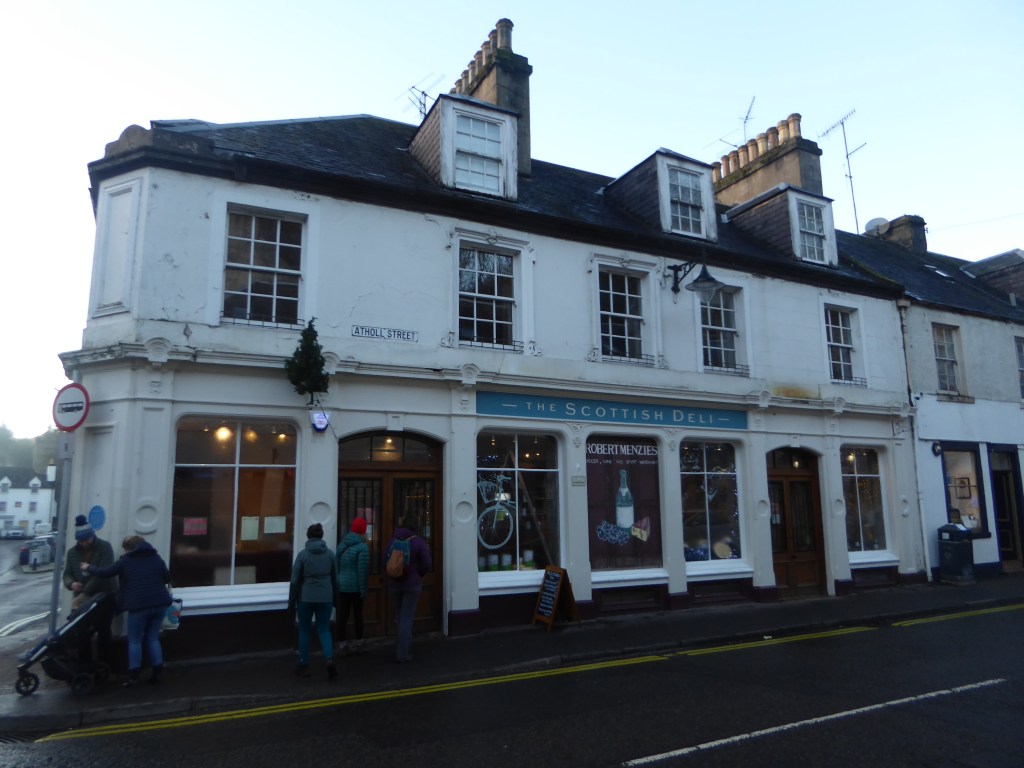
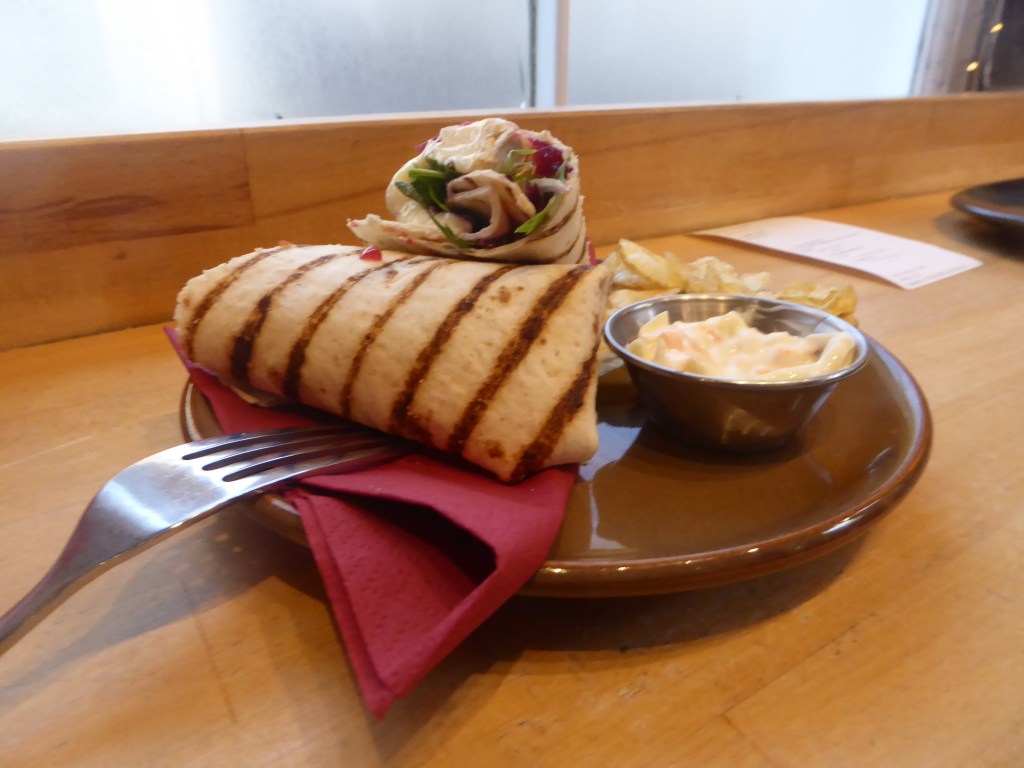
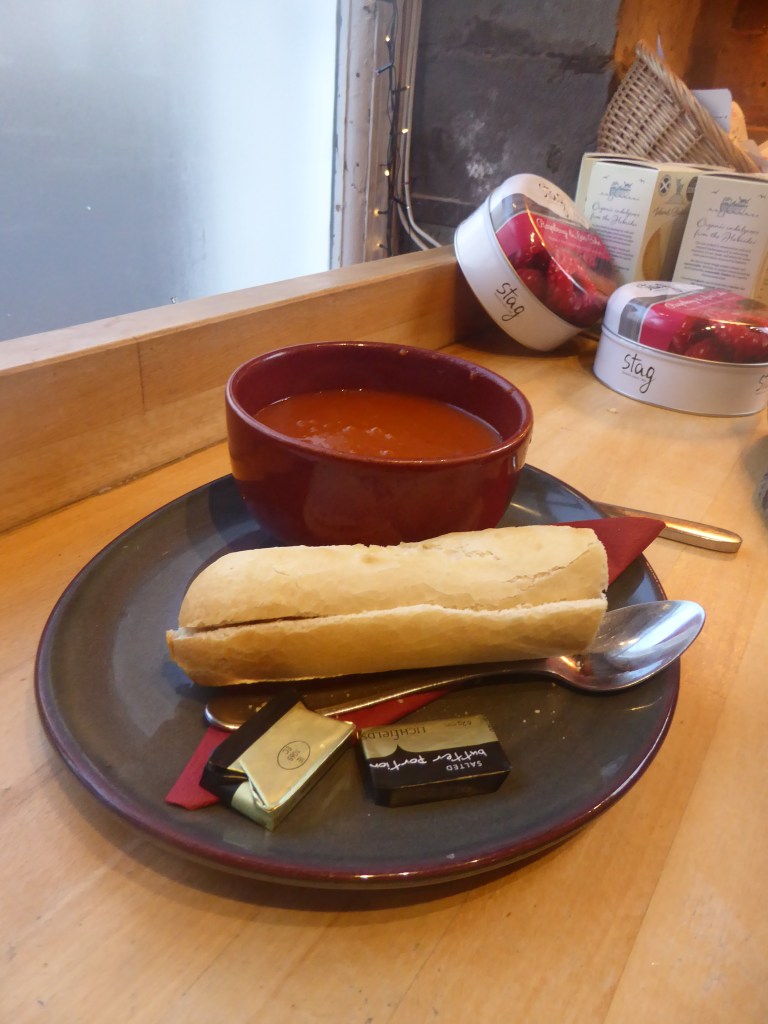
We decided to visit one of the many cafes, The Scottish Deli. Local kids were working there, no doubt earning minimum wage or more. The atmosphere was friendly and inviting, and the coffee was, indeed, perfect.
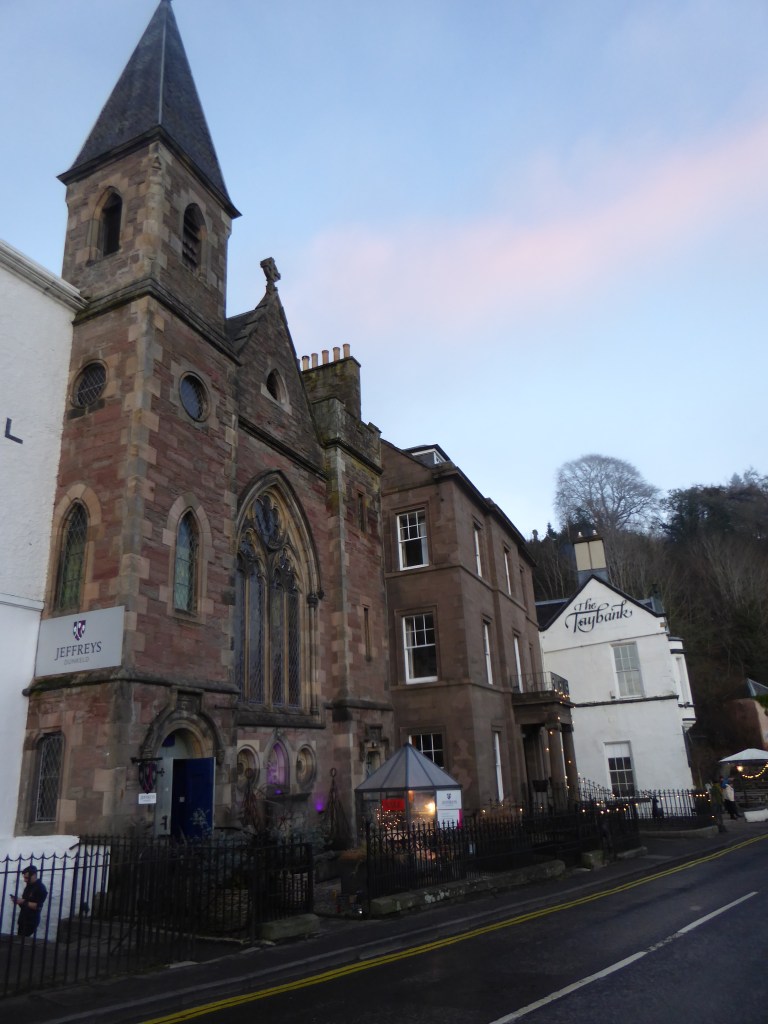
But that was just the beginning. We then stumbled (again) upon my favourite home furnishings shop in the entire world, Jeffreys Dunkeld.
What a name!
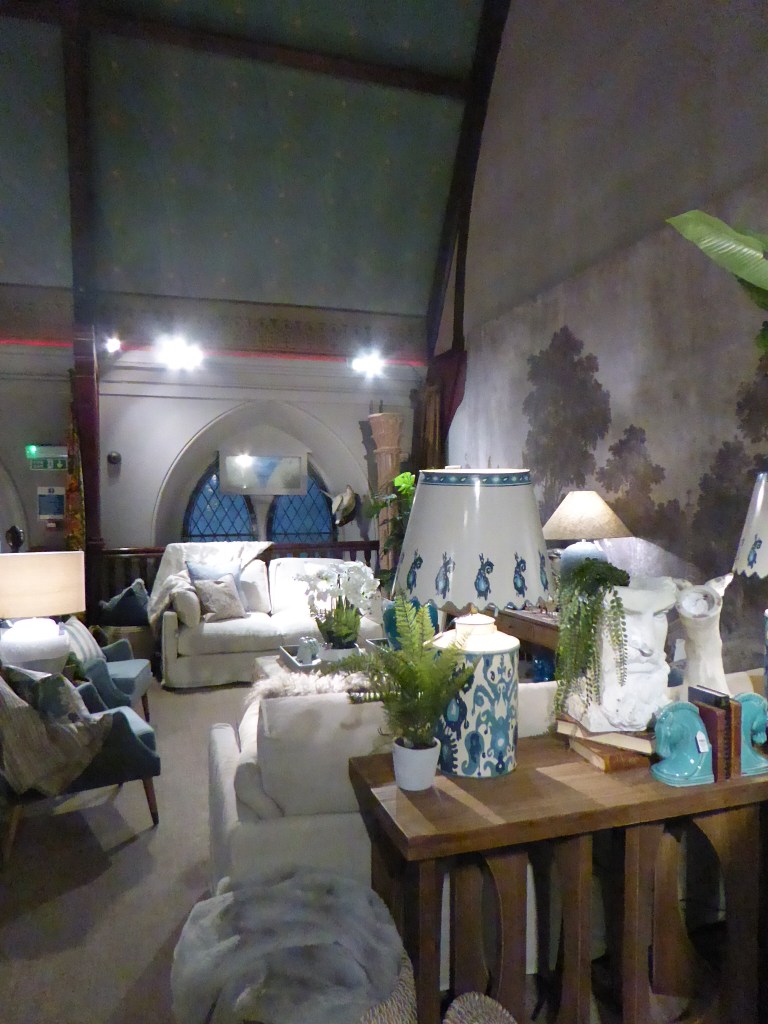
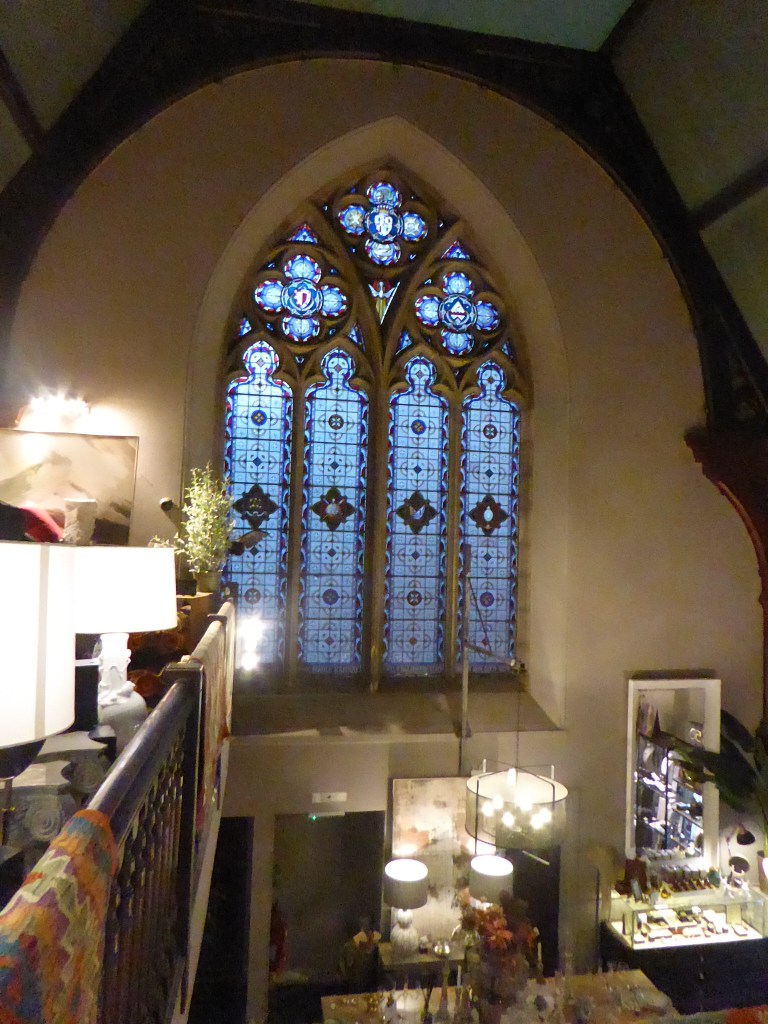
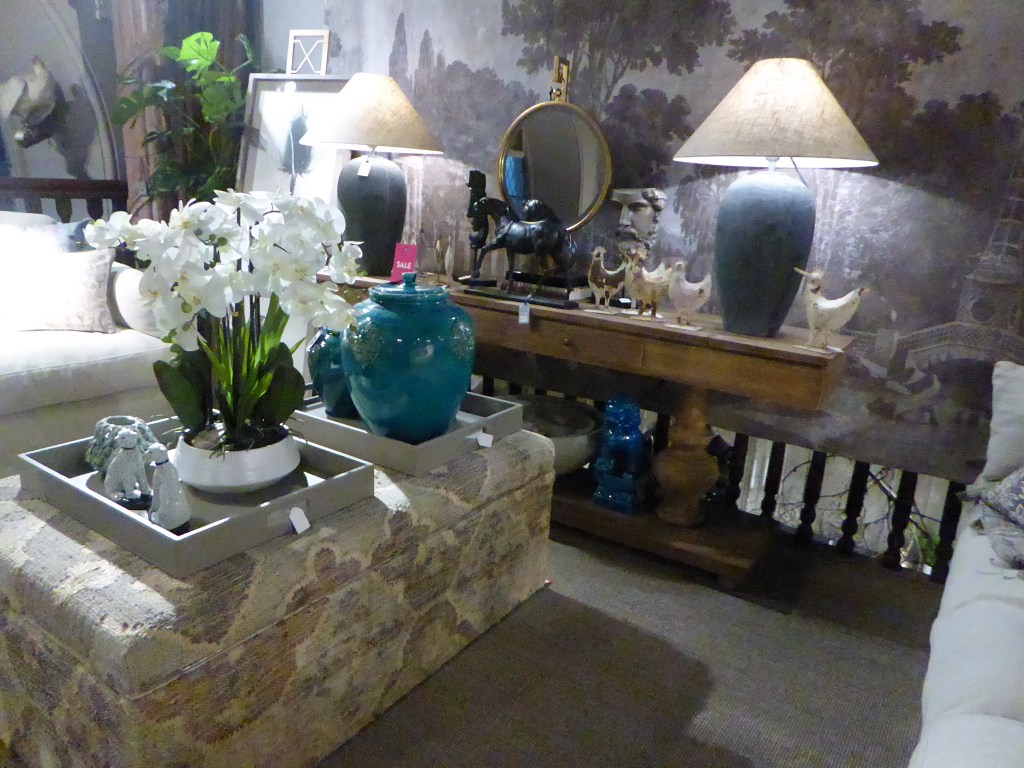
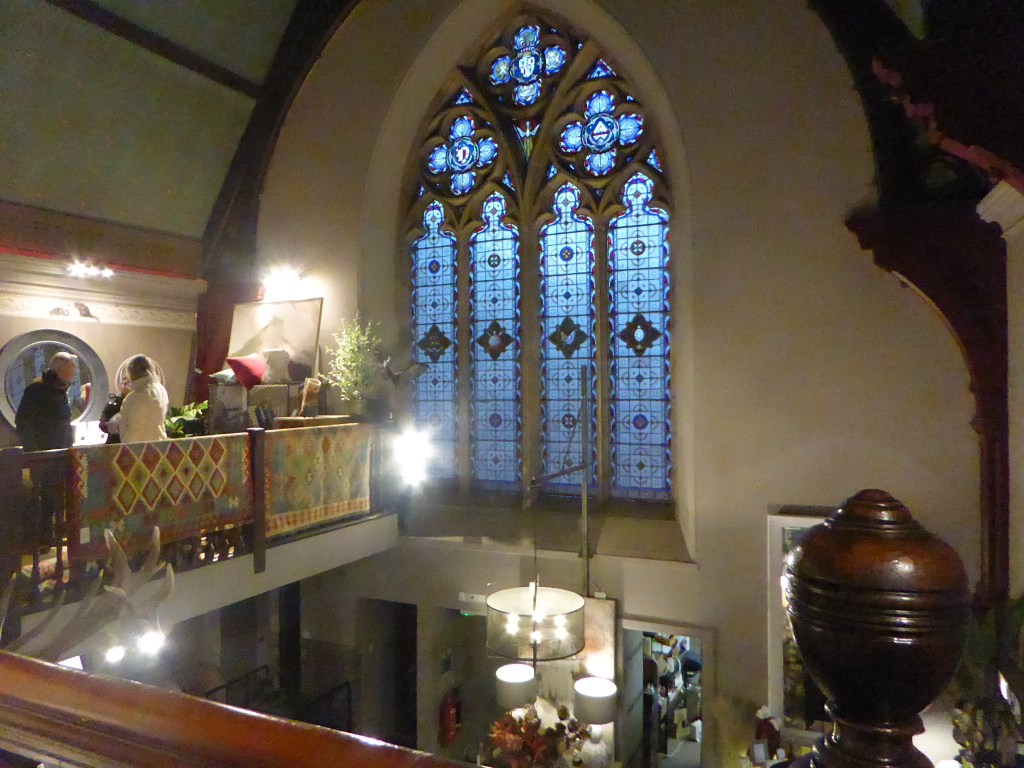
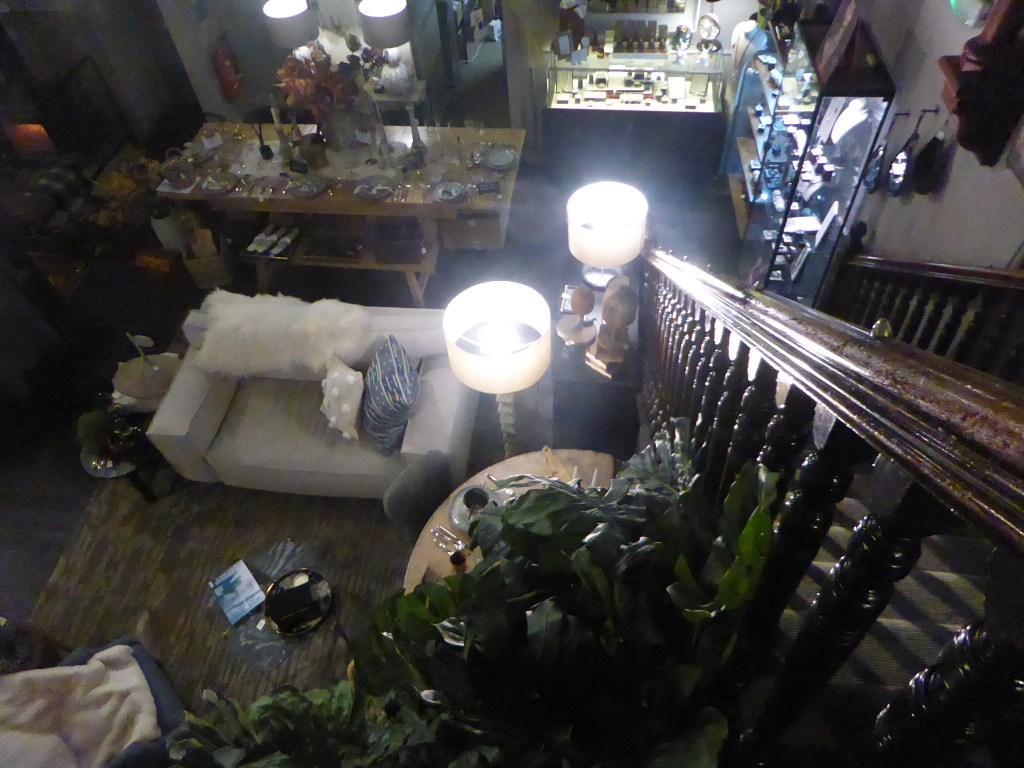
It’s like a treasure trove, always stocked with everything under the sun and more. Housed in an old church, or “kirk” as we say in Scotland, it caters to the upmarket home furnishing market. It’s tastefully decorated, resembling someone’s luxurious home rather than a store.
I can’t recall if we purchased anything significant, perhaps just some candles. The prices were reasonable, although some items bordered on the expensive. If you ever find yourself in this neck of the woods, do yourself a favour and pay a visit here.

















 Curious Bystander