The day before my visit to the Tenement House, I decided to wander around the West End of Glasgow. This tree-lined, leafy area is very middle-class, with many Chinese students near the university and various hospitals. It is probably the most desirable place to live in Glasgow, perhaps even in Scotland.
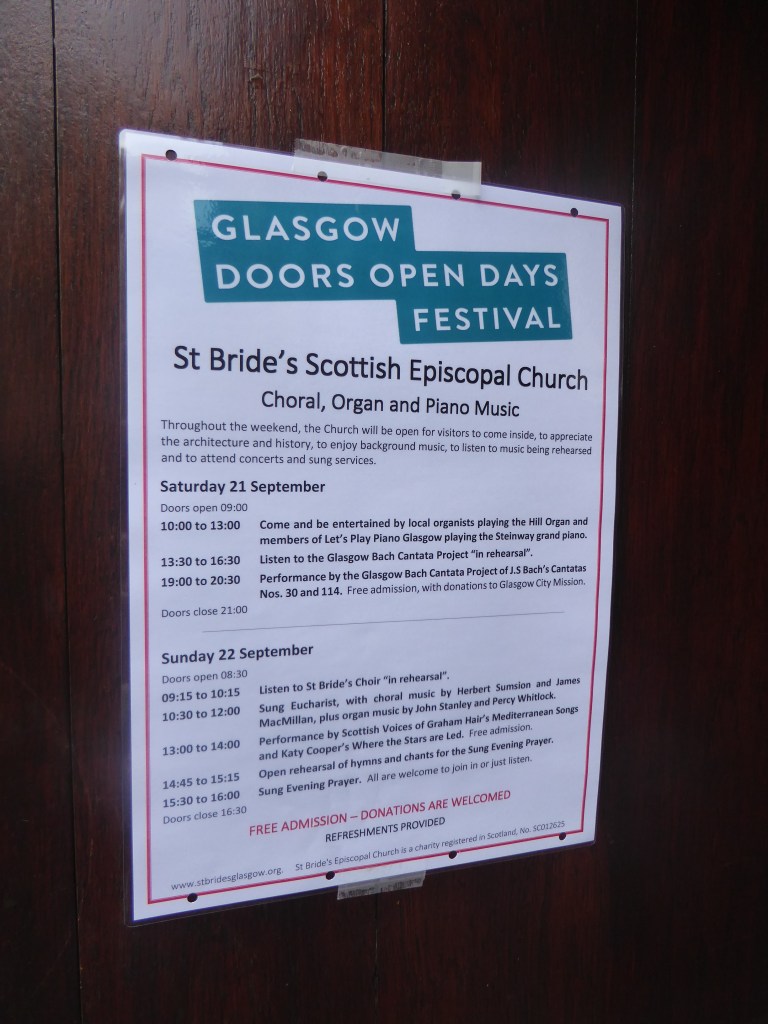
Doors Open Day is a celebration that occurs every September in Glasgow, showcasing many different buildings, with churches being one of the highlights.
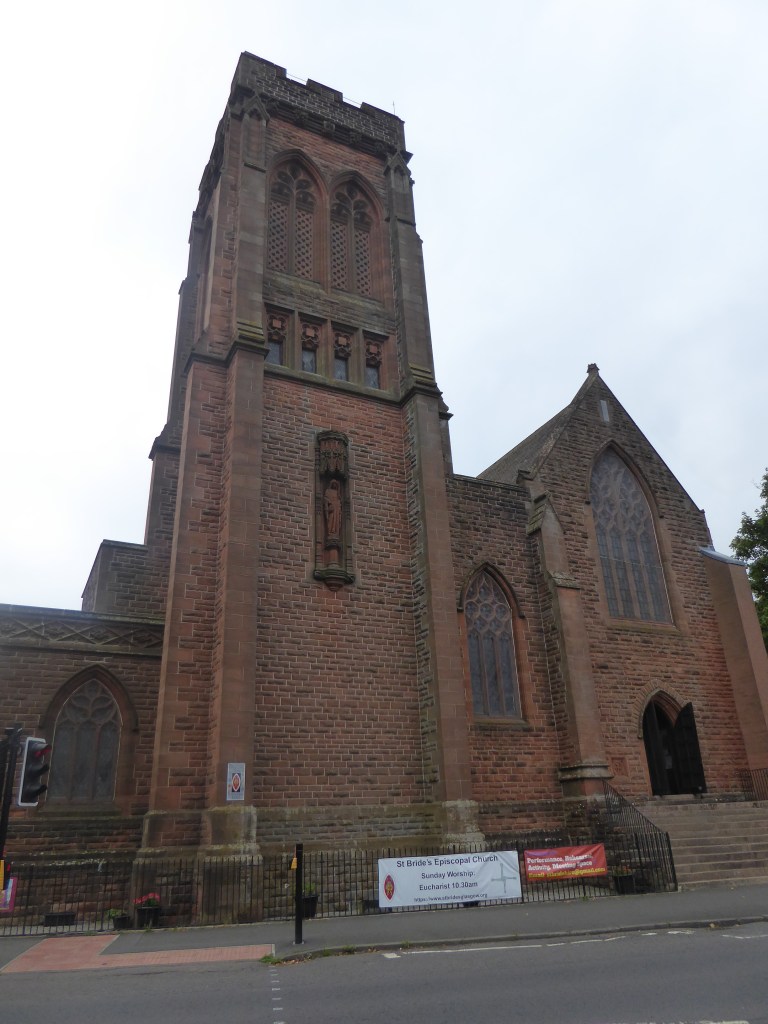
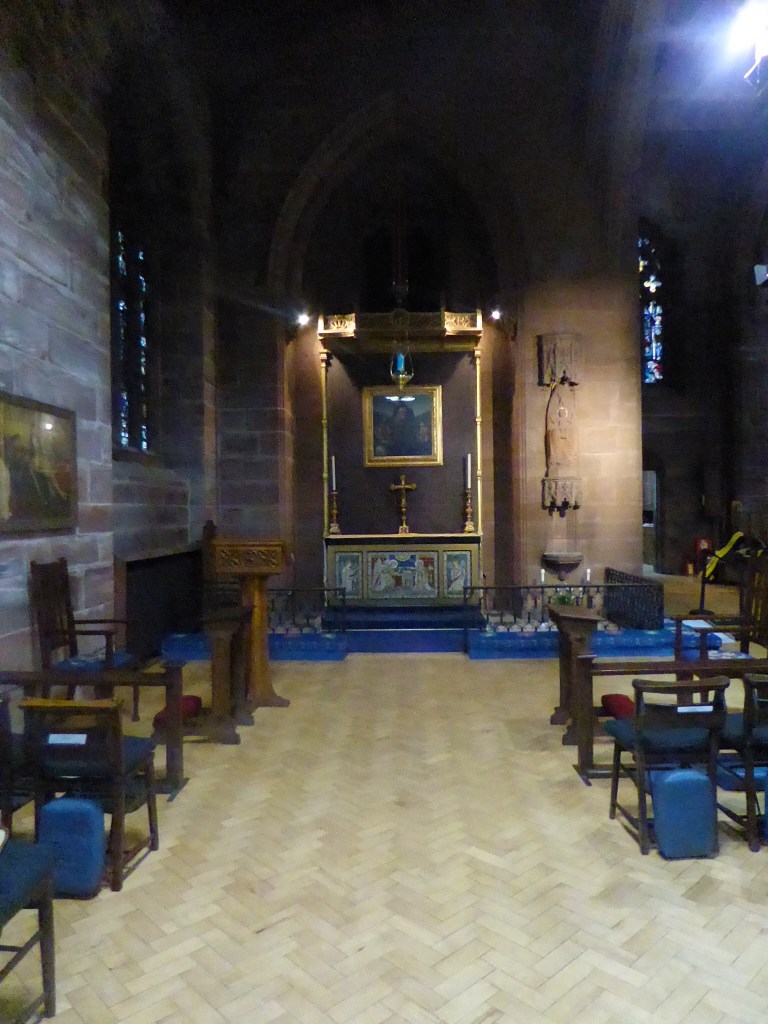
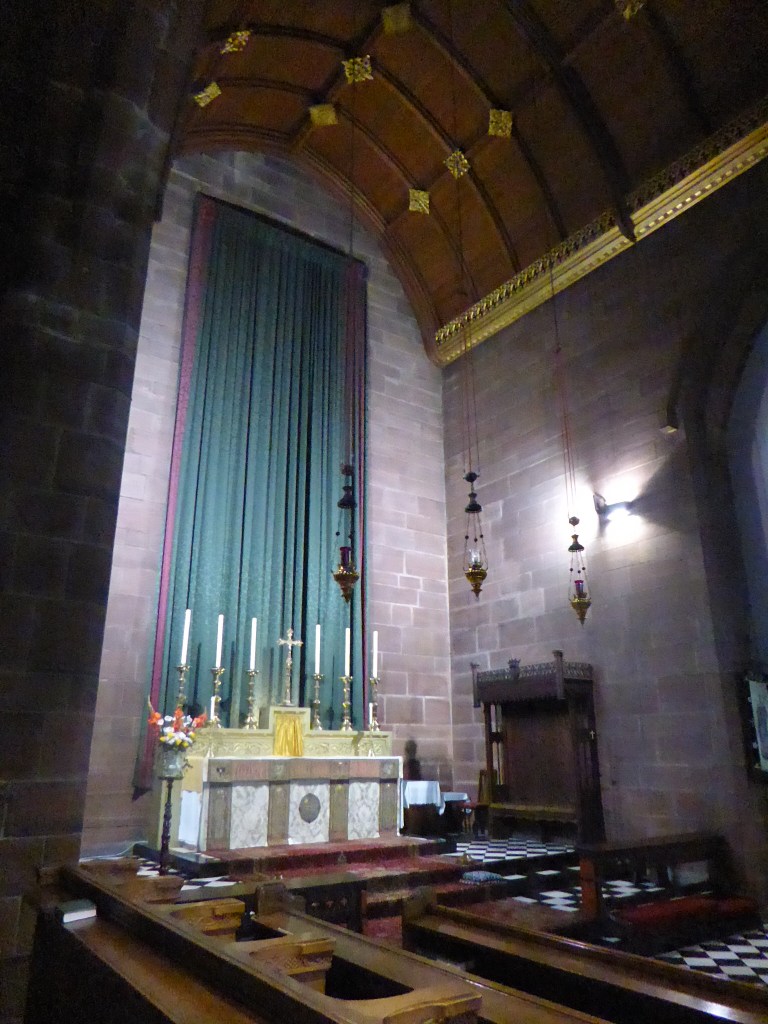
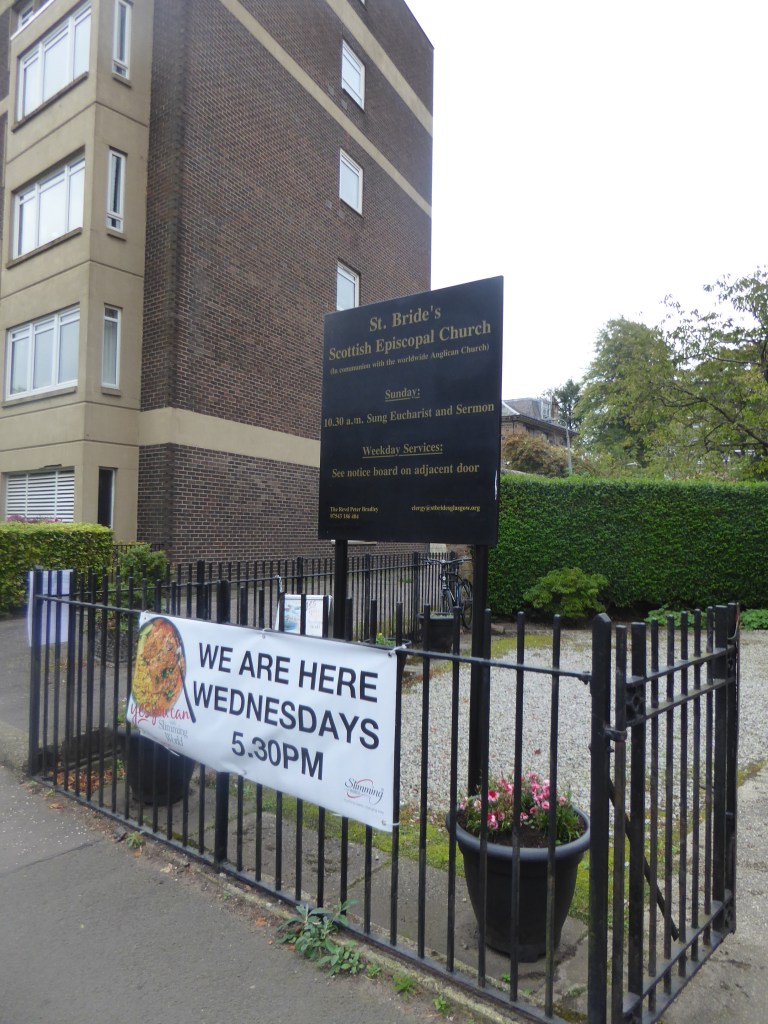
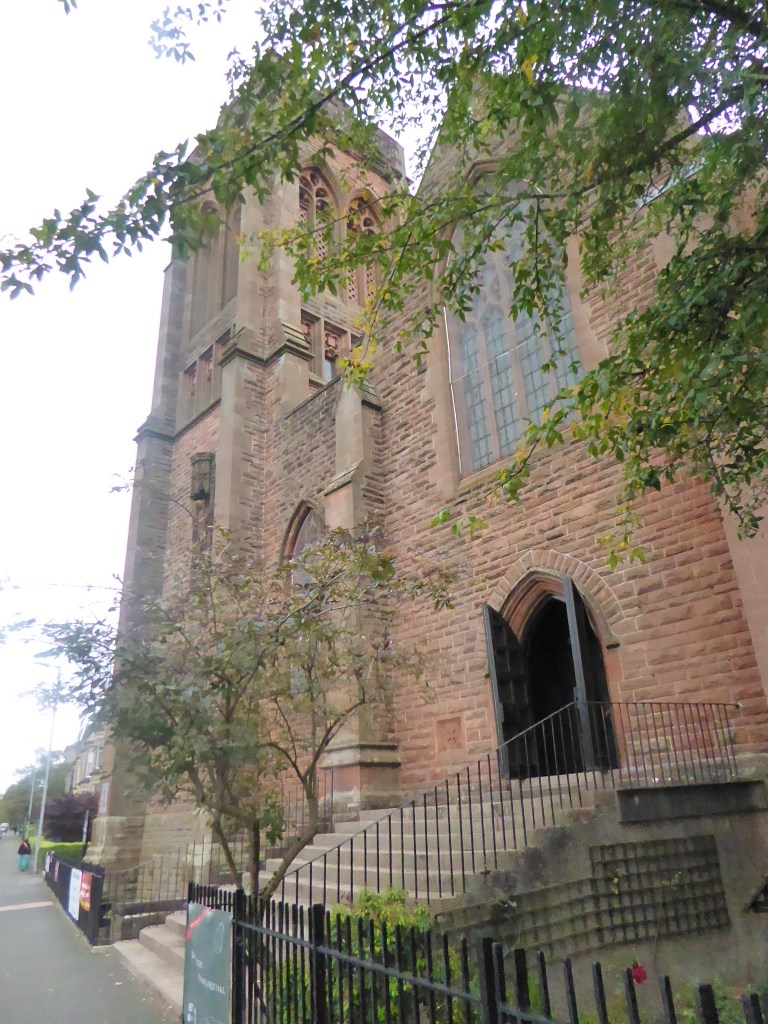
Like many other churches in Glasgow, St. Bride’s Church is not only old but also grand and elegant. It appears to be well-maintained, showcasing the care taken by its community. According to my research, it is a member church of the Scottish Episcopal Church, which is part of the global Anglican Communion, with the Archbishop of Canterbury serving as its head.
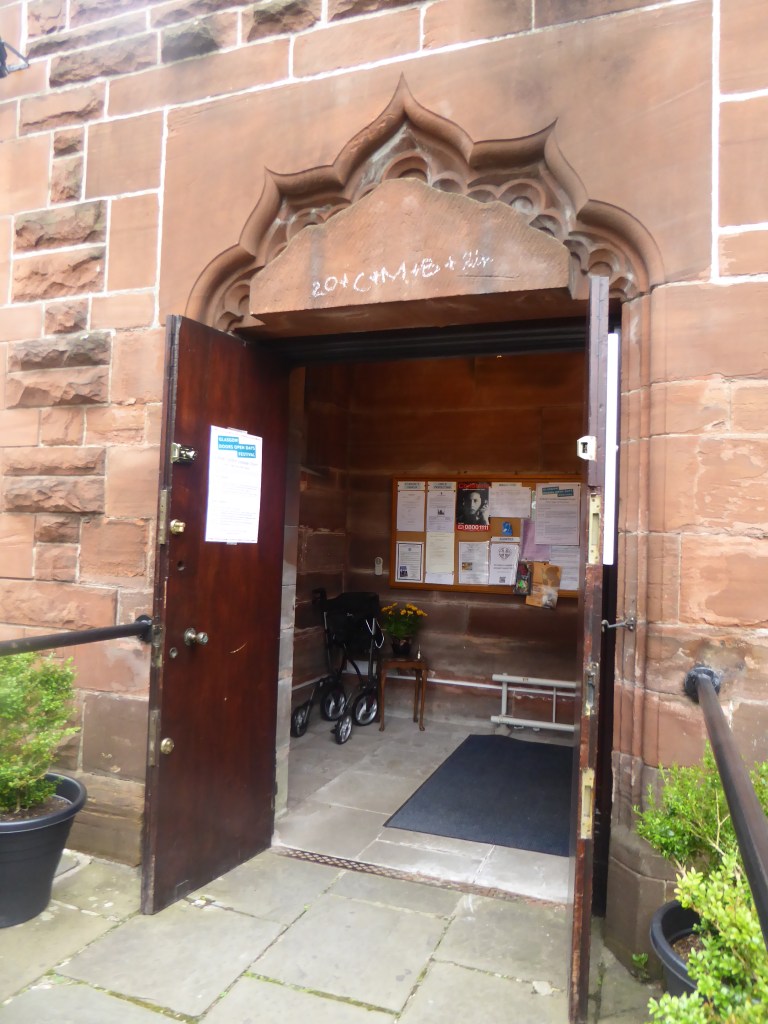
The church exudes a warm and welcoming atmosphere, evident from the numerous bulletins, brochures, and various “churchy” materials I observed. These resources indicate that St. Bride’s is a hive of activity, hosting many services and a plethora of music concerts.
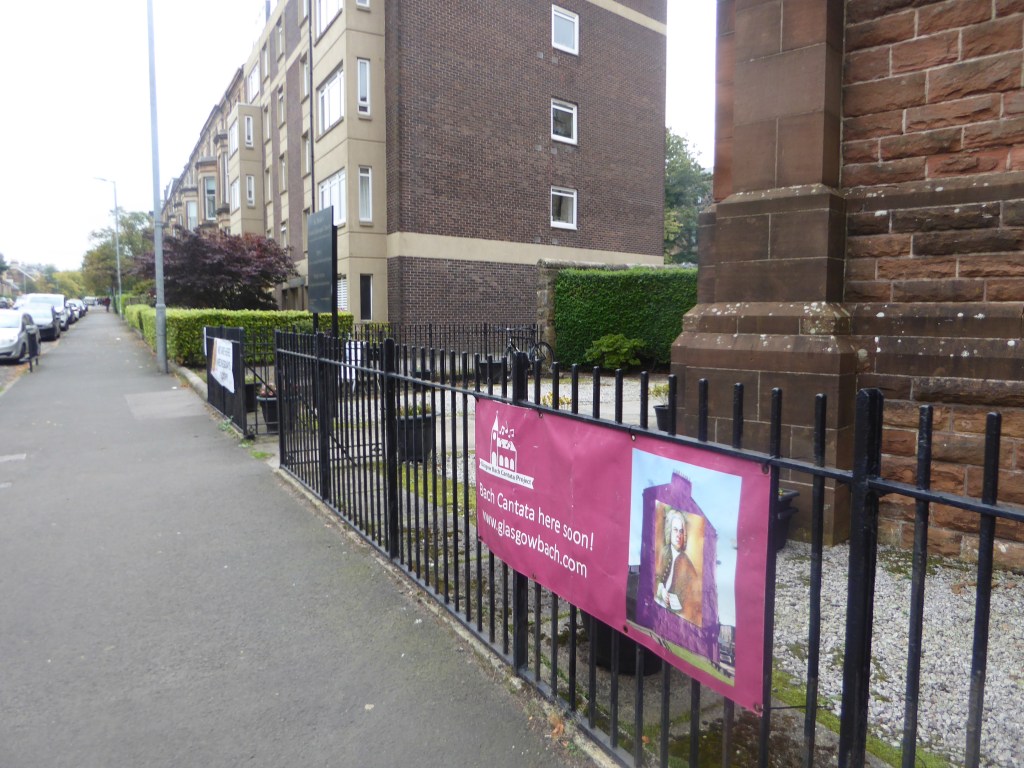
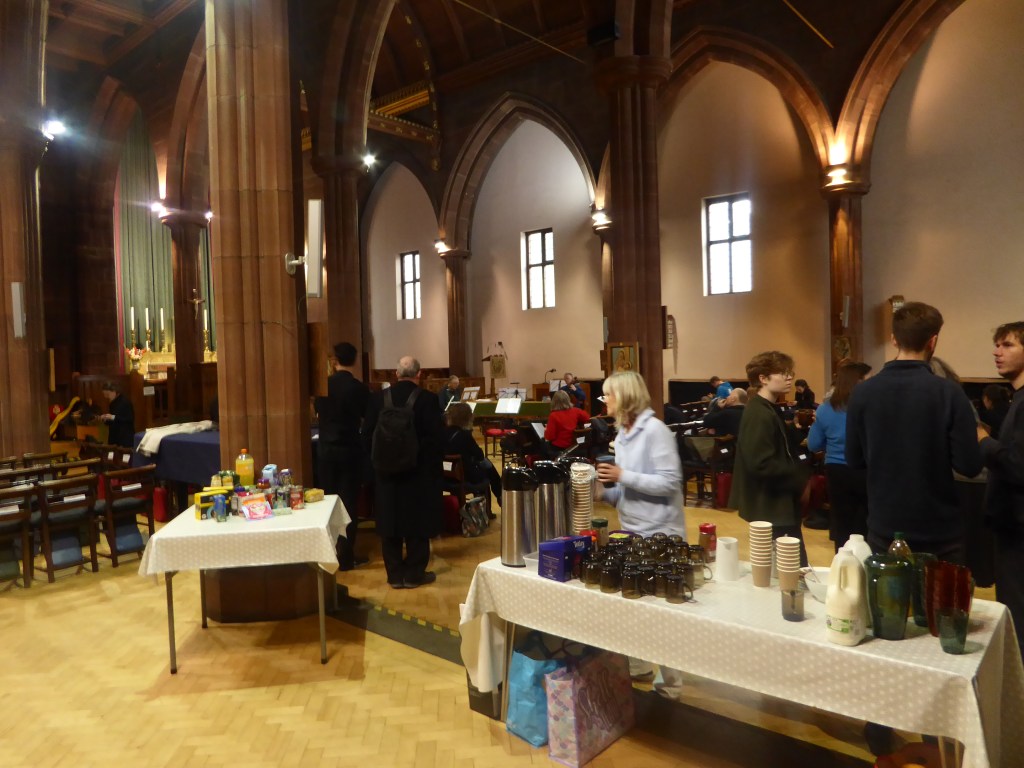
During my visit, I noticed a Bach or Baroque group rehearsing inside, presumably preparing for an upcoming concert either at the church or elsewhere in Glasgow.
With the added charm of delicious cakes, tea, and coffee, I left St. Bride’s Church with a positive impression.
I already have a “Church of the Month” category on my blog that I haven’t utilized enough. Perhaps I can make it a point to explore more of these hidden gems in the future.
It’s interesting because I’ve been in Glasgow for 30 years, but I’ve never actually visited this part of the National Trust for Scotland. At the same time, it seems that virtually every accommodation I’ve used in Glasgow has been a tenement—tenements in the West End, tenements in the East End, and tenements in the South Side. The only time I haven’t stayed in a tenement was in the city centre, specifically in the Pollokshields area of Glasgow, which is a very nice inner suburb.
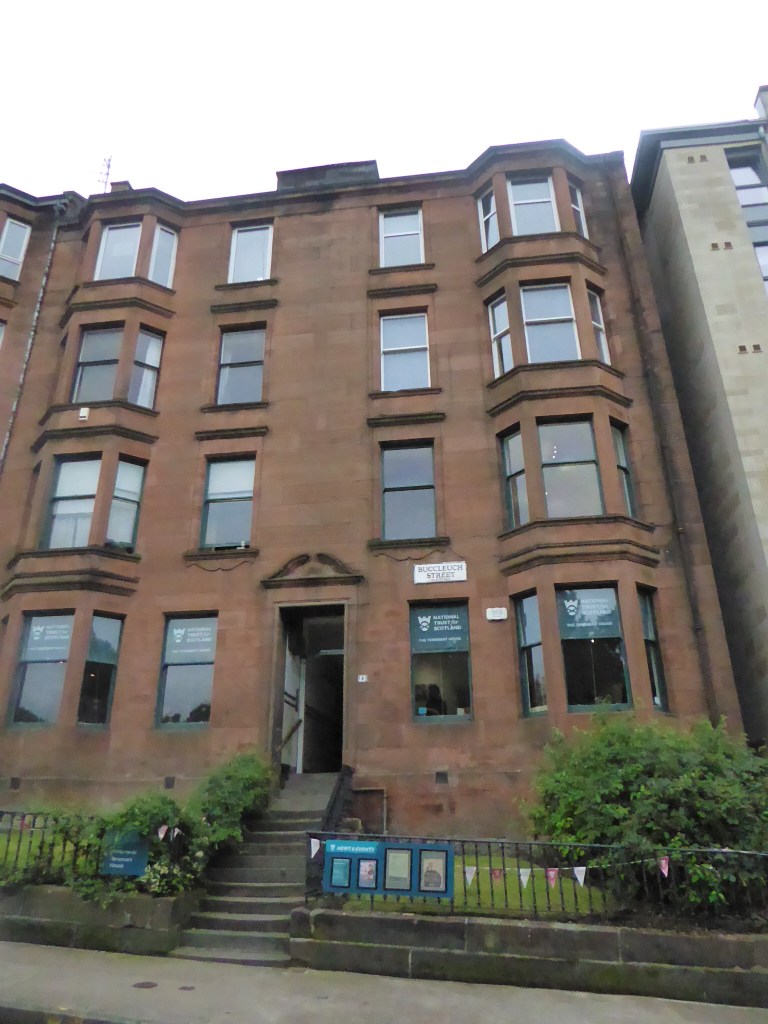
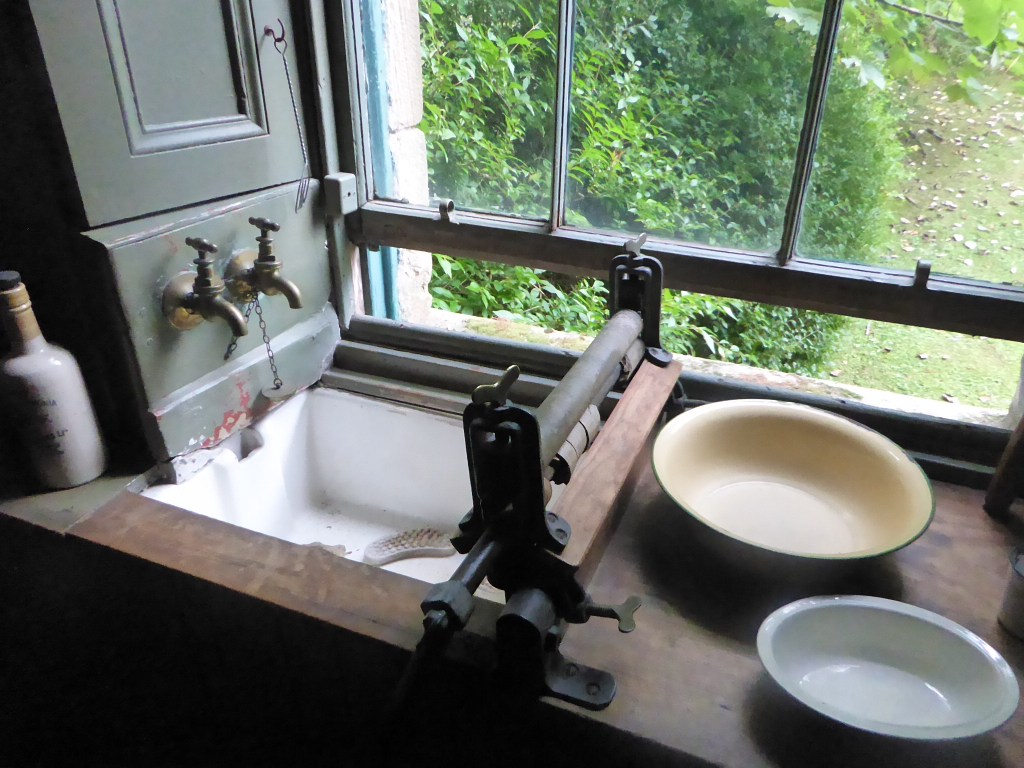
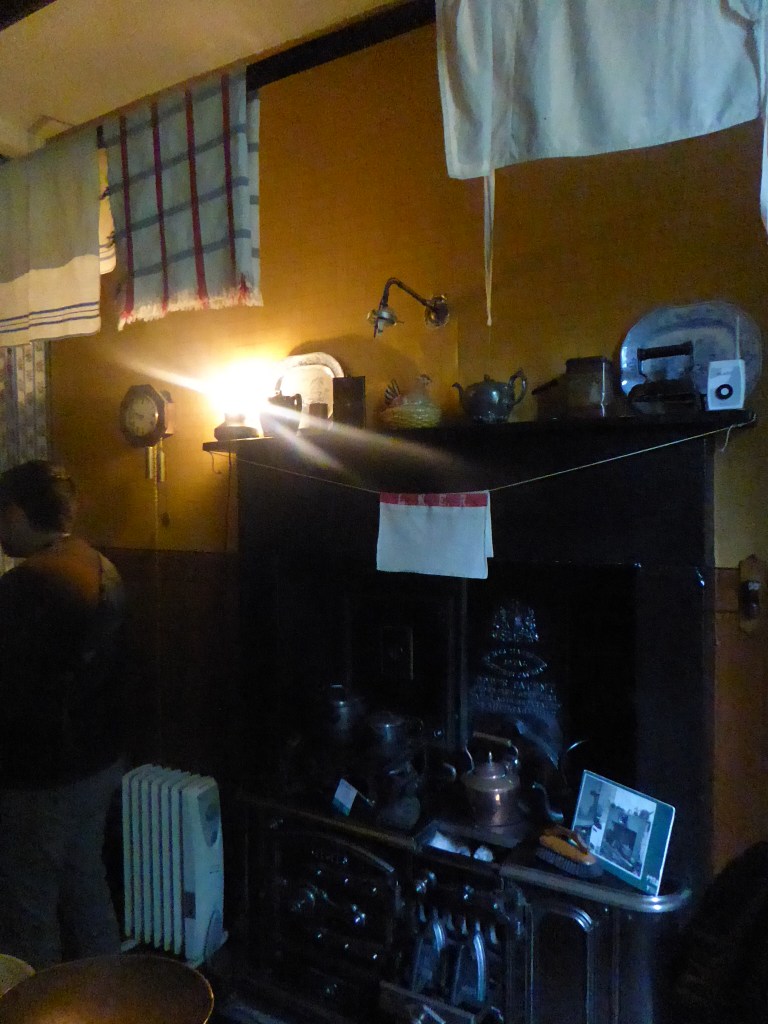
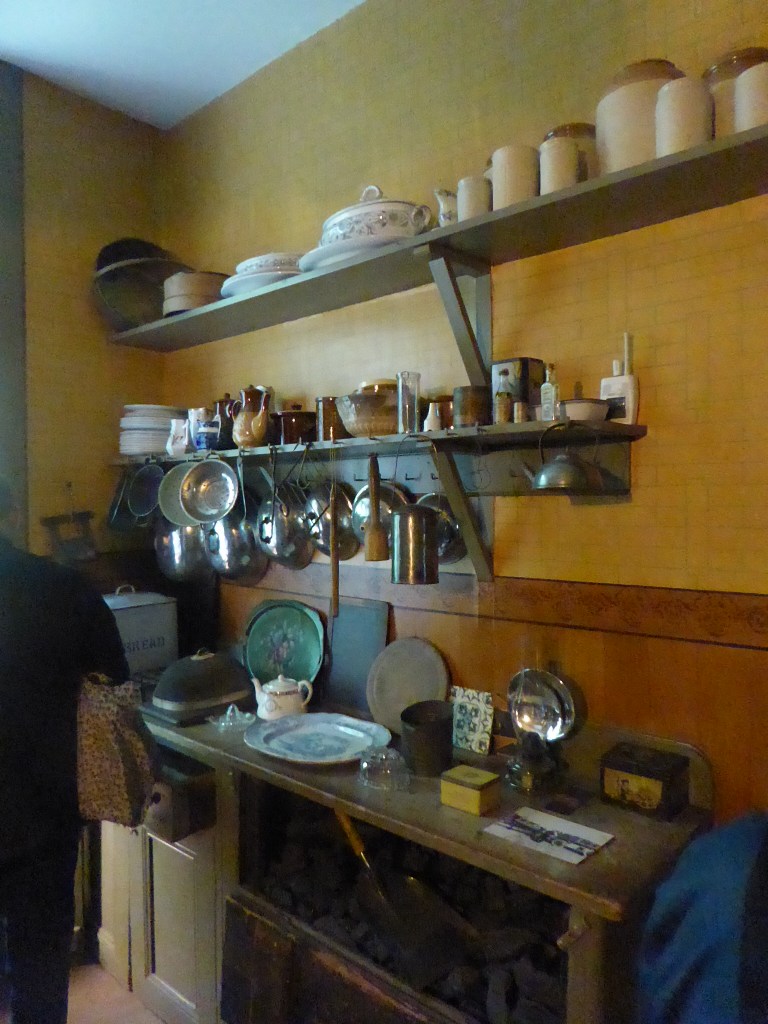
During the annual Doors Open Day in Glasgow, which took place a couple of weeks ago, I decided to visit the Tenement House located in the Garnethill section. It truly feels like a time capsule from 100 to 120 years ago.
The house was bequeathed to the city and later to the National Trust in the mid-1960s, after the owner neared the end of her life. I believe her daughter took over and rented some of it out. The National Trust acquired it in 1965.
It’s fascinating to have a conversation with someone and then, 100 years later, start that conversation again. Time stands still here.
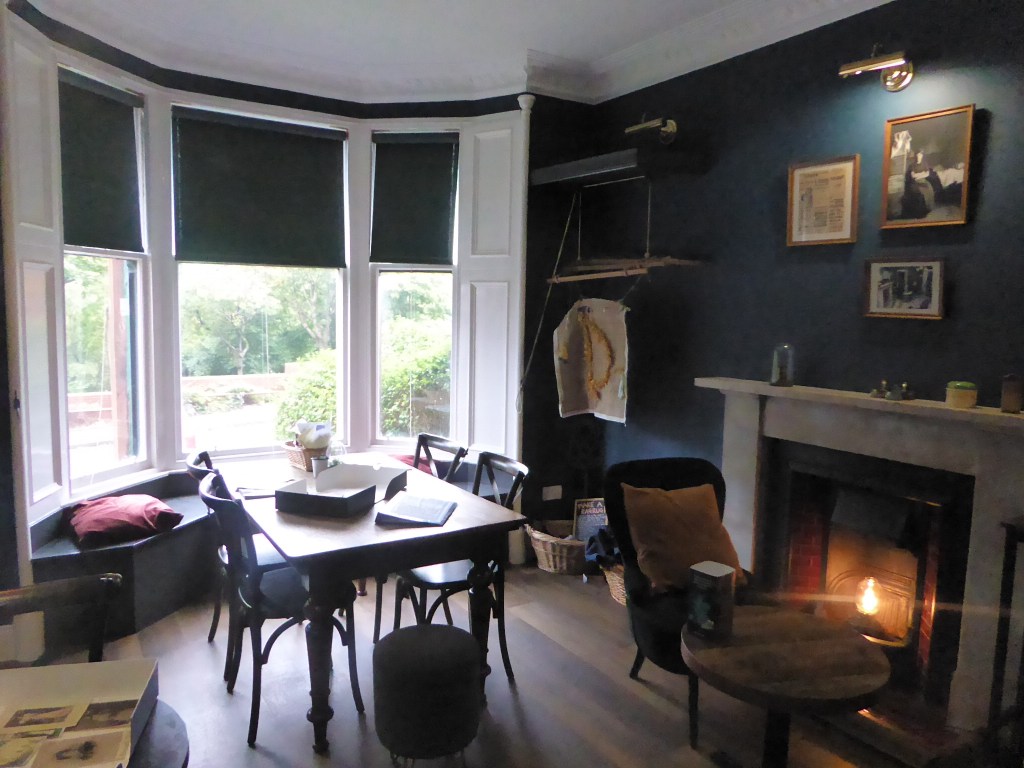
The overall layout is identical to so many tenements here in Glasgow, from the bed recesses (now used as a kitchen table area or closet):
To the “pully,” which is rather horrifically referred to as a Victorian hanger by some:
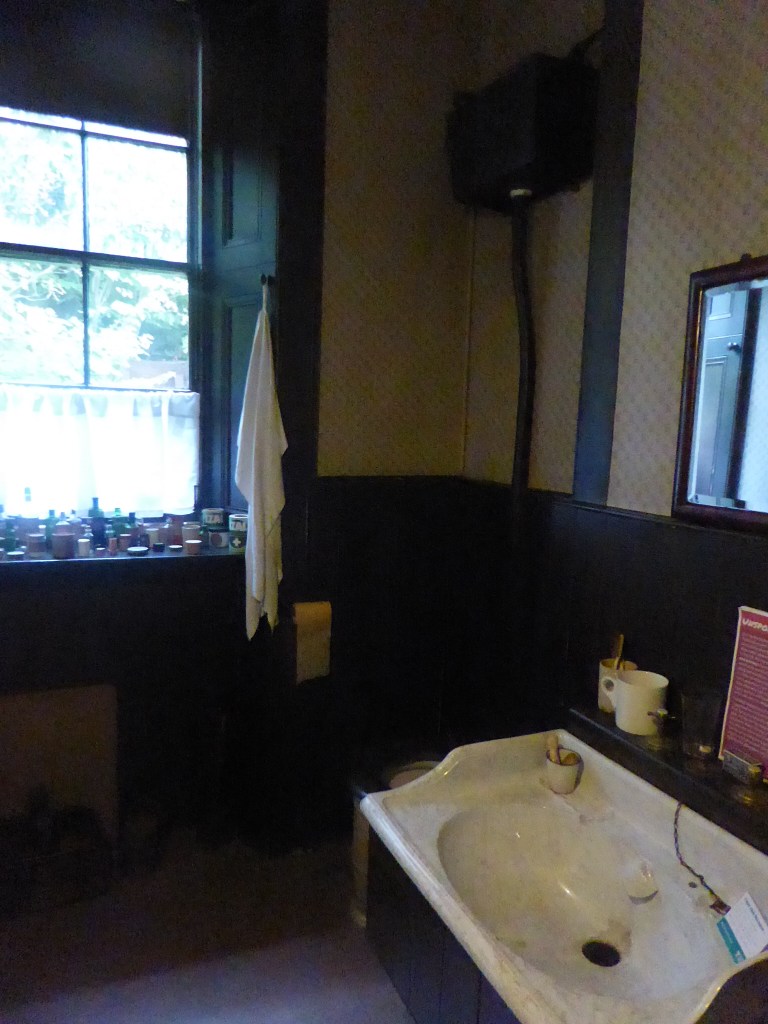
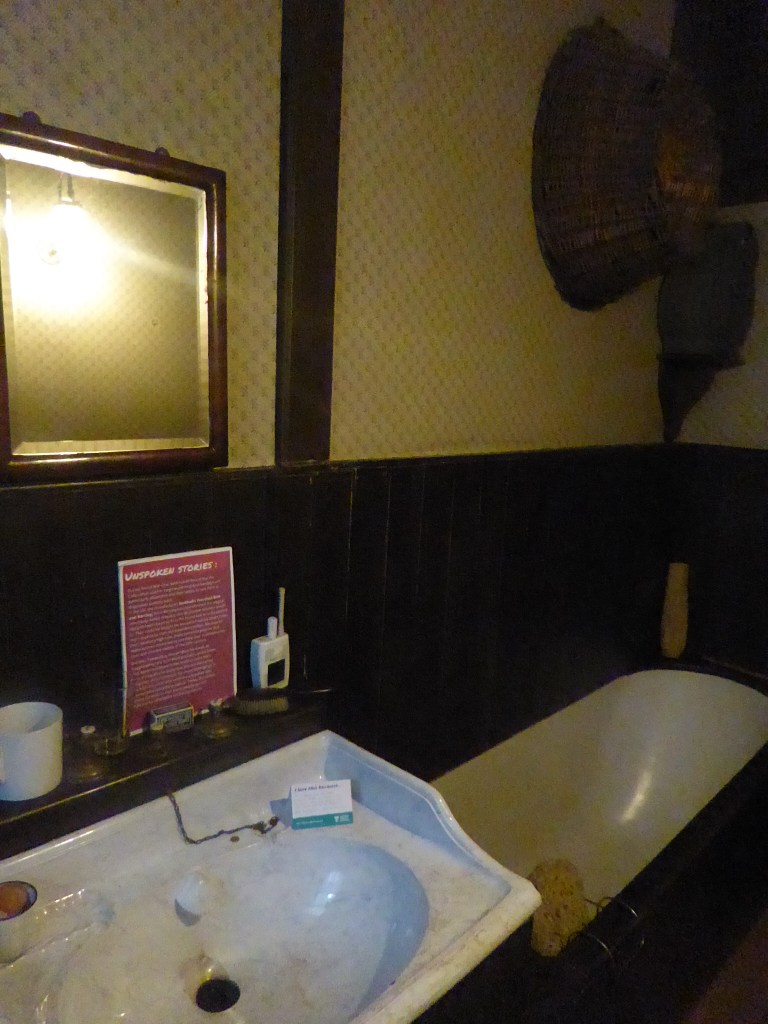
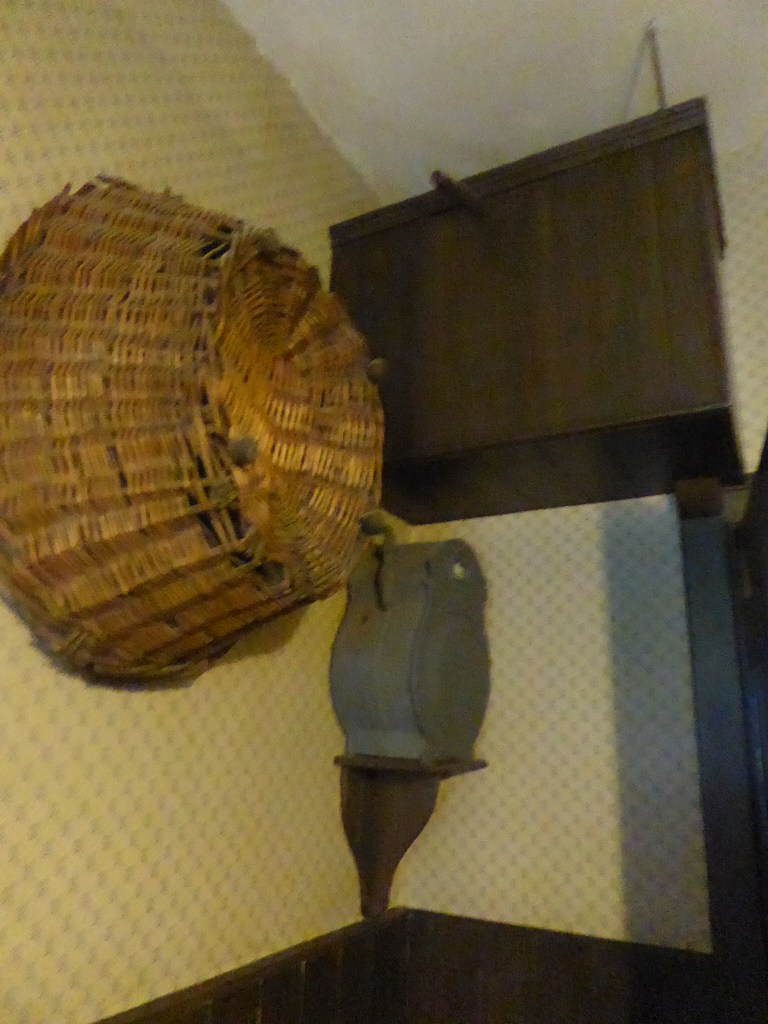
Additionally, it seems the lady who owned it was fairly well-off. While I was in the bathroom, three older Glaswegian women were describing what each feature in the room represented. They noticed a gas connection in the wall, which was connected to the gas port at the time, providing some of the heating and hot water. This suggests that the woman who owned the place was probably middle class.
Even in the bathroom, with a little paint and minor repairs, it would fit right in today.
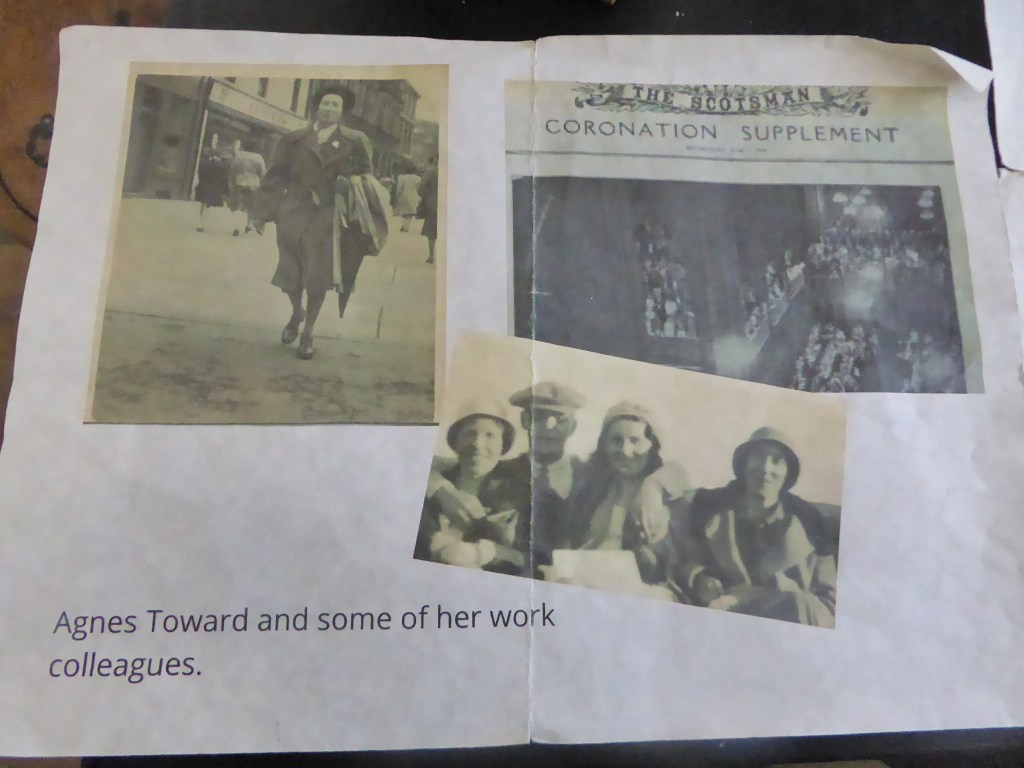
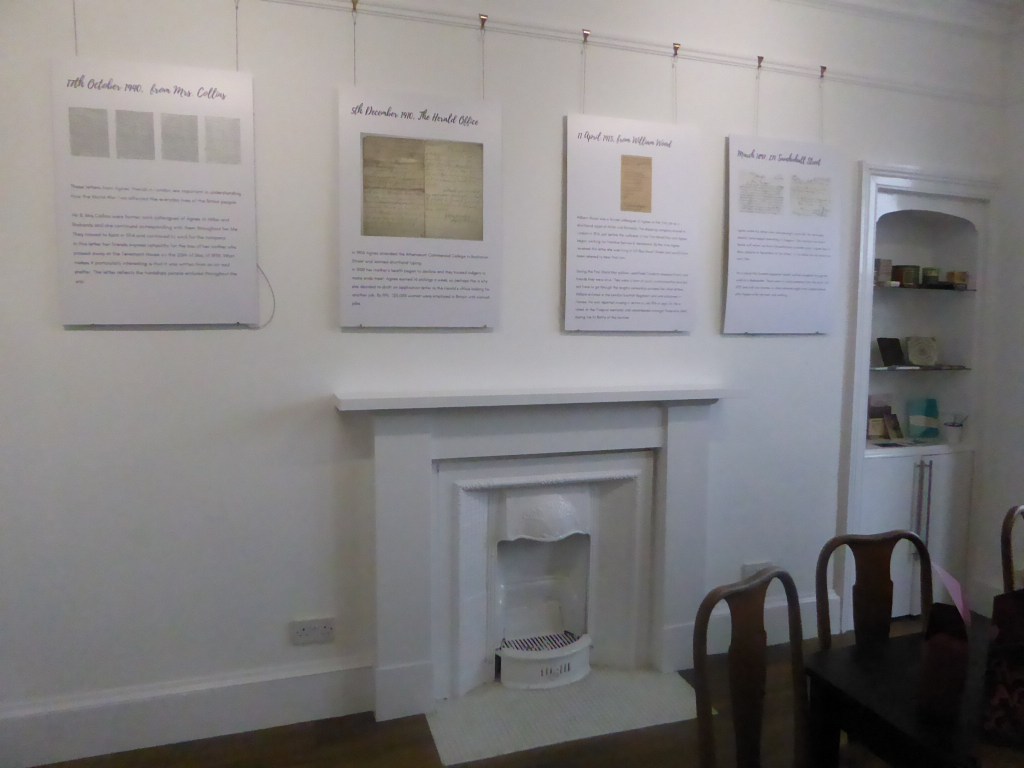
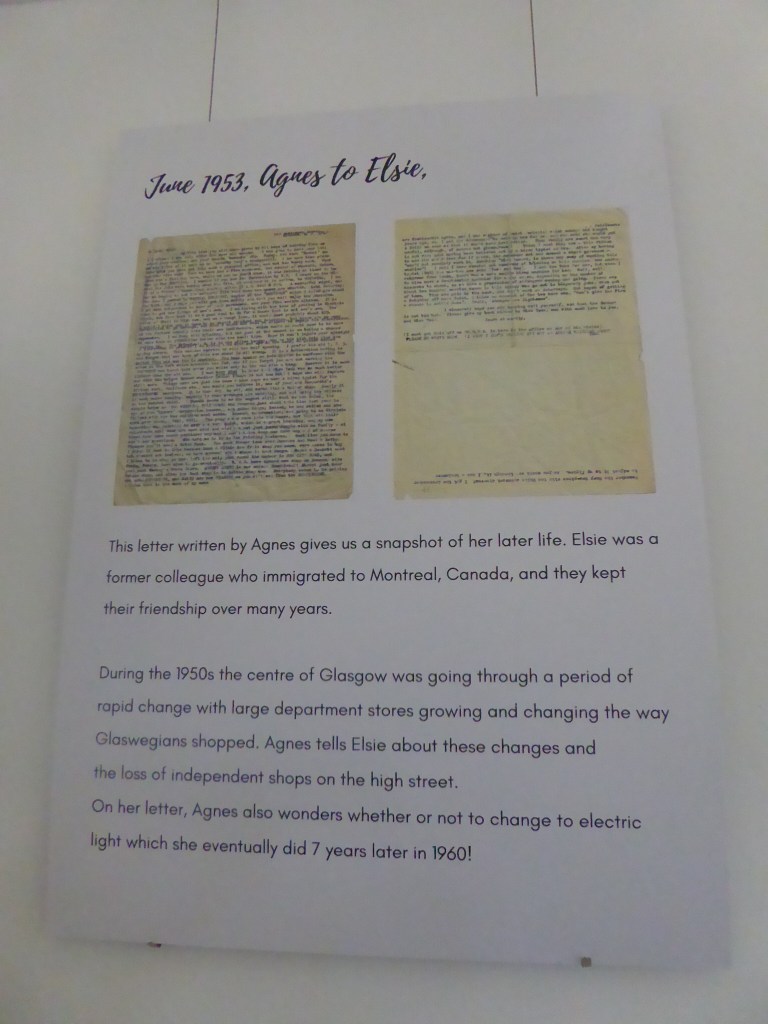
The most striking thing I saw was the letters and briefs that she had written and received throughout her life. It always strikes me that although we have everything from the internet to telephones and mass communication today, we’ve completely and utterly lost any form of communication via pen and paper. These letters were so much more eloquent and elegant than we use today; the words were utterly superior than what we could ever dream of crafting nowadays, even if we were to give up texting or emails.
What’s interesting about the UK and Scotland as a whole is that there seems to be an increasing number of Chinese students and residents nowadays, which can only be good for the restaurant trade. I live in the West End of Glasgow in Scotland, where there has been a significant influx of Chinese students, leading to a rise in the number of Chinese cafes, restaurants, and even supermarkets.
Also, if you look at the figures from the last few years, in 2021, around 150,000 people from Hong Kong were allowed to settle in the UK. In Glasgow, this likely represents many thousands that we’ve probably welcomed in the last few years.
The last few months in Glasgow, I’ve walked by a bike shop that surely had someone from Hong Kong working there, as he was older, and not a student. In addition, I was also at a small café that had been for sale for about a year. The new owner, Chinese, I believe also comes from Hong Kong, as his English was excellent, and I don’t believe too many Chinese students have this level of English, in addition to not having enough money to fork out for a used café’.
He was also quite astute, as when I mentioned to him that I had noticed this café’ had been on sale for the last few months, he enquired how I knew that piece of information. I told him that it was on a Glasgow website.
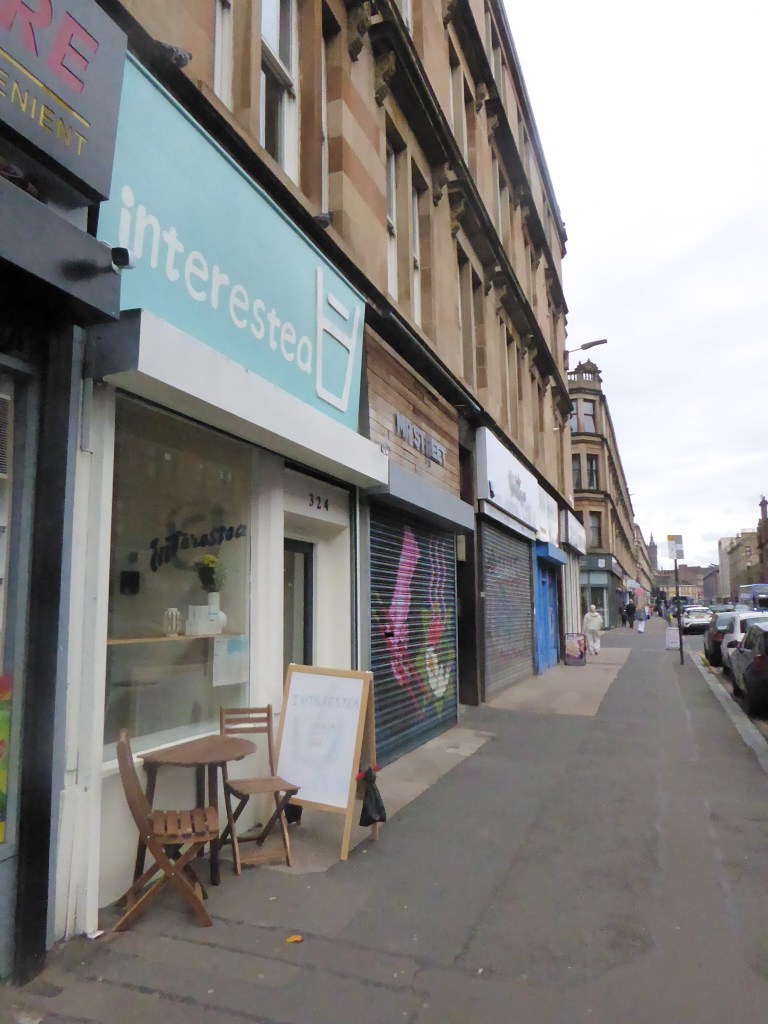
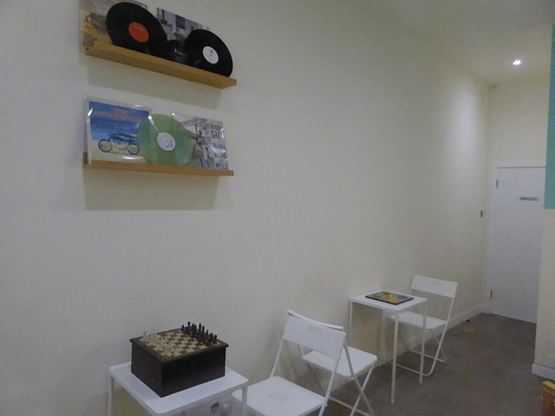
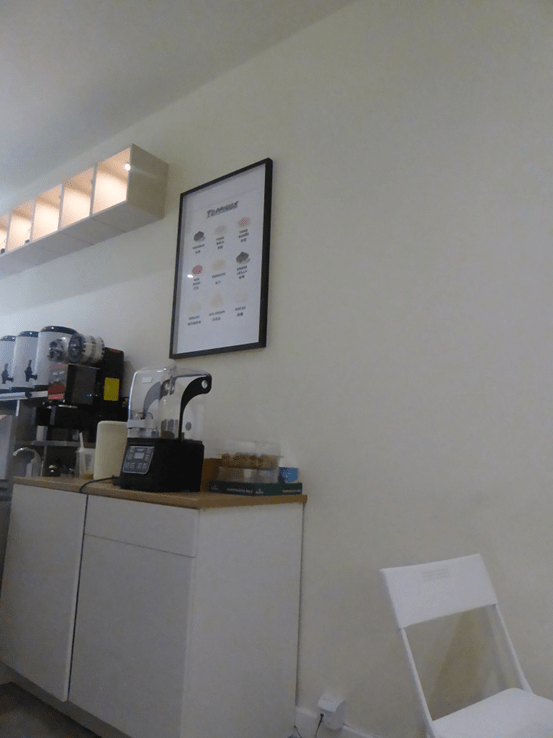
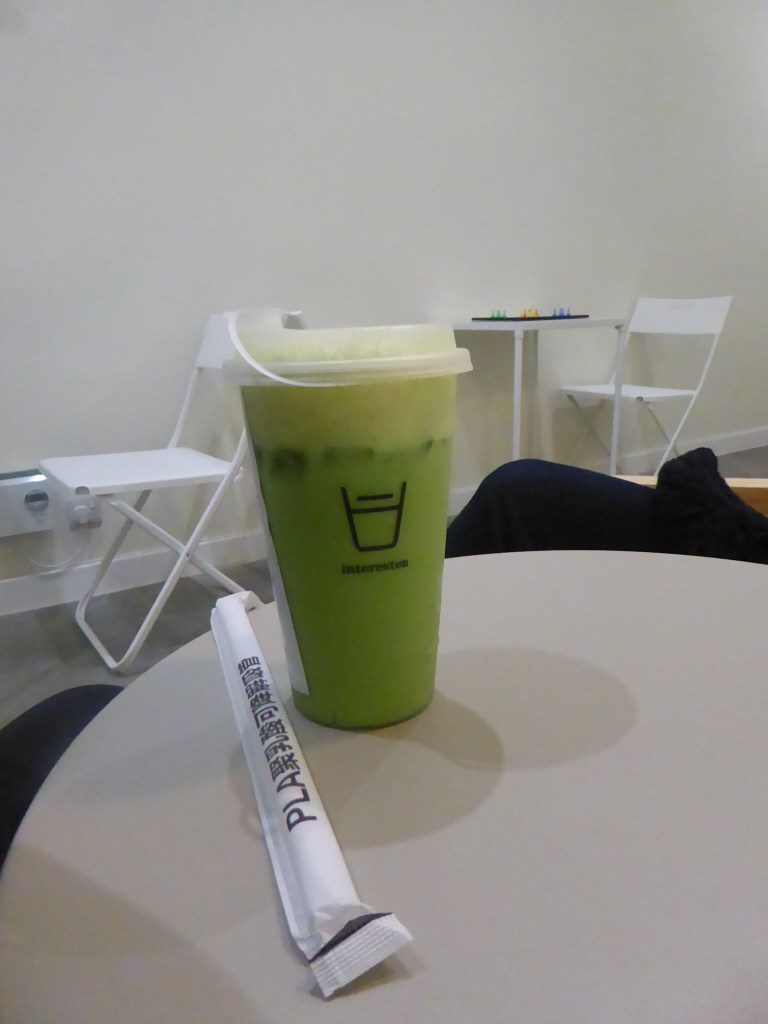
So, during a walk the other day, we passed by, yet another Chinese place, in this case also with a rather unfortunate name Interestea – a new bubble tea and coffee café that is minimal and sleek.
I just LOVE some of the names of Chinese restaurants in Glasgow!
This establishment is located further west in the West End of Glasgow. This trend is natural, as more & more Chinese students (and other nationalities) arrive, there simply isn’t enough accommodation near the University itself. As a result, they are moving further west, expanding into the Thornwood, and Victoria Park areas of the city.
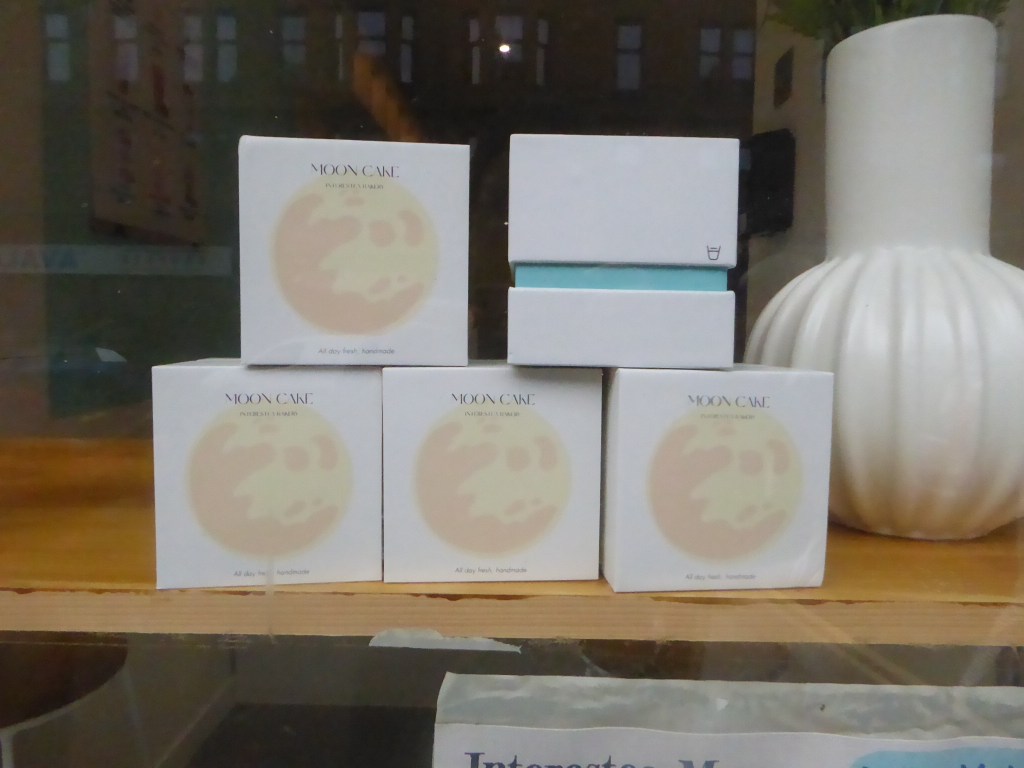
One thing I noticed, as I am currently trying to learn Chinese, whilst I also have Chinese clients online, was that there were some moon cakes displayed in the window.
Moon Cakes, or Autumn Festival cakes, are traditionally baked for the Mid-Autumn Festival that took place 2 weeks ago in China. Unfortunately, we didn’t get to try any here, but we did buy some last week from our Chinese supermarket in the West End. I haven’t tried them yet, but one client mentioned he didn’t like them because they were too greasy.
In addition, as I’m a dreadful amateur “cook”, I searched for and found an online recipe that called for a strange flour mixture of dough; consisting of alkaline water, along with some sort of golden syrup and eggs—it didn’t look very appetizing.
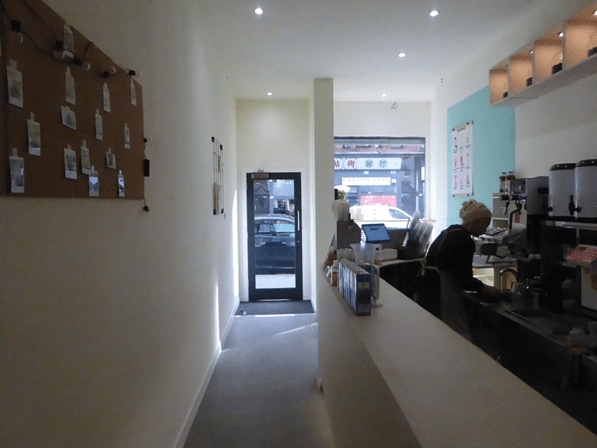
This café was new, clean and very minimal; and will no doubt contribute to the proliferation of Chinese establishments, whether cafes or restaurants, in the West End of Glasgow. It can only be a blessing.
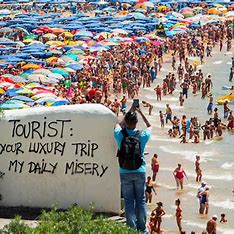
As a follow up to my post of February 1 of this year, it is now quite well known that Venice has indeed brought in a tourist fee for a day trip to the beloved city.
But, what the press has been quite low key about, is a variety of other regions and cities are essentially doing the same thing.
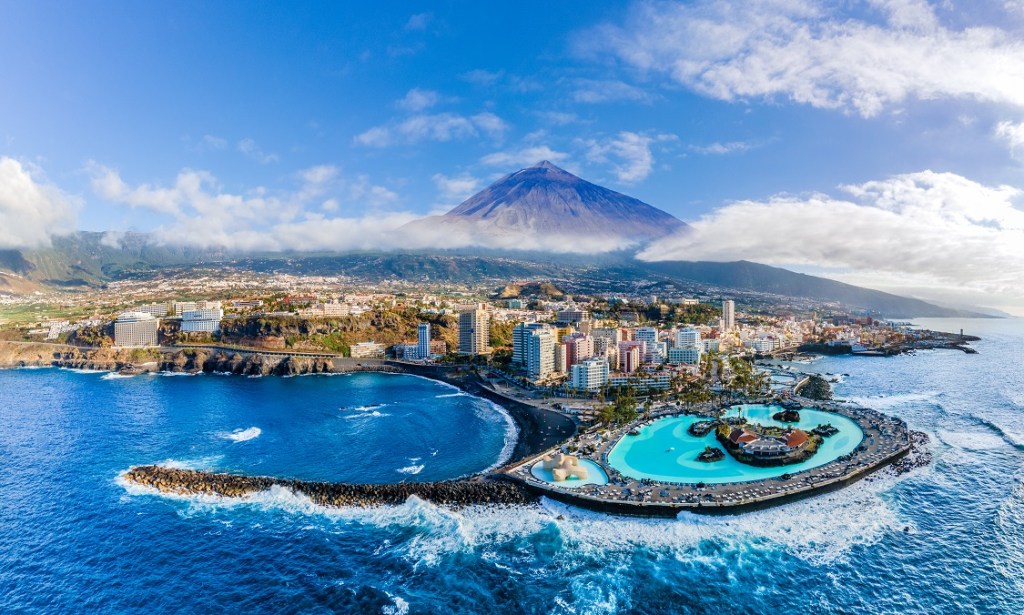
These are presently ranging from Spain to Hawaii, and various places in between.
As always, there is a decision taken (this case Venice) and then, there are the followers.
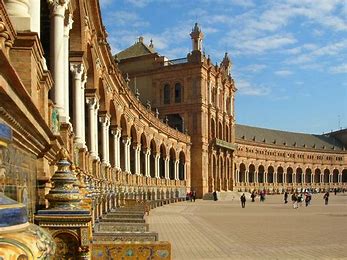
It’s happening all over Spain at present. I mention Spain, because of the sheer numbers who do go there from the UK. In fact, I’ll be going to Mallorca in June, in order to watch the Mallorca Open grass court tennis tournament.
As someone who travels quite a lot, with my next trip to Porto or Northern Ireland to see a brother(s) of mine, next week, I can well understand both the concerns of the tourist, as well as the people who live in these tourist areas.
At present I’ve a holiday home in a picturesque area of Scotland, that as of last week, has started to become inundated with tourists. Though many in the local community, as the town is small, rely on them for certain portions of the year for their income (or at least a part of it).
I put up with them, and they are really not that bad! OTOH, at times the traffic is outrageous. This makes me furious, as I’ve always wondered why people who want to “get away from it all“, are at the same time driving through the village as if it’s a friggin motorway!
In addition, as this is not our main residence, as of this year we’ve now been hit with a double council tax from the local Council.
Is this really a solution? I’m still not sure, as we will not only pay it, but at the same time will have no intention of all of a sudden, selling it to a “local”. I say local, as we’re there for about 7 – 10 days a month, and consider ourselves to be “locals”. And besides, just what does the local Council do with this new found money? I seriously doubt that they’ve set up a special trust fund with it, in order to assist locals in find accommodation!
Alternatively, I can certainly understand when certain local people can not find a flat either for sell, or to rent for the long term.
An obvious solution comes from countries who have already experienced something like this. Germany is one that comes to mind, and one where I have first-hand experience of.
There, it has always been the case for many of the states to have a cap / limit, on the number of Ferienwohnungen (holiday houses) that a specific area is allowed to have.
This seems like common sense, and it also does not punish someone like myself, who has bought a second property, and then later, is expected to be taxed double for it.
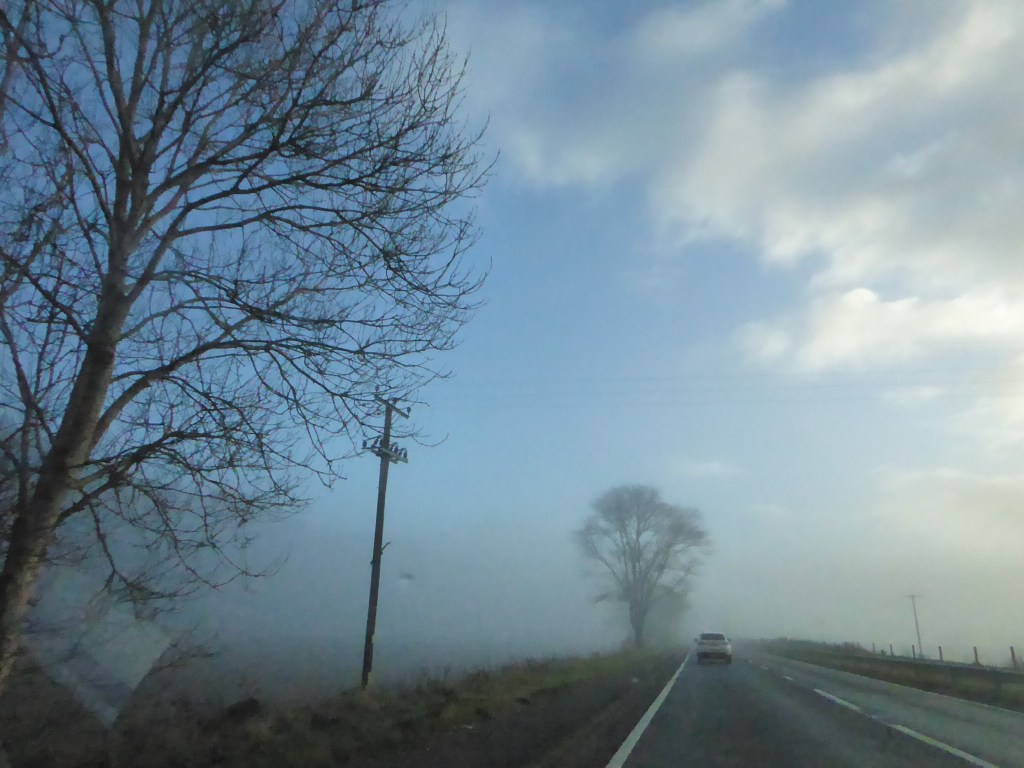
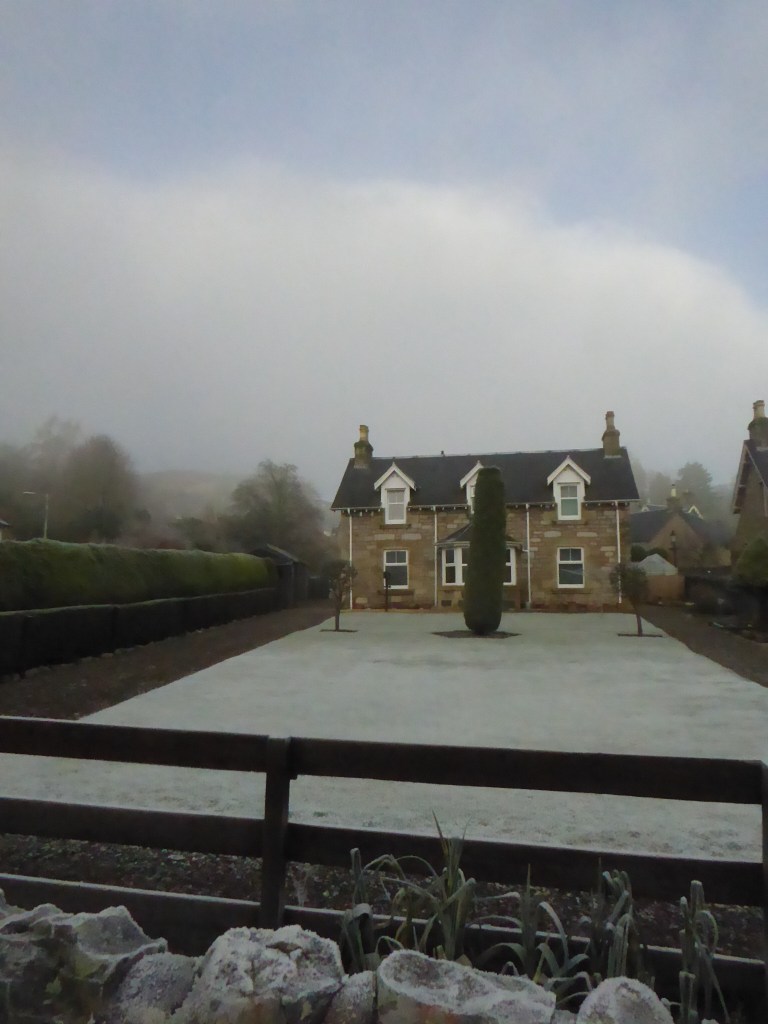
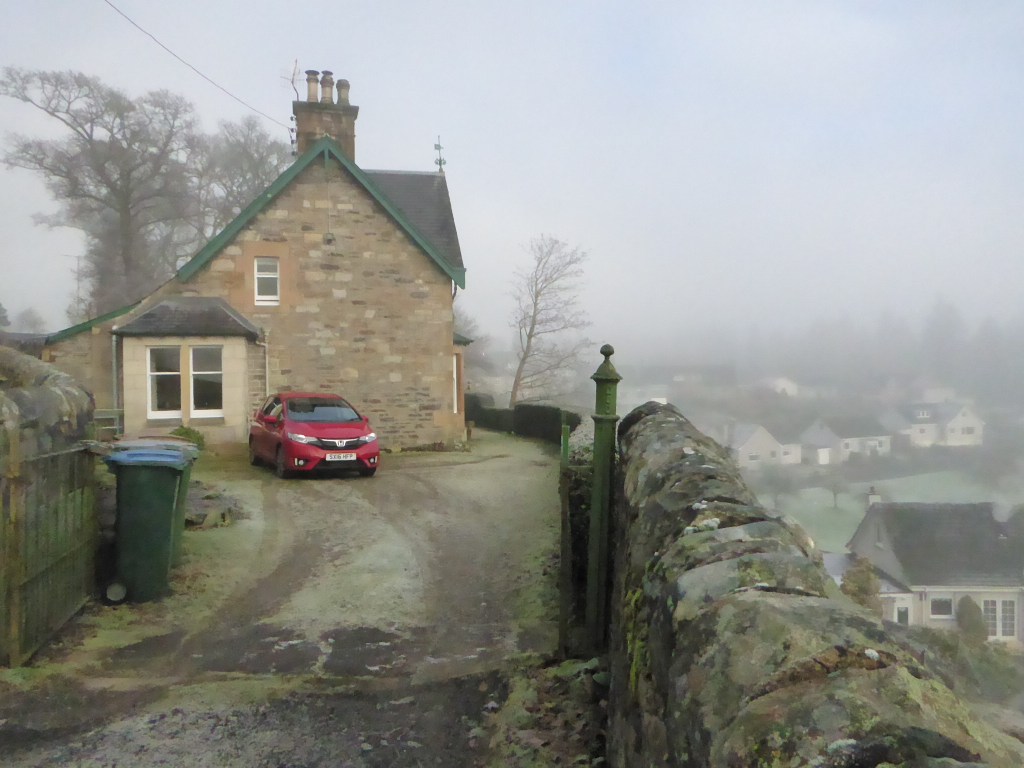
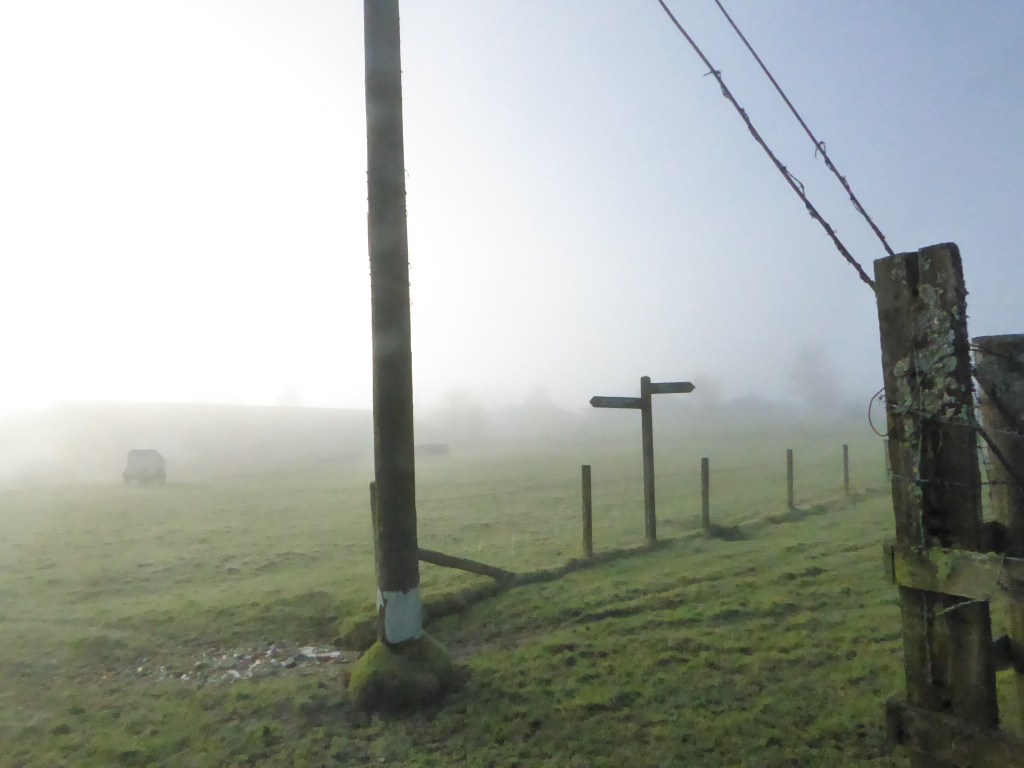
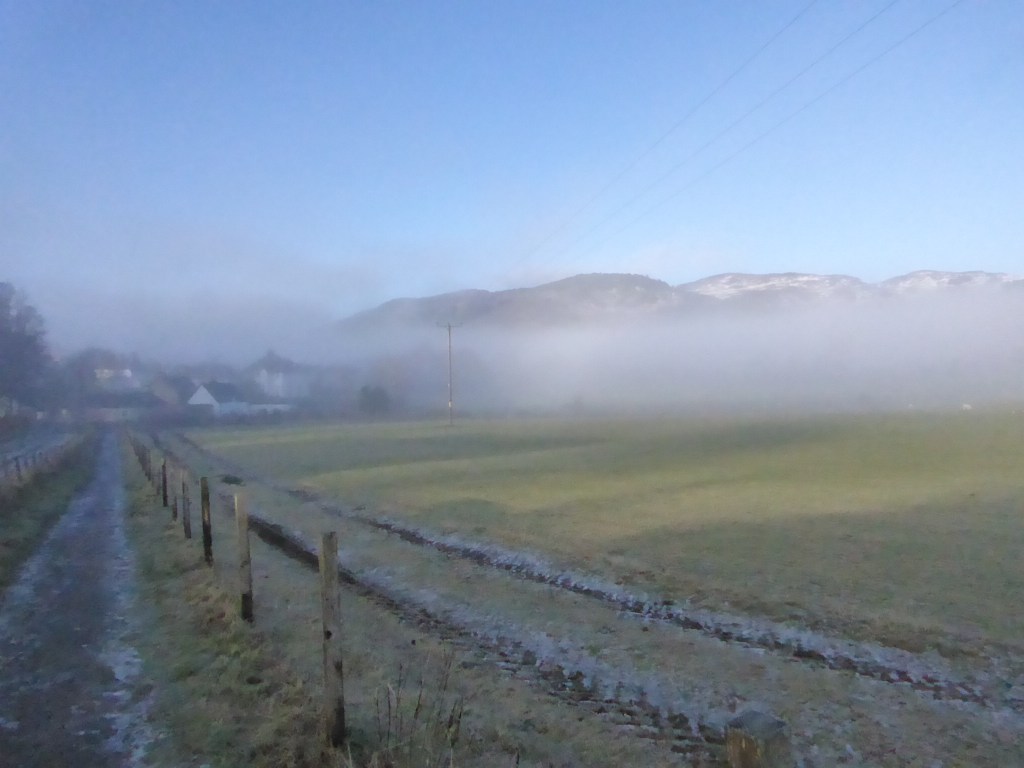
Have I blogged about this before? I’m not entirely sure. But Dunkeld is a charming little village nestled between Perth and Aviemore. And as you can tell, driving there, the fog had still not lifted yet.
It’s also known as the home of Beatrix Potter. In the 19th century, I’m uncertain whether she lived there permanently or just during the summers, or if she did any writing there. I’ll delve into that in another post. However, they do have a new museum dedicated to her, along with a café.
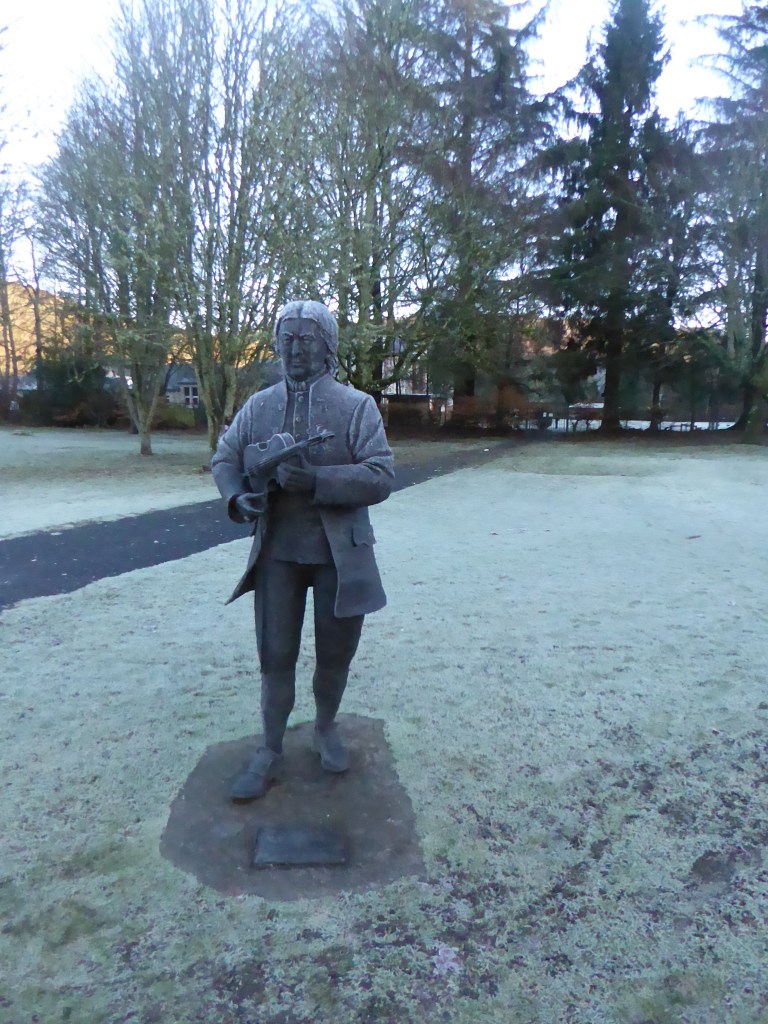
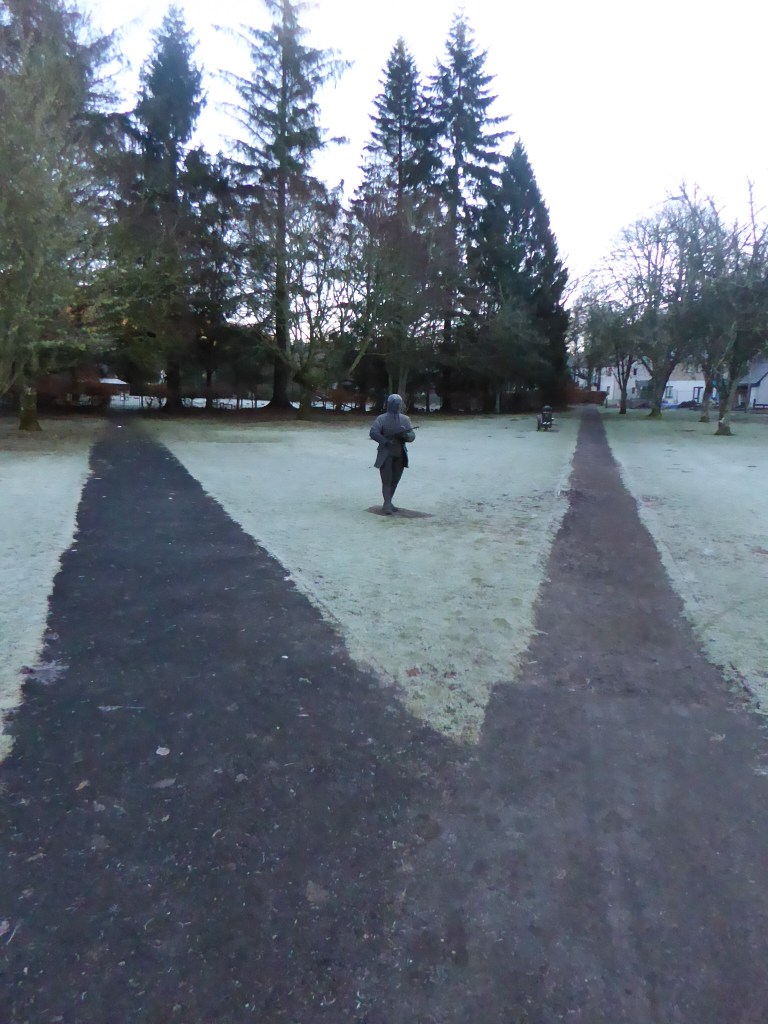
As we wandered into Dunkeld; we passed by a statue of a violin player named Neil Gow, who was apparently the foremost player in all of Scotland during the 17th century, if not the world. It’s a wonderful statue in the park just before you reach the bridge.
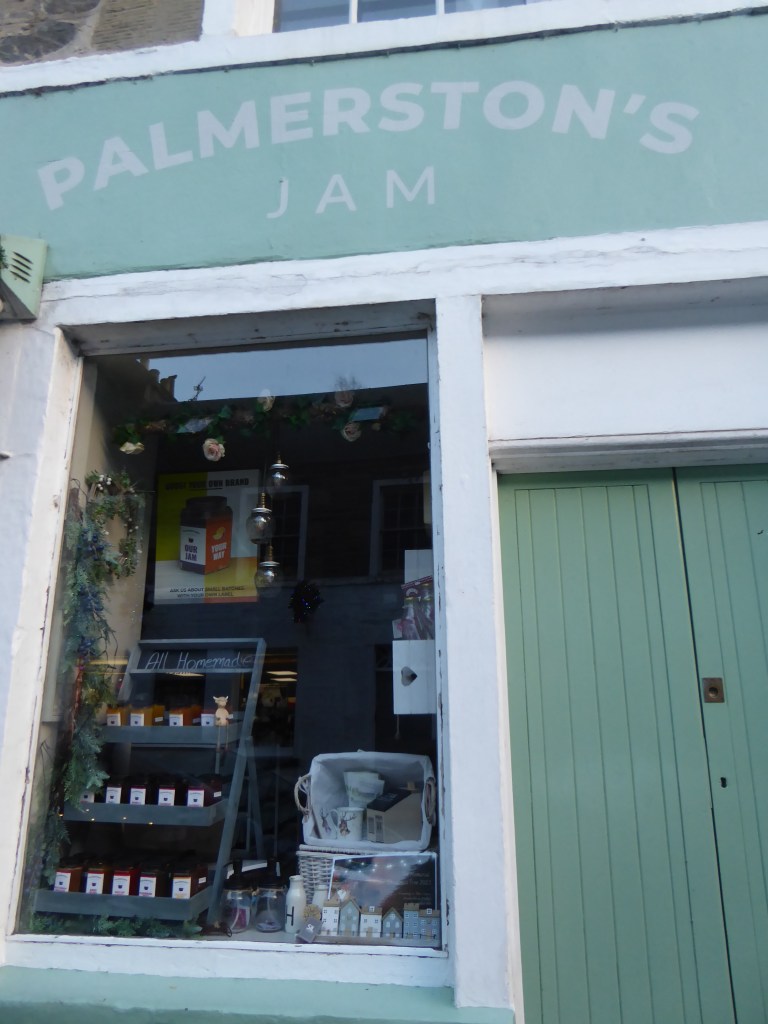
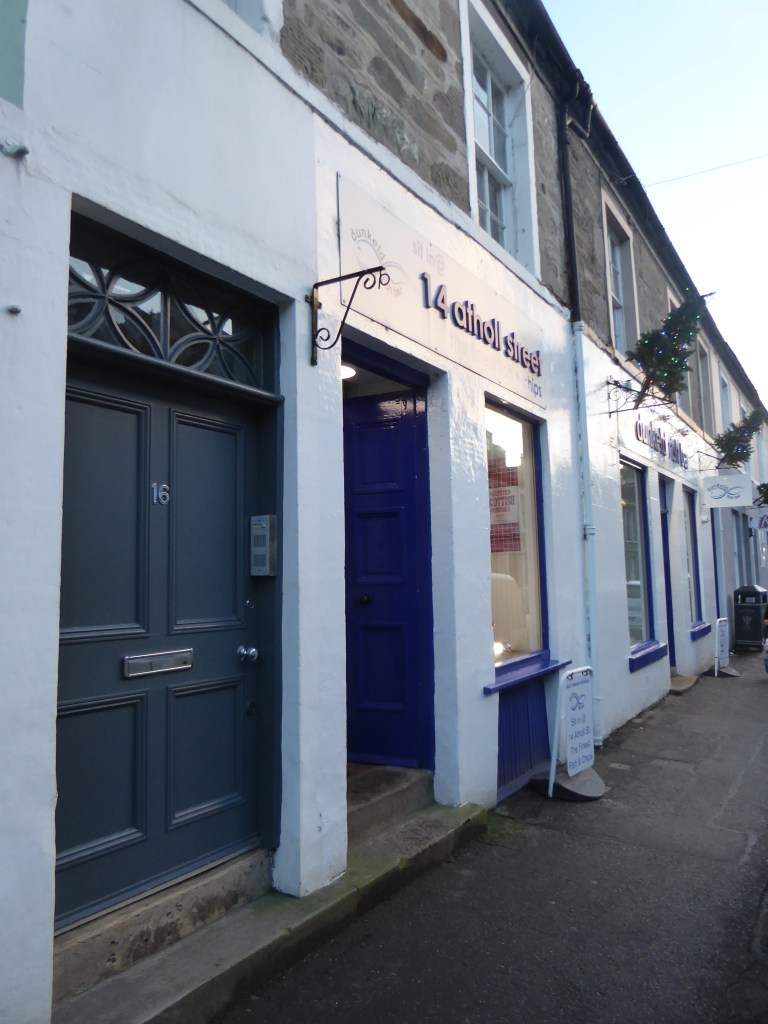
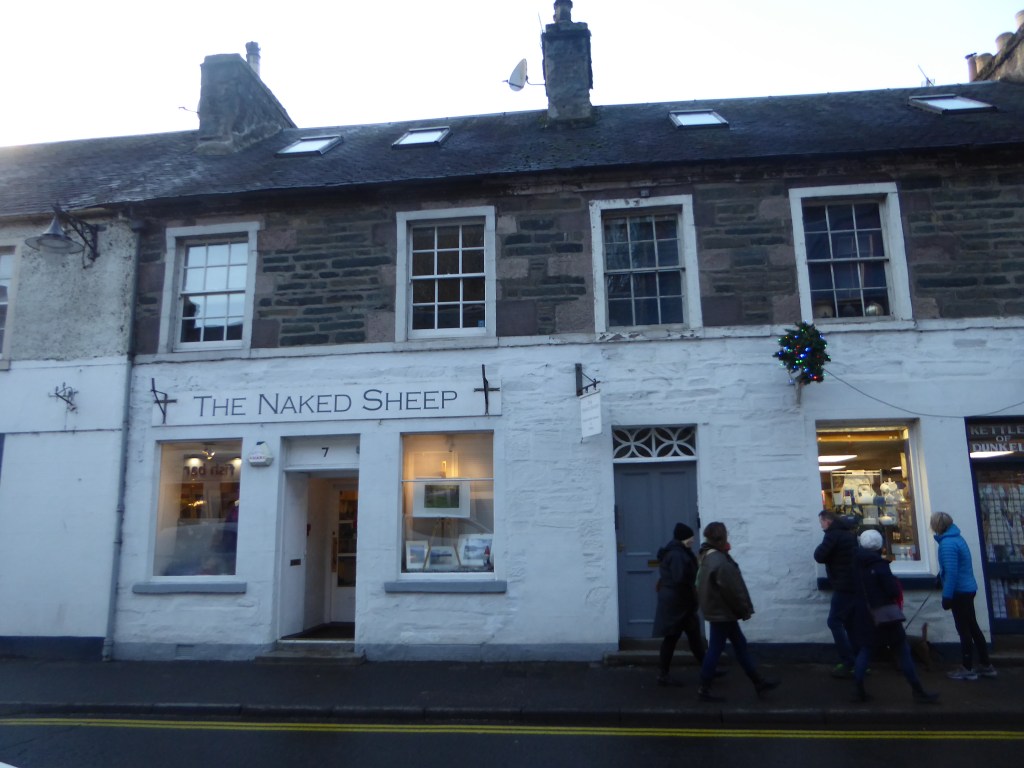
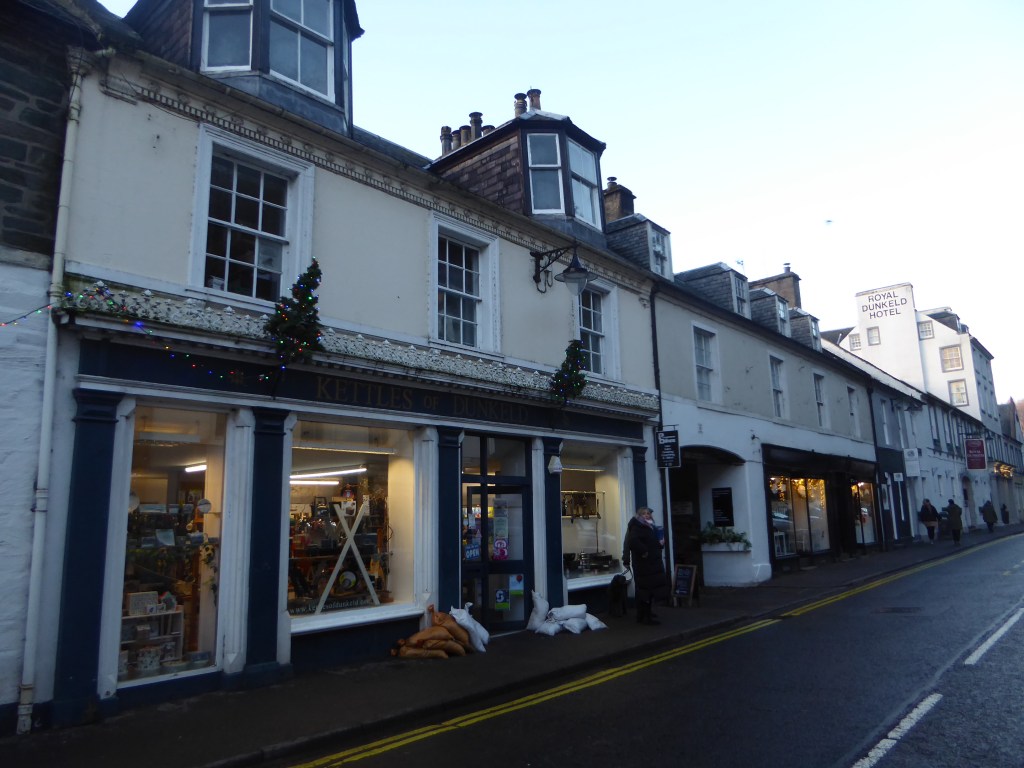
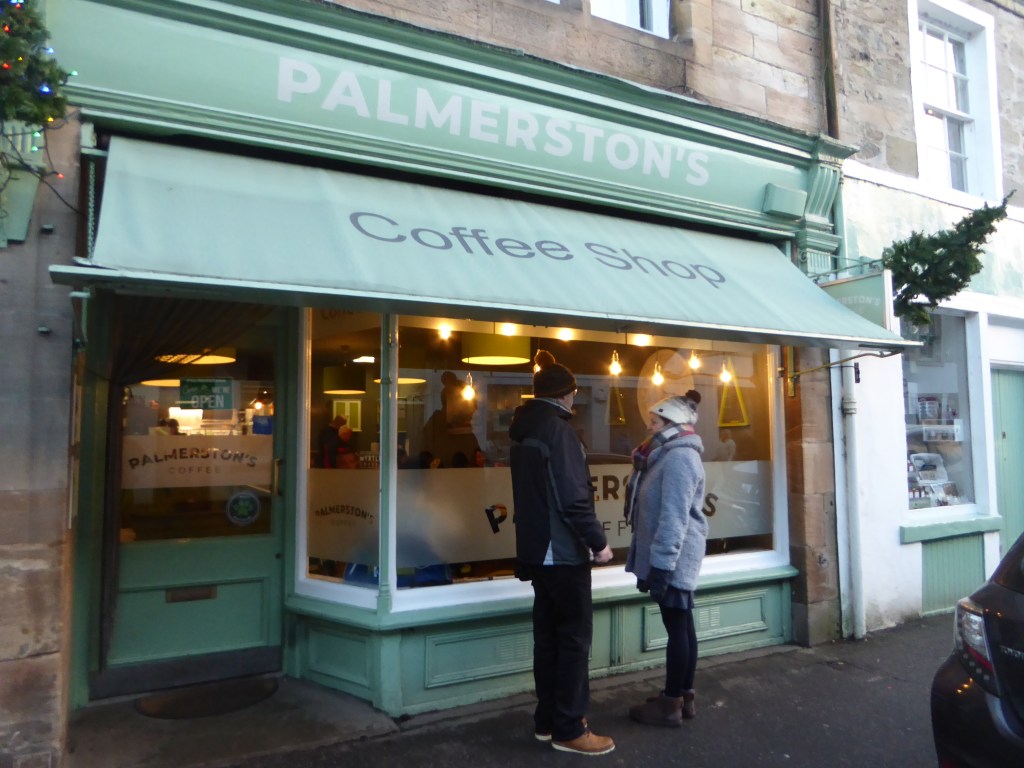
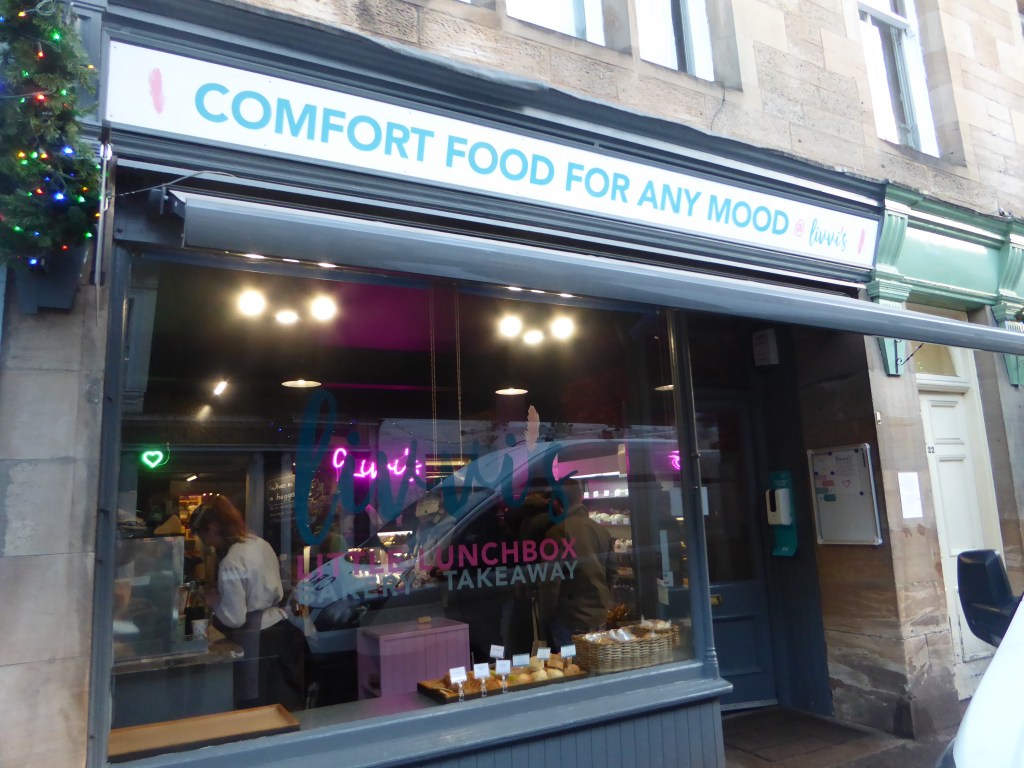
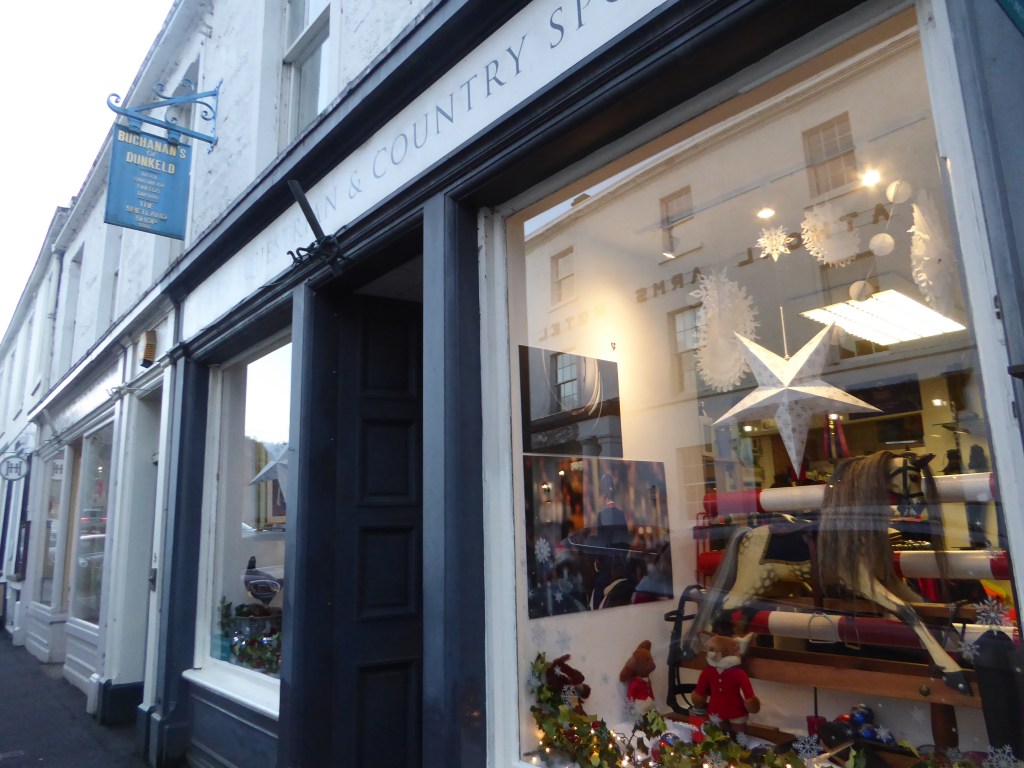
Once you cross the bridge into Dunkeld proper, you’re greeted by a multitude of boutique shops, numbering around fifteen to thirty. The air practically oozes affluence here, yet it retains a refined, classical, and quintessentially Scottish middle-class vibe.
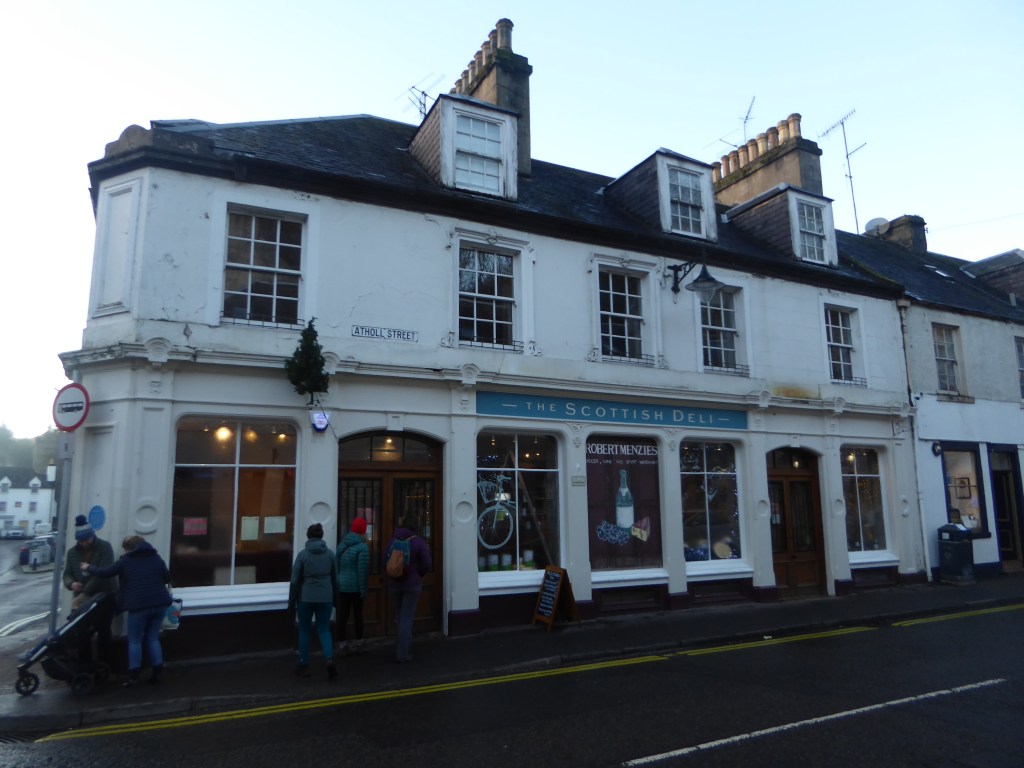
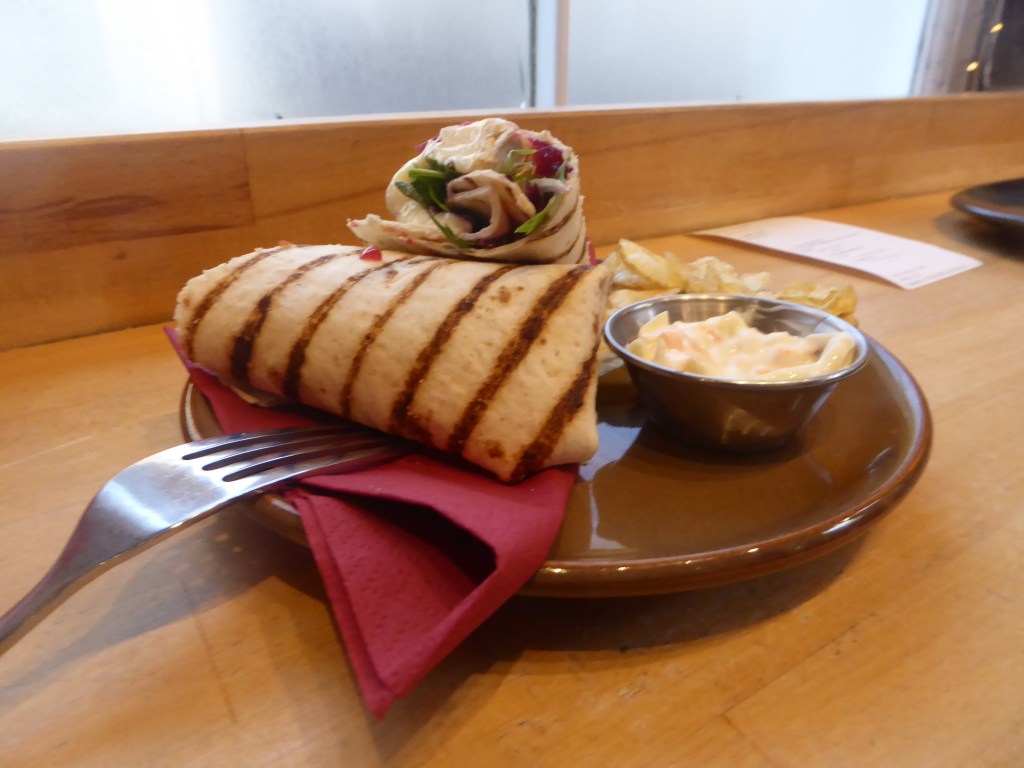
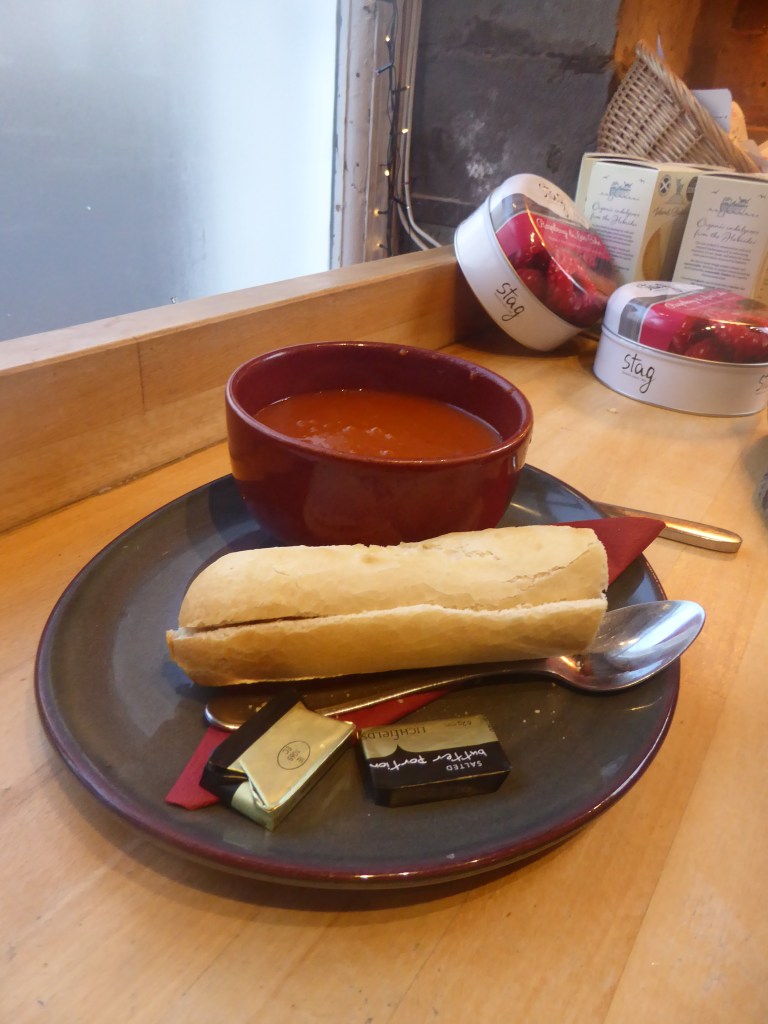
We decided to visit one of the many cafes, The Scottish Deli. Local kids were working there, no doubt earning minimum wage or more. The atmosphere was friendly and inviting, and the coffee was, indeed, perfect.
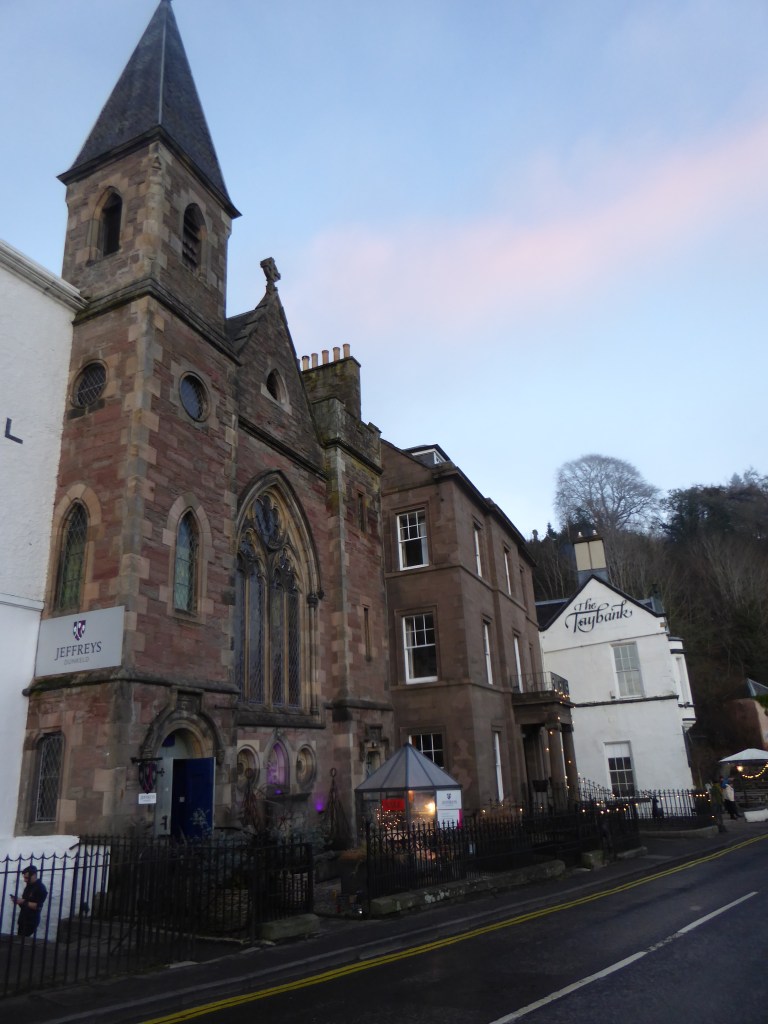
But that was just the beginning. We then stumbled (again) upon my favourite home furnishings shop in the entire world, Jeffreys Dunkeld.
What a name!
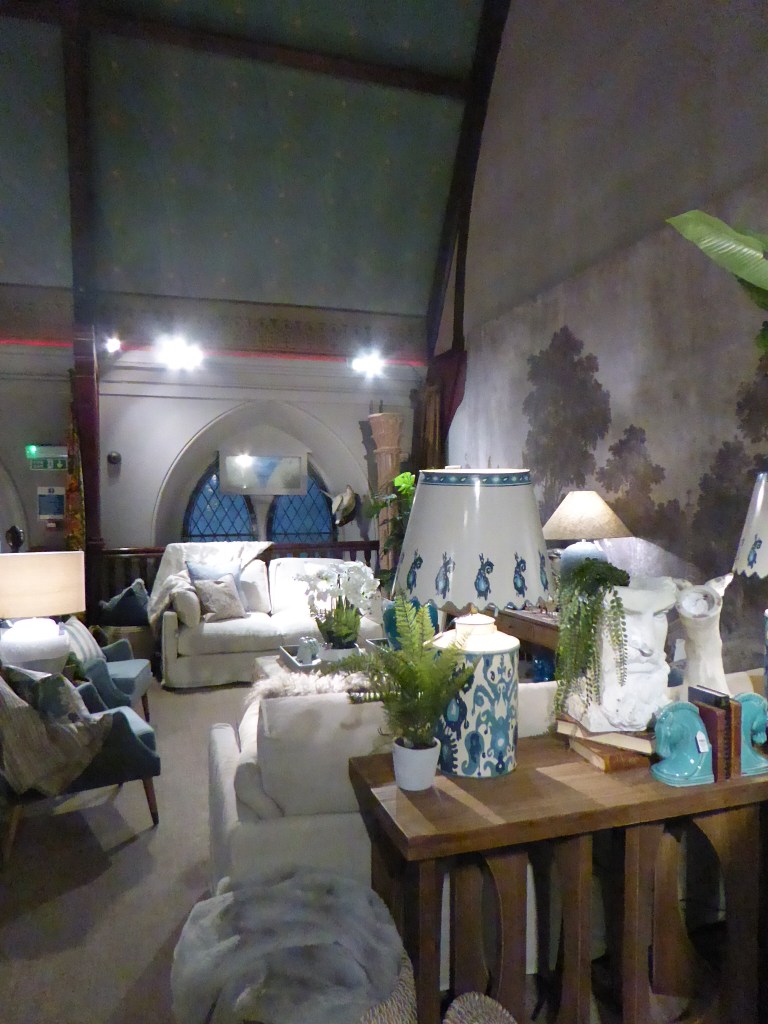
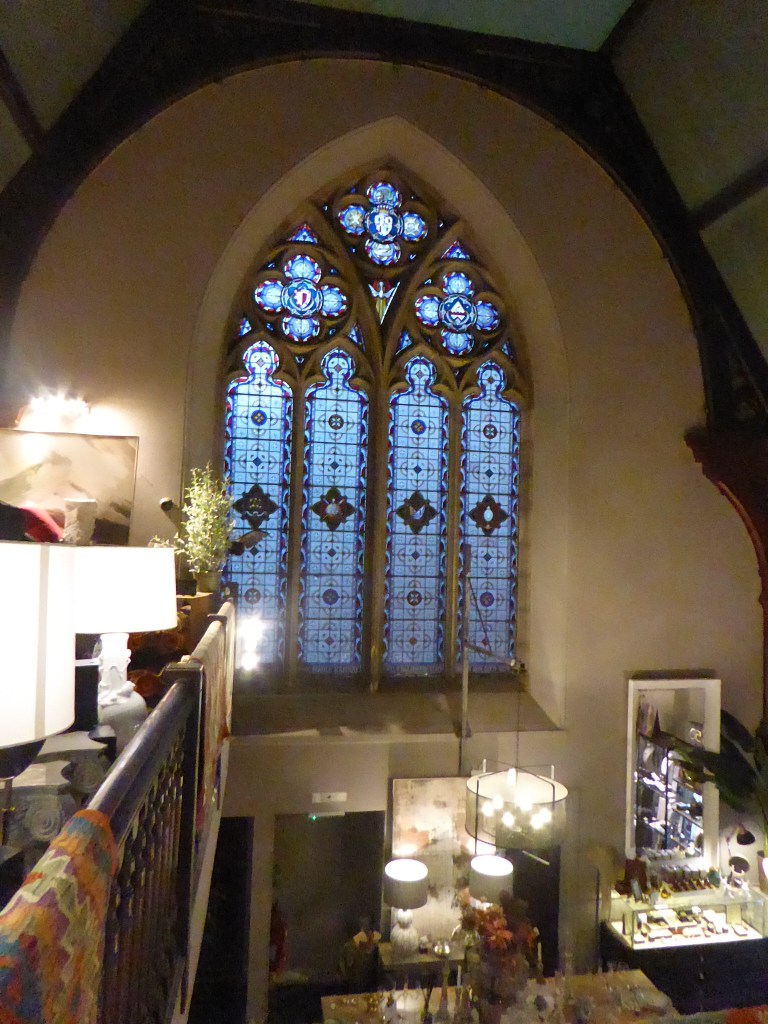
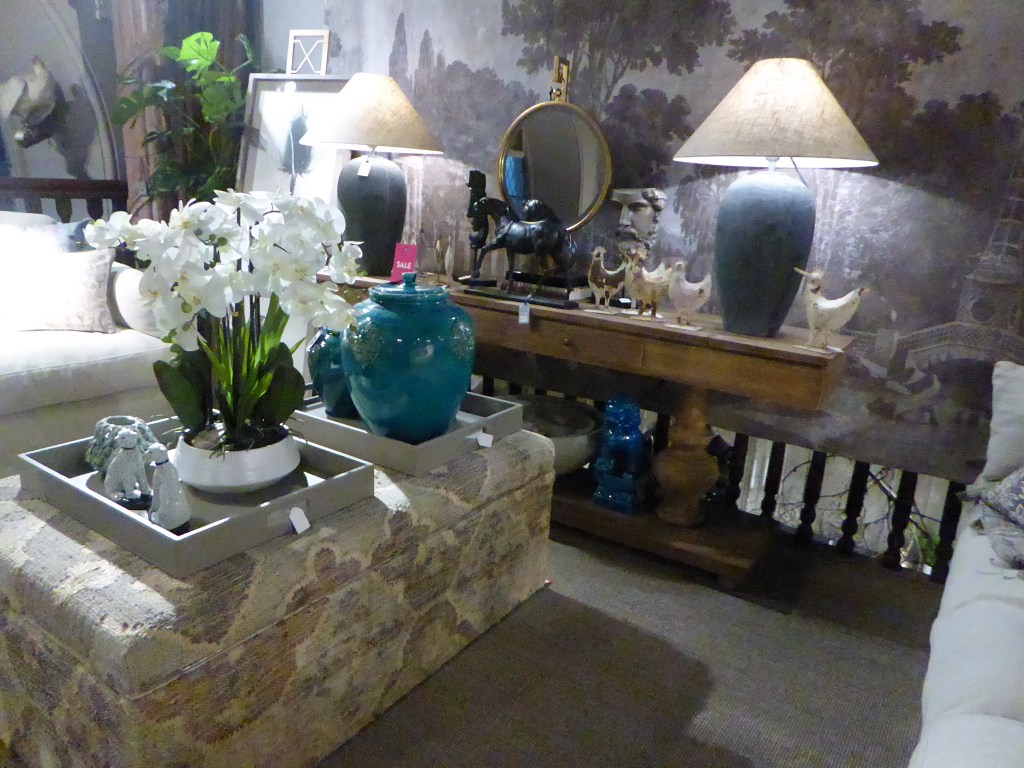
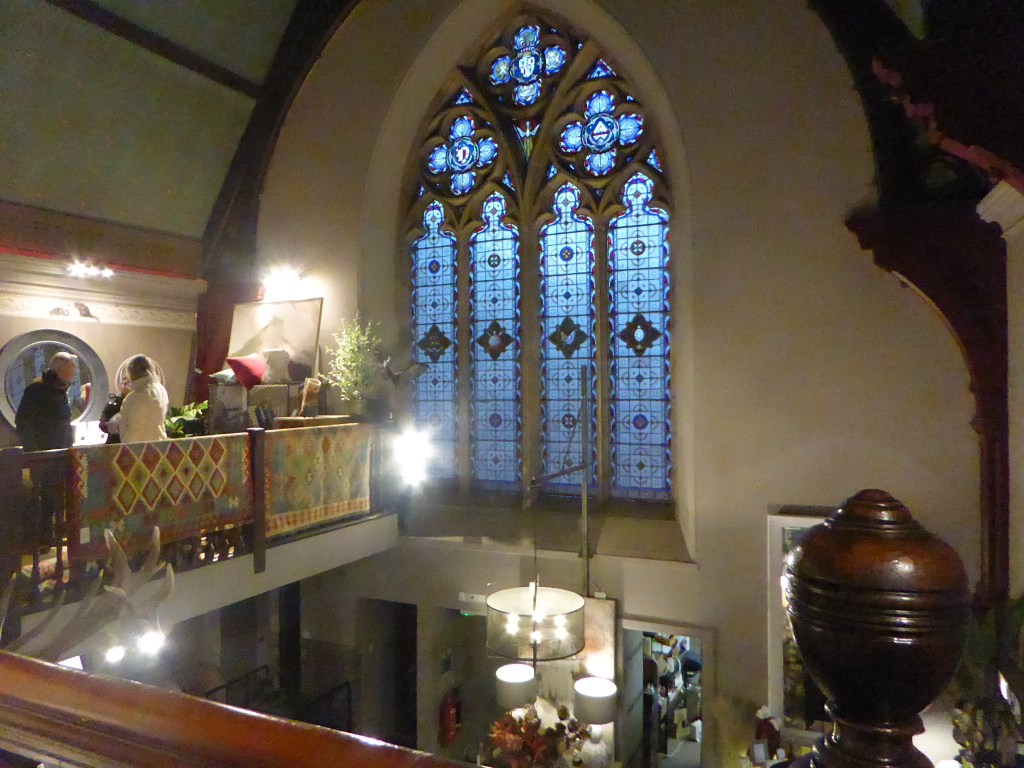
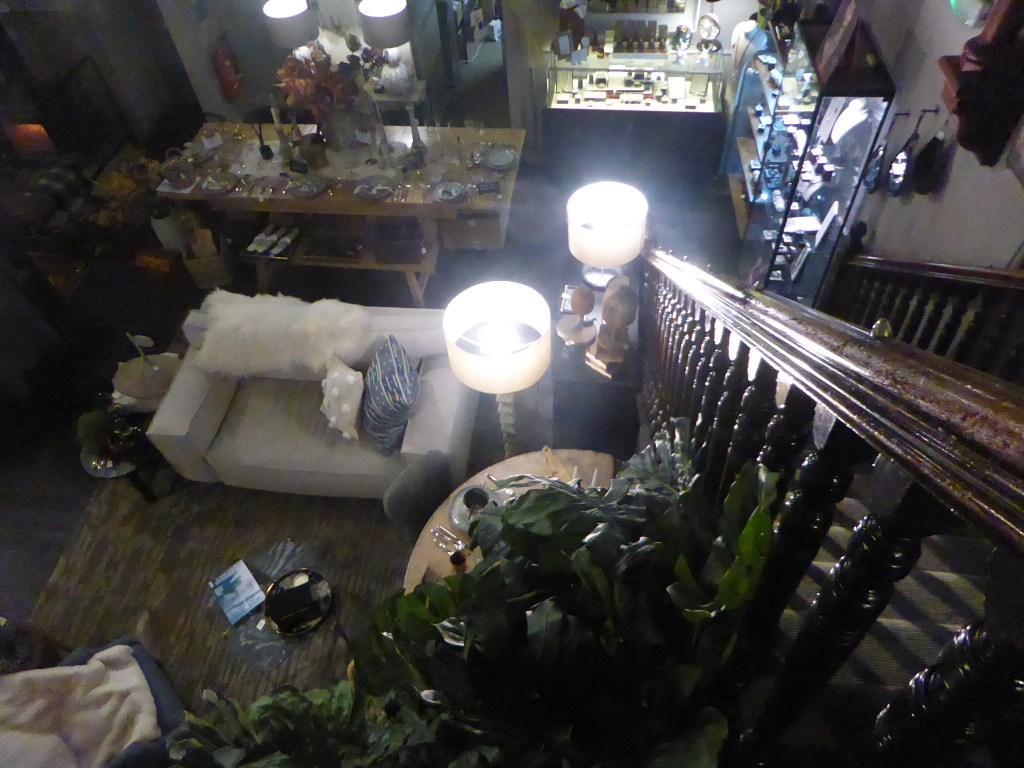
It’s like a treasure trove, always stocked with everything under the sun and more. Housed in an old church, or “kirk” as we say in Scotland, it caters to the upmarket home furnishing market. It’s tastefully decorated, resembling someone’s luxurious home rather than a store.
I can’t recall if we purchased anything significant, perhaps just some candles. The prices were reasonable, although some items bordered on the expensive. If you ever find yourself in this neck of the woods, do yourself a favour and pay a visit here.
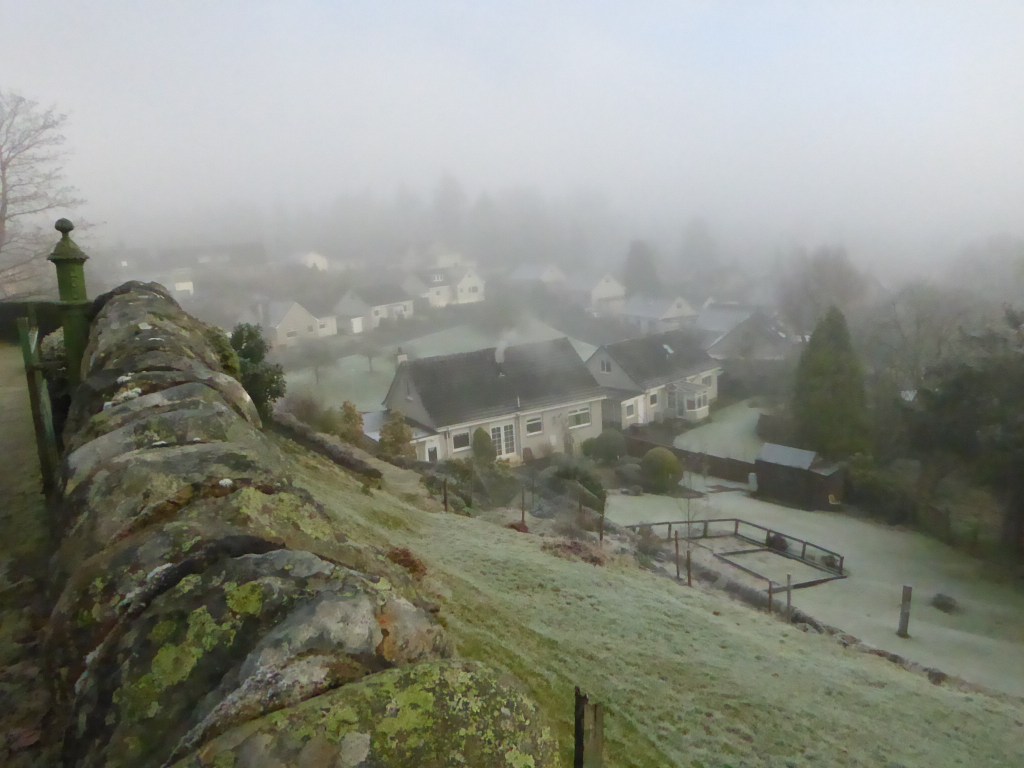
Yes, what a cold winter it has been in Glasgow and all over Scotland over the last few weeks. We decided to go for a walk in Pitlochry again, specifically in the more northern part of the village, an “Upper Pitlochry”, if you can call it that.
The first thing we noticed was the abundance of beautiful Victorian buildings in the village; something that I hadn’t really appreciated too much before (the sheer quantity of them). Who knows, maybe I’ll find some more specific examples and discuss the actual history of them.
Checking the Wikipedia article on the village, it describes the area as a “largely Victorian town”, making our walk up to the north part, I presume the older part, quite interesting.
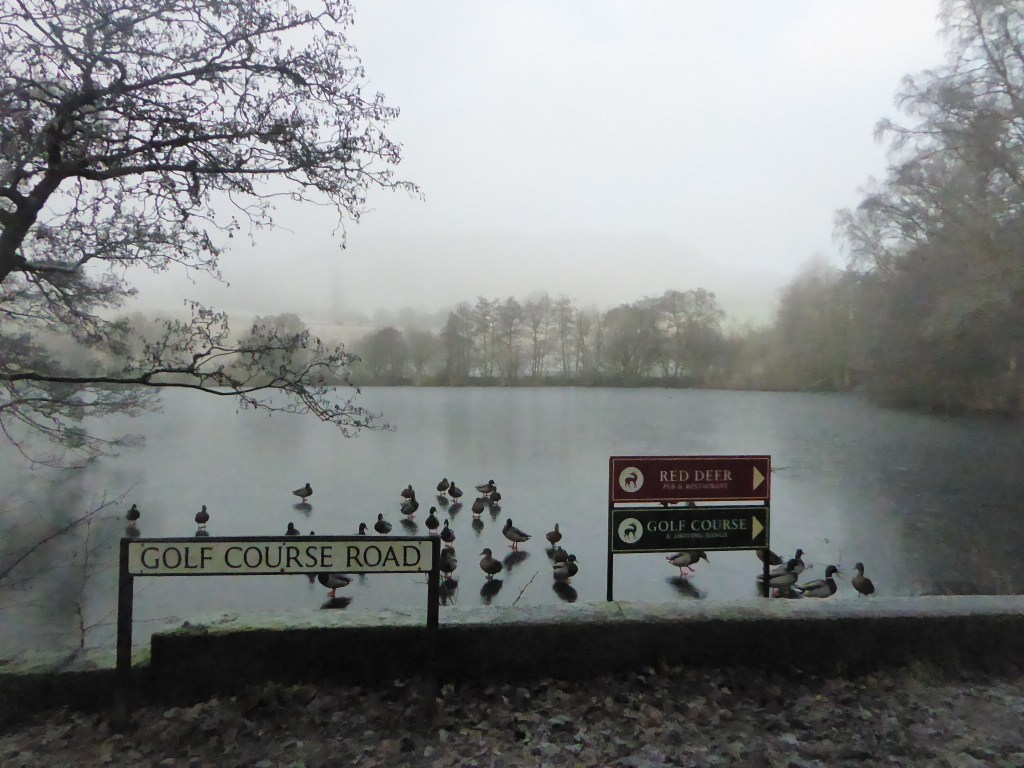
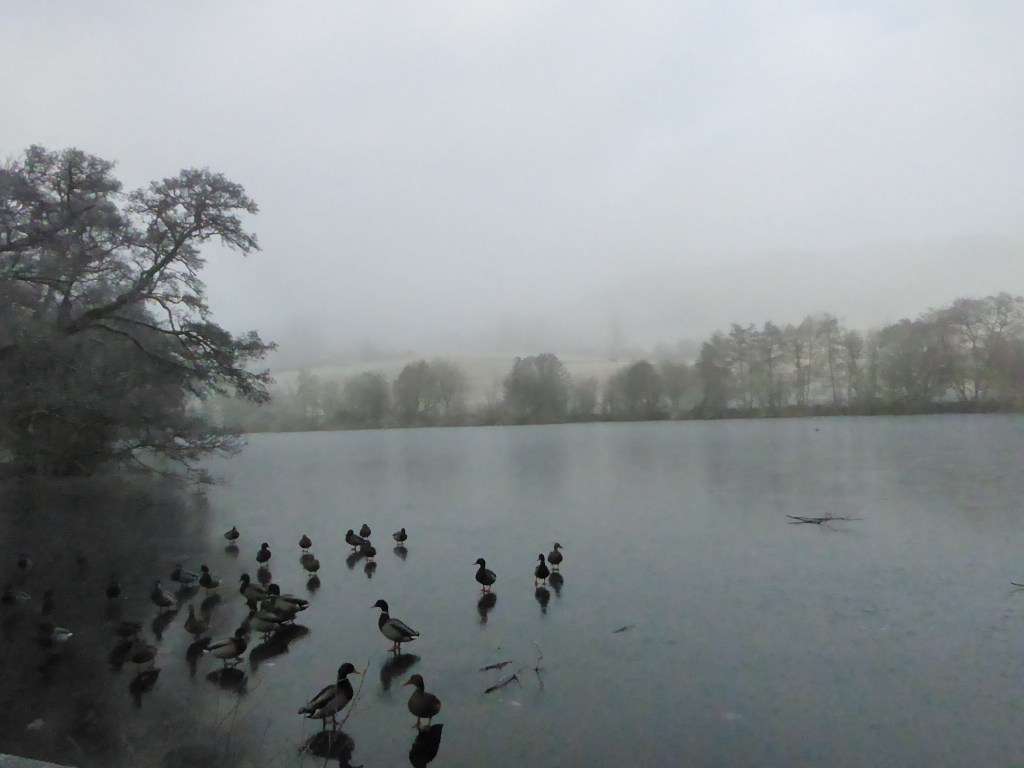
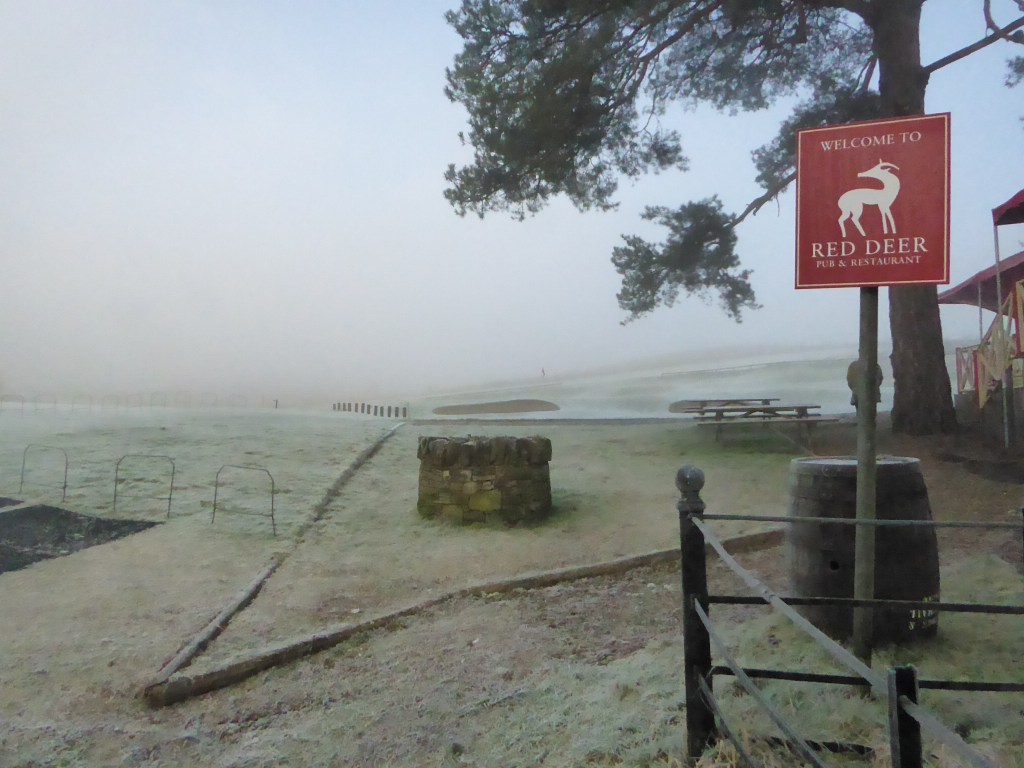
Eventually, we made our way to the Golf Club. Along the journey, we were surprised to find a small lake, frozen solid with ducks standing on it. It looked completely out of place. Was it really that cold?!
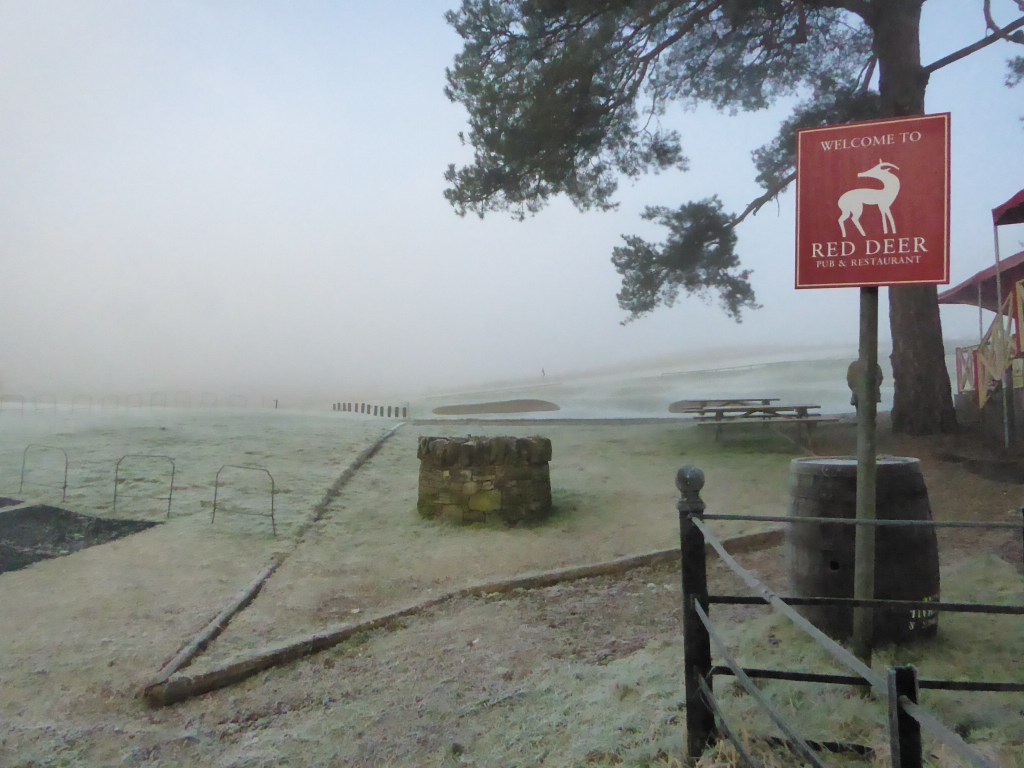
Upon reaching the Golf Club, it was eerie to see that some golf had actually taken place that day! Maybe the fog, along with an orange ball, added a mystical touch to the surroundings. At least you’d have an excuse then, as to just how shite your golf was!
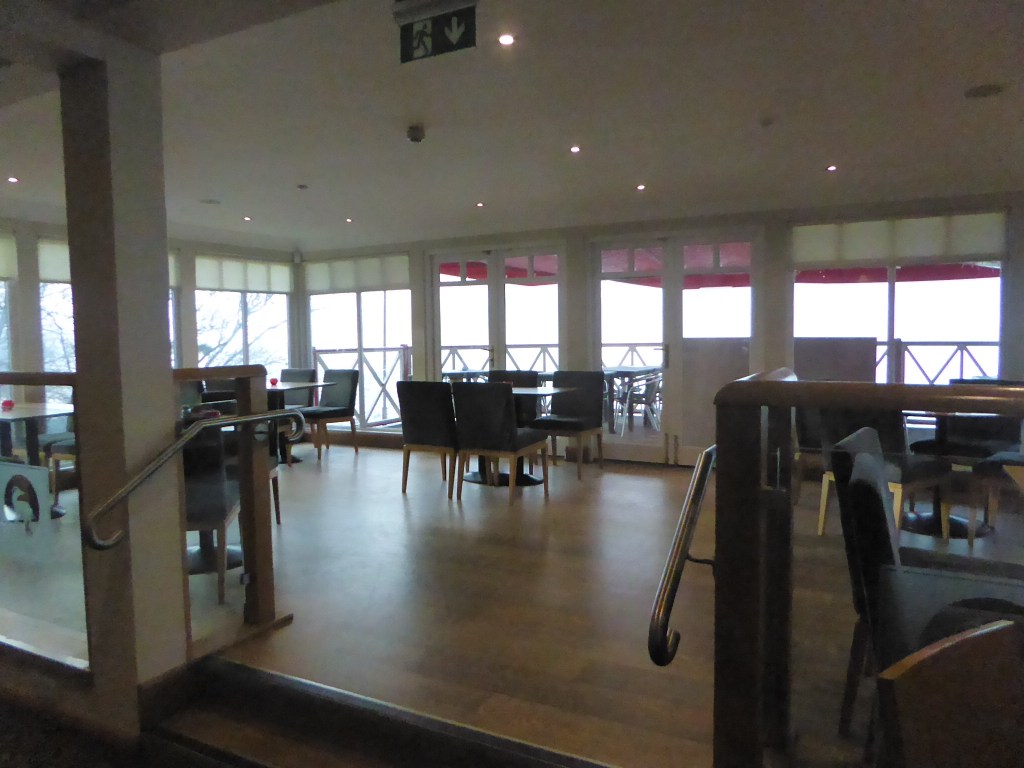
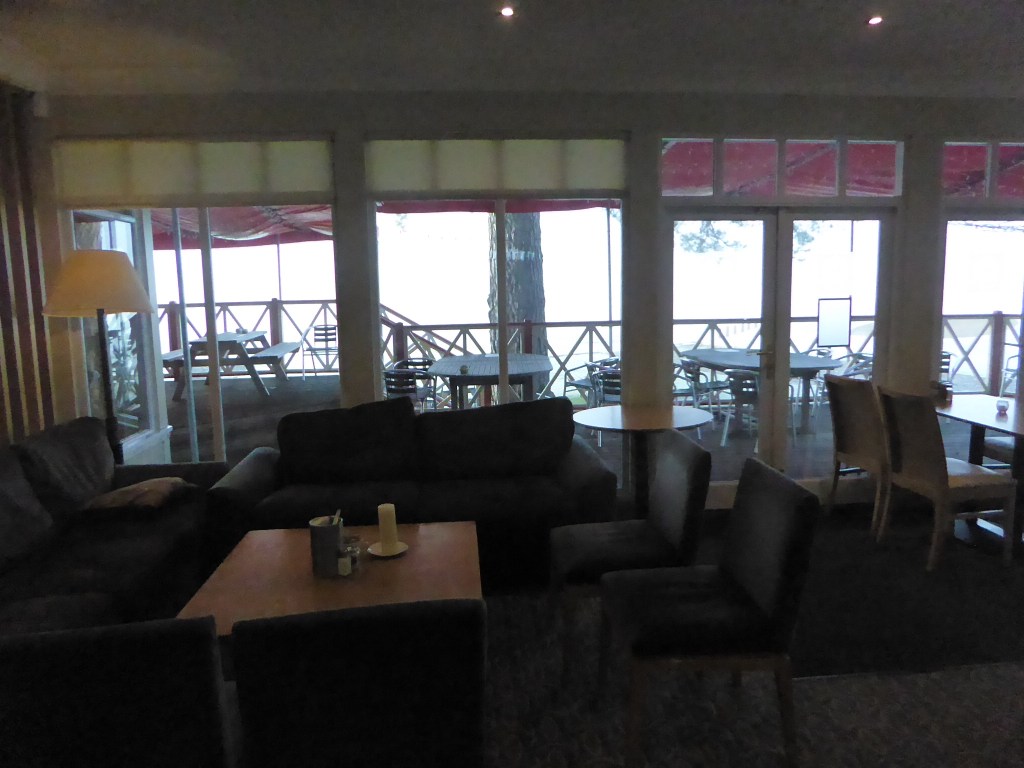
We decided to visit the restaurant, which was not that bad, and then meandered back down to the village / town.
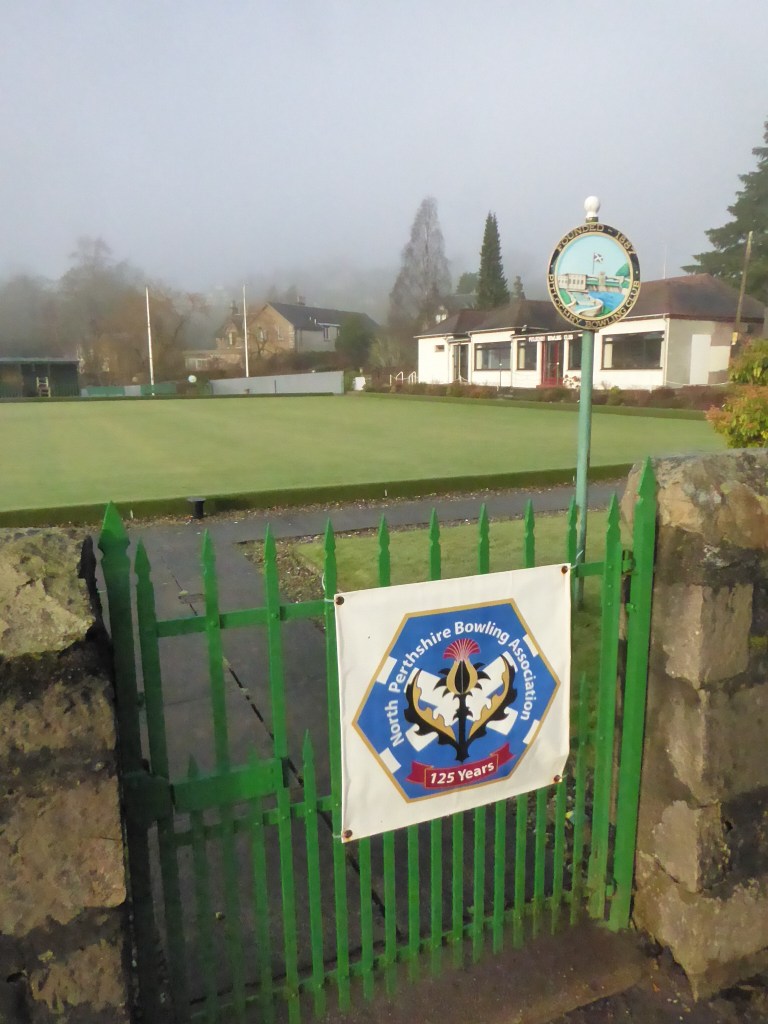
We started our journey from central Pitlochry once again, passing by the beautiful bowling green in the centre.
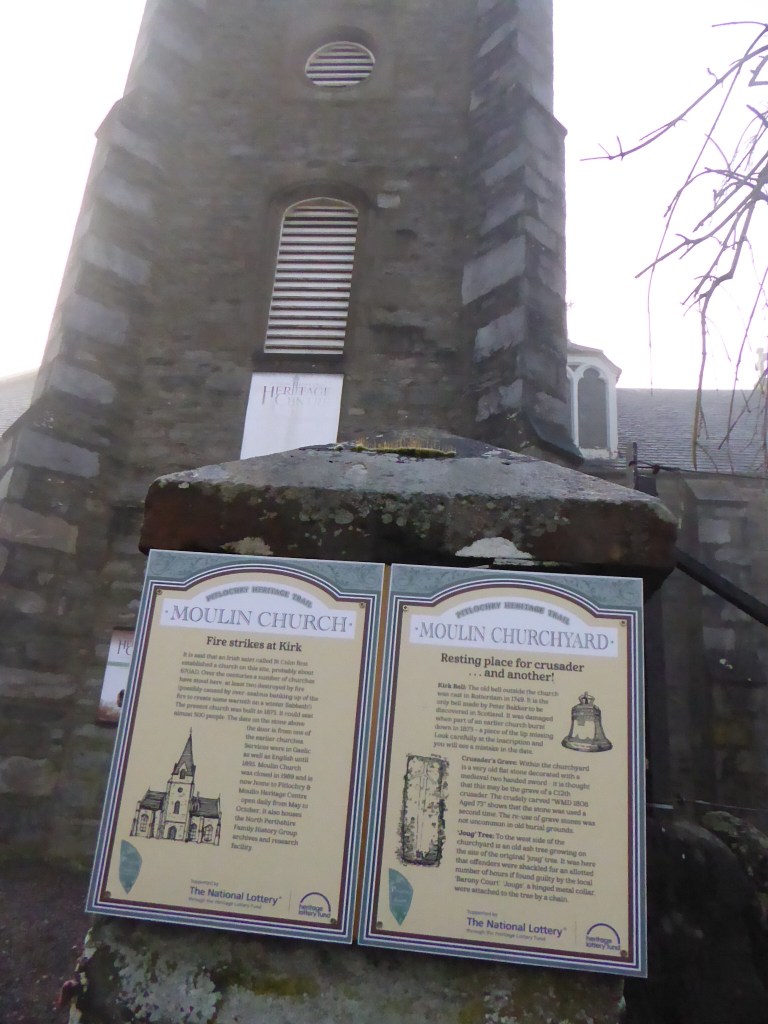
And then made our way to the quaint village of Moulin, just about a kilometre or so north of the town (I’ve blogged about this before).
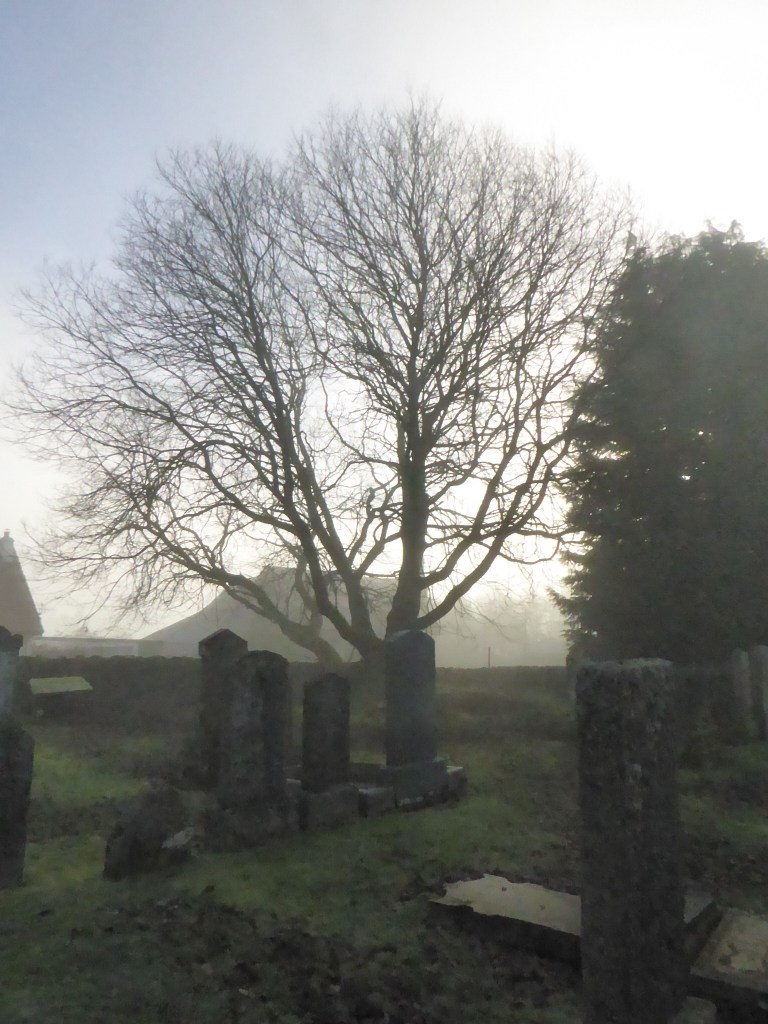
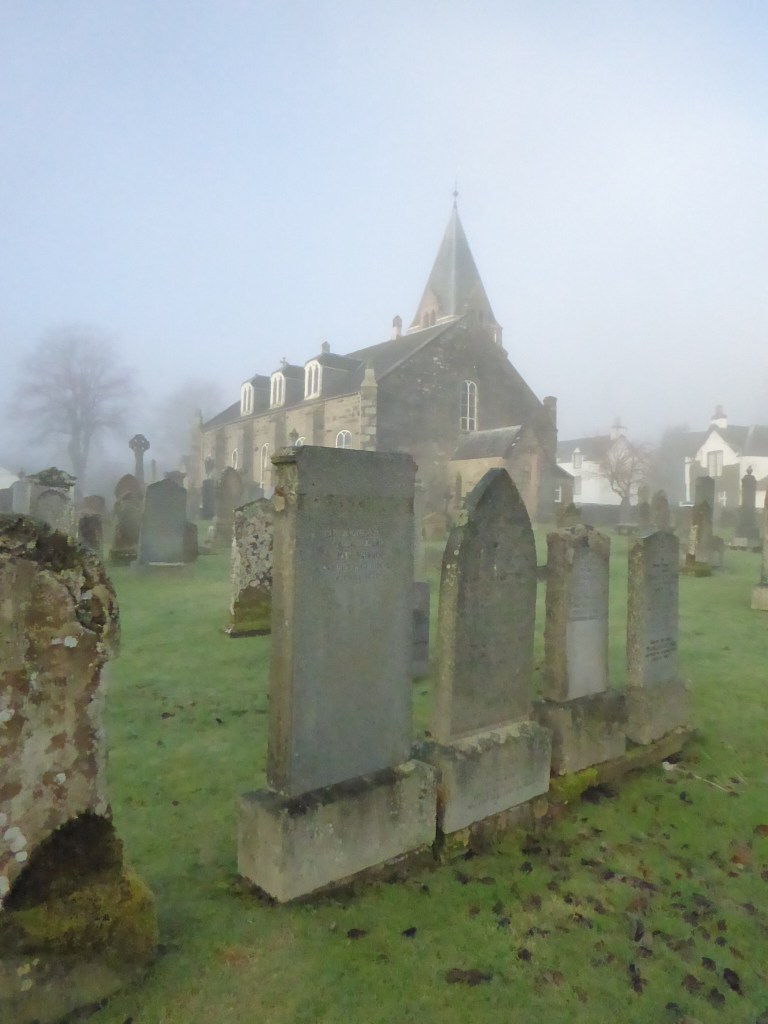
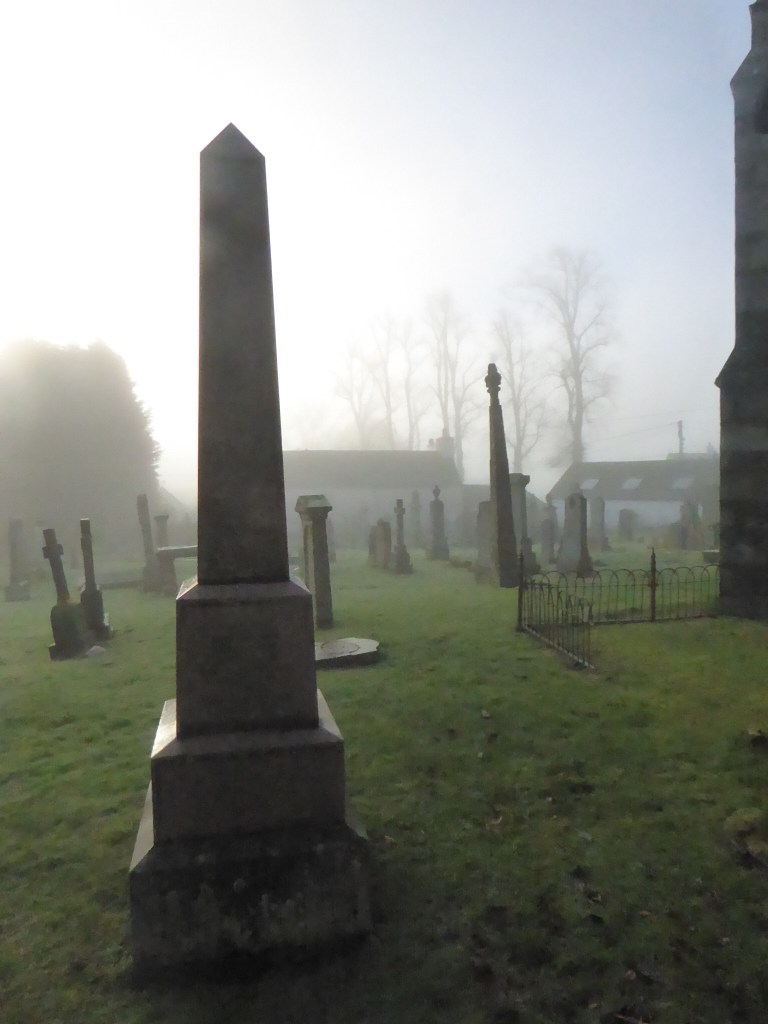
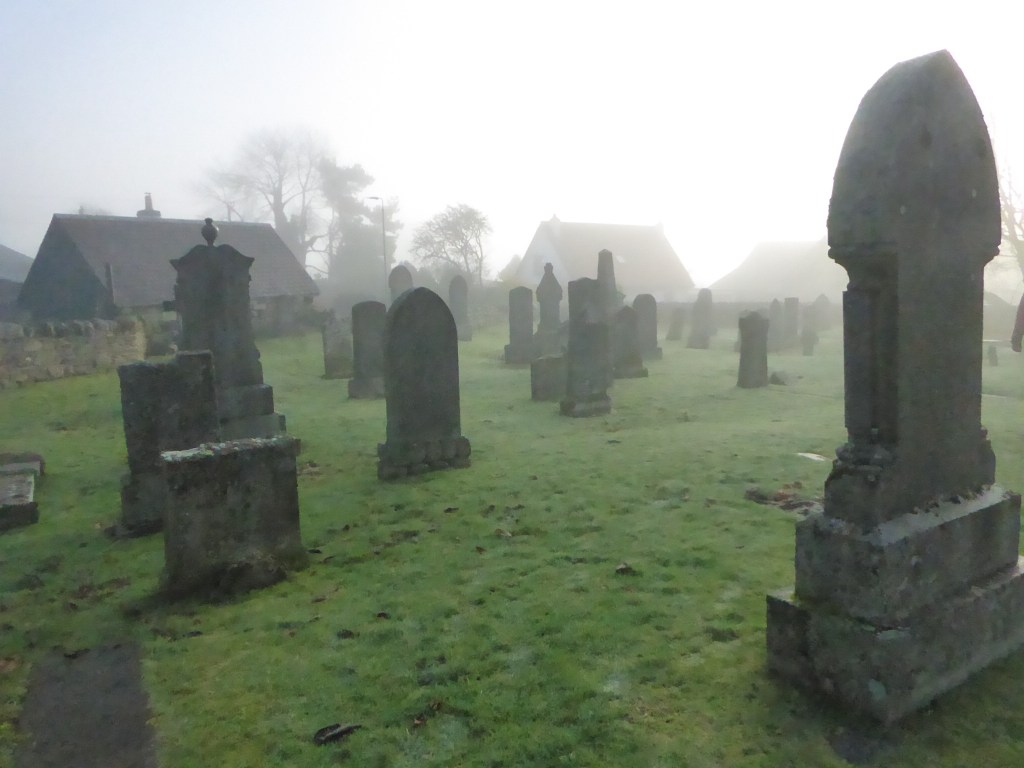
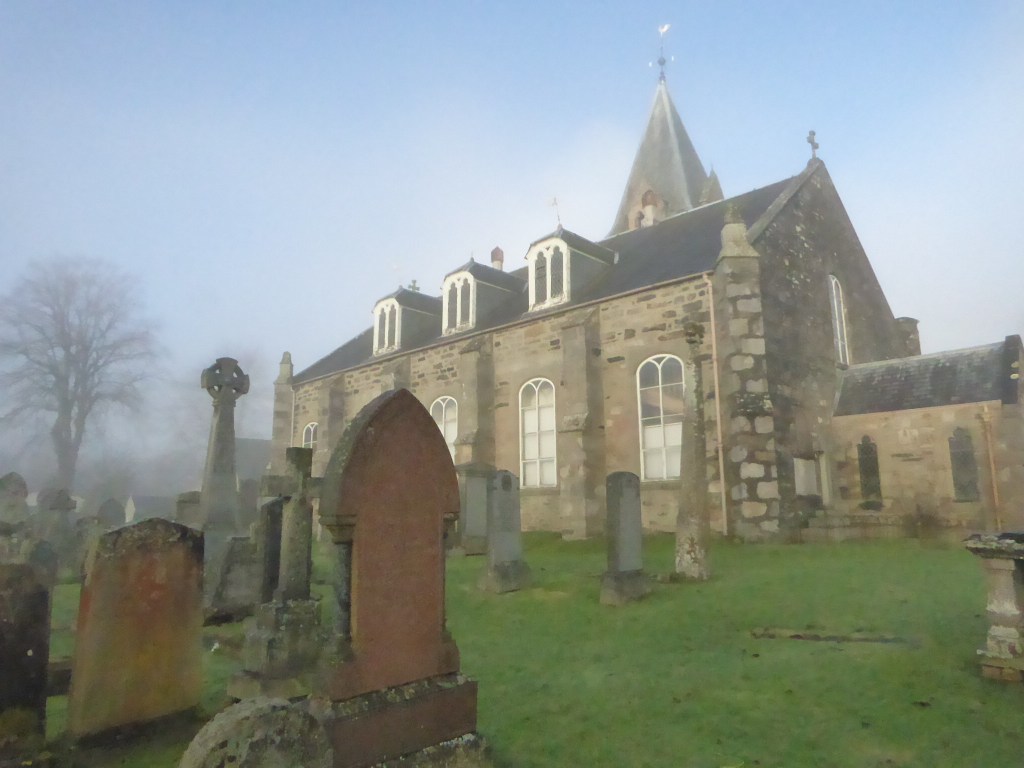
This time we decided to explore the cemetery. It proved to be quite fascinating, with its different graves and rich history. There was also a lingering fog which added an eerie atmosphere.
Continuing on a familiar route, we passed an old castle, although not much of it remains today.
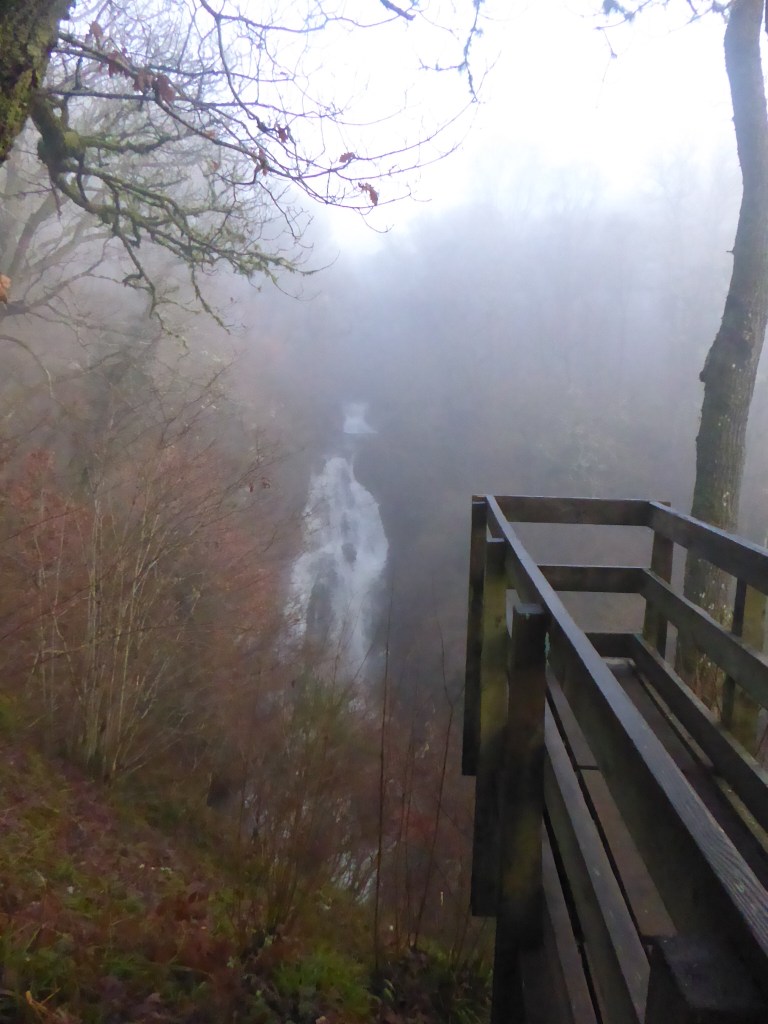
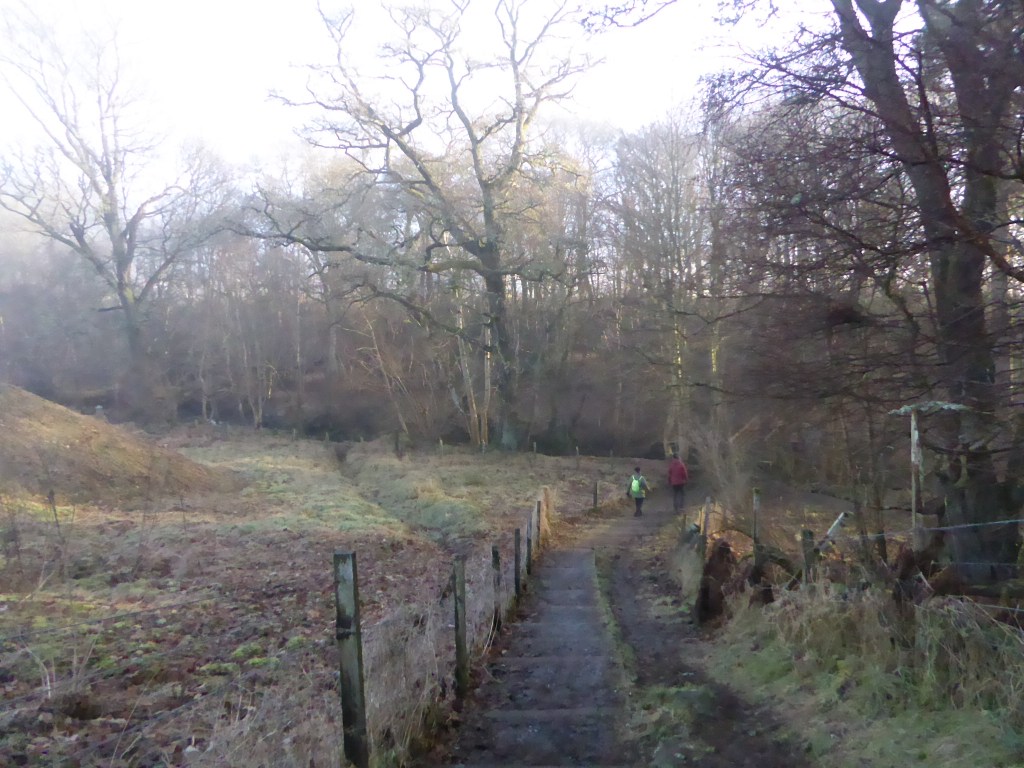
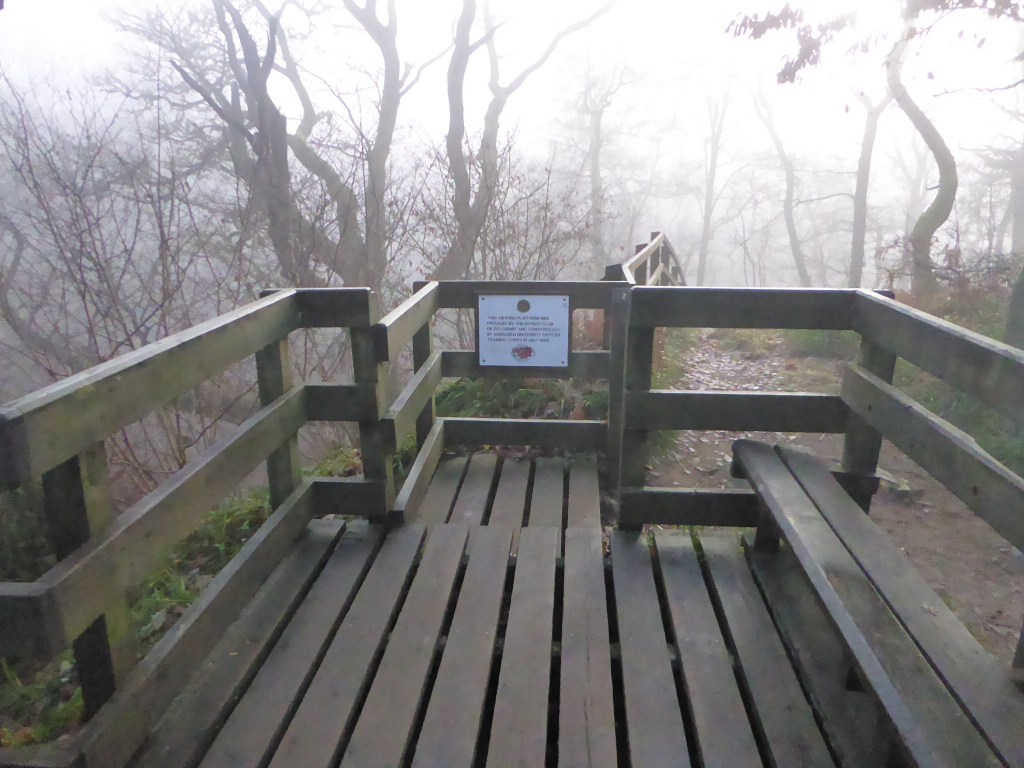
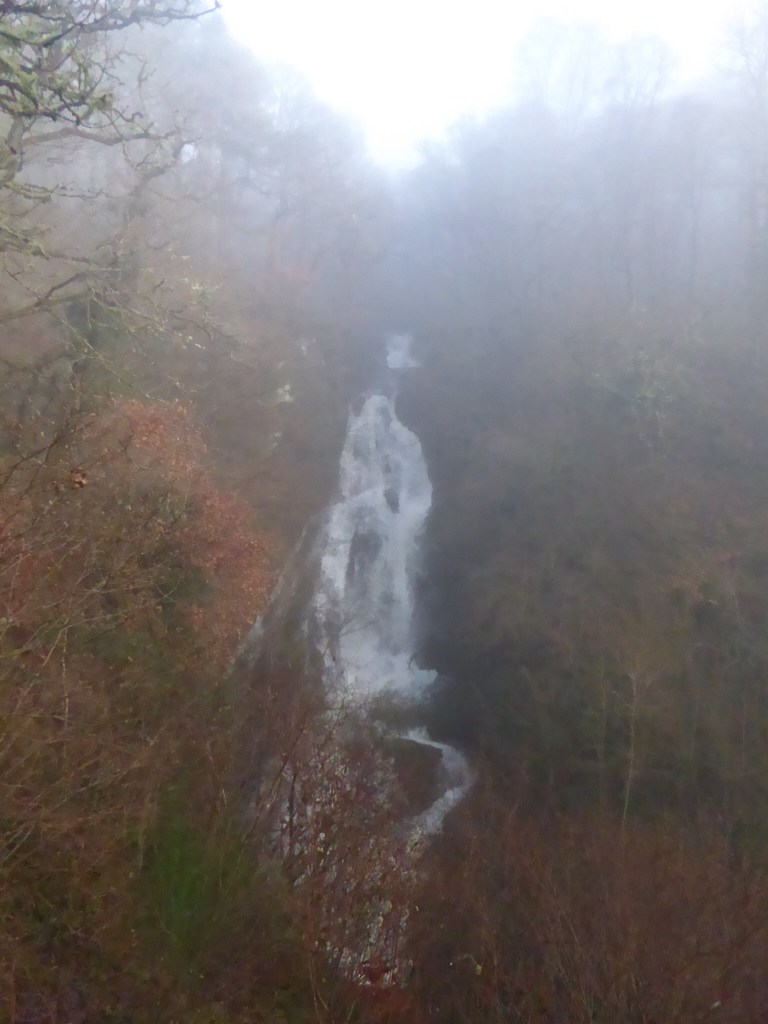
We traversed up and down several times until we reached the Black Spout.
I recently read about a tragic incident where someone fell 70 feet to their death in North Scotland a couple of weeks ago. Trust me; it’s easier to do than people realize, especially when distracted by taking photos in the middle of nowhere with their mobile phones.
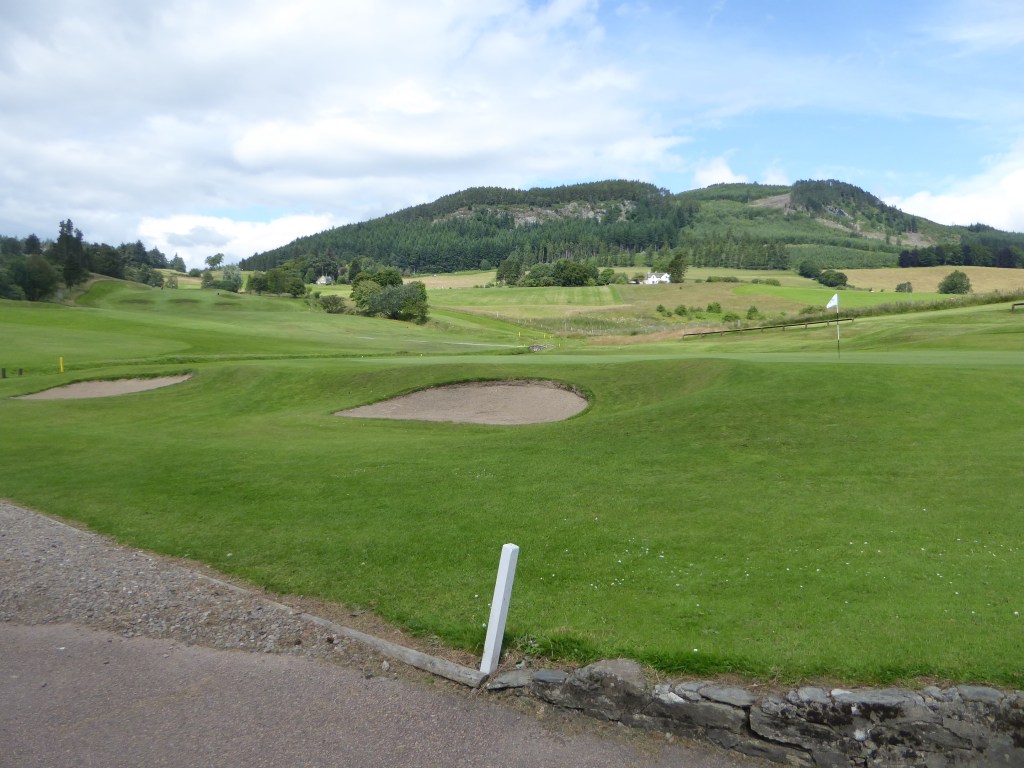
Fortunately, we navigated the area safely and proceeded towards Athol Palace hotel, capturing shots of the small 9-hole golf course that surrounds the hotel.
Perhaps one day, I’ll write an article about the numerous 9-hole courses I’ve encountered in Scotland. It seems like every old hotel in the Highlands of Scotland has one. It would be interesting to discover who plays on them and who designs them.
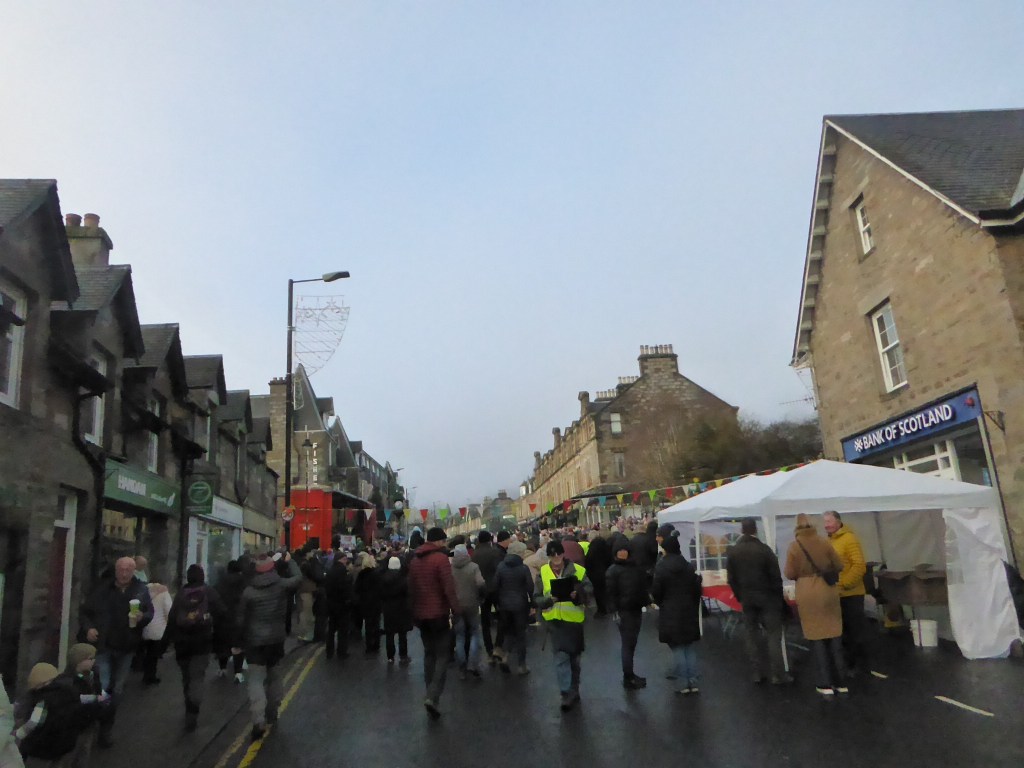
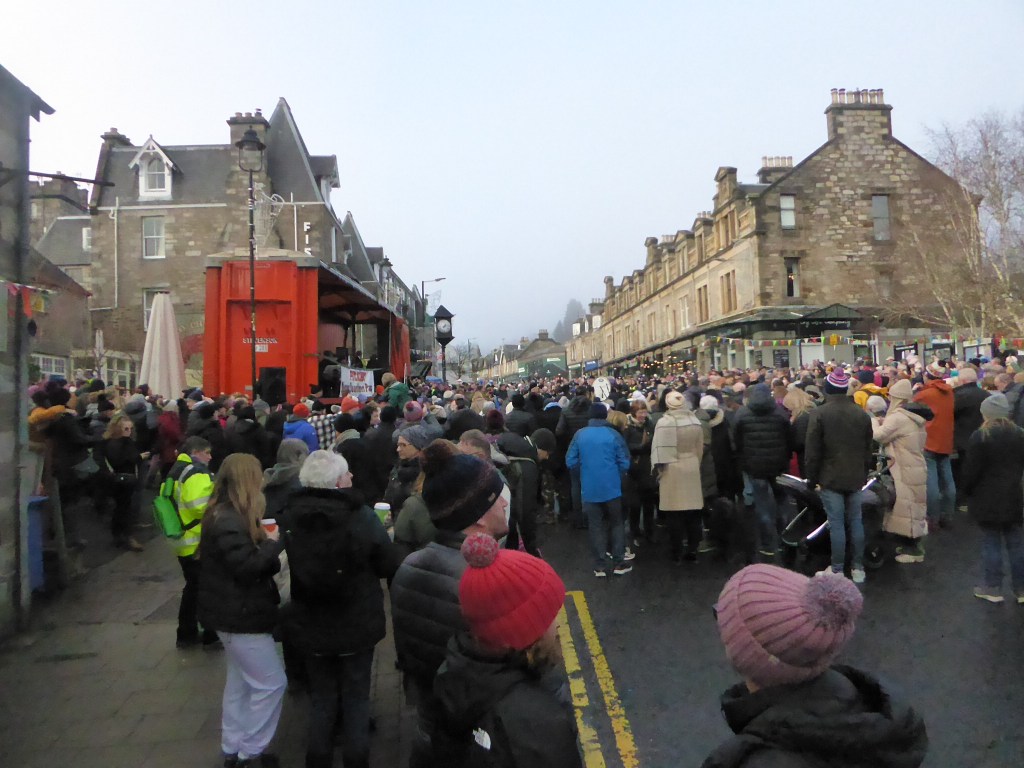
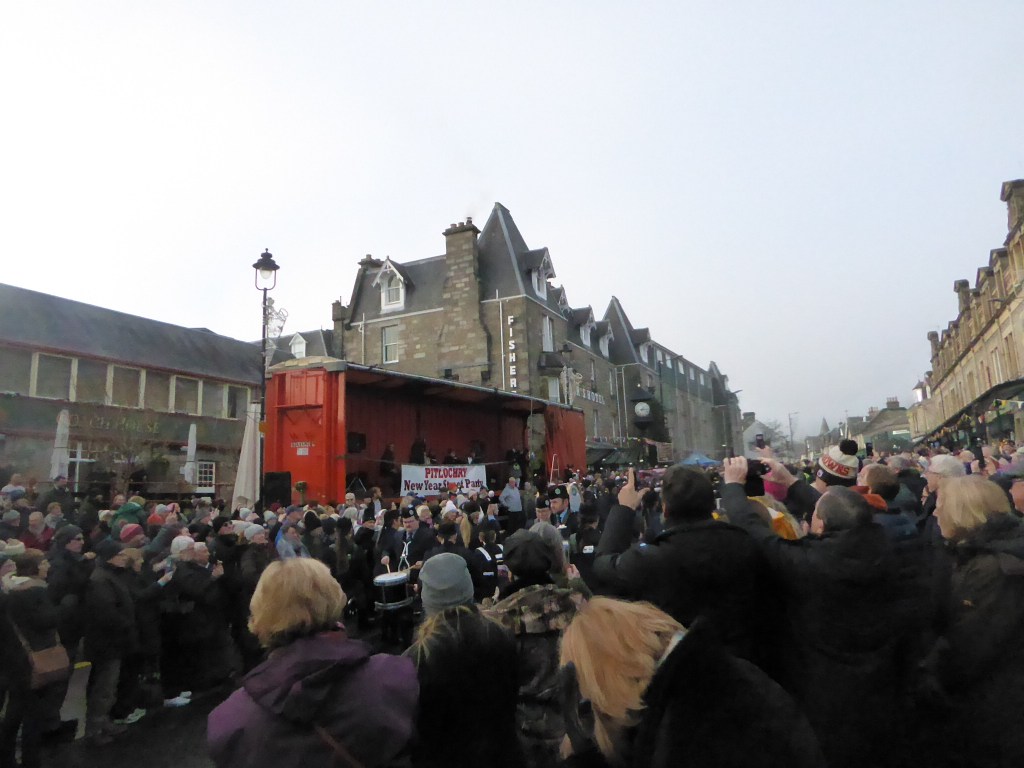
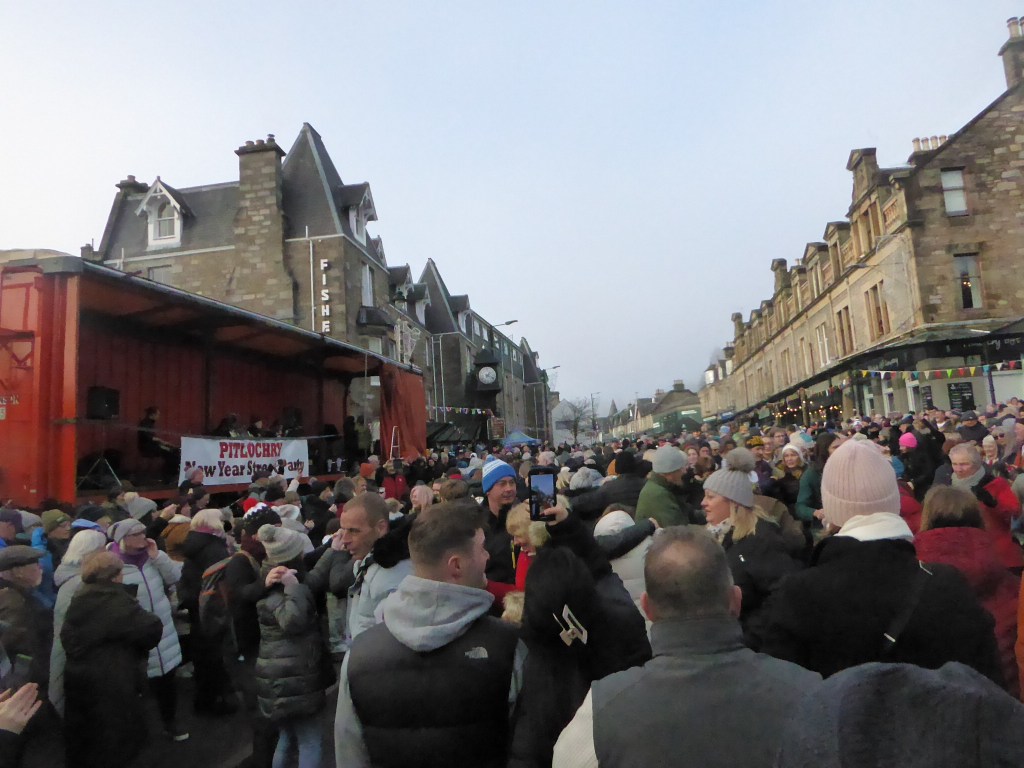
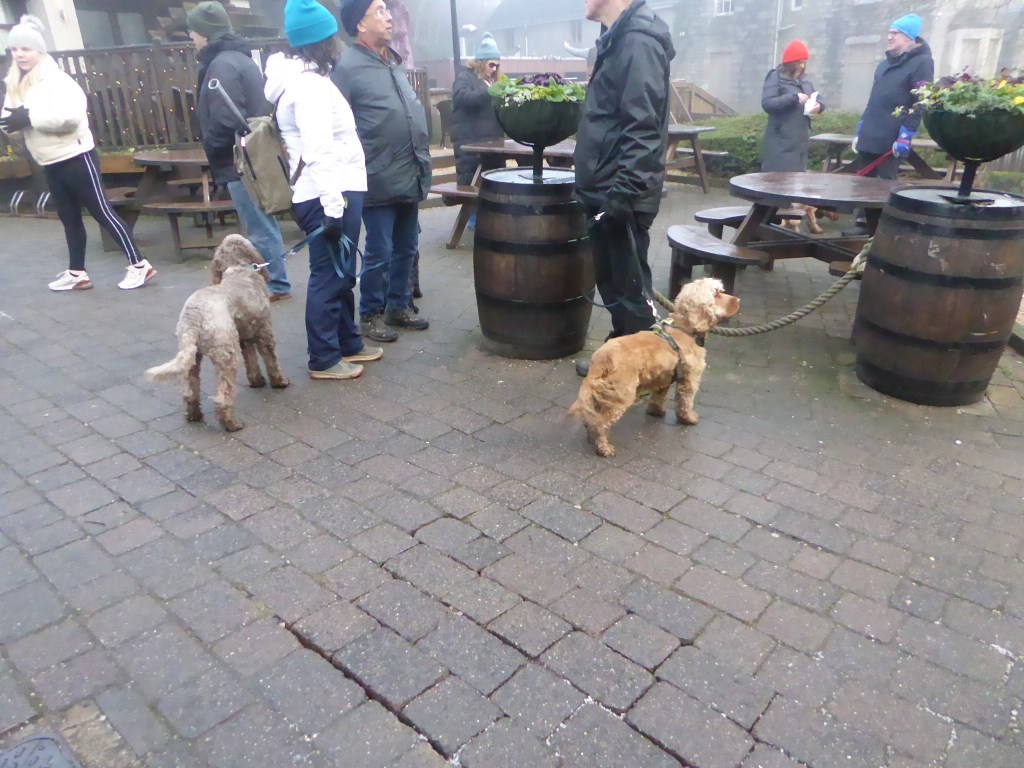
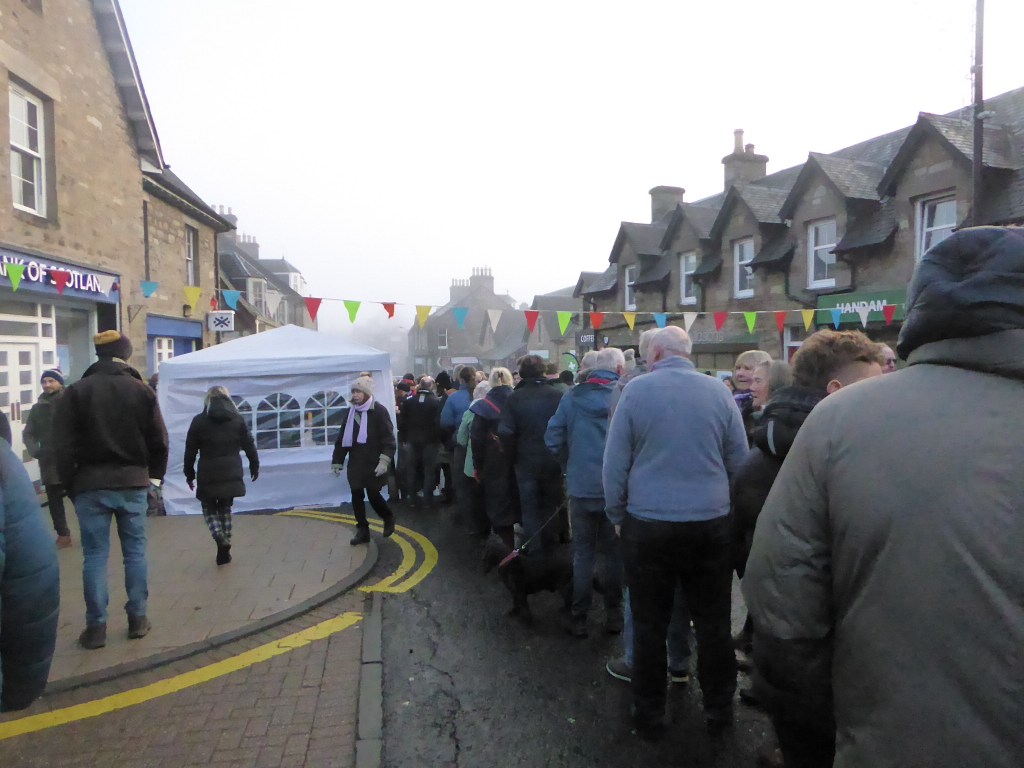
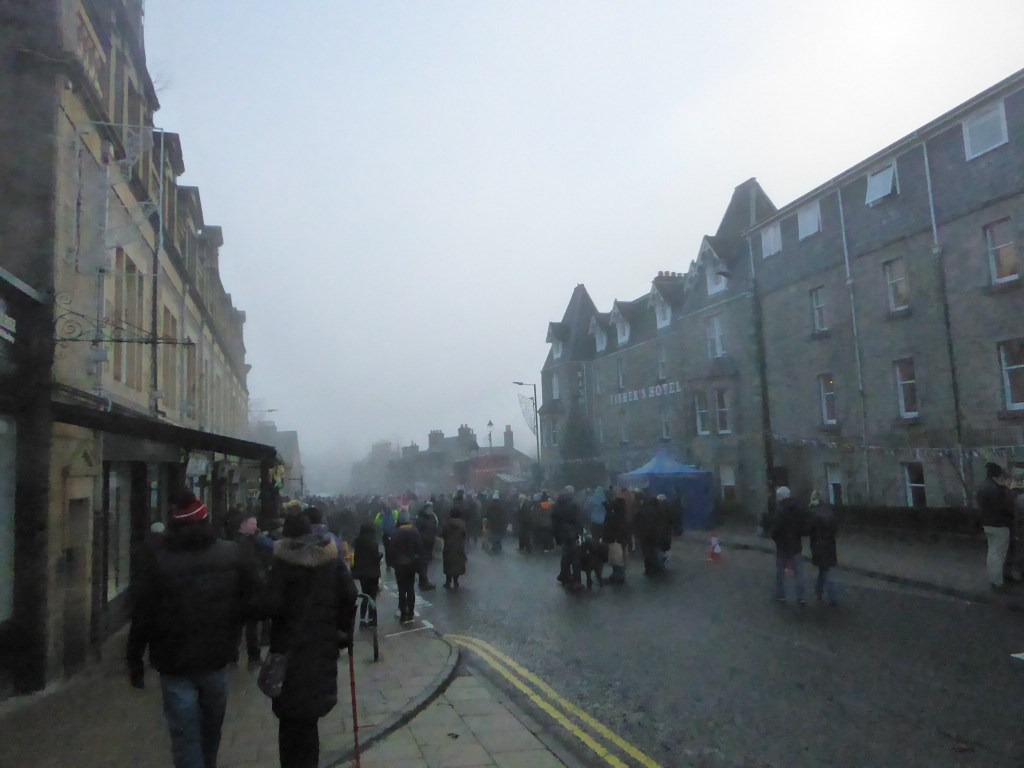
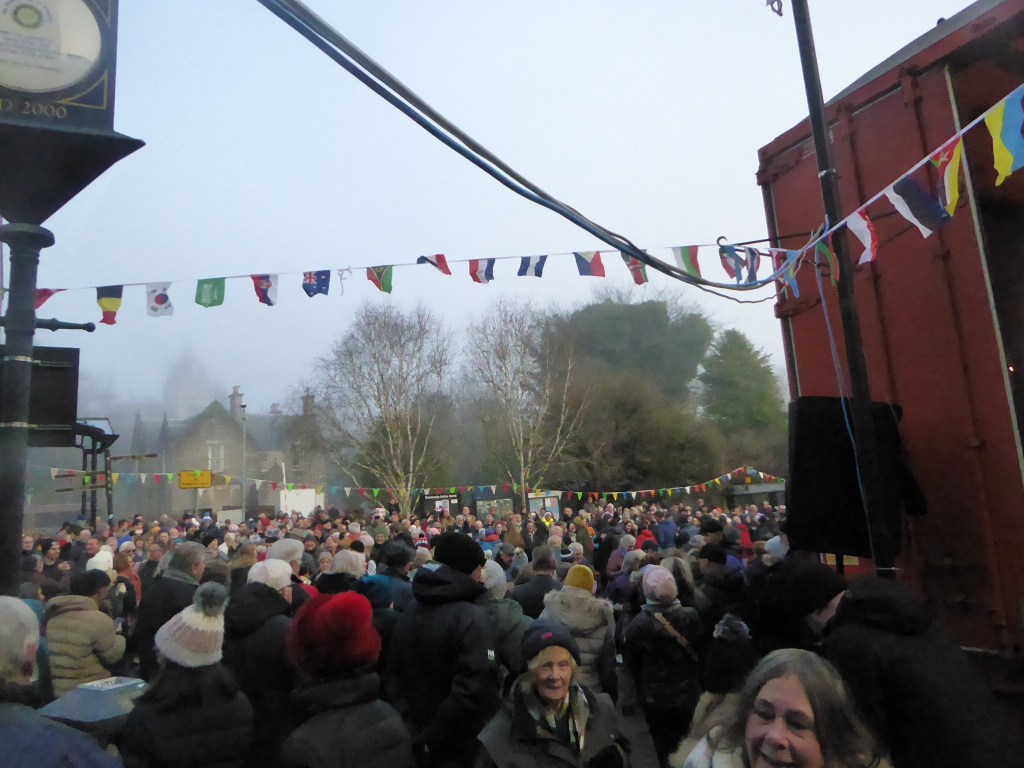
Afterwards, we continued to central Pitlochry, as there was a street fest on New Year’s Day.
It was quite enjoyable and bustling. While the event had the obligatory hot chocolate and a mulled wine place, I think they could have offered more food choices and beverage options. Nonetheless, it was a pleasant experience. My partner and I decided to partake in a Gay Gordon or Canadian Barn dance, which turned out to be quite enjoyable. Despite the cold weather, the absence of rain added to the overall atmospheric charm.
It’s been some time for us to post here about this walk, and we STILL have a couple of stages to do.
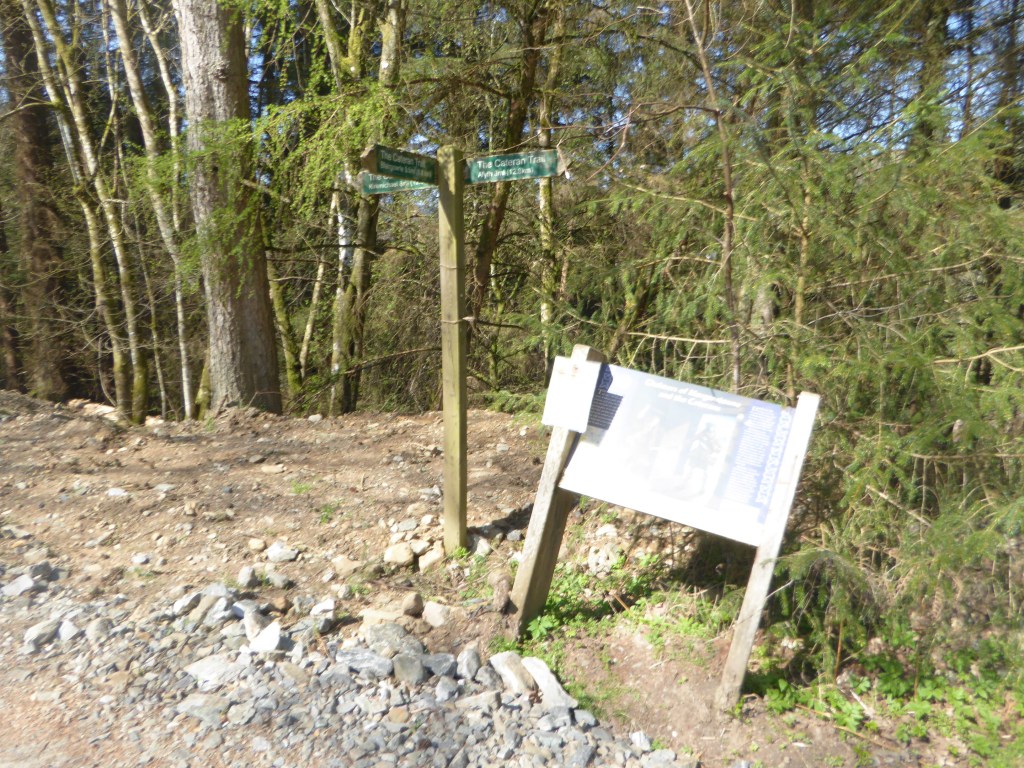
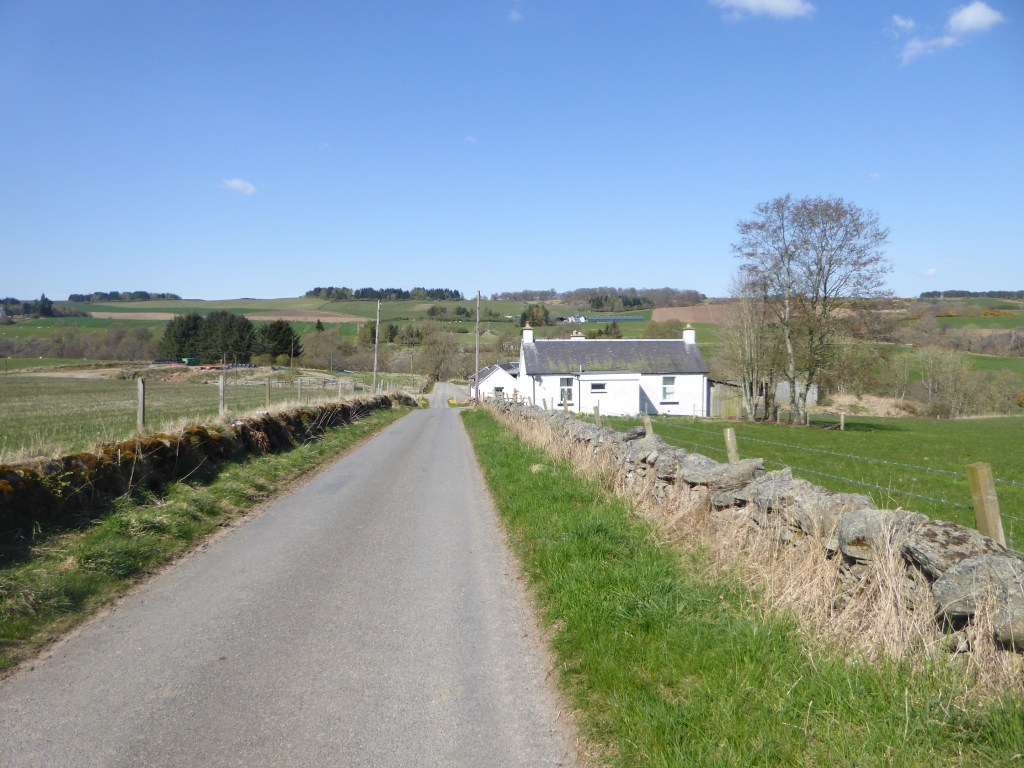
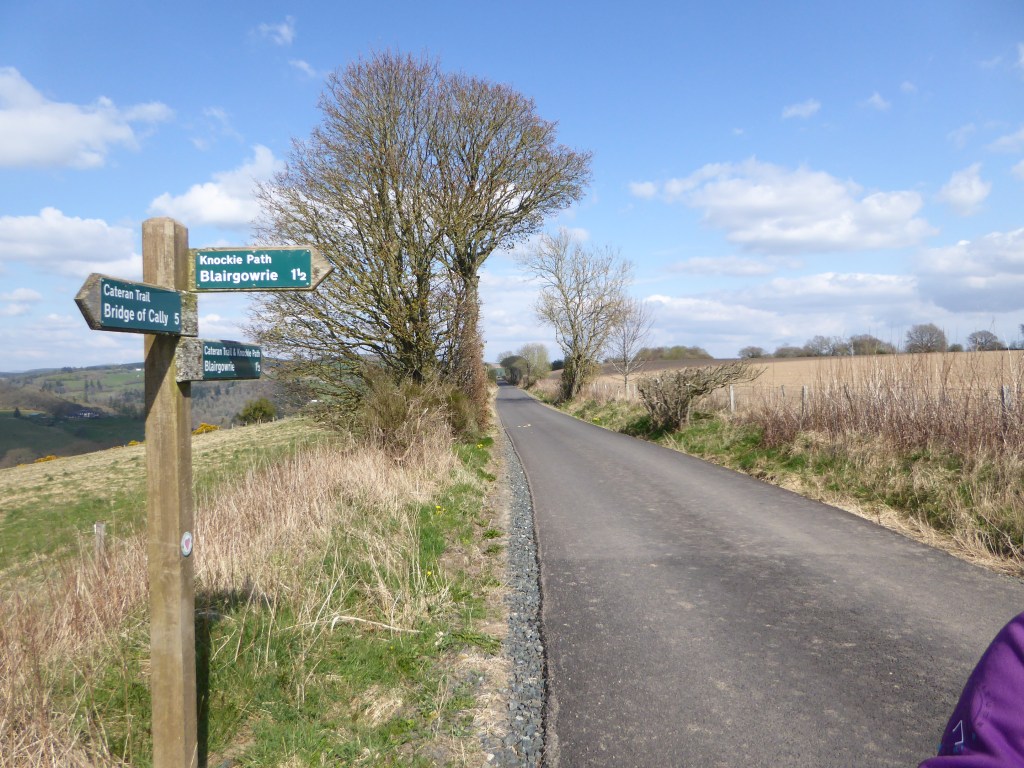
This was a very much shorter version of the trail and we did NOT travel from Kirkmichael, but from Bridge of Cally. So as as of now, there are only two parts remaining; Bridge of Cally to Kirkton of Glenisla & then onwards to Lair.
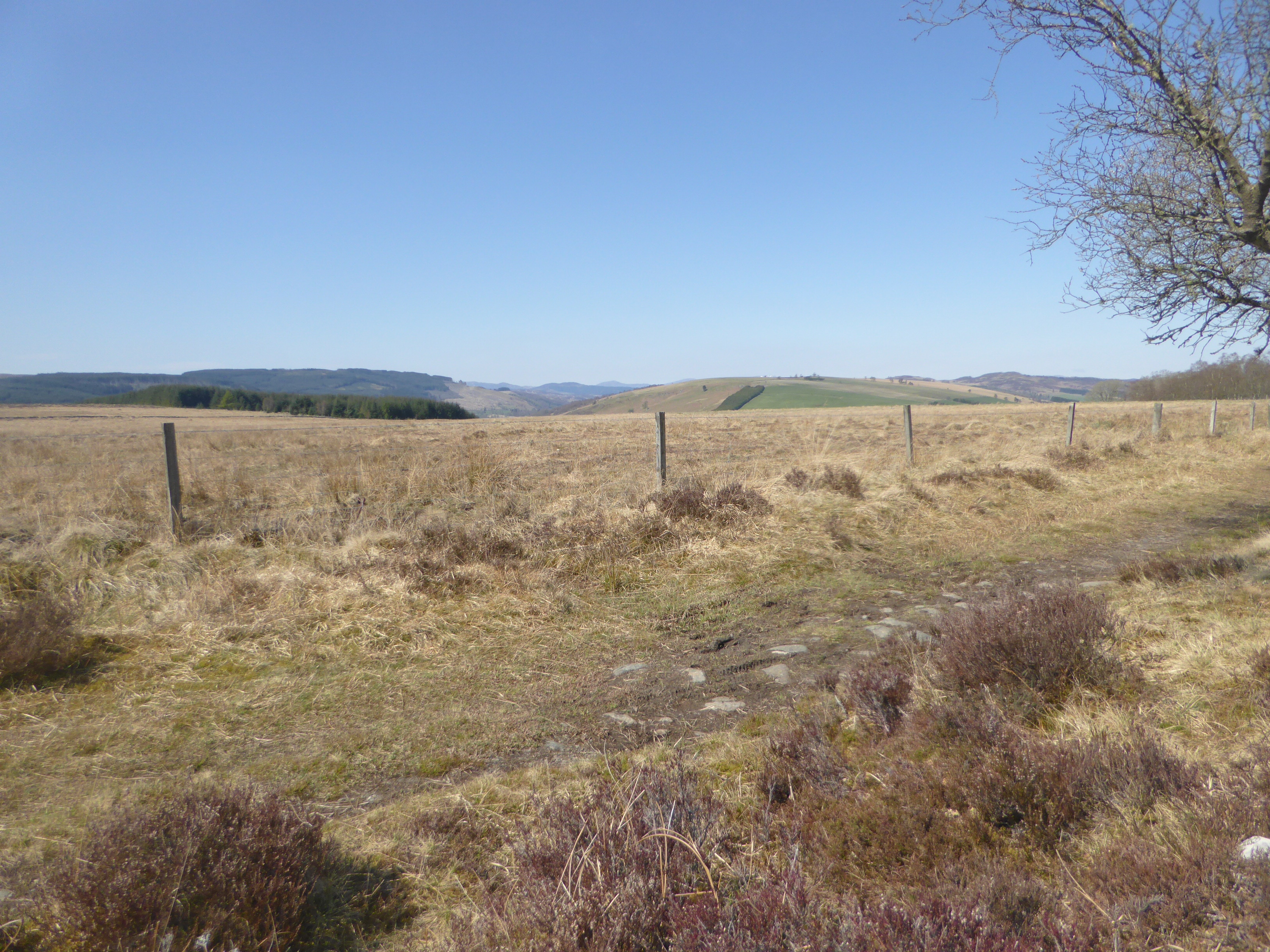
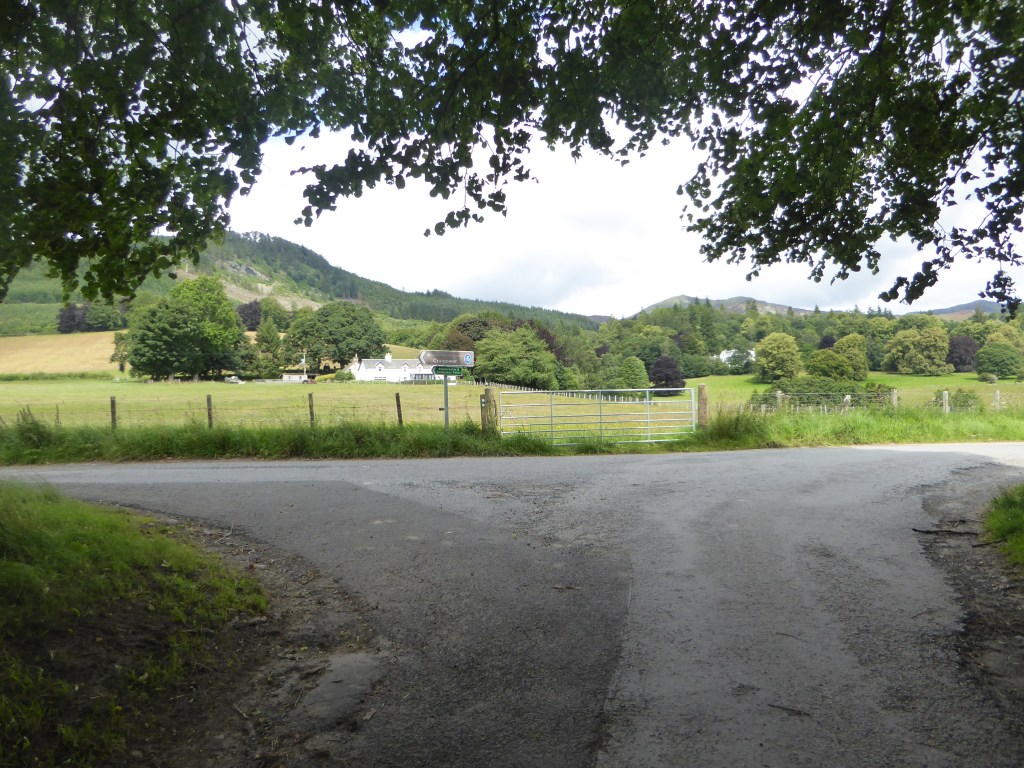
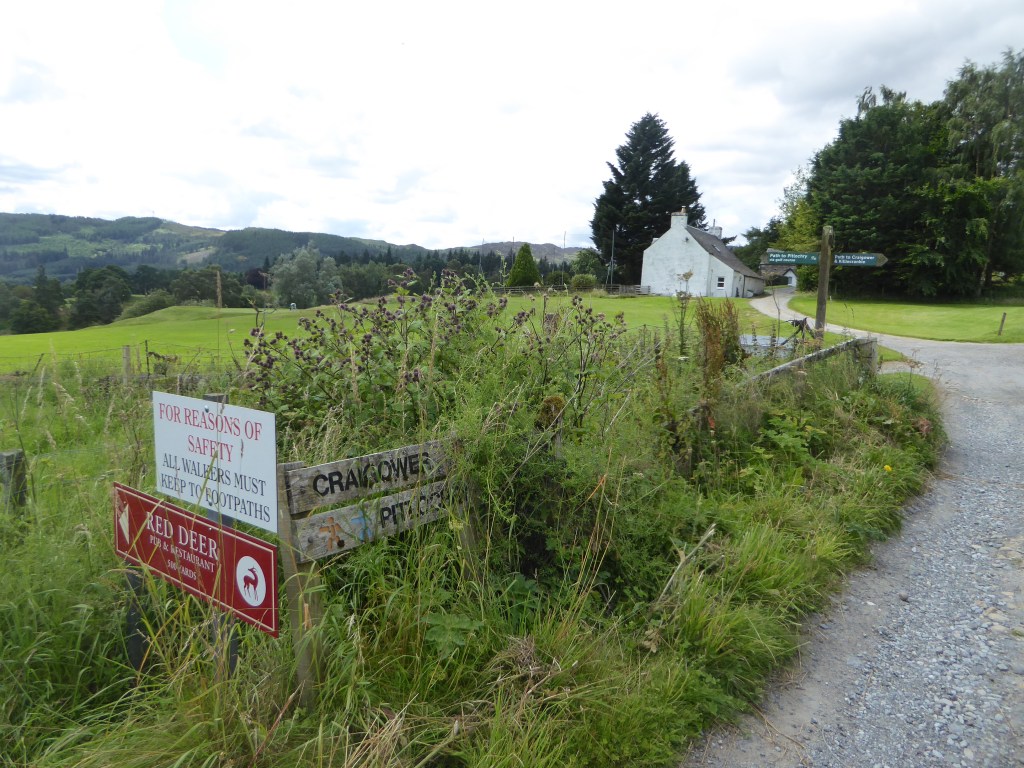
The first part, to be honest, was a mess of detours, gravel and confusing signposting; but we got onto the moor in the end. Just follow the fence for a few miles!
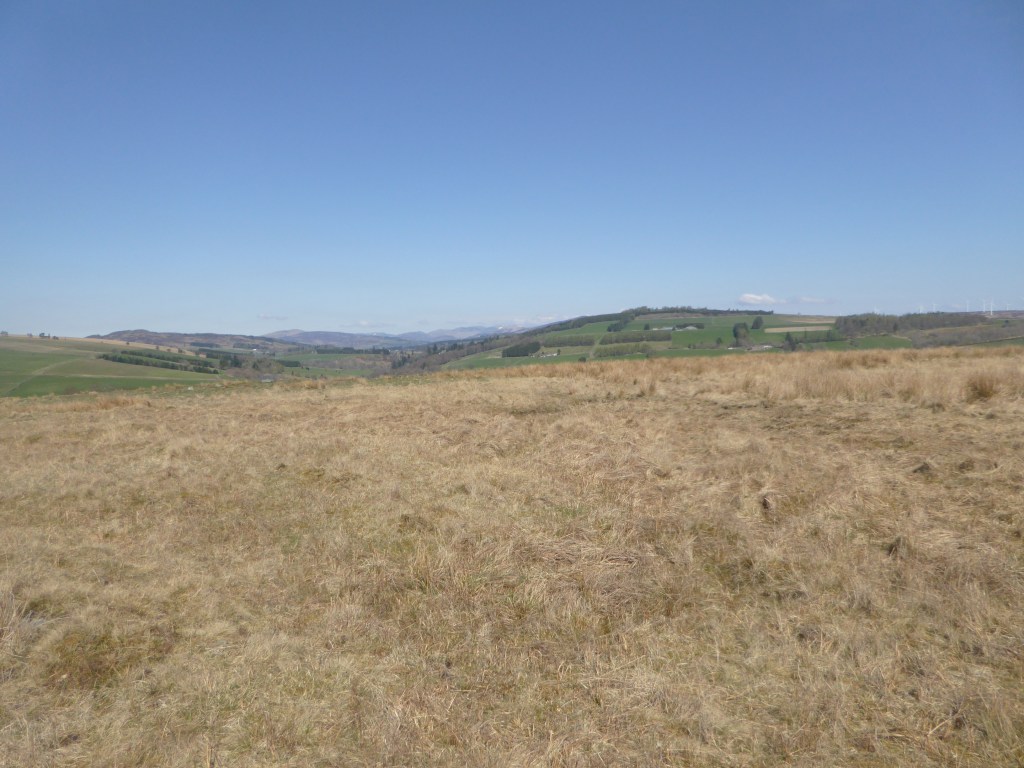
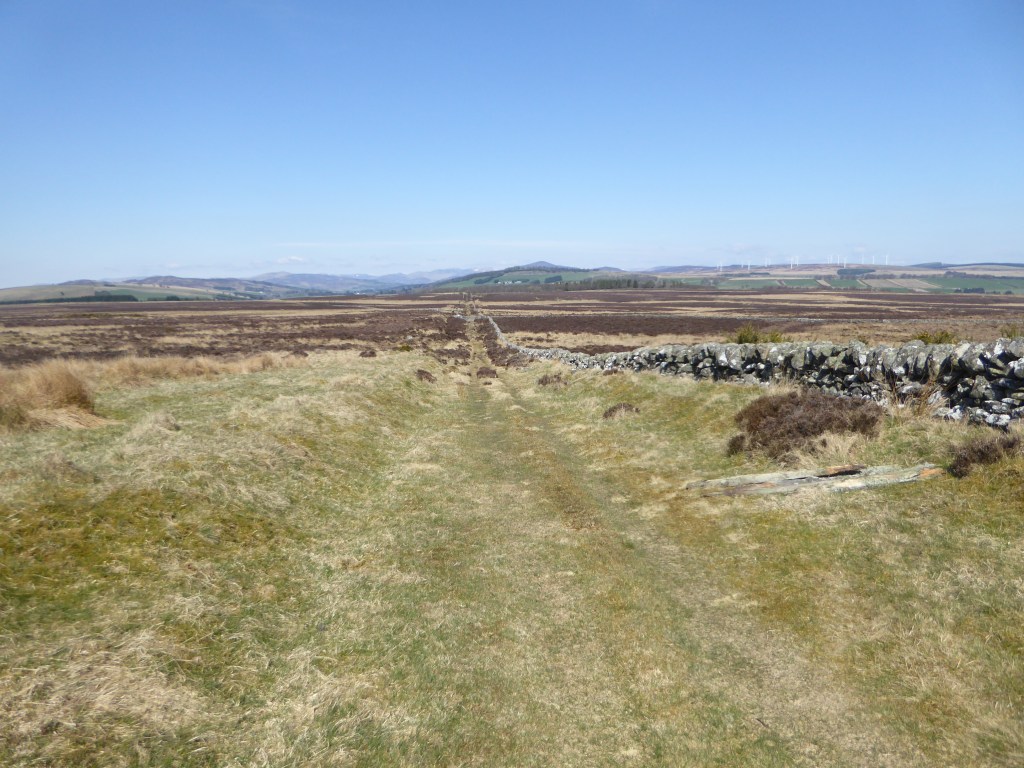
In total, it was just under seven (easy) miles on foot, with brilliant weather and all in a southerly direction. The terrain was also quite easy but with outstanding views.
It was actually a very easy walk, and the weather was outstanding.
Once on the “high” plateau, it was more or less downhill, with not much in between.
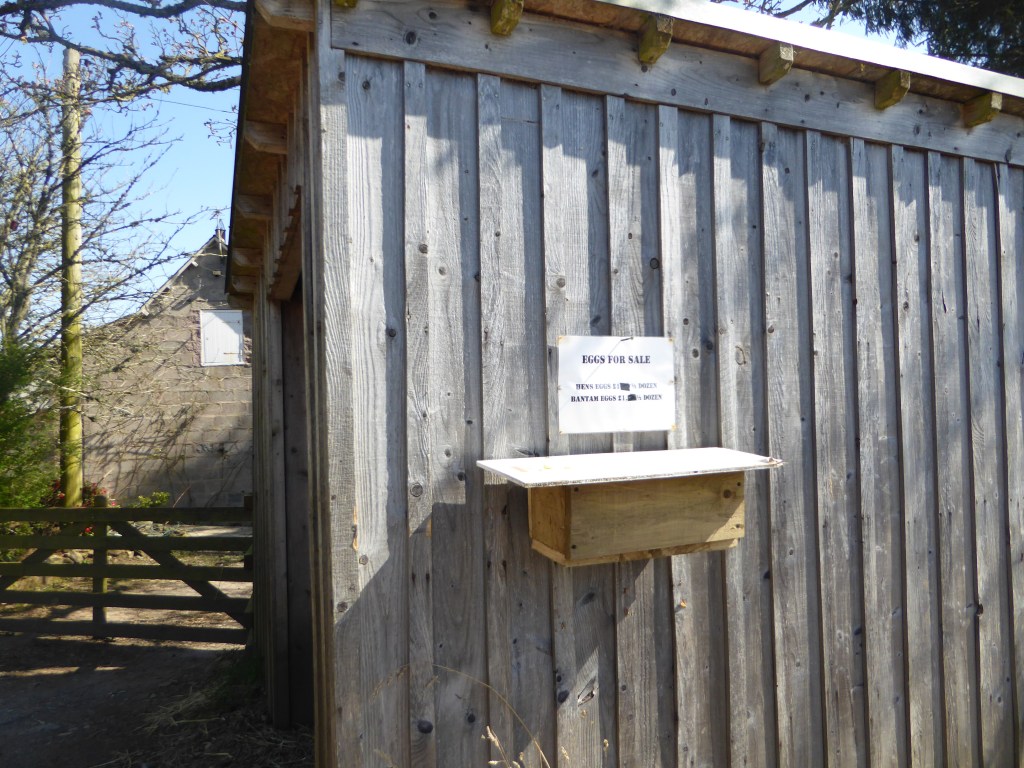
As I remember, there was only one, very small settlement on the way, that offered eggs for sale!
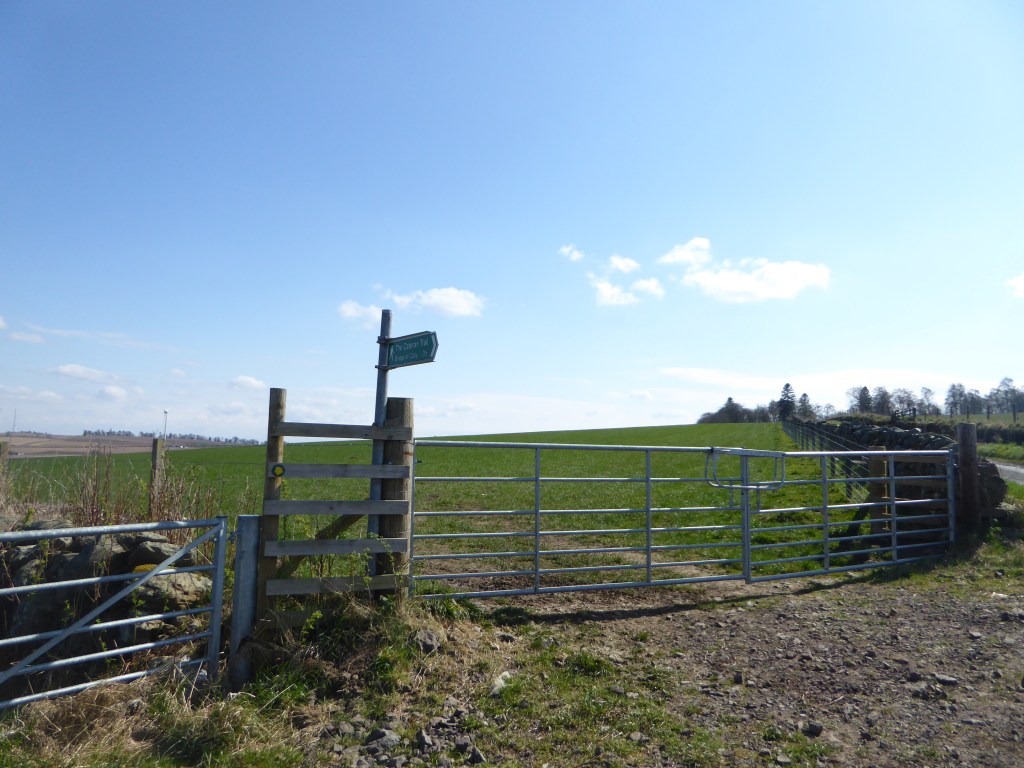
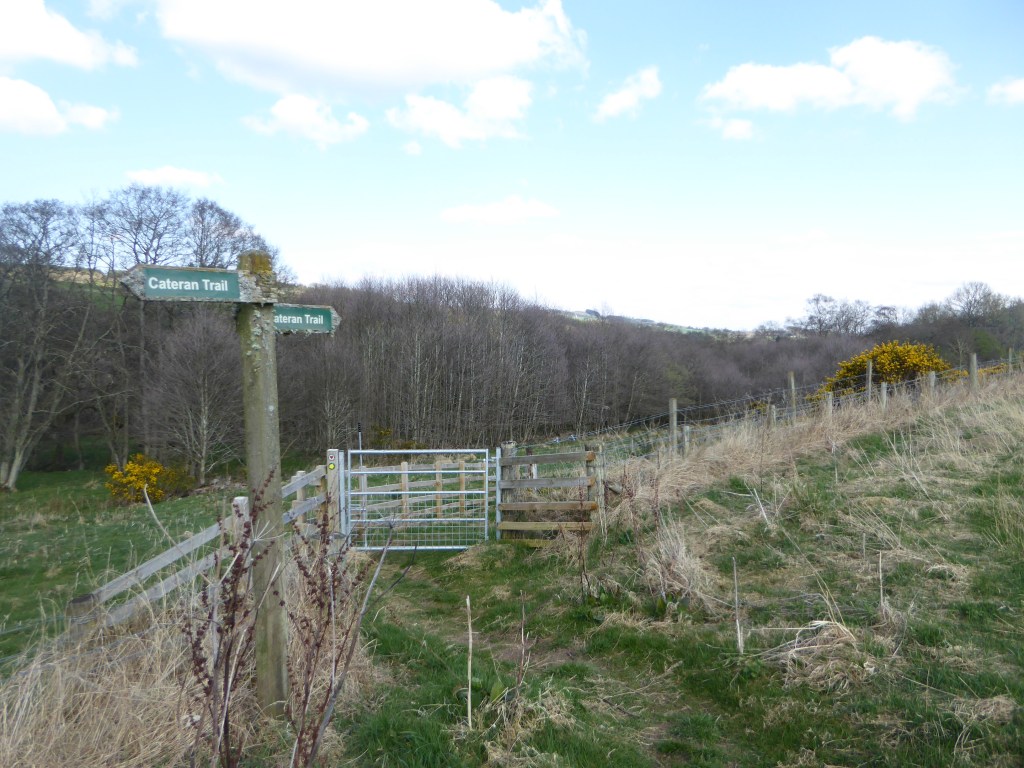
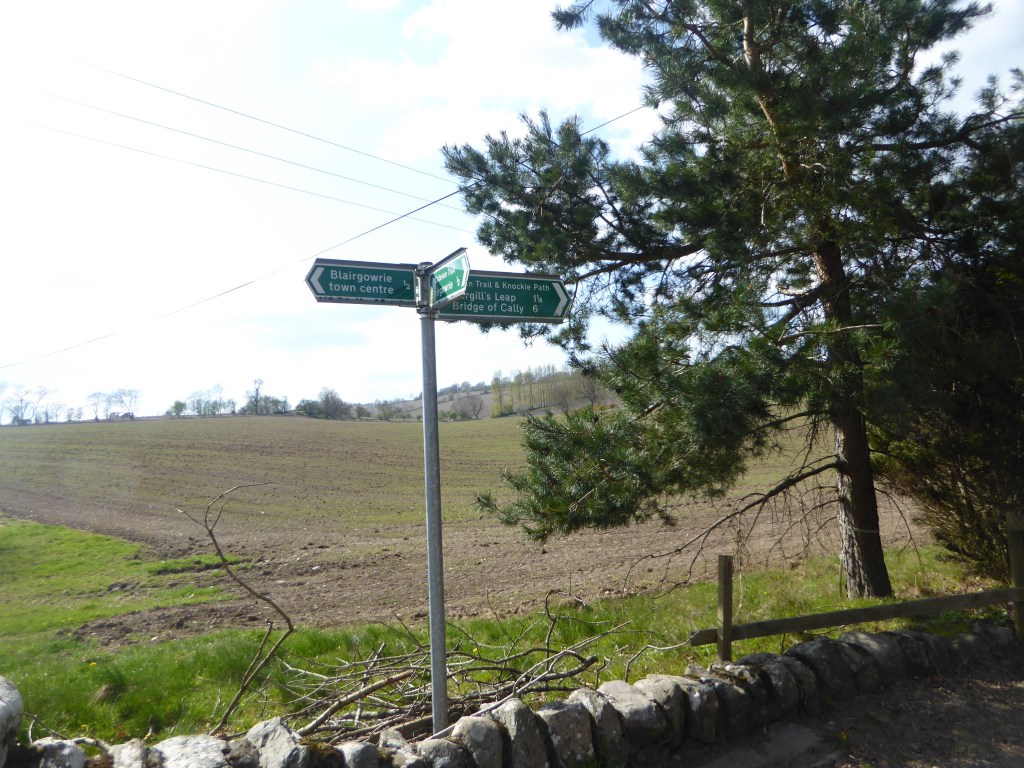
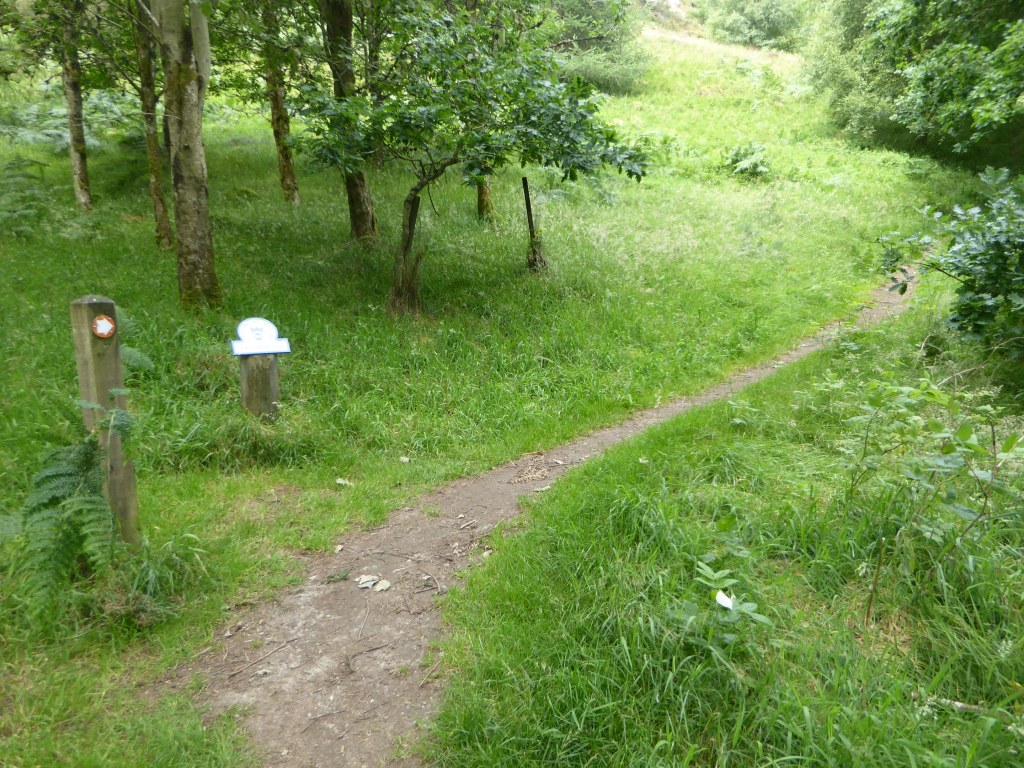
And there were still enough signs to encourage you that you were on the right track.
From here, it was more or less downhill to Blairgowrie (forgive the simply awful website!)
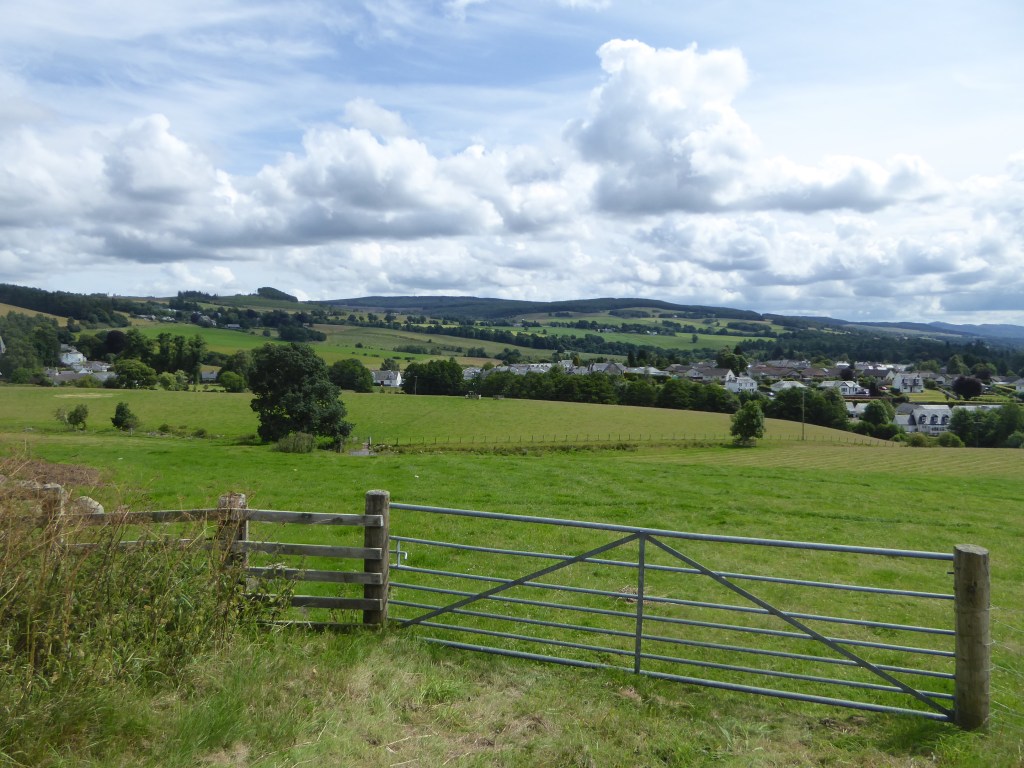
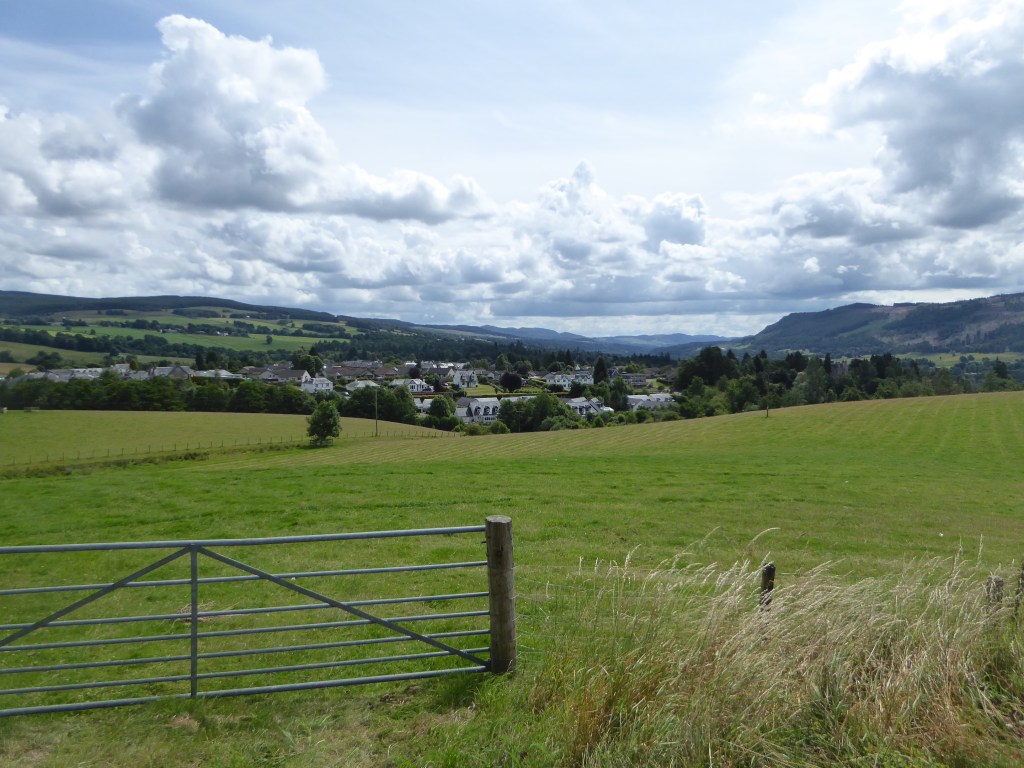
It was interesting, that Blairgowrie calls itself the Raspberry Capital of Scotland, and coming down from above, no doubt it being in a valley, contributes to its “warmer” Scottish temperature. You can see the raspberry plantings / farms below.
Before we arrived, we noticed an abundance of garlic under many trees, but believe that it is not edible? We didn’t try it!
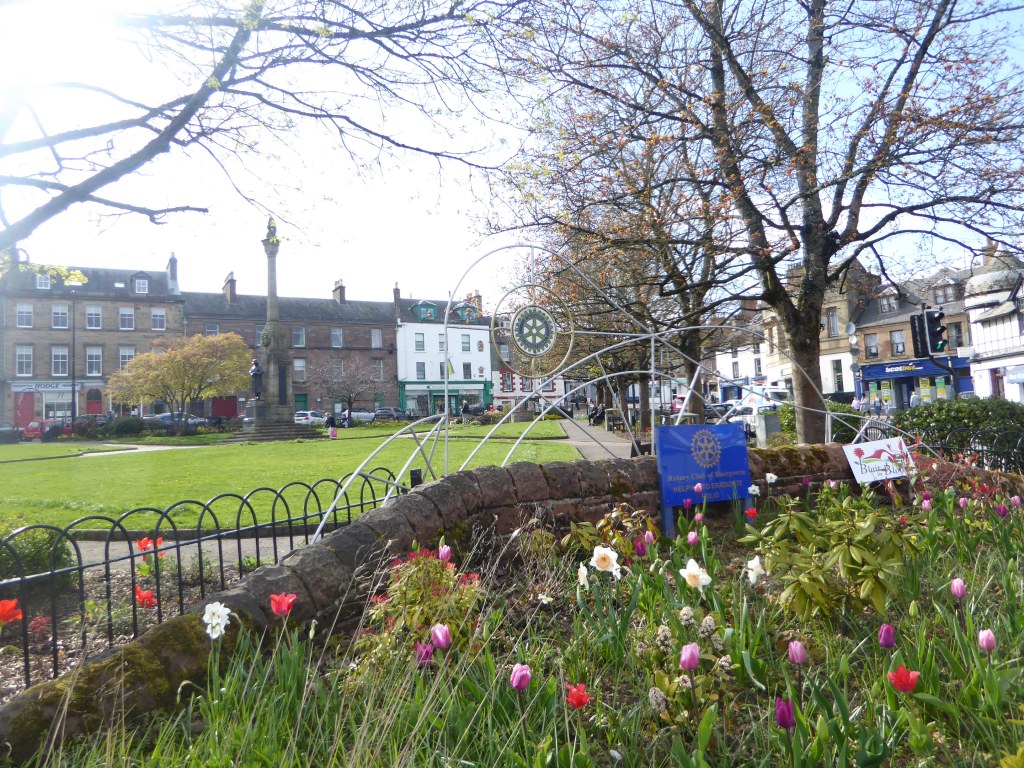
The town itself was very clean and looked exactly as I thought it should. We decided to catch a reliable bus service, back to Bridge of Cally (it was very easy to do this), and have our tea there, at the Bridge of Cally hotel where we were staying.
I believe there are only a few stages left; which I hope to finish in 2024.
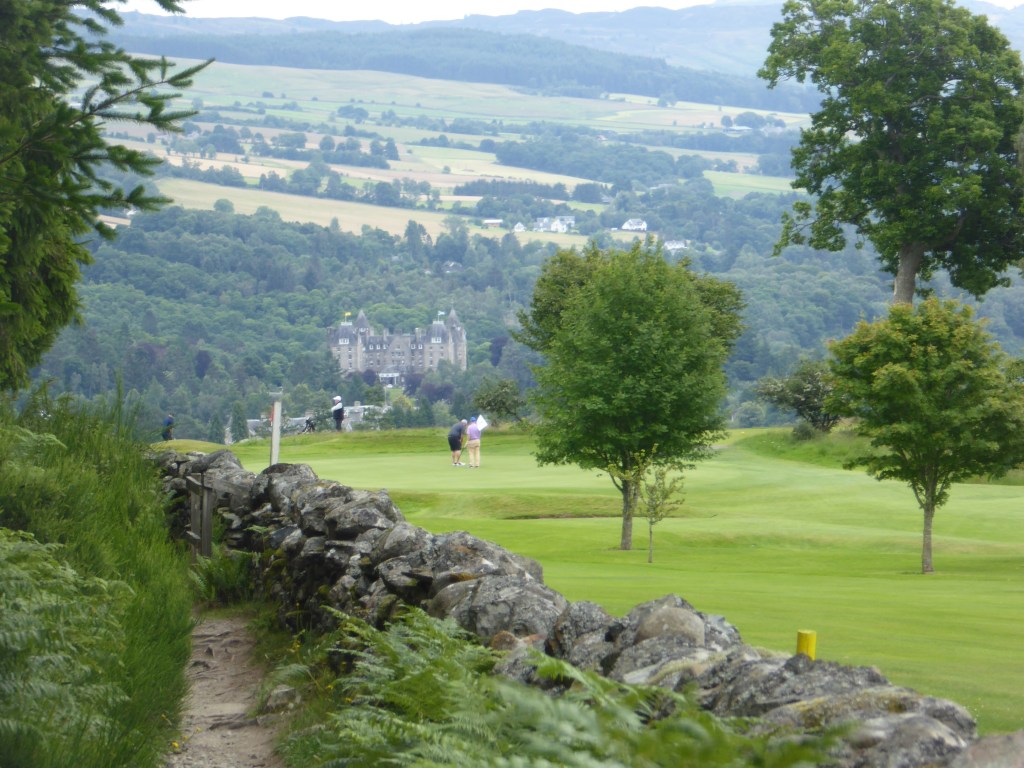
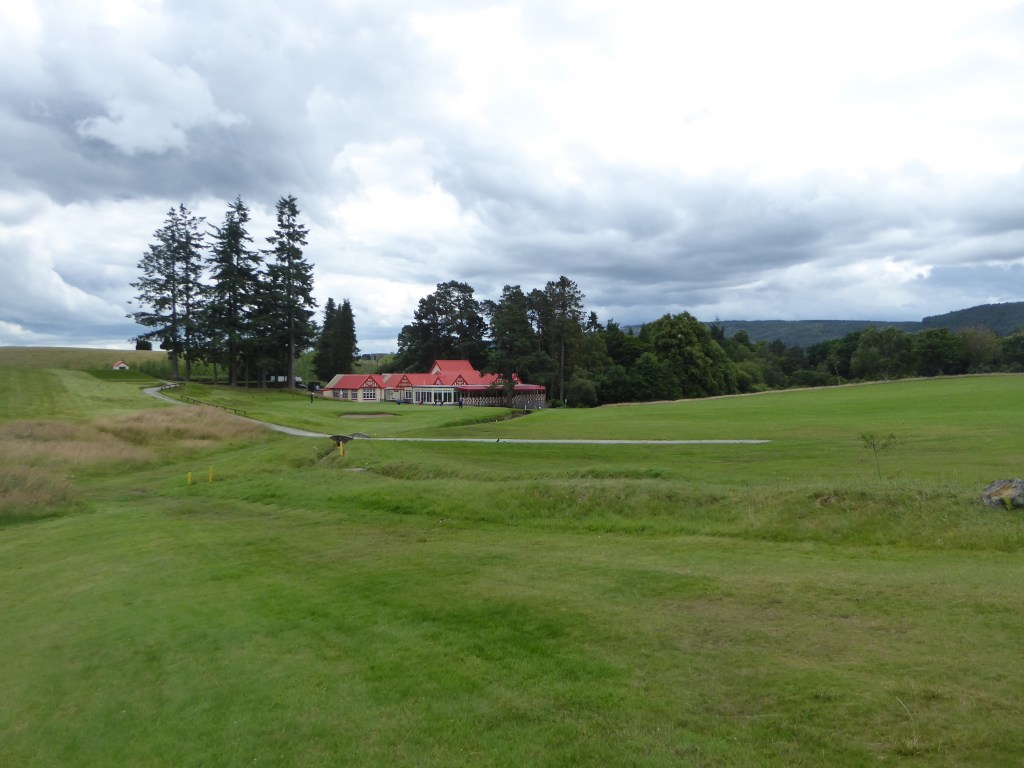
What a shot! And a “castle” in the background, but it’s not a castle, it’s Athol Palace Hotel.
And yes, that IS a golf course there, Pitlochry Golf Club. Excellent cafe by the way.
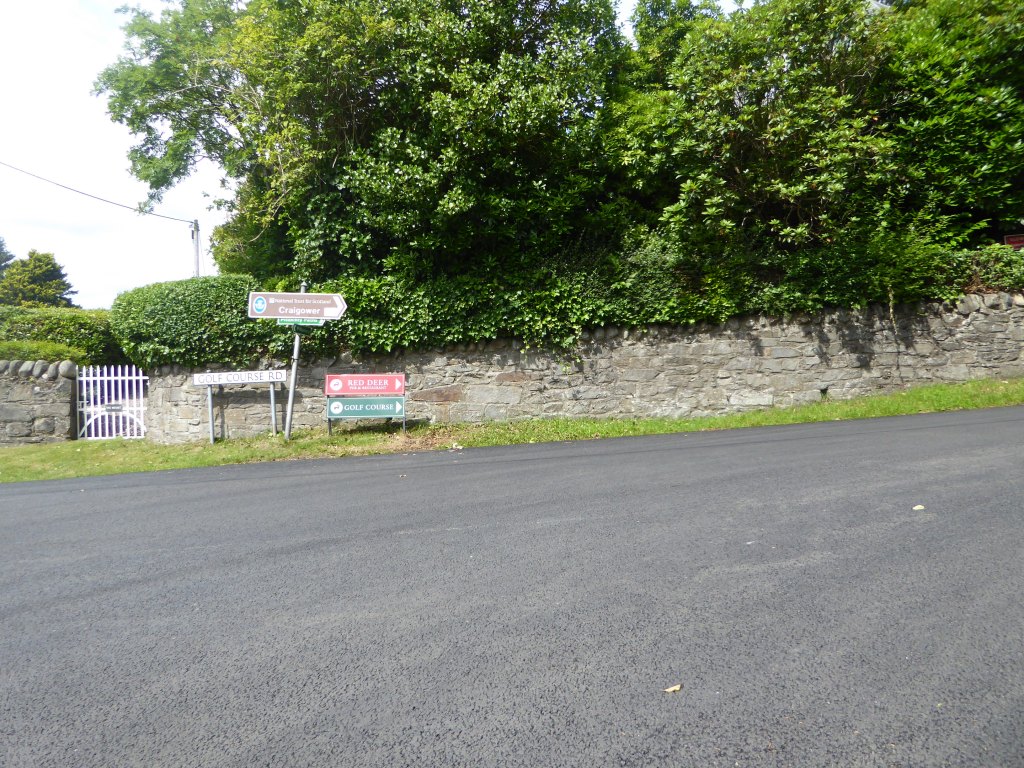
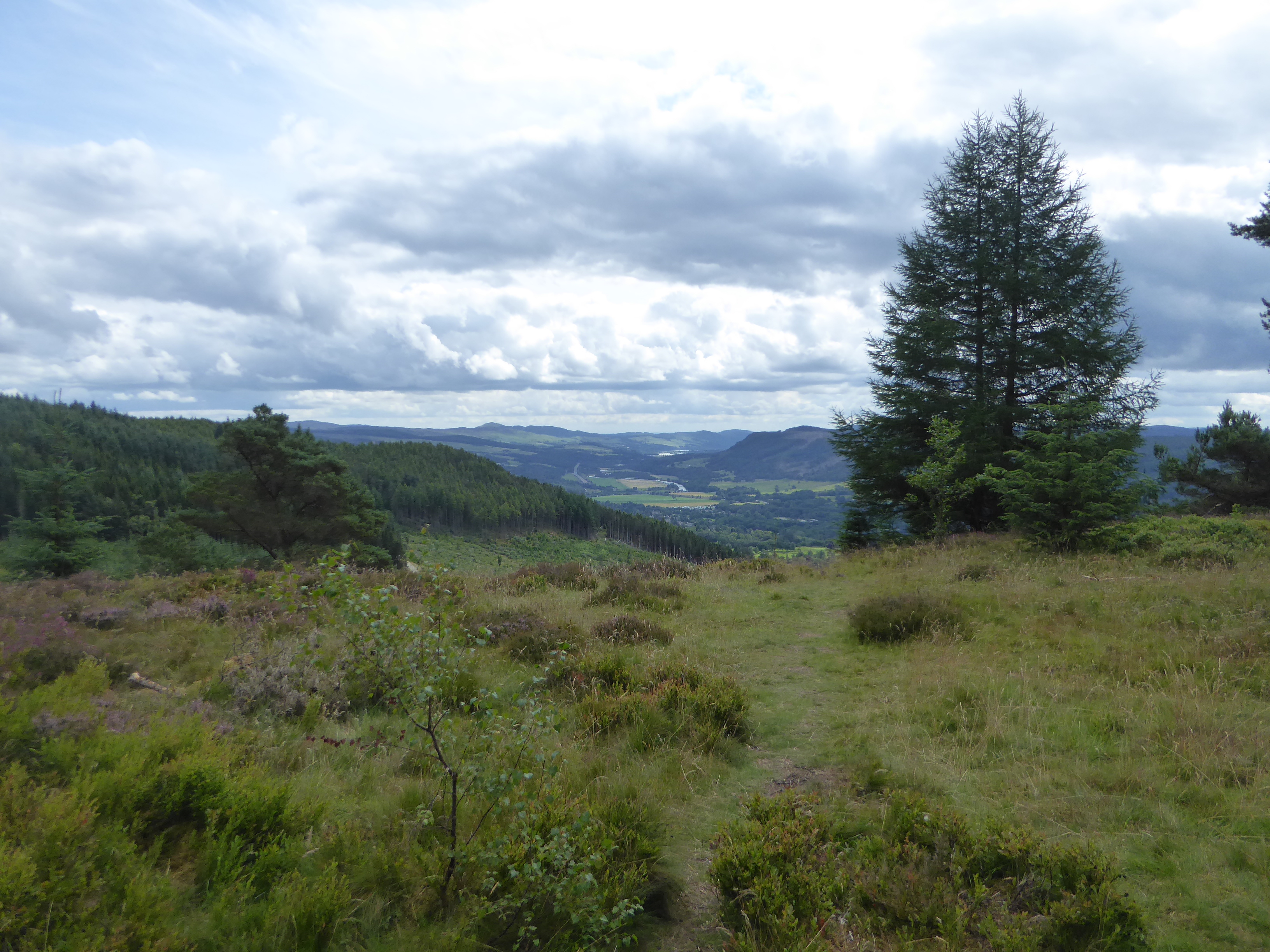
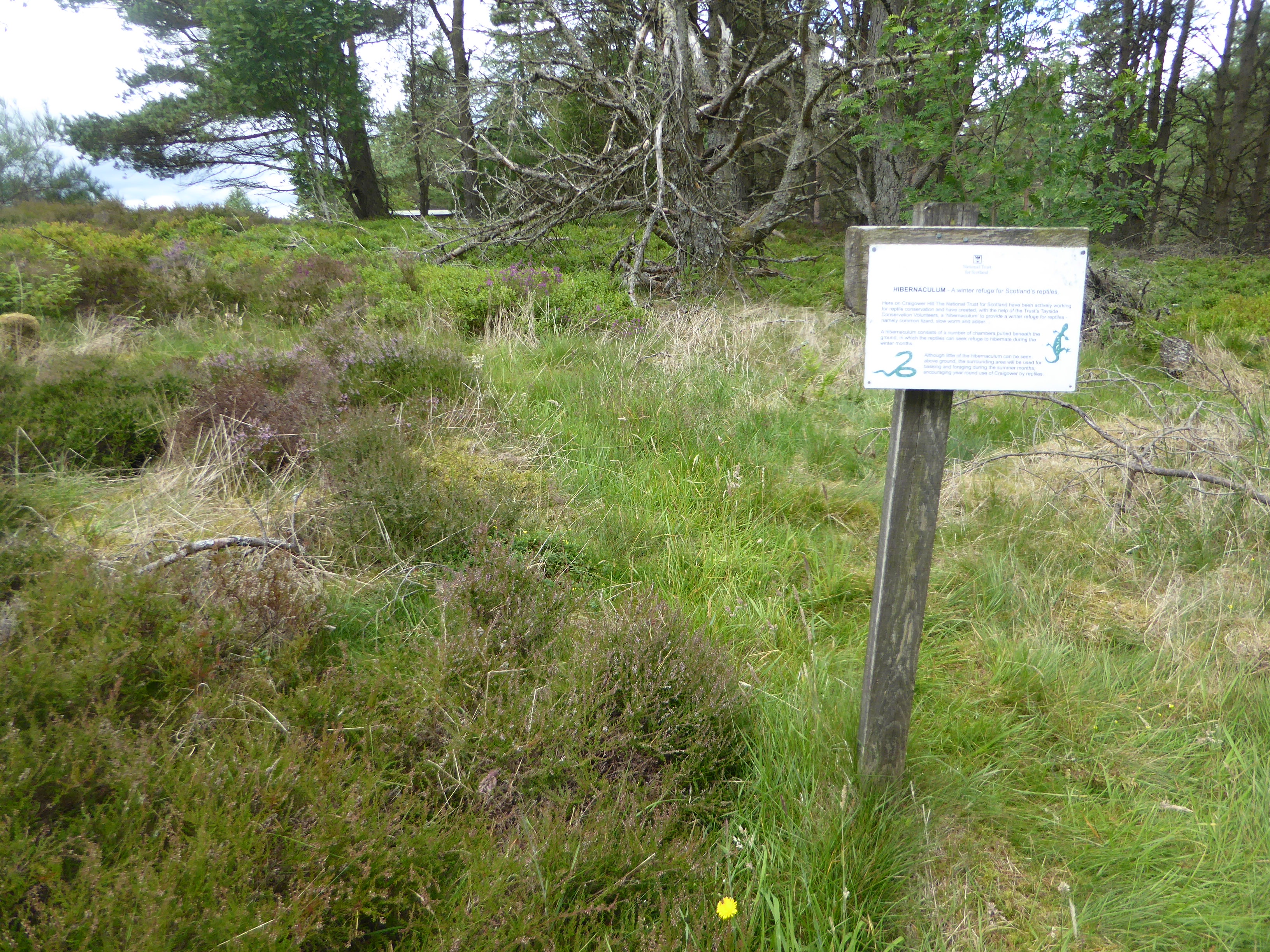
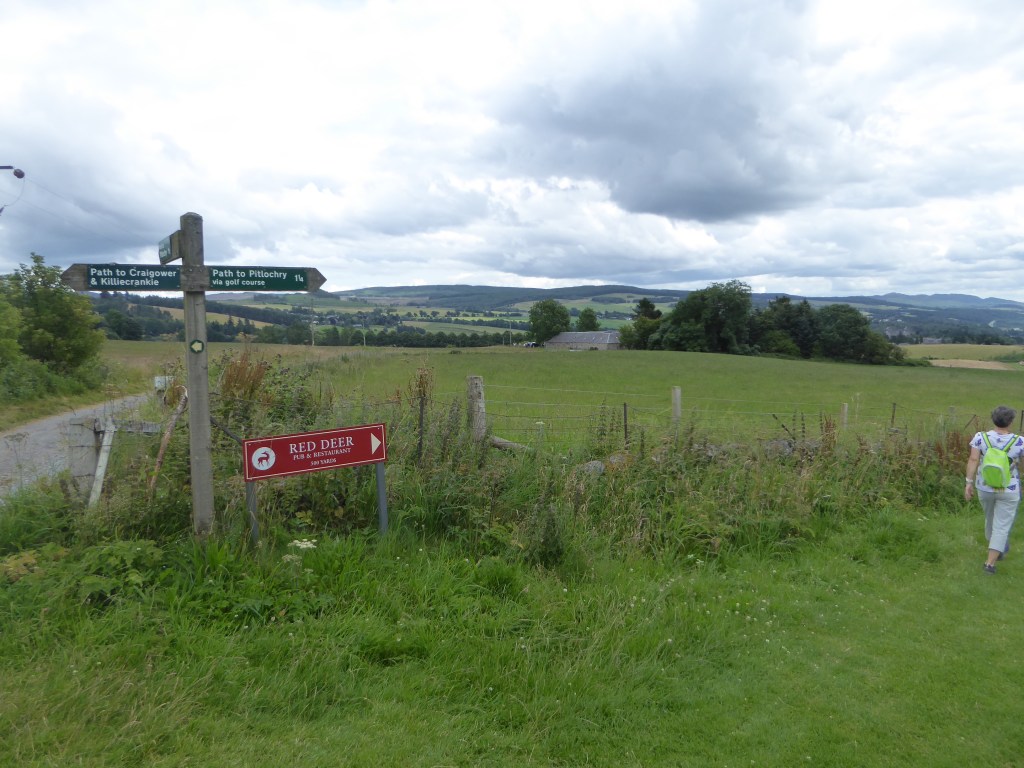
We tried a very minor walk, from Pitlochry, that darling Victorian town in Perthshire Highlands, to a small National Trust owned hill, Craigower.
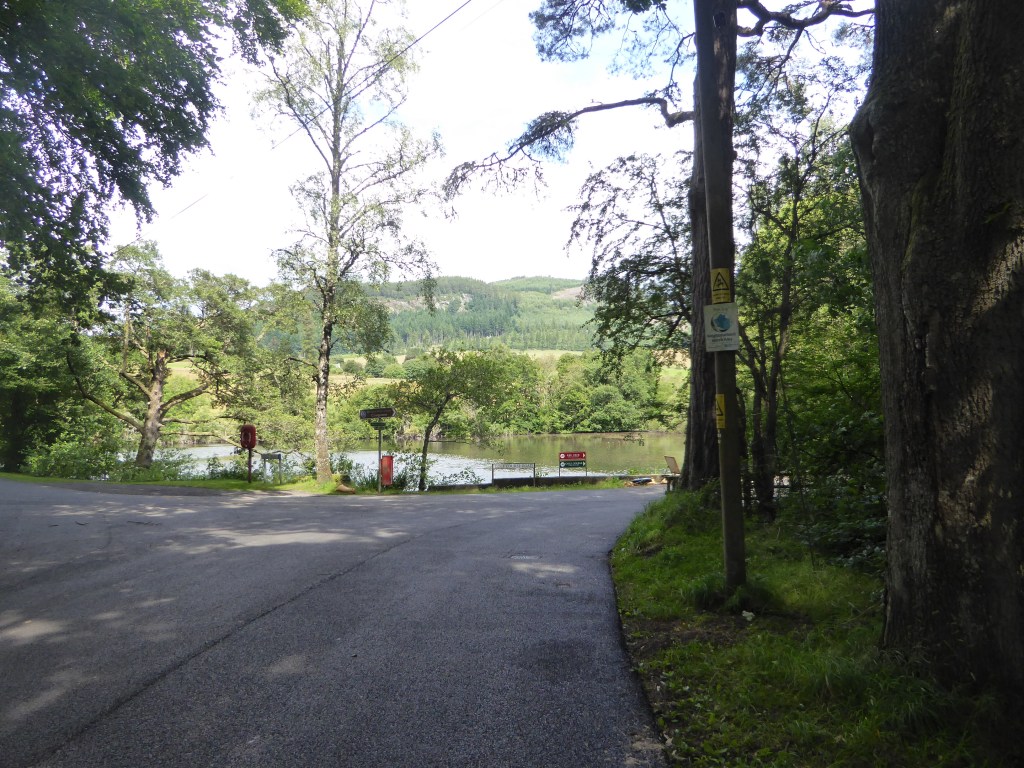
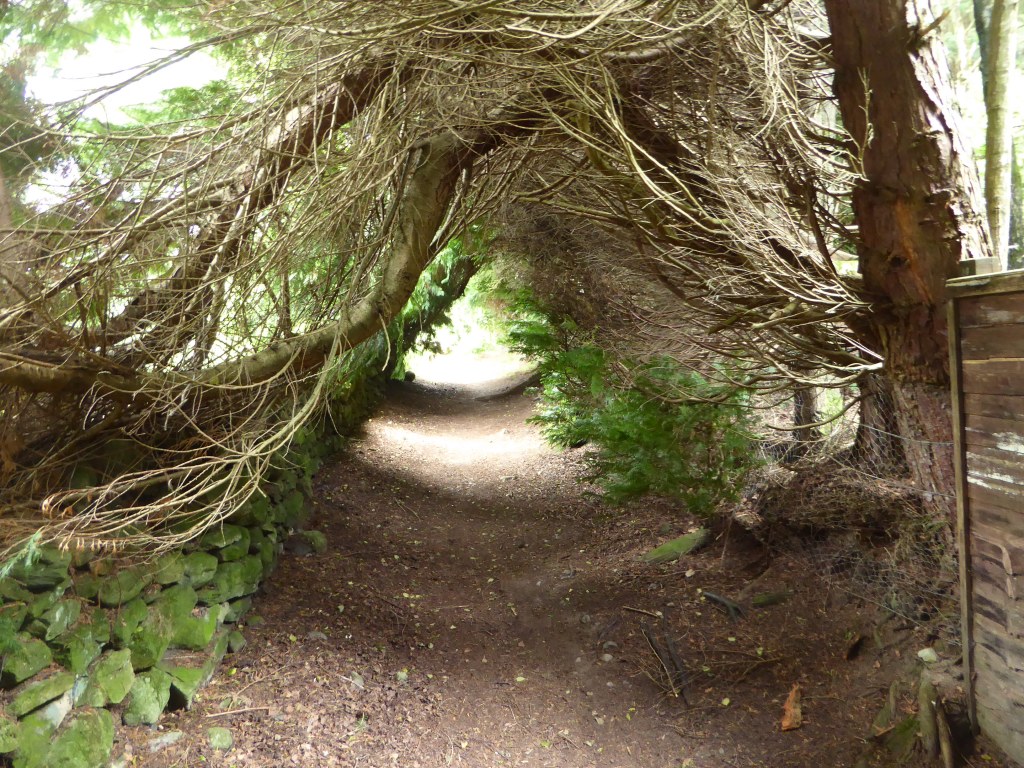
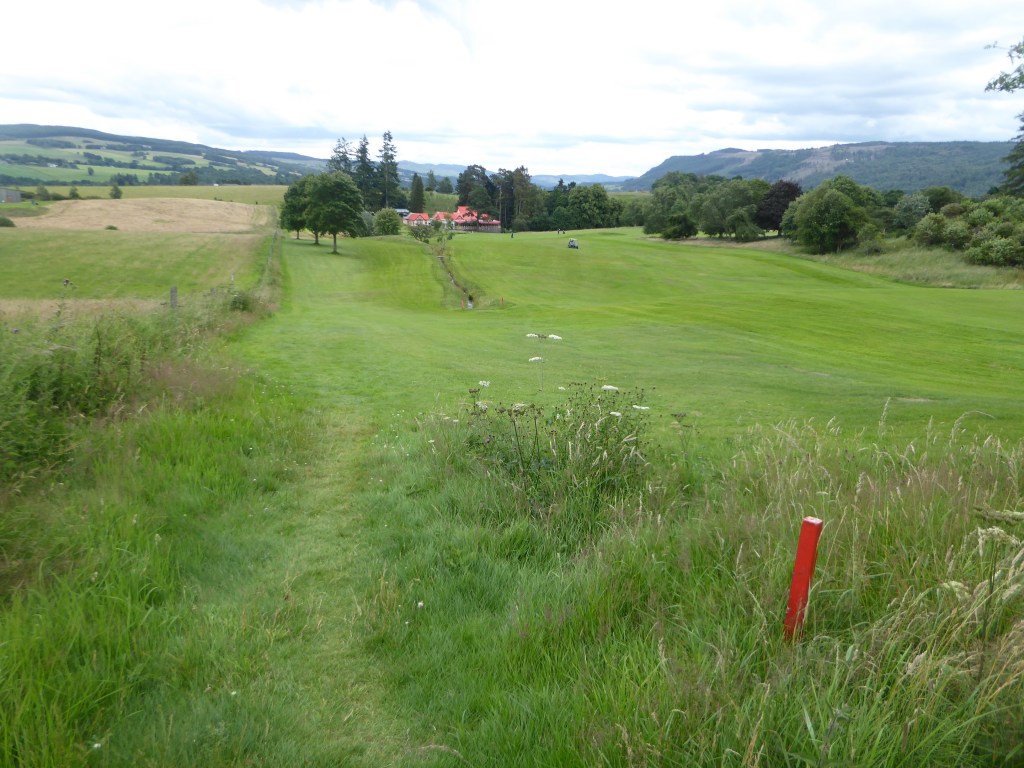
What an easy, interesting and surprisingly steep walk / hike. It started in the town, or at least close by to the aforementioned golf club, and then after passing by it, you walk straight up (below).
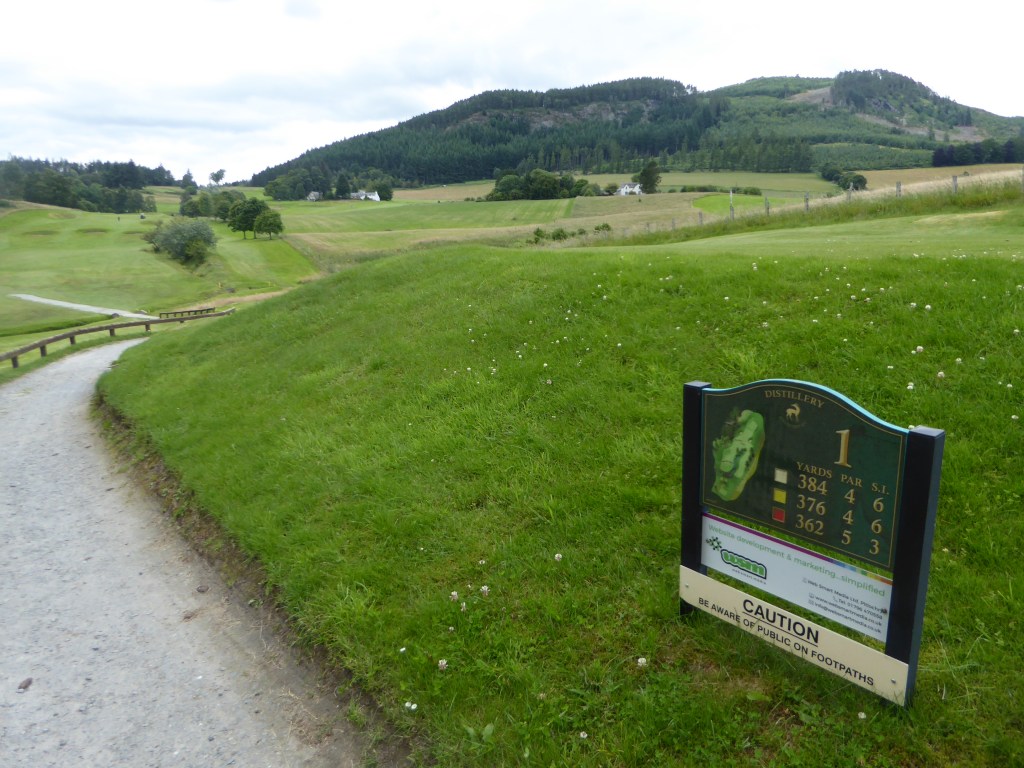
At one point, it’s necessary to cross directly in front of the club house and 18th hole if you wish, we did a slight detour around the course via an easier road, and could look back at the course and Pitlochry.
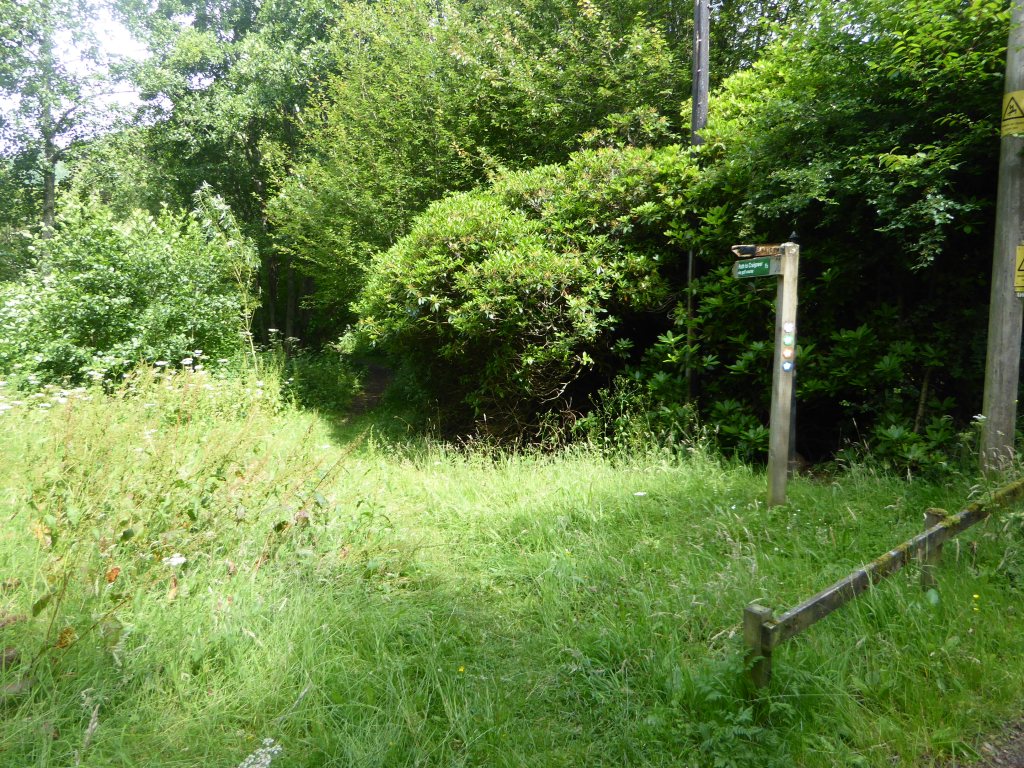
After this, it was straight up the hill track.
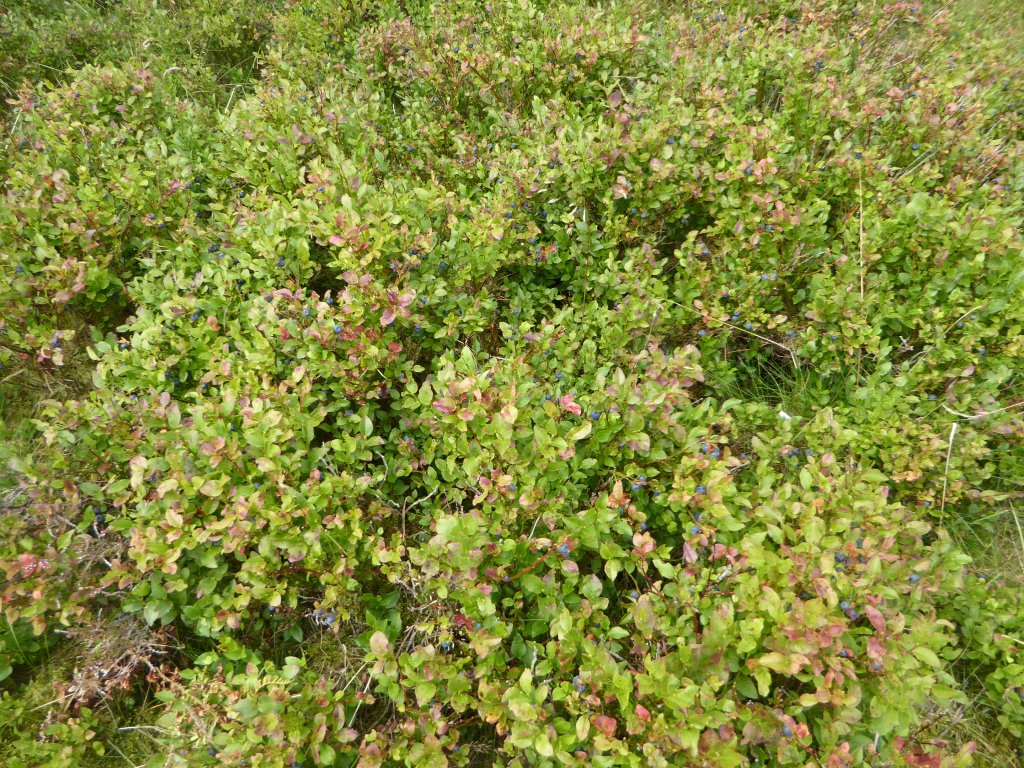
I imagine it’s impressive on the “summit”, but we found another person, no doubt a little crazy, who was in the midst of a wild blueberry / blaeberry patch, collecting these for later use.
We decided to do the same, and to take in the views from the top. From here, it’s possible to hike down to the next settlement, a metropolis called Killercrankie, which has an excellent cafe / National Trust property.
We went back the same way, this time through the course.
Glasgow has a history of demolishing and rebuilding, a cycle that repeated during the 1960s, 70s, and 80s.
It is rumoured that the Glasgow City Council, or the City of Glasgow District Council as it was known back then, may have demolished upwards of 38,000 to 40,000 tenement blocks. I’m uncertain if these numbers refer to entire tenement blocks or individual flats within them. The exact count remains elusive, but the consensus is that this approach was a disaster.
Instead of demolishing, they could have refurbished them, preserving their charm and the character of the areas involved. Unfortunately, the mass exodus to new areas, not only decimated community spirit but also led these residents to move into unpleasant, grey high-rises. Approximately, only 75% of THESE structures still stand, as the remaining 25% have ALSO been demolished.
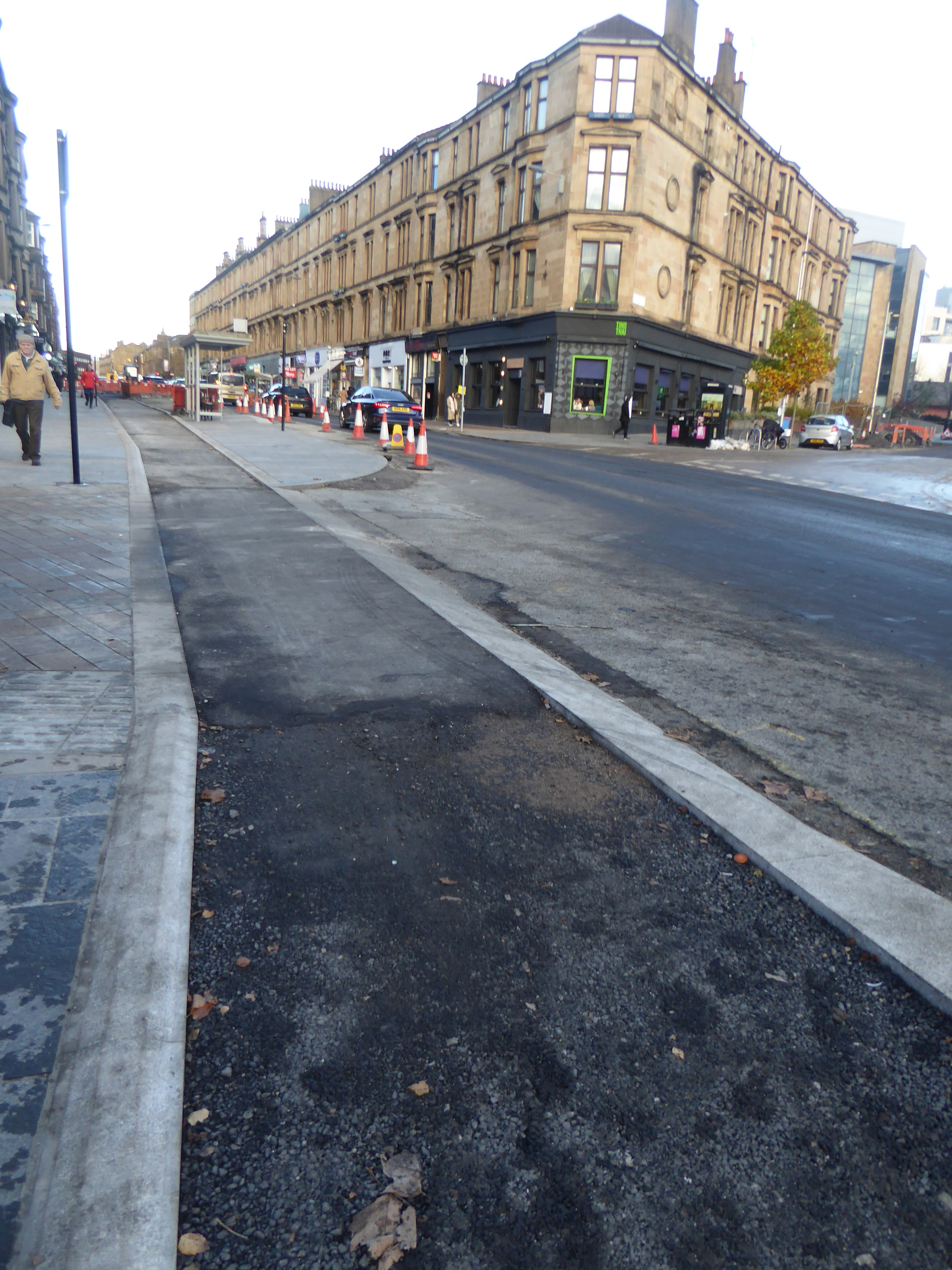
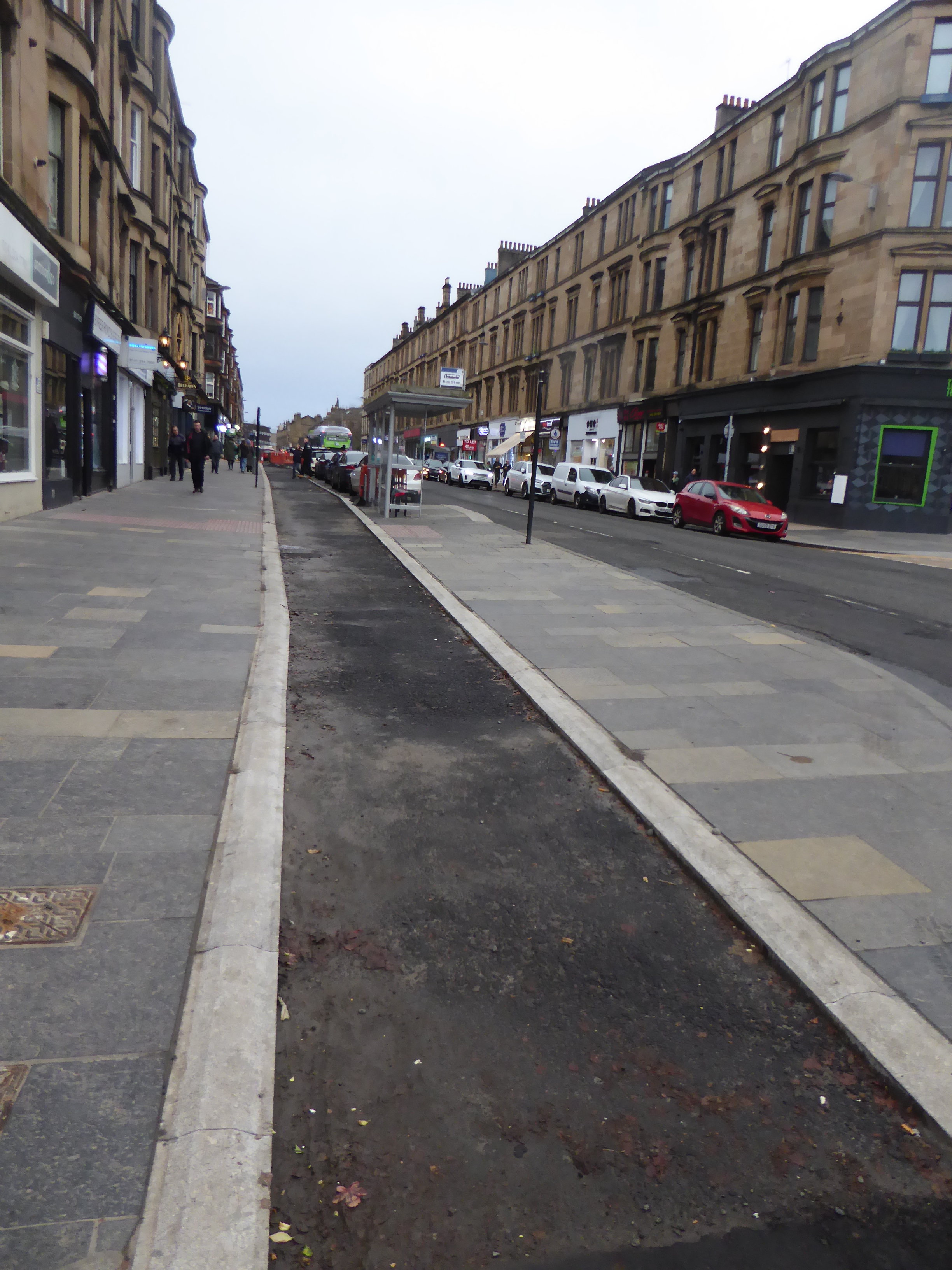
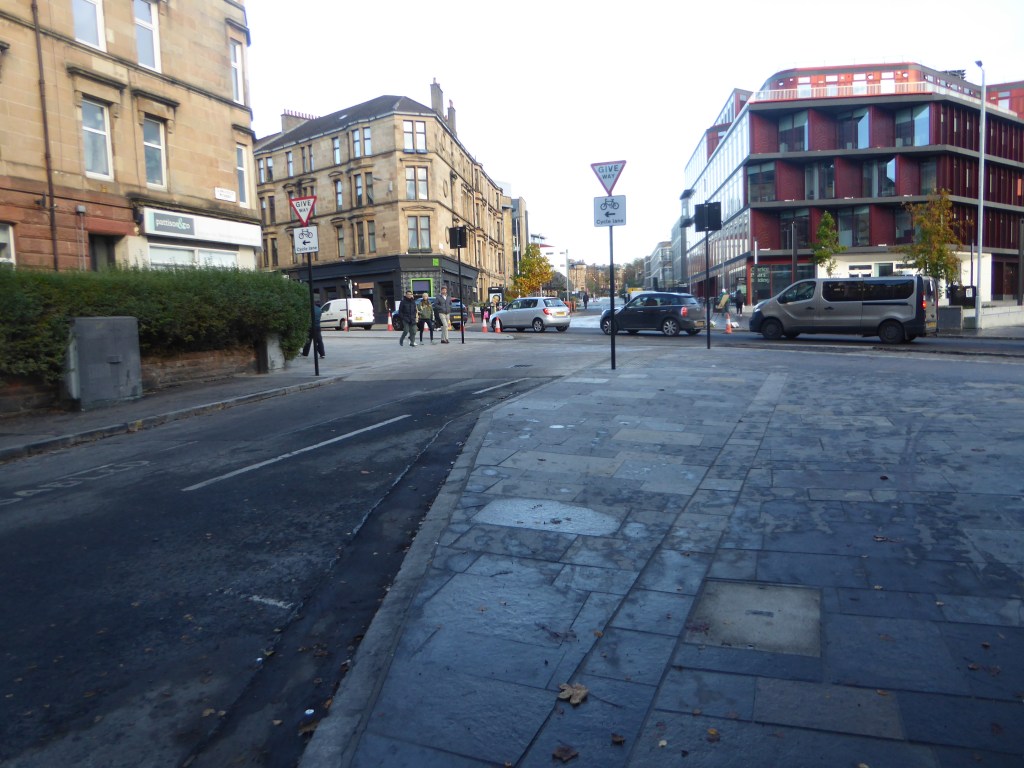
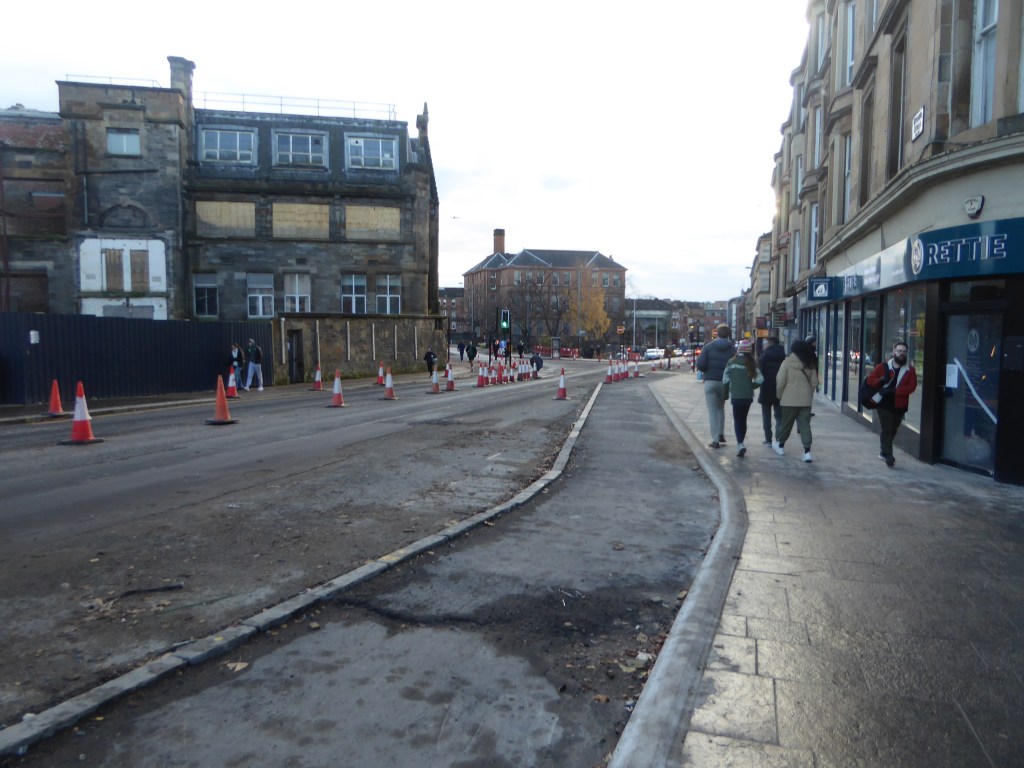
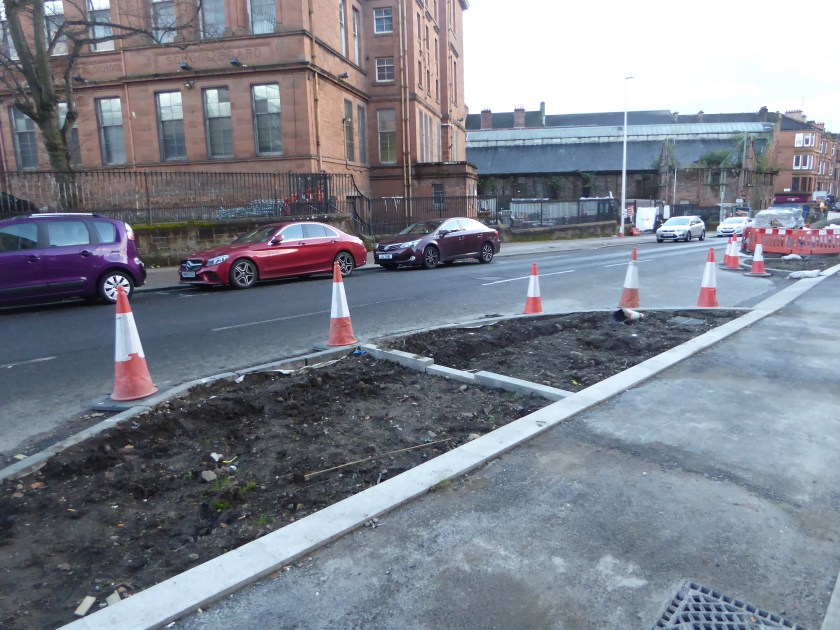
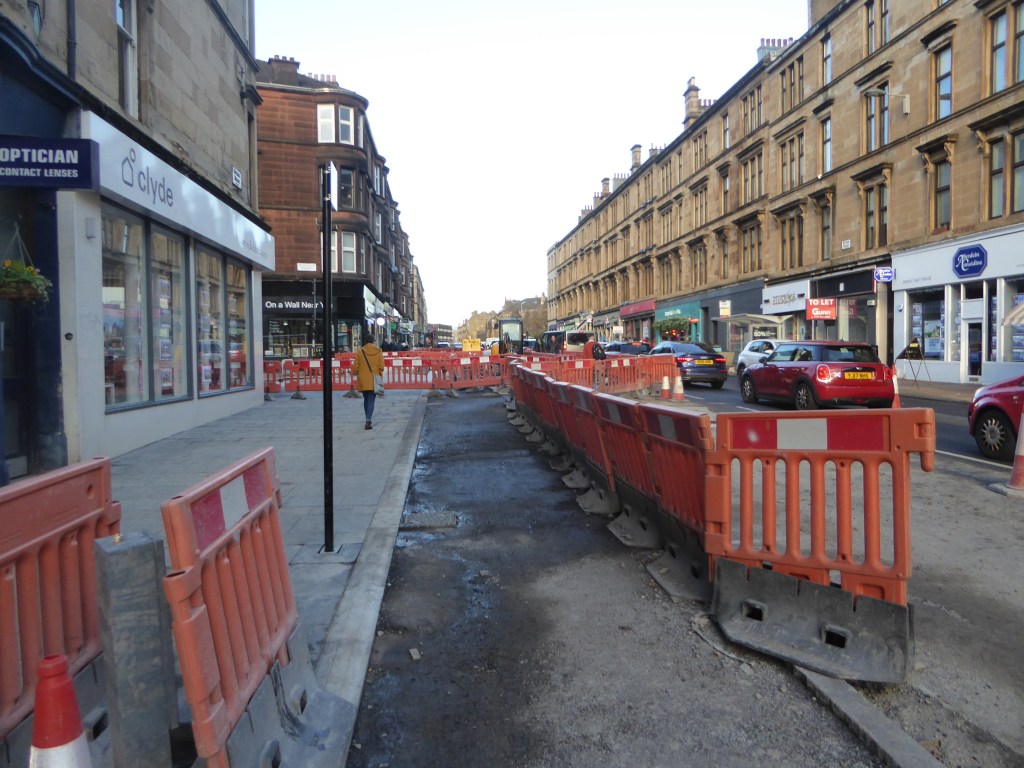
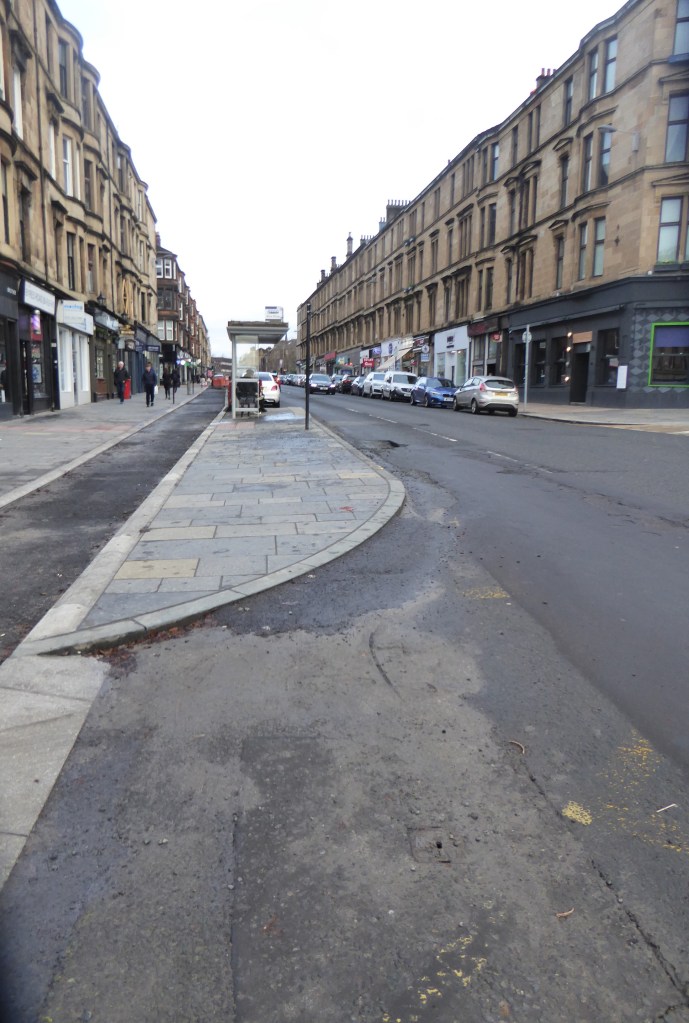
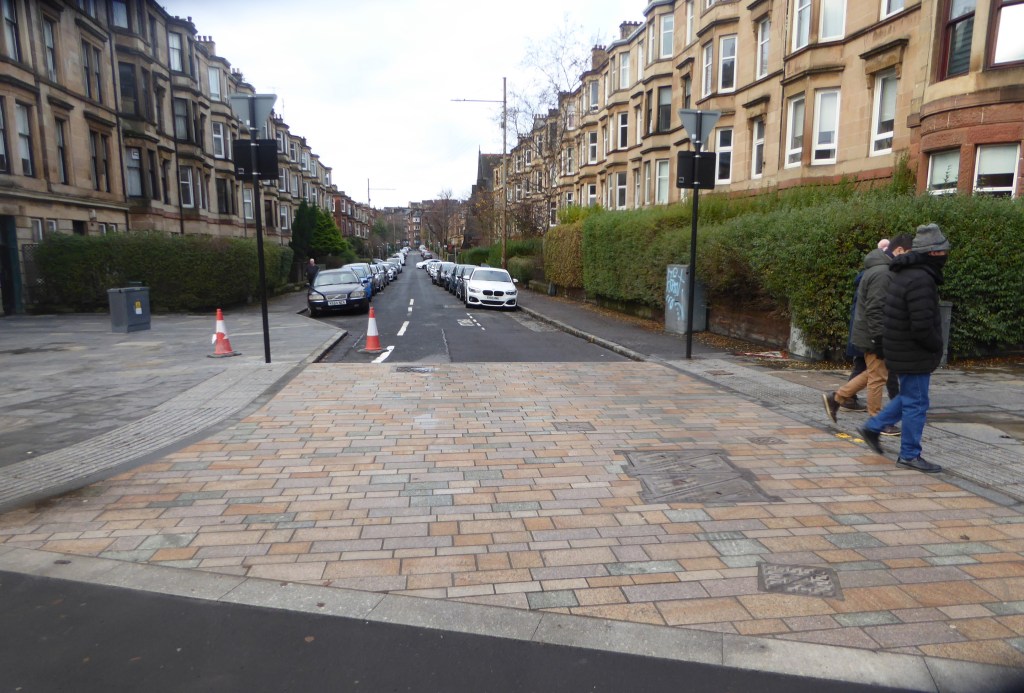
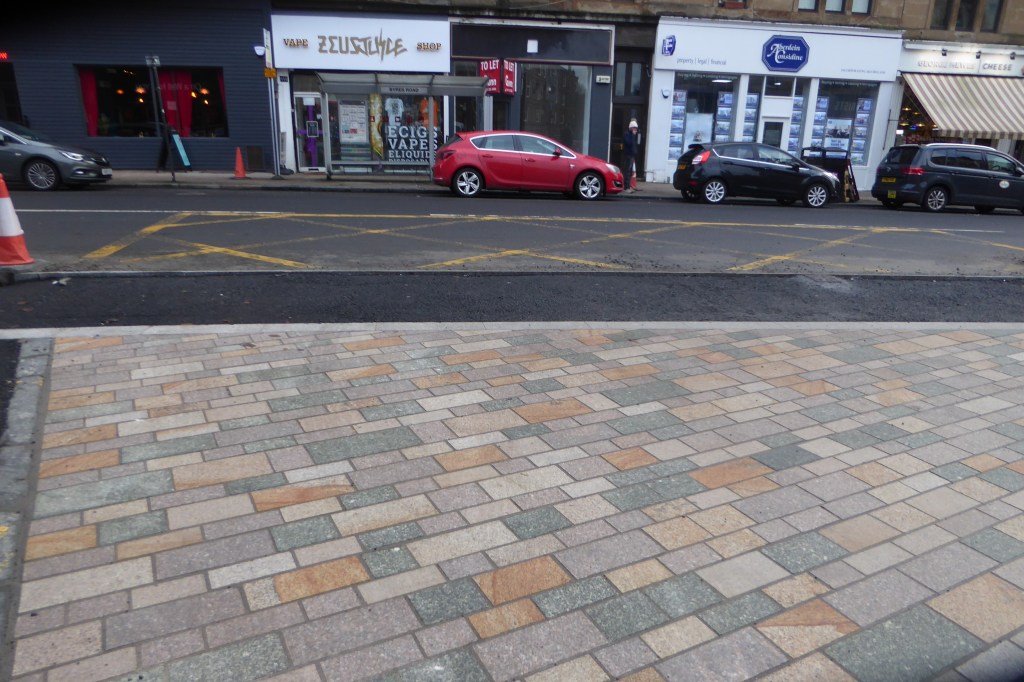
In recent years, particularly in the West End of Glasgow, there have been plans to revamp Byres Road. The COVID pandemic may have caused delays, but there’s a concerted effort to make the area more cyclist and pedestrian-friendly, while reducing car accessibility. Plans were presented to the local community for voting through a website or at a community library in the West End (I believe); btw, I did not vote..
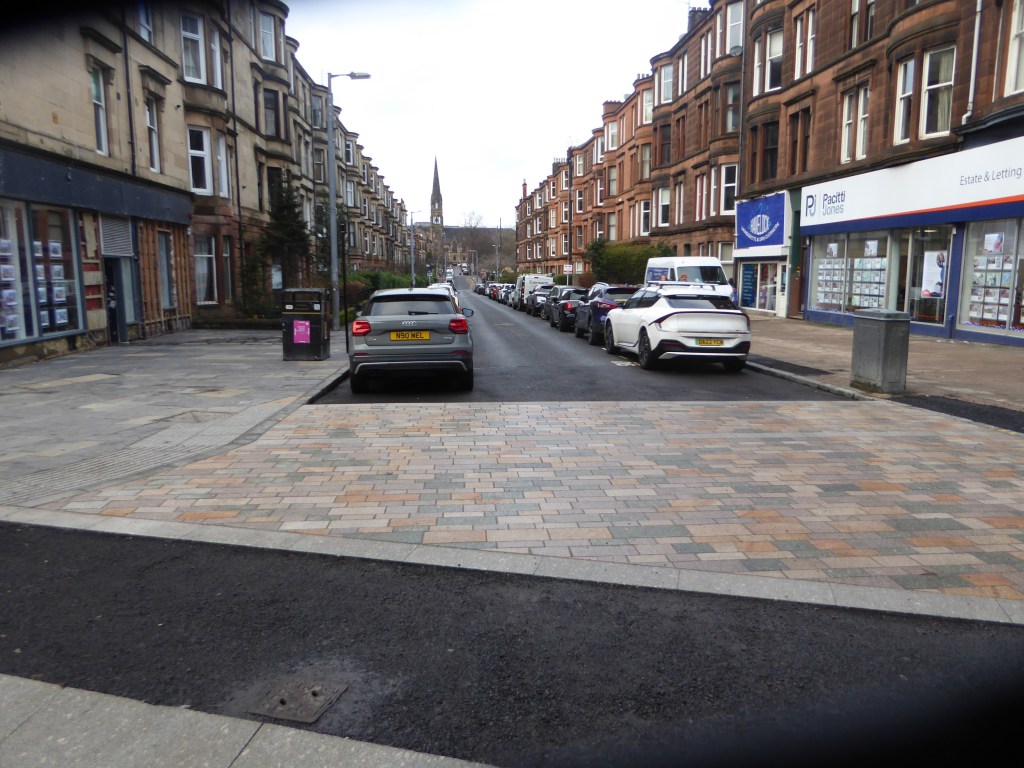
Judging from the photos (before the completed work), it doesn’t align with my vision of something positive. It appears monotonously grey, reminiscent of the old, grey, high-rises that replaced the tenements?
Although there is a smattering of red, the cycle of demolish, build, demolish, build – seems to be replaced with putting up something grey with a touch of red.
Several issues will arise, especially concerning the bike lanes. Pedestrians are already walking in them, and it’s unclear how they will function once completed. Additionally, the angles could pose challenges, making it difficult for moving cars to navigate, especially when encountering parked cars. Already, buses are experiencing delays due to these cars parked almost in the traffic lanes; creating significant traffic jams until the opposing traffic moves.
The effectiveness of this scheme will depend on how well it is policed. Monitoring and enforcement will likely be the key to the success of this initiative.






























 Curious Bystander