

Interesting, all of a sudden I see nothing but cherry trees here in Glasgow in the west of Scotland. I know they’ve always been here, but I’ve always wondered why, and I’ve always wondered are they the cherry trees as in Japanese Cherry trees? Well apparently after doing a wee bit of research, many are. And from past recollections I know that they don’t bloom long, several weeks at the most.
Equally the past several weeks it hasn’t rained, and being quite bright, I took some shots and I decided to actually look into this; like who brought them here, how long have they been here, and just what exactly they are.
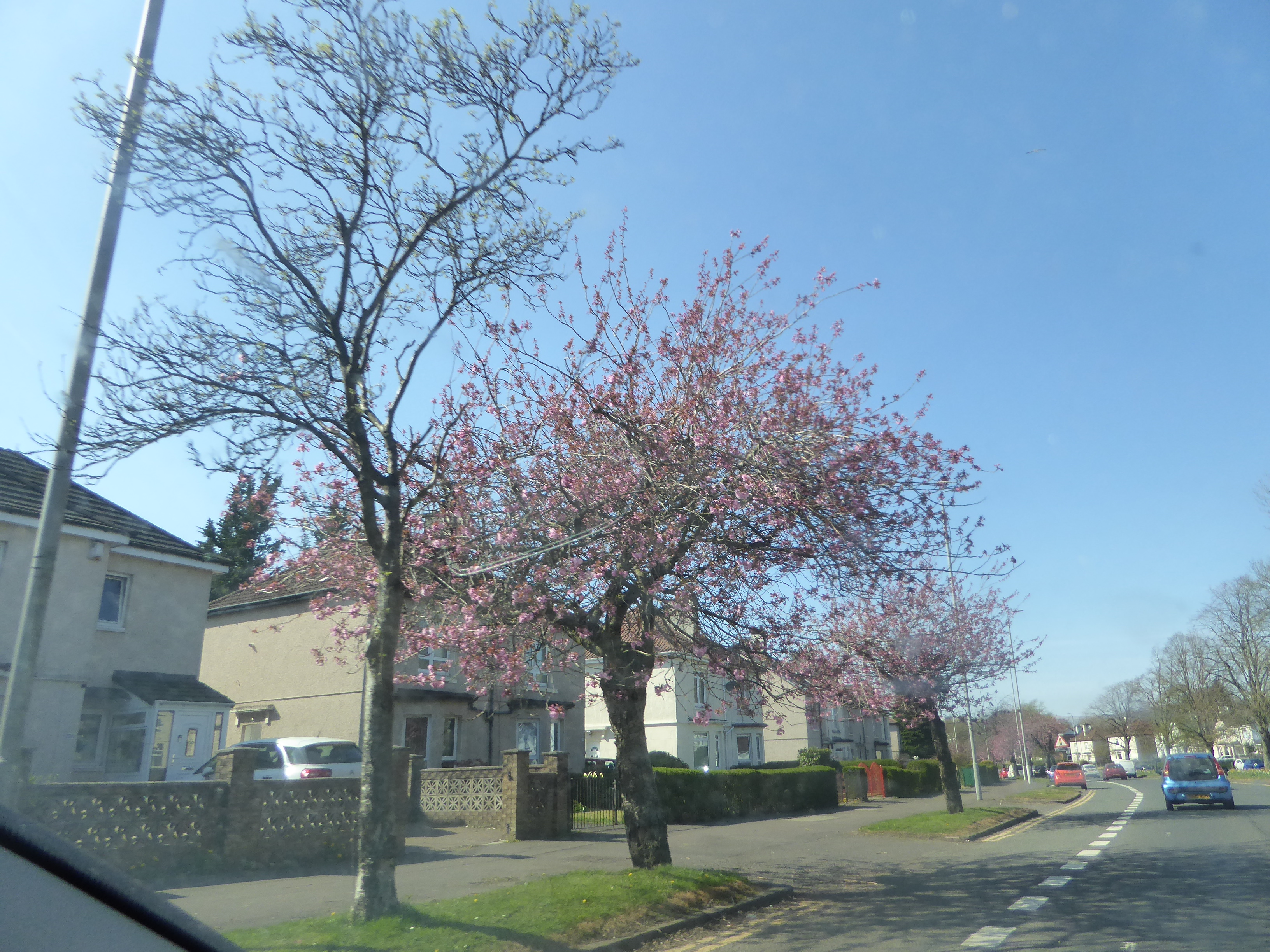
Along western Sauchiehall Street (below) –
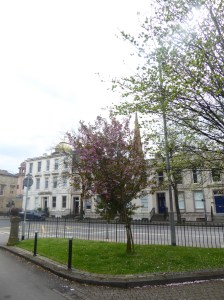
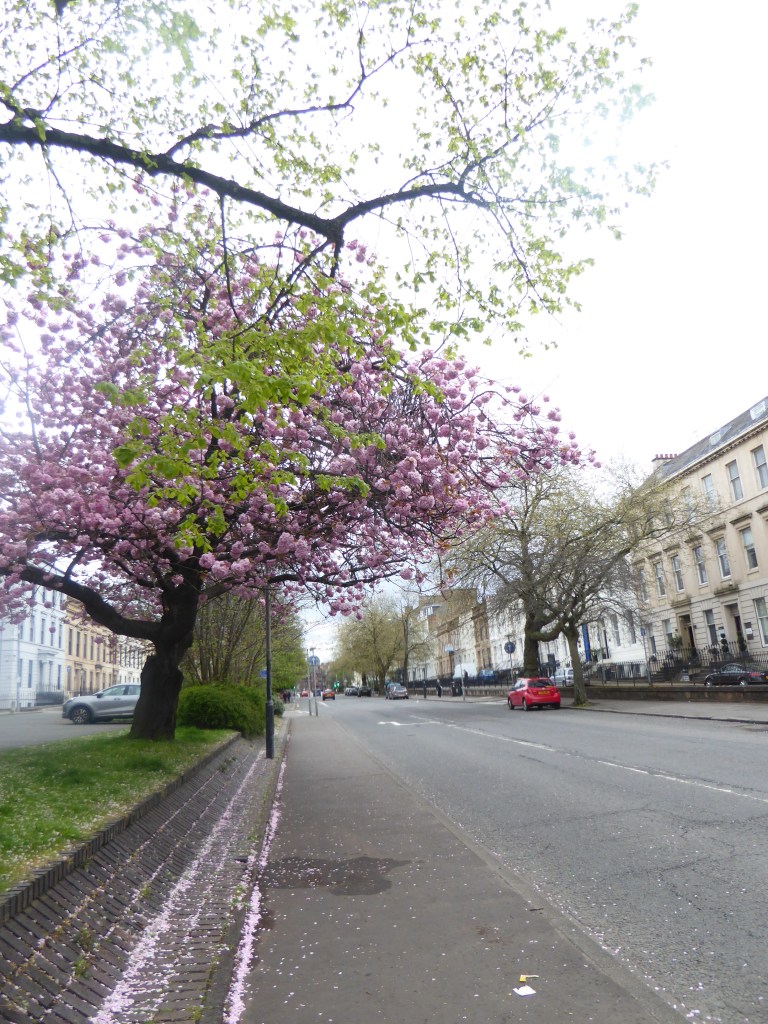
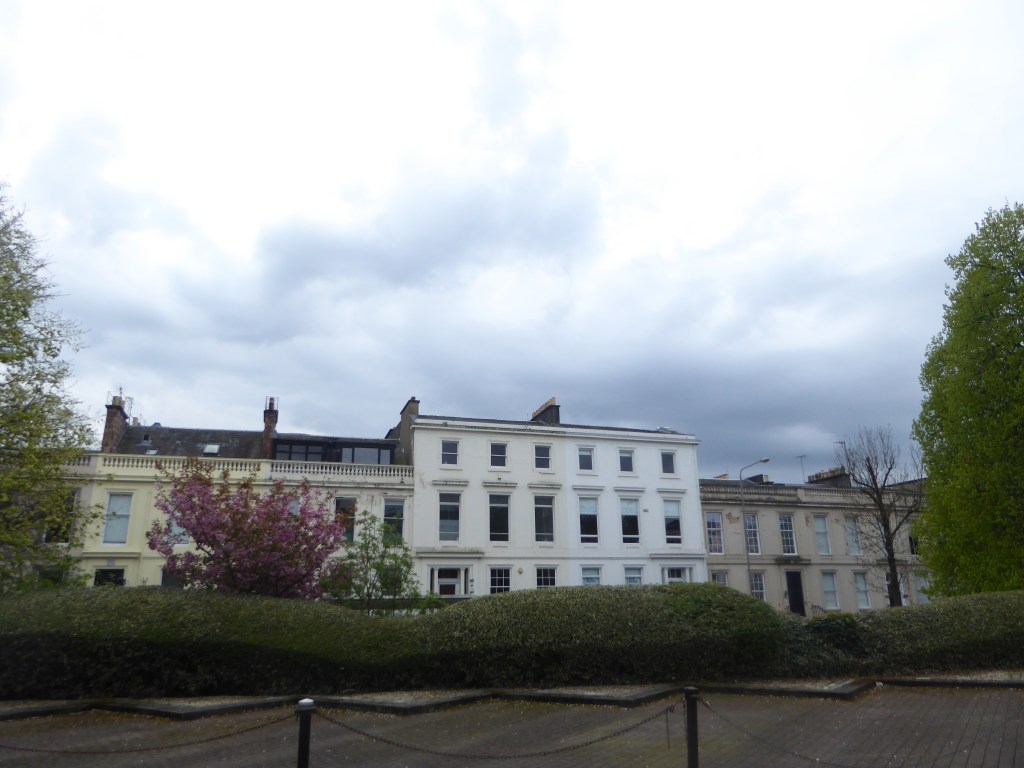
A Glimpse into History
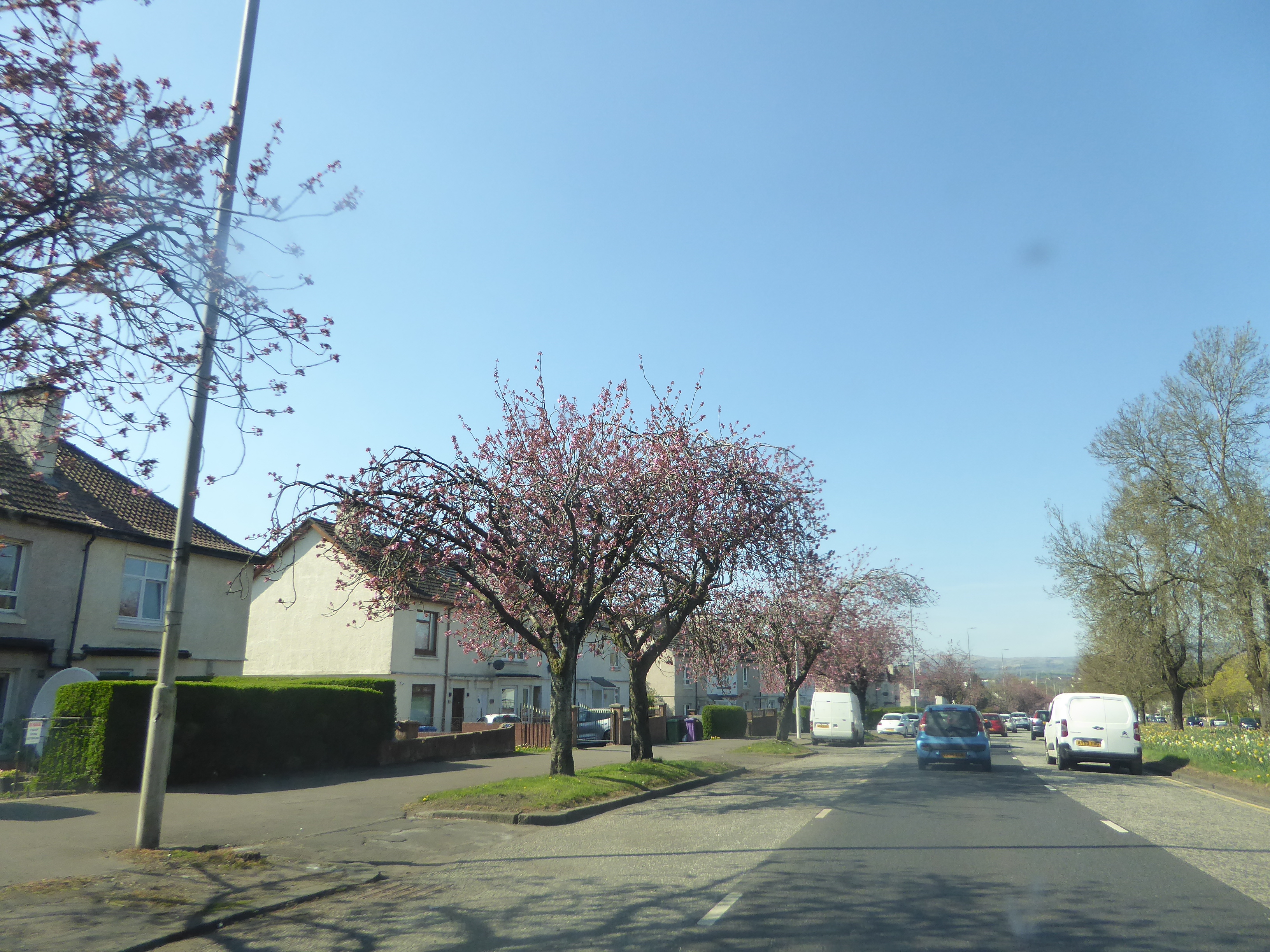
Glasgow’s cherry trees trace back to the Victorian era, when Japanese culture captivated Britain after Japan opened to the West in the 1850s. Glasgow’s wealthy embraced ornamental cherries as symbols of beauty and status. Parks like Glasgow Green (expanded in the 19th century) and Kelvingrove Park (opened 1852) showcased these trees to reflect a certain civic pride. Many current trees were planted in the 20th century, particularly post-WWII, during urban renewal efforts in areas like Great Western Road, that goes through the housing schemes there, on the way out of the city.
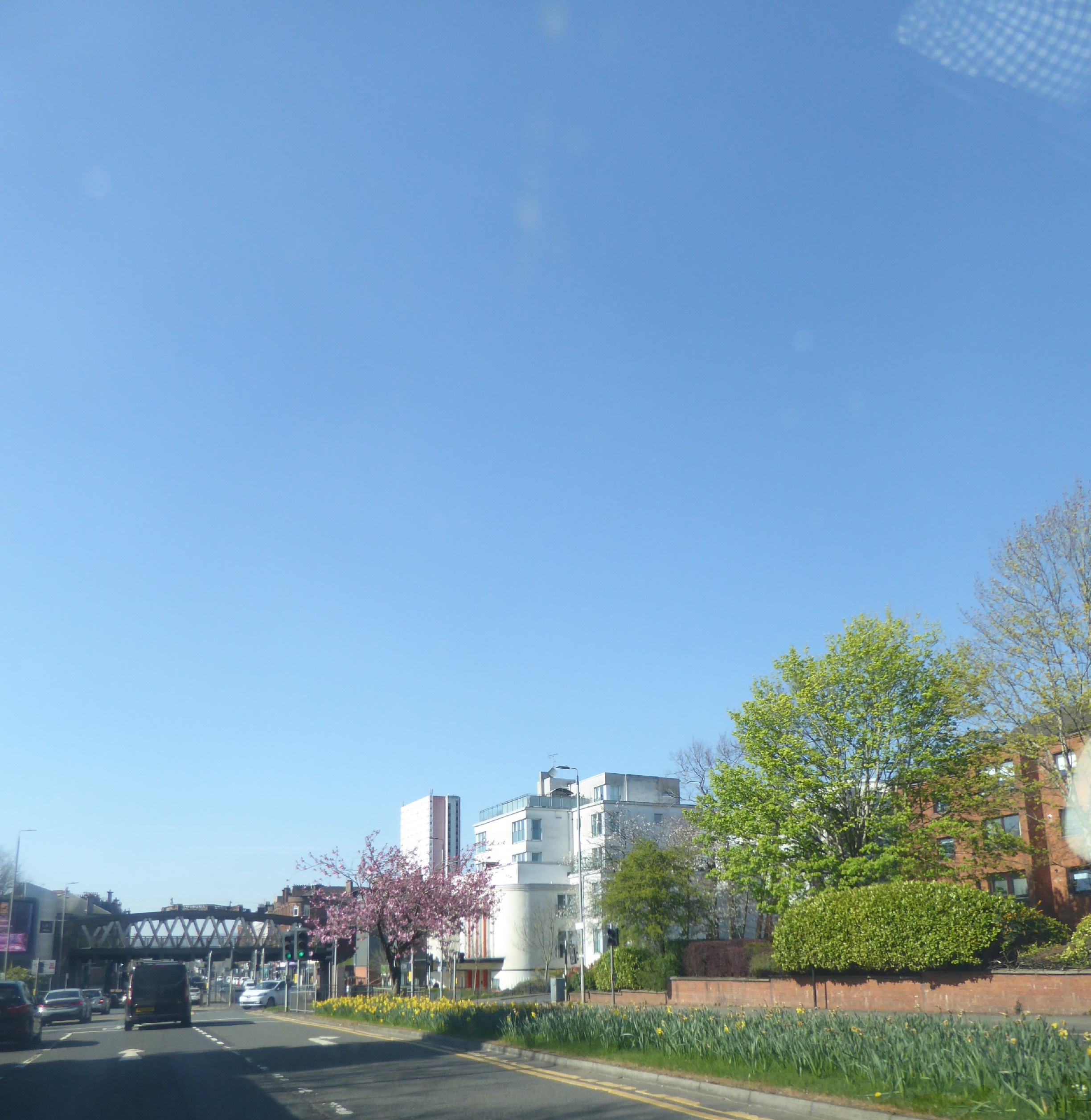
Great Western Road (below) –
Species and Japanese Roots
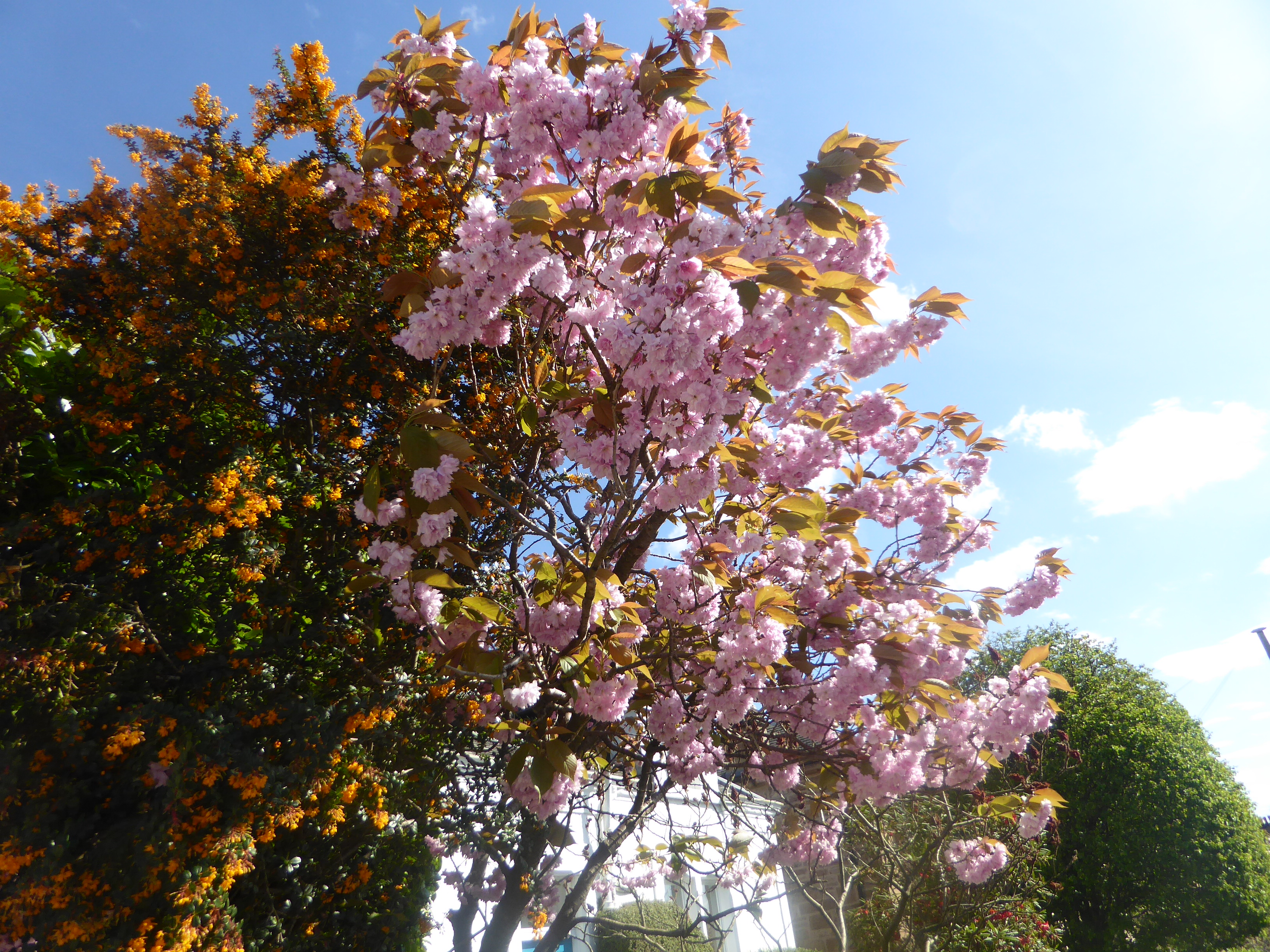
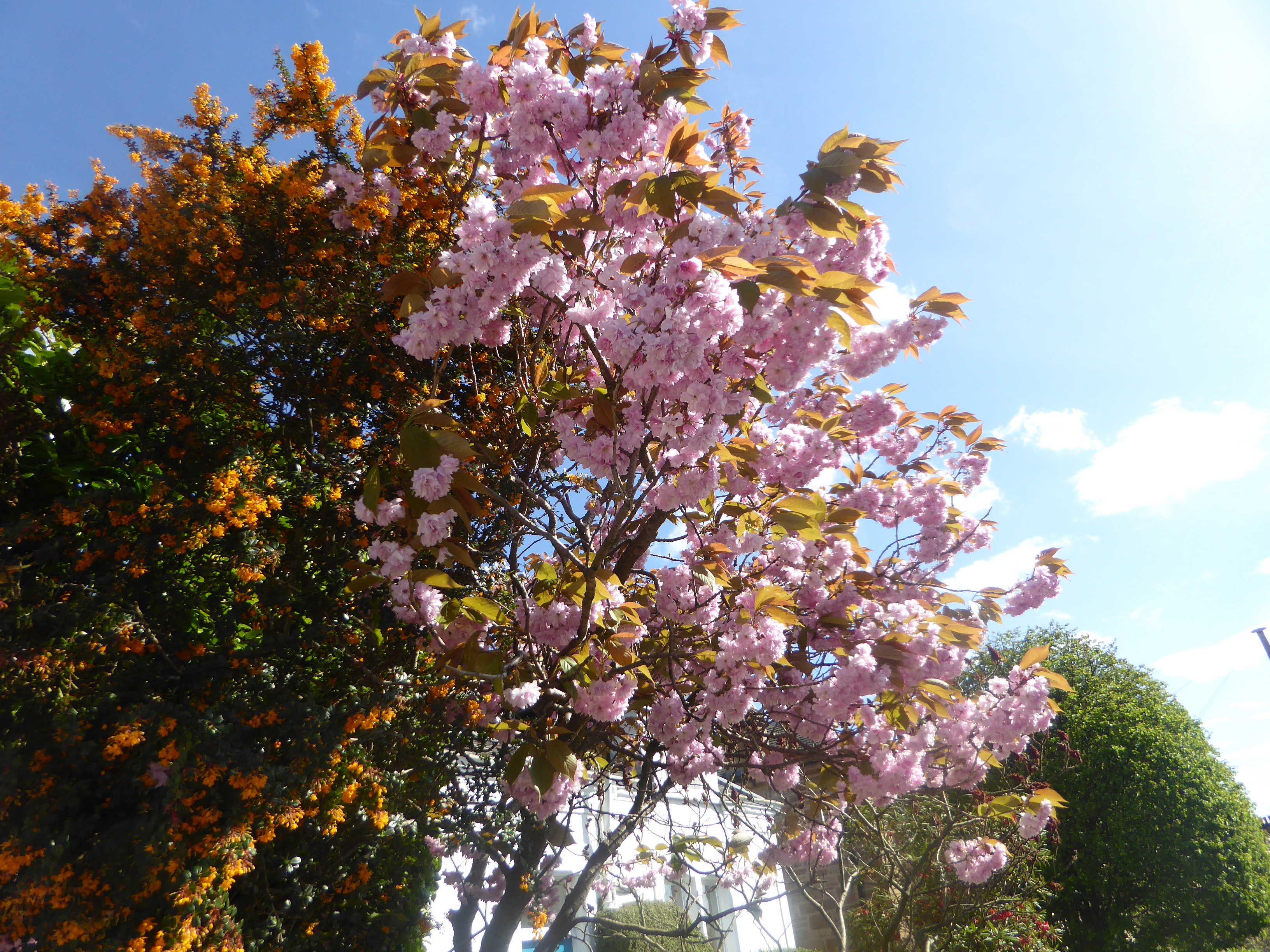
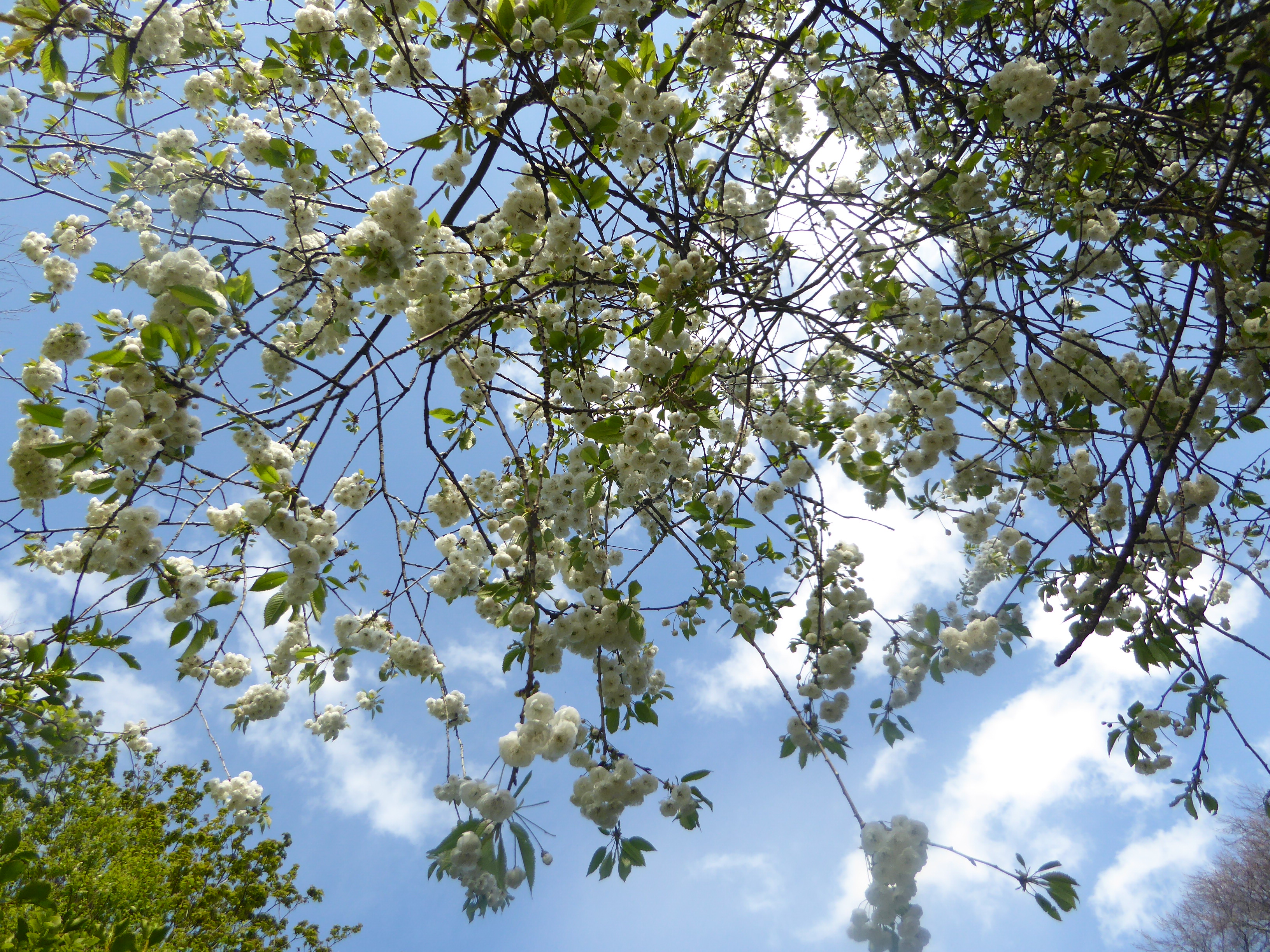
Glasgow’s trees, mostly from the Prunus genus, mirror Japan’s sakura. Common species include Prunus serrulata (with showy ‘Kanzan’ or ‘Shirofugen’ cultivars), Prunus x yedoensis (Yoshino cherry), and occasionally Prunus avium or Prunus subhirtella. These are botanically similar to Japan’s cherries, sporting pink or white single or double blooms. However, Glasgow’s cooler, wetter climate means later blooms (April vs. March) and smaller, scattered areas where the trees actually are.
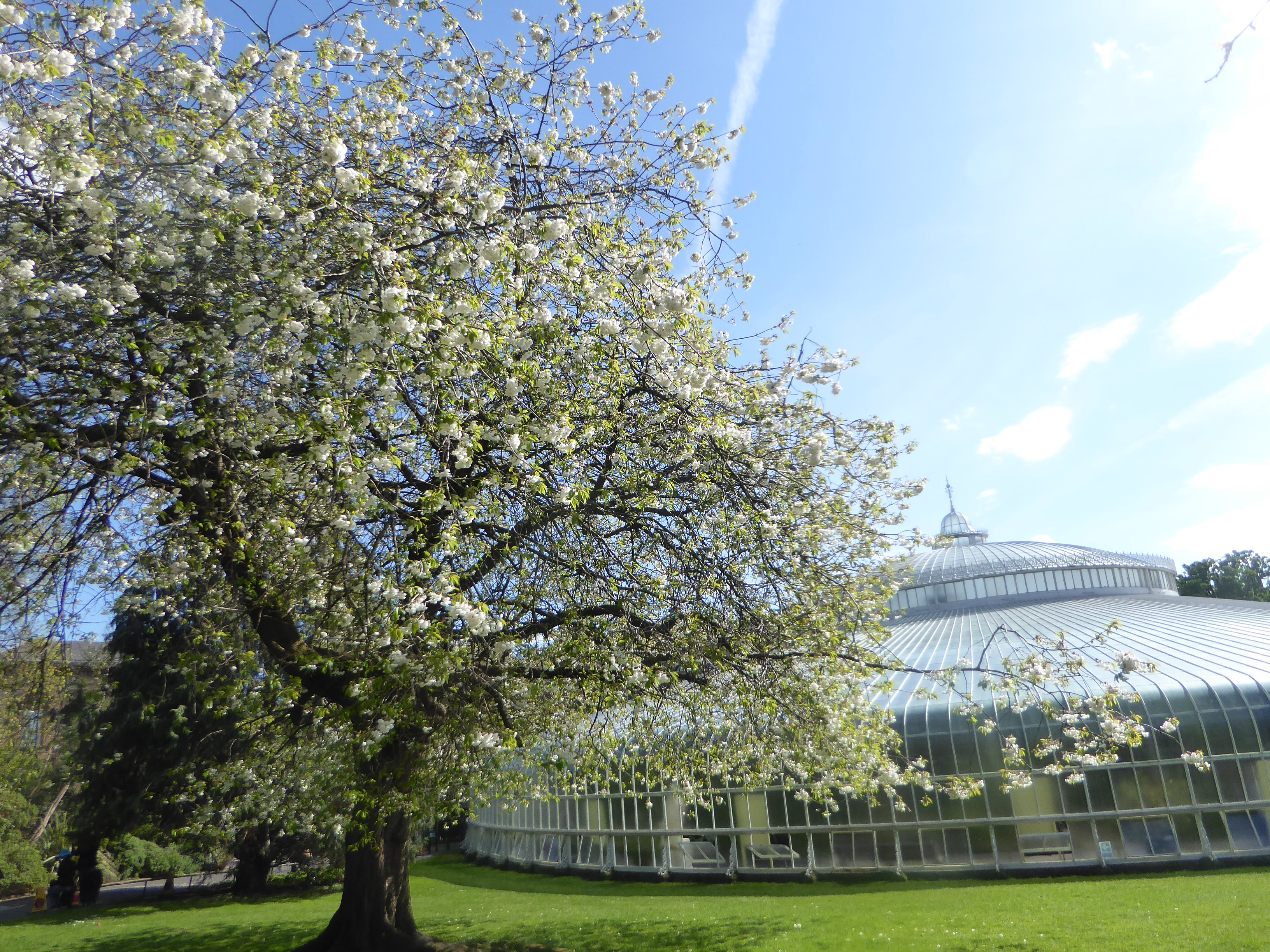
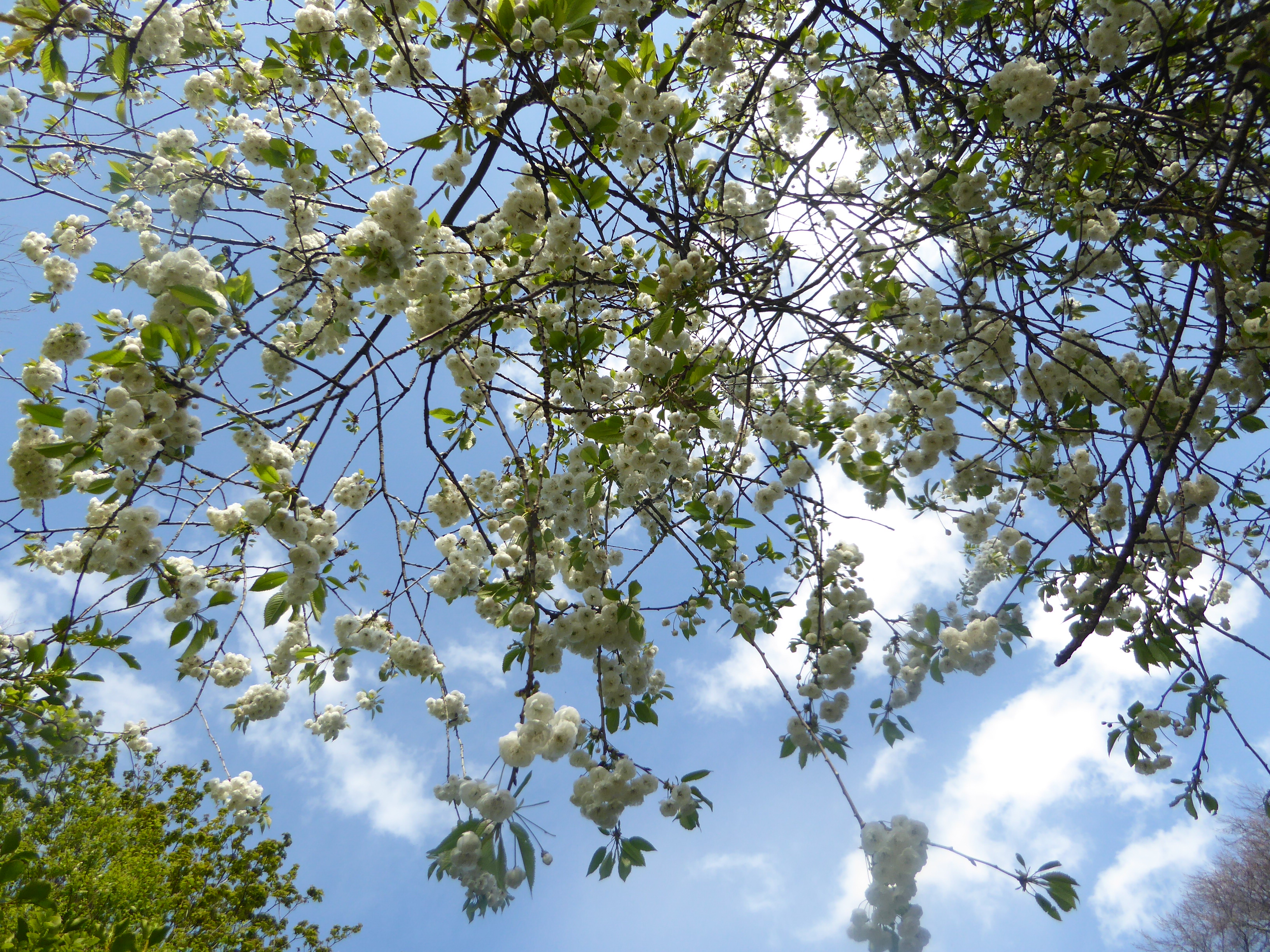
Botanical Gardens (below) –
Are the Cherries Edible?
Don’t be tempted to eat them! Most of Glasgow’s cherry trees are ornamental, bred for their stunning flowers, not fruit. Varieties like Prunus serrulata may produce small, bitter cherries—or none at all—that aren’t palatable. While some trees, like Prunus avium (wild cherry), can yield edible but tart cherries, urban trees are rarely maintained for food and may be treated with pesticides. For safety and taste, stick to the cherries from the shops. These trees are a feast for the eyes, not the stomach, especially in places like Glasgow Green or Kelvingrove Park.
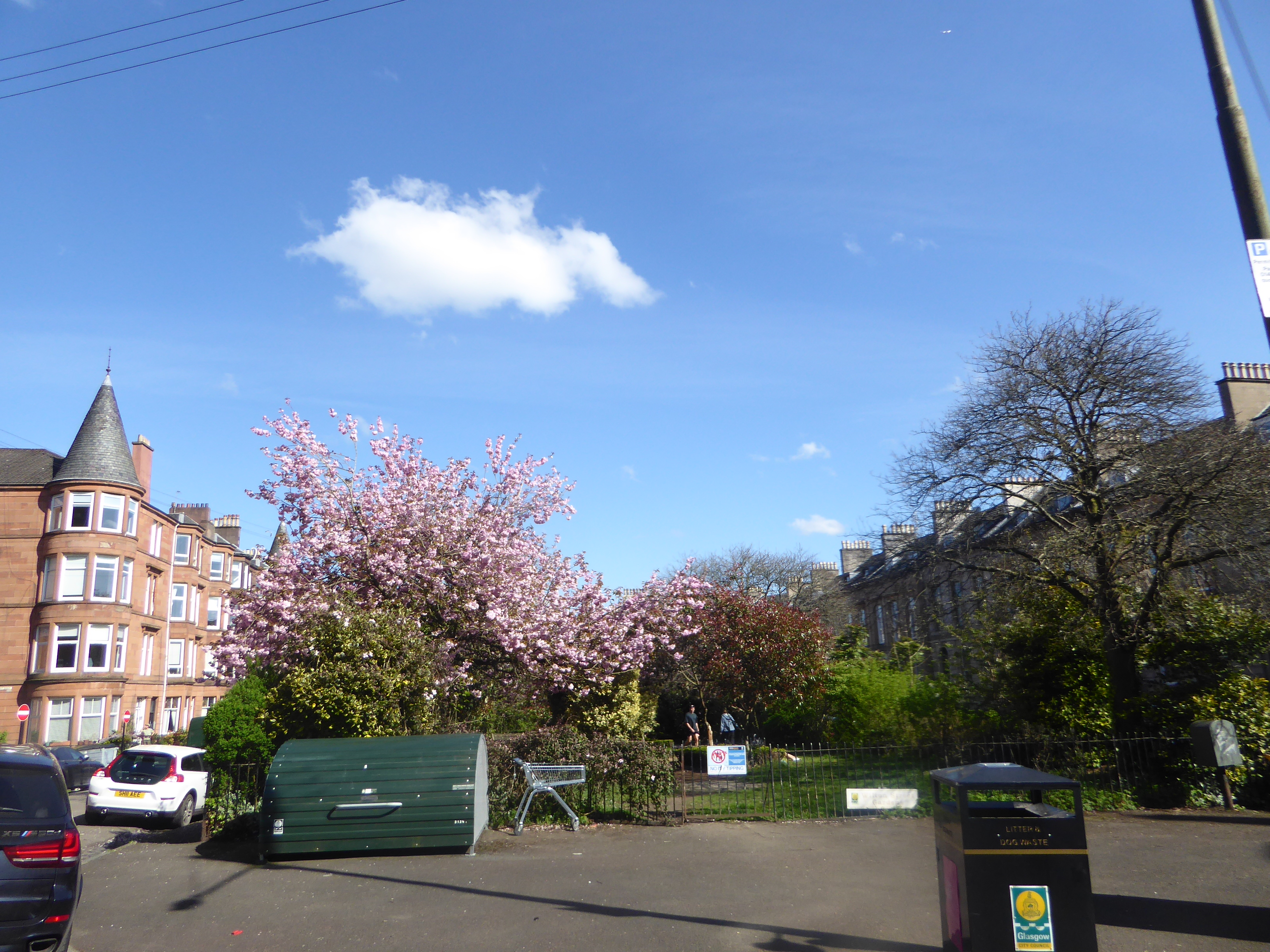
The West End (below) –
Make the Most of It
The cherry blossoms won’t be around for much longer, so if you’re that way inclined, grab your mobile, take some photos and explore Glasgow’s streets now.
CB

 Curious Bystander